About Gustav Mahler
Gustav Mahler was an Austro-Bohemian late-Romantic composer and one of the leading conductors of his generation, recognized for his expansive symphonies and song cycles. He served as a bridge between the 19th-century Austro-German musical tradition and the modernism of the early 20th century. Though his status as a conductor was established during his lifetime, his profoundly emotional and often monumental compositions only gained widespread popularity after periods of relative neglect, establishing him as a monumental figure in classical music.
- Mahler's primary career during his lifetime was as a celebrated conductor, holding prestigious positions such as the director of the Vienna Court Opera and later the New York Philharmonic.
- He famously composed nine complete symphonies, with his Tenth Symphony remaining unfinished at his death, a circumstance often linked to the superstition of the "curse of the ninth symphony" that affected composers like Beethoven and Schubert.
- Mahler converted from Judaism to Catholicism in 1897, a decision that enabled him to secure the directorship of the Vienna Court Opera, a prominent cultural position in Europe.
- His symphonies often incorporated elements of folk music, military fanfares, and even popular melodies, weaving them into vast and complex orchestral tapestries that explored profound philosophical themes of life, death, and nature.
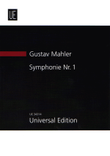
Playing Gustav Mahler's music offers a profoundly rewarding experience for advanced musicians, including orchestral instrumentalists, vocalists, and skilled pianists capable of tackling his challenging piano reductions. His sheet music, available in various formats from full scores to instrumental parts and vocal scores, provides an opportunity to delve into works that demand deep emotional expression and intellectual engagement. Performers will find rich harmonic language, intricate orchestration, and an expansive emotional landscape that offers a chance to connect with some of the most monumental and philosophically charged works in the classical repertoire.