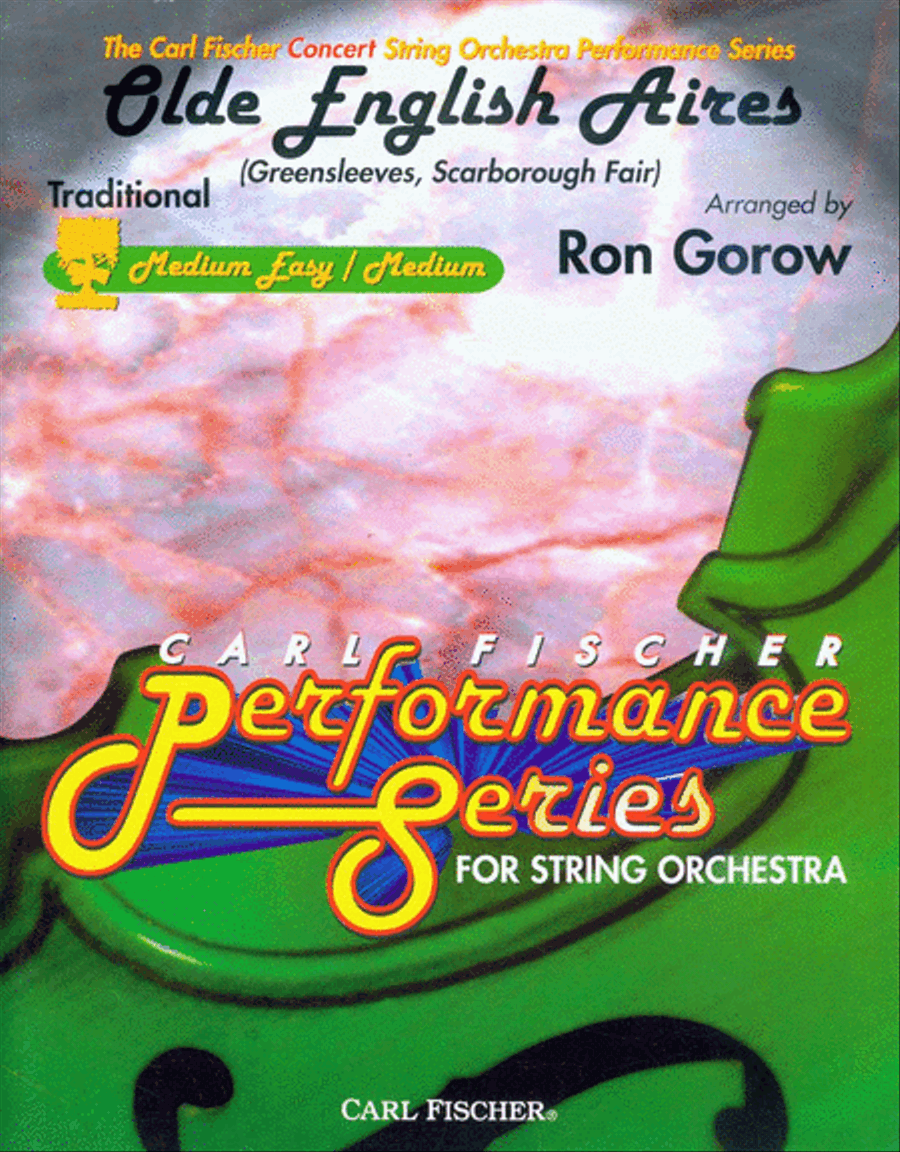
Olde English Aires Greensleeves, Scarborough Fair - Full Score and Parts by Traditional String Orchestra - Sheet Music
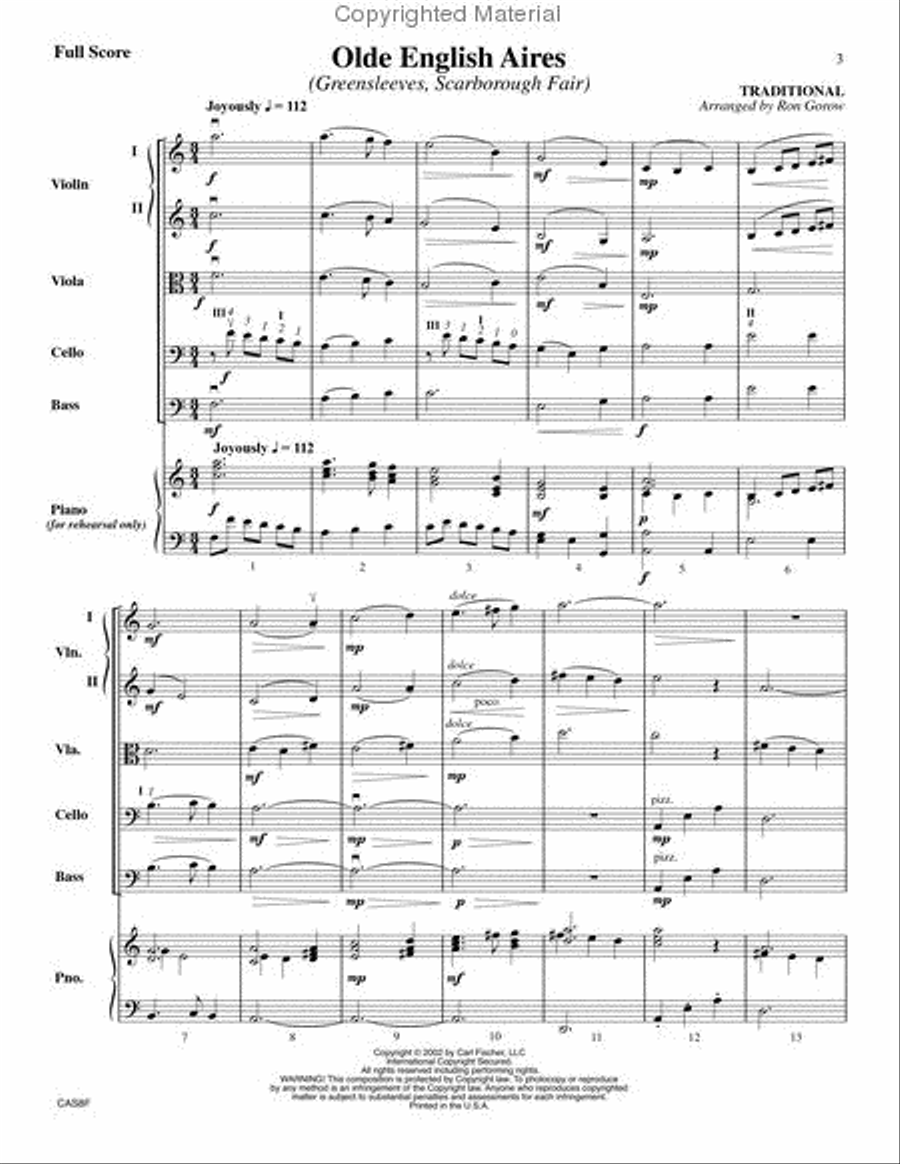
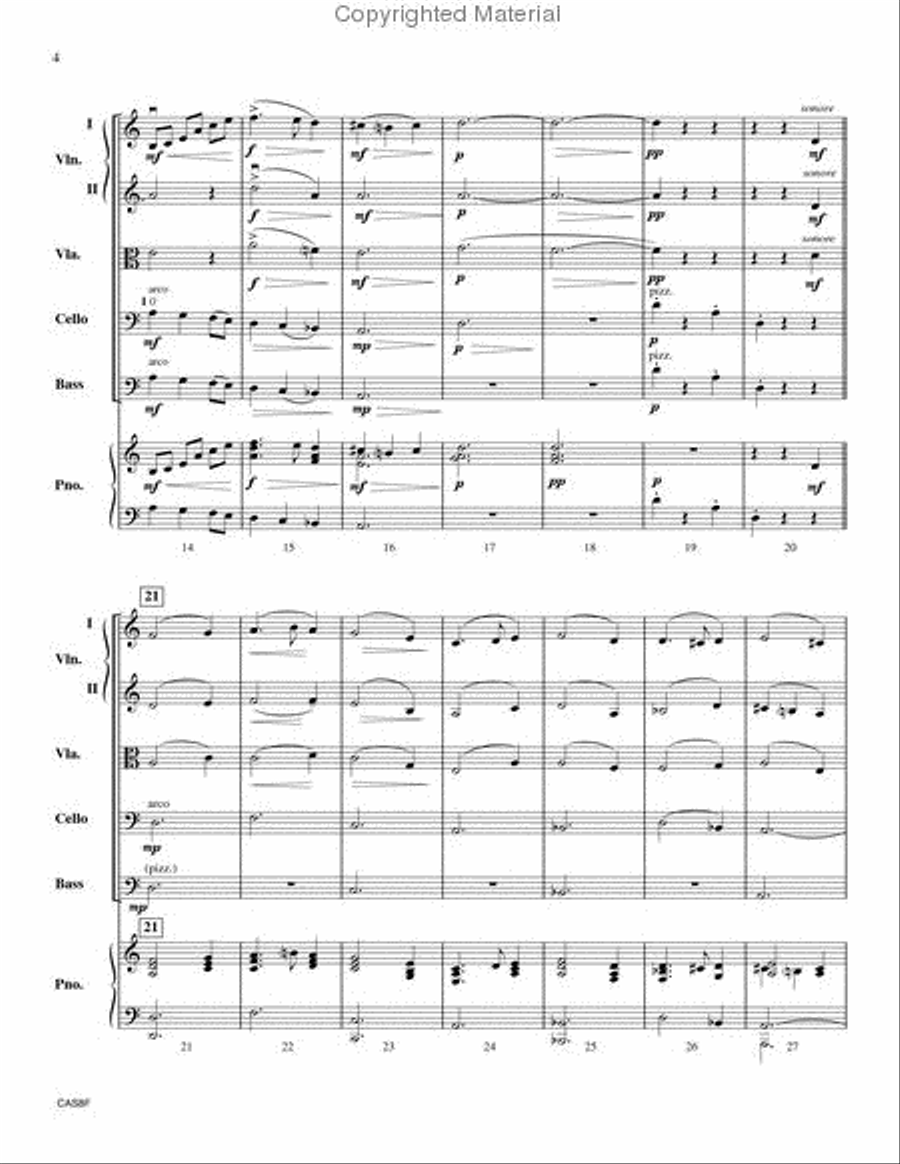
By TraditionalPlayed joyously, with full bow, the piece is an opportunity to resonate these timeless tunes. Both are written in the Dorian mode, with refreshing modal harmony. After a dynamic introduction, each tune is visited, then they are interwoven in a playful, balanced tapestry. In mm. 71-86, the two tunes are superimposed in counterpoint. This passage may be played with several combinations. Here is an opportunity to feature one, two or three of your best performers. A trio of soloists (Vln. 1, Vln II and Vla.) creates a striking contrast-an image of a medieval street scene. Any or all of the solo parts may be played by one or more players from each section. Adapt this arrangement to your particular ensemble. Adjust dynamics to maintain a balance between soloists and section. When the tutti orchestra enters at m.87, it should sound grandiose, diminishing during the rallentando, then swelling from the penultimate chord to a full ending.Played joyously, with full bow, the piece is an opportunity to resonate these timeless tunes. Both are written in the Dorian mode, with refreshing modal harmony. After a dynamic introduction, each tune is visited, then they are interwoven in a playful, balanced tapestry. In mm. 71-86, the two tunes are superimposed in counterpoint. This passage may be played with several combinations. Here is an opportunity to feature one, two or three of your best performers. A trio of soloists (Vln. 1, Vln II and Vla.) creates a striking contrast-an image of a medieval street scene. Any or all of the solo parts may be played by one or more players from each section. Adapt this arrangement to your particular ensemble. Adjust dynamics to maintain a balance between soloists and section. When the tutti orchestra enters at m.87, it should sound grandiose, diminishing during theA rallentando, then swelling from the penultimate chord to a full ending.Played joyously, with full bow, the piece is an opportunity to resonate these timeless tunes. Both are written in the Dorian mode, with refreshing modal harmony. After a dynamic introduction, each tune is visited, then they are interwoven in a playful, balanced tapestry. In mm. 71-86, the two tunes are superimposed in counterpoint. This passage may be played with several combinations. Here is an opportunity to feature one, two or three of your best performers. A trio of soloists (Vln. 1, Vln II and Vla.) creates a striking contrast-an image of a medieval street scene. Any or all of the solo parts may be played by one or more players from each section. Adapt this arrangement to your particular ensemble. Adjust dynamics to maintain a balance between soloists and section. When the tutti orchestra enters at m.87, it should sound grandiose, diminishing during the rallentando, then swelling from the penultimate chord to a full ending.Played joyously, with full bow, the piece is an opportunity to resonate these timeless tunes. Both are written in the Dorian mode, with refreshing modal harmony. After a dynamic introduction, each tune is visited, then they are interwoven in a playful, balanced tapestry. In mm. 71-86, the two tunes are superimposed in counterpoint. This passage may be played with several combinations. Here is an opportunity to feature one, two or three of your best performers. A trio of soloists (Vln. 1, Vln II and Vla.) creates a striking contrast-an image of a medieval street scene. Any or all of the solo parts may be played by one or more players from each section. Adapt this arrangement to your particular ensemble. Adjust dynamics to maintain a balance between soloists and section. When the tutti orchestra enters at m.87, it should sound grandiose, diminishing during the rallentando, then swelling from the penultimate chord to a full ending.Played joyously, with full bow, the piece is an opportunity to resonate these timeless tunes. Both are written in the Dorian mode, with refreshing modal harmony. After a dynamic introduction, each tune is visited, then they are interwoven in a playful, balanced tapestry. In mm. 71-86, the two tunes are superimposed in counterpoint. This passage may be played with several combinations. Here is an opportunity to feature one, two or three of your best performers. A trio of soloists (Vln. 1, Vln II and Vla.) creates a striking contrast-an image of a medieval street scene. Any or all of the solo parts may be played by one or more players from each section. Adapt this arrangement to your particular ensemble. Adjust dynamics to maintain a balance between soloists and section. When the tutti orchestra enters at m.87, it should sound grandiose, diminishing during thexa0rallentando, then swelling from the penultimate chord to a full ending.
Details
Summary
- Instrument:
- Cello Double Bass Piano
- Ensembles:
- String Orchestra
- Composers:
- Traditional
- Publishers:
- Carl Fischer Music
- UPC:
- 798408047597
- ISBN:
- 9780825847592
- Format:
- Score Set of Parts Score and Parts
- Item types:
- Physical
- Level:
- Beginning Intermediate
- Artist:
- Traditional
- Usages:
- Christmas
- Main Key:
- A minor
- Number of Pages:
- 80
- Size:
- 8.5 x 11 inches
- Shipping Weight:
- 0.94 pounds
Detailed Description
SKU: CF.CAS8
Greensleeves, Scarborough Fair - Full Score and Parts. Composed by Traditional. Edited by Amy Rosen. Arranged by Ron Gorow. Folio. Carl Fischer Concert String Orchestra Series. Score and Parts. With Standard notation. 80 pages. Carl Fischer Music #CAS8. Published by Carl Fischer Music (CF.CAS8).ISBN 9780825847592. UPC: 798408047597. 8.5 x 11 inches. Key: A minor.
Played joyously, with full bow, the piece is an opportunity to resonate these timeless tunes. Both are written in the Dorian mode, with refreshing modal harmony. After a dynamic introduction, each tune is visited, then they are interwoven in a playful, balanced tapestry. In mm. 71-86, the two tunes are superimposed in counterpoint. This passage may be played with several combinations. Here is an opportunity to feature one, two or three of your best performers. A trio of soloists (Vln. 1, Vln II and Vla.) creates a striking contrast-an image of a medieval street scene. Any or all of the solo parts may be played by one or more players from each section. Adapt this arrangement to your particular ensemble. Adjust dynamics to maintain a balance between soloists and section. When the tutti orchestra enters at m.87, it should sound grandiose, diminishing during the rallentando, then swelling from the penultimate chord to a full ending.
Played joyously, with full bow, the piece is an opportunity to resonate these timeless tunes. Both are written in the Dorian mode, with refreshing modal harmony. After a dynamic introduction, each tune is visited, then they are interwoven in a playful, balanced tapestry. In mm. 71-86, the two tunes are superimposed in counterpoint. This passage may be played with several combinations. Here is an opportunity to feature one, two or three of your best performers. A trio of soloists (Vln. 1, Vln II and Vla.) creates a striking contrast-an image of a medieval street scene. Any or all of the solo parts may be played by one or more players from each section. Adapt this arrangement to your particular ensemble. Adjust dynamics to maintain a balance between soloists and section. When the tutti orchestra enters at m.87, it should sound grandiose, diminishing during theA rallentando, then swelling from the penultimate chord to a full ending.
Played joyously, with full bow, the piece is an opportunity to resonate these timeless tunes. Both are written in the Dorian mode, with refreshing modal harmony. After a dynamic introduction, each tune is visited, then they are interwoven in a playful, balanced tapestry. In mm. 71-86, the two tunes are superimposed in counterpoint. This passage may be played with several combinations. Here is an opportunity to feature one, two or three of your best performers. A trio of soloists (Vln. 1, Vln II and Vla.) creates a striking contrast-an image of a medieval street scene. Any or all of the solo parts may be played by one or more players from each section. Adapt this arrangement to your particular ensemble. Adjust dynamics to maintain a balance between soloists and section. When the tutti orchestra enters at m.87, it should sound grandiose, diminishing during the rallentando, then swelling from the penultimate chord to a full ending.
Played joyously, with full bow, the piece is an opportunity to resonate these timeless tunes. Both are written in the Dorian mode, with refreshing modal harmony. After a dynamic introduction, each tune is visited, then they are interwoven in a playful, balanced tapestry. In mm. 71-86, the two tunes are superimposed in counterpoint. This passage may be played with several combinations. Here is an opportunity to feature one, two or three of your best performers. A trio of soloists (Vln. 1, Vln II and Vla.) creates a striking contrast-an image of a medieval street scene. Any or all of the solo parts may be played by one or more players from each section. Adapt this arrangement to your particular ensemble. Adjust dynamics to maintain a balance between soloists and section. When the tutti orchestra enters at m.87, it should sound grandiose, diminishing during the rallentando, then swelling from the penultimate chord to a full ending.
Played joyously, with full bow, the piece is an opportunity to resonate these timeless tunes. Both are written in the Dorian mode, with refreshing modal harmony. After a dynamic introduction, each tune is visited, then they are interwoven in a playful, balanced tapestry. In mm. 71-86, the two tunes are superimposed in counterpoint. This passage may be played with several combinations. Here is an opportunity to feature one, two or three of your best performers. A trio of soloists (Vln. 1, Vln II and Vla.) creates a striking contrast-an image of a medieval street scene. Any or all of the solo parts may be played by one or more players from each section. Adapt this arrangement to your particular ensemble. Adjust dynamics to maintain a balance between soloists and section. When the tutti orchestra enters at m.87, it should sound grandiose, diminishing during thexa0rallentando, then swelling from the penultimate chord to a full ending.
About Carl Fischer Concert String Orchestra Series
This series of pieces (Grade 3 and higher) is designed for advancing ensembles. The pieces in this series are characterized by:
- Expanded use of rhythms, ranges and keys but technical demands are still carefully considered
- More comprehensive bowing techniques
- Viola T.C. included
- Careful selection of keys and degree of difficulty for advancing musicians
Similar Sheet Music & Digital Downloads
- More by this Composer:
- Traditional Traditional Piano Traditional Piano Accompaniment Traditional Violin
- Instrument:
- Strings Cello Strings Double Bass Piano and Keyboard Piano
- Artists:
- Traditional
- Ensemble:
- String Orchestra
- Publisher:
- Carl Fischer Music