Concerto for Clarinet, K. 622 K622 by Wolfgang Amadeus Mozart Clarinet Solo - Sheet Music
By Wolfgang Amadeus MozartISBN 9780825804410. UPC: 798408004415. 9x12 inches. Key: Bb major.
Details
Summary
- Instrument:
- Piano Accompaniment Clarinet Solo
- Genres:
- Classical Period
- Composers:
- Wolfgang Amadeus Mozart
- Publishers:
- Carl Fischer Music
- UPC:
- 798408004415
- ISBN:
- 9780825804410
- Item types:
- Physical
- Level:
- Intermediate
- Musical forms:
- Concerto
- Artist:
- Wolfgang Amadeus Mozart
- Arrangers:
- Simeon Bellison
- Usages:
- School and Community
- Main Key:
- Bb major
- Number of Pages:
- 48
- Size:
- 9x12 inches
- Shipping Weight:
- 0.5 pounds
Detailed Description
SKU: CF.W1668
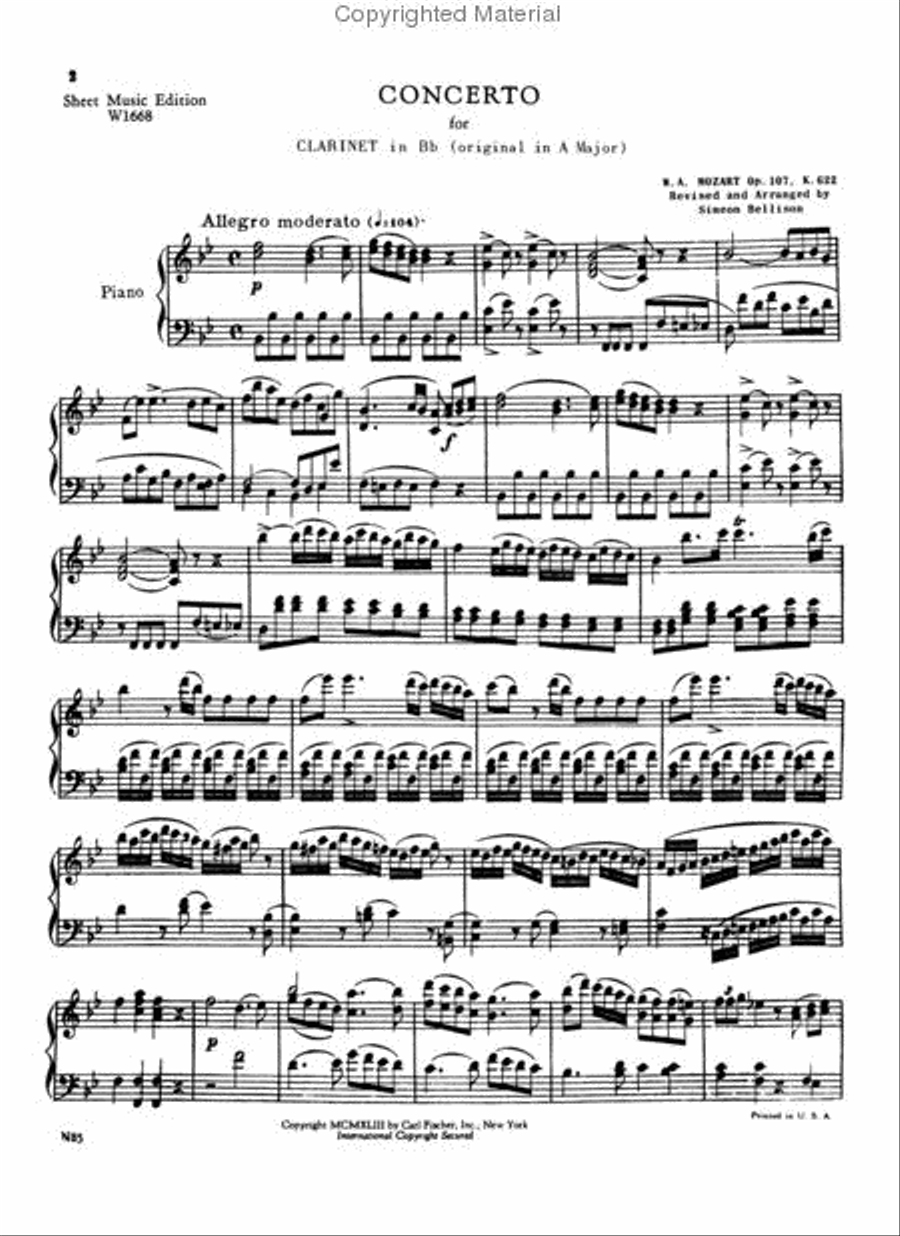
K622. Composed by Wolfgang Amadeus Mozart. Edited by Simeon Bellison. Arranged by Simeon Bellison. This edition: saddle-wire stitch. Sws. Back To School. Classical Period. Instrumental solo book. With solo part, standard notation and piano accompaniment. K 622. 48 pages. Carl Fischer Music #W1668. Published by Carl Fischer Music (CF.W1668).ISBN 9780825804410. UPC: 798408004415. 9x12 inches. Key: Bb major.
Similar Sheet Music & Digital Downloads
- More by this Composer:
- Wolfgang Amadeus Mozart Wolfgang Amadeus Mozart Piano Wolfgang Amadeus Mozart Piano Accompaniment Wolfgang Amadeus Mozart Violin
- Artists:
- Wolfgang Amadeus Mozart Simeon Bellison
- Publisher:
- Carl Fischer Music
Ratings + Reviews
2 Rating
1 review
Dan
Aug 12, 2018
K622 is extremely popular, and many editions are available with considerable variation both because the original was composed for basset clarinet down to low C then lost, so current editions are based on the surviving range-adjusted publications, often with reconstructions from recent scholarly work, with liberties taken by editors along the way. Search for a 1998 ClarinetFest comparison of 18 editions for excellent details by Keith Koons.This version (with piano in Bb) stands out for several passages of awkward and inconsistent phrasing, and several note errors which are well-documented by the clarinet community. This 1943 release has not changed to fix these errors nor to incorporate more-recent scholarly work indicating original lower-range passages.Despite these significant concerns, this edition has been used for CBDA auditions for many years which presents an interesting challenge: students must learn atypical phrasing, and check the CBDA errata for the right notes.