
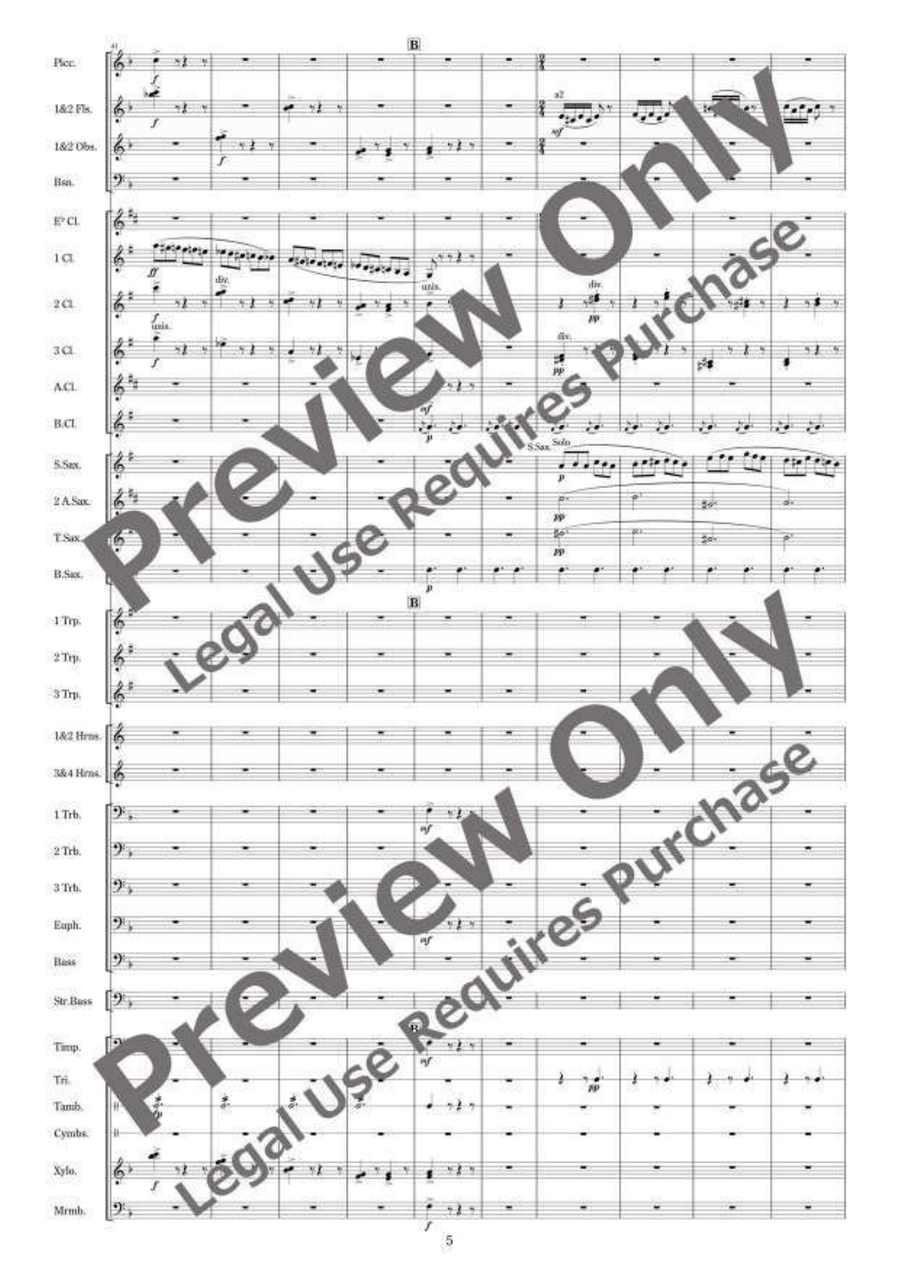
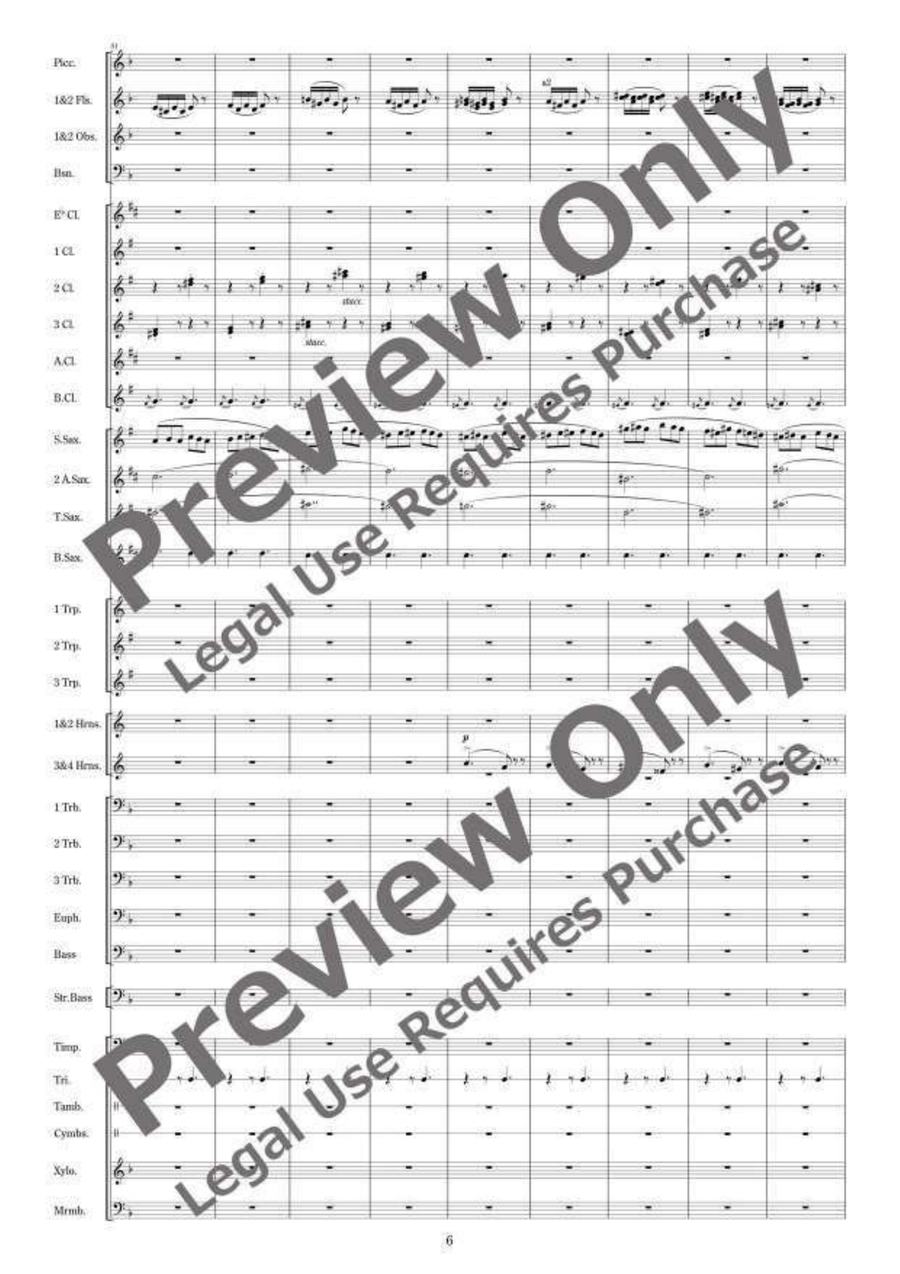
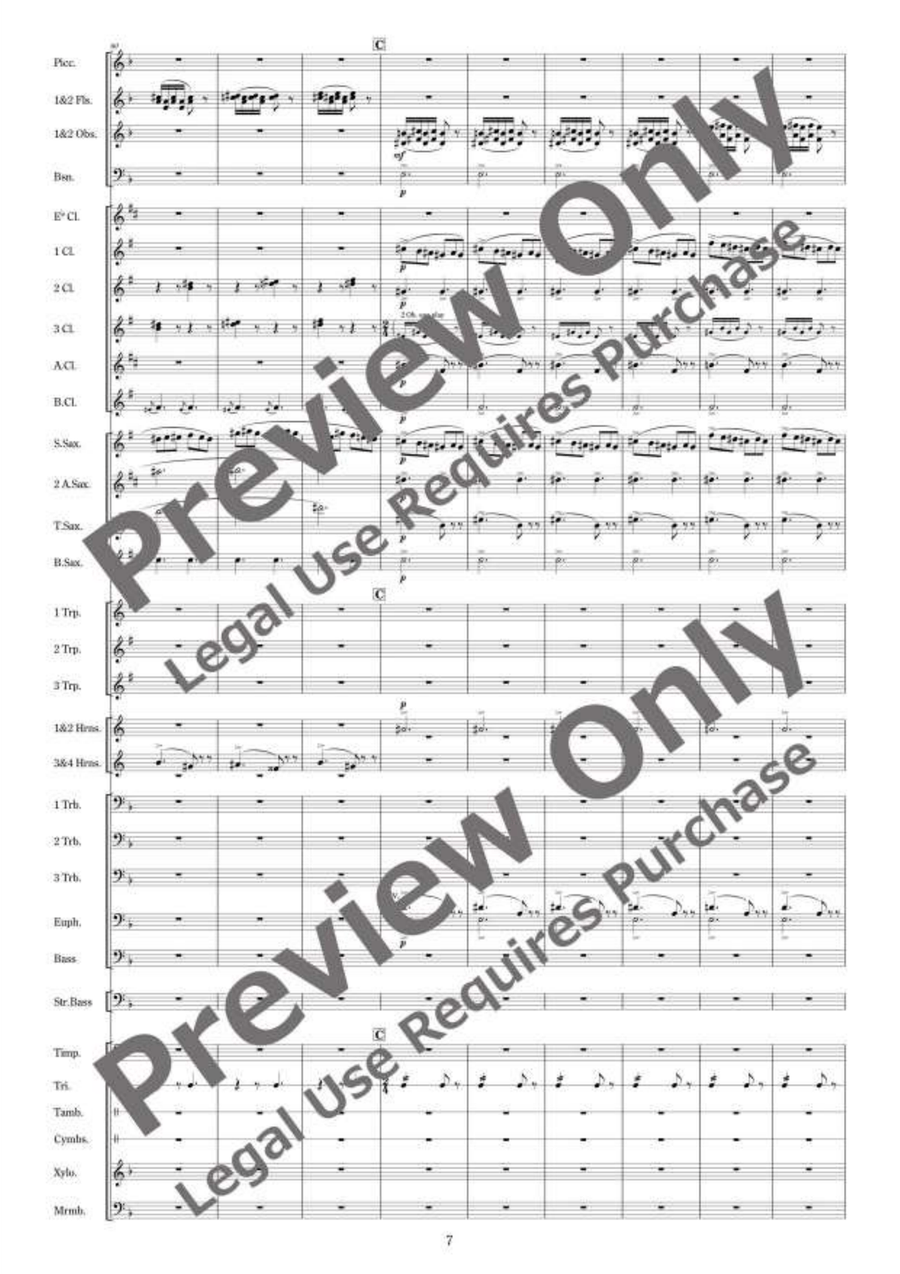
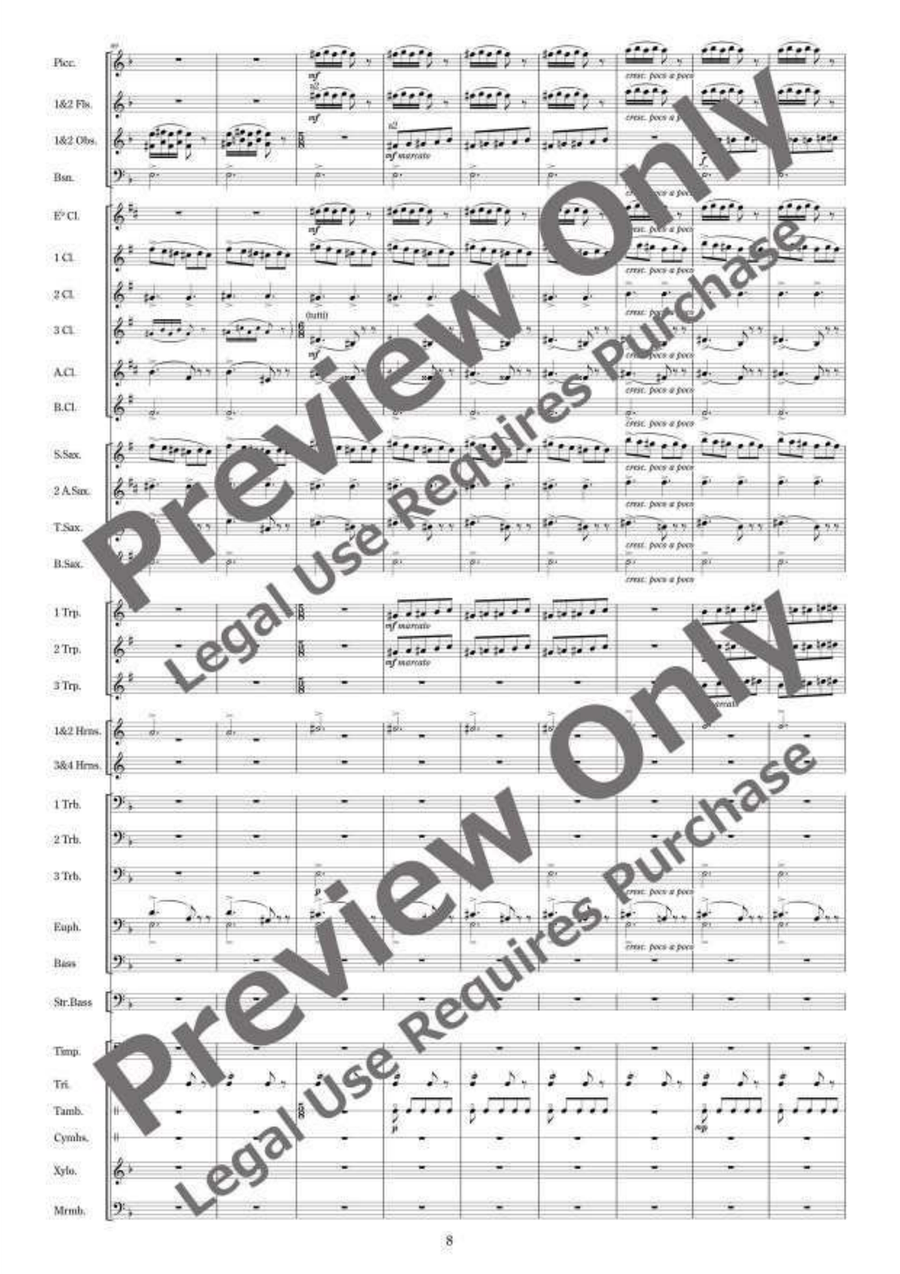
Polovtsian Dances from Prince Igor Concert Band - Sheet Music
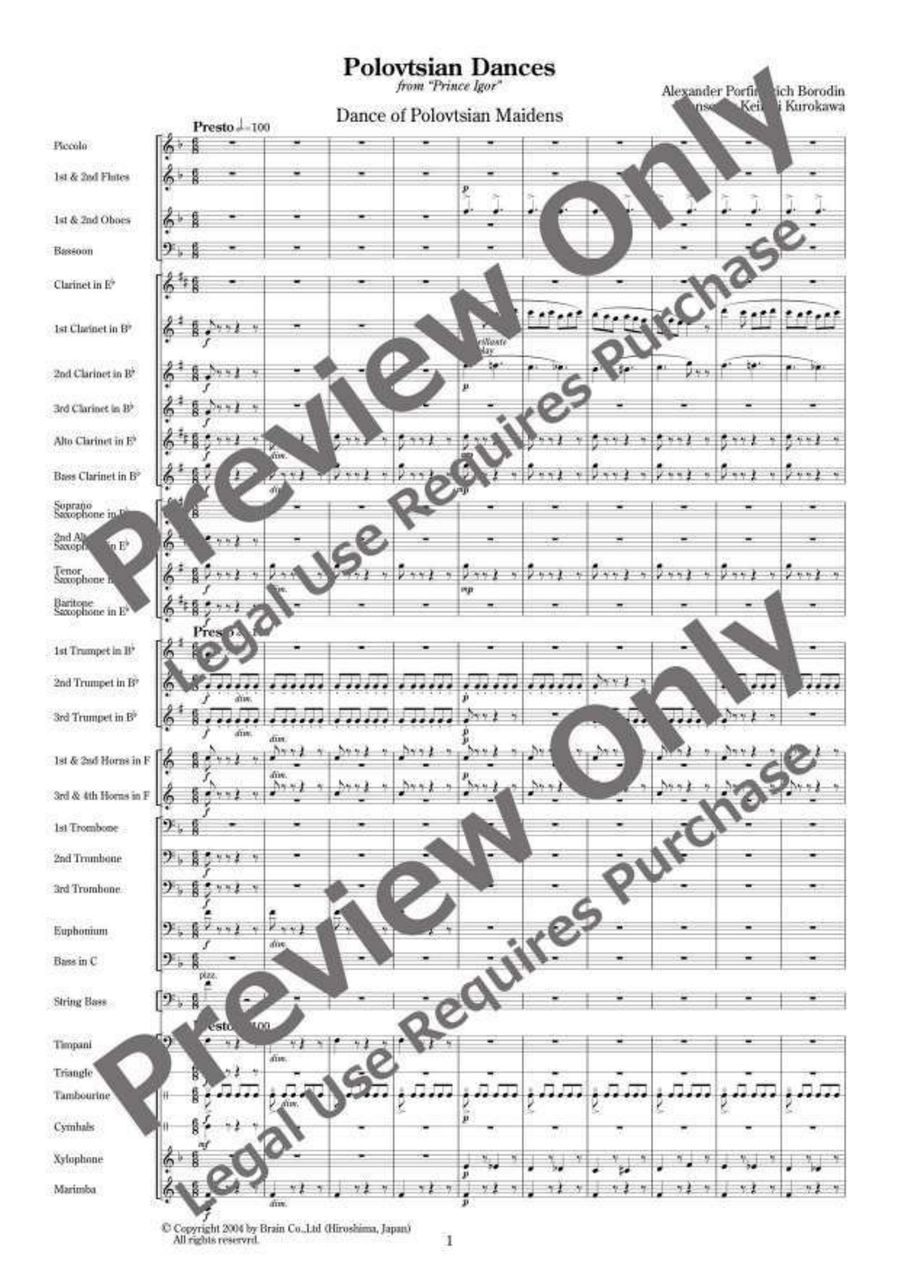
Alexander Porfirievich Borodin, a member of the "Mighty Handful" of Russian composers, embarked on the composition of the opera "Prince Igor" in the summer of 1869. However, Borodin, who referred to himself as a "chemist" and gave his research priority, was unable to make steady progress on "Prince Igor." He died suddenly on February 15, 1887, leaving the opera incomplete. Afterwards, Nikolai Rimsky-Korsakov and Alexander Glazunov sorted and supplemented his manuscripts, making the opera ready for performance. "Prince Igor" premiered on October 23, 1890. The opera "Prince Igor" is based on "The Tale of Igor's Campaign," a seminal work of medieval Russian literature. In the 12th century, the nomadic Polovtsians frequently invaded Southern Russia, looting as they went. In response, Prince Igor Svyatoslavich of the Novgorod-Seversk principality of Kievan Rus led several punitive expeditions. "The Tale of Igor's Campaign" narrates one such expedition in 1185. This arrangement reflects the above-mentioned composition. Parts marked with an asterisk (*) are designed to be optional; in places where independent notes are necessary, other parts include cue notes. The treatment of optional parts, marked as "Option" on the score, depends on the band's balance and can be adjusted to reinforce certain sections. Additionally, parts specified as "Option" should be played if the mentioned instrument is absent but can also be added depending on the overall balance. Adjustments to the balance and sound can be made as necessary, depending on the band's actual situation. The parts for chorus and Khan Konchak (bass solo) are optional. It is possible to include the chorus without the soloist. Although the English translation of the lyrics could not be included in this score due to copyright issues, a pocket score with the English translation is available from M.P. Belaieff (Nr. 388). For parts marked with [a] or [o] that are rests, one option is for performers not playing at that moment to sing the chorus parts. This approach, even if performed as a vocalise (singing on vowels), can be quite effective. For reference, at the premiere of this arrangement, female parts were sung by the performers using vocalise during sections marked with [o]. (Keiichi Kurokawa)
Details
Summary
- Instrument:
- English Horn B-Flat Clarinet E-Flat Clarinet Bass Clarinet
- Ensembles:
- Concert Band
- Publishers:
- Bravo Music
- Format:
- Score Set of Parts Score and Parts
- Item types:
- Physical
- Usages:
- School and Community
- Shipping Weight:
- 0.34 pounds
Detailed Description
SKU: BZ.Z-YDAB-E01S
Composed by Alexander Perfir'evich Borodin. Arranged by Keiichi Kurokawa. Concert & Festival. Score & parts. Bravo Music #Z-YDAB-E01S. Published by Bravo Music (BZ.Z-YDAB-E01S).Alexander Porfirievich Borodin, a member of the "Mighty Handful" of Russian composers, embarked on the composition of the opera "Prince Igor" in the summer of 1869. However, Borodin, who referred to himself as a "chemist" and gave his research priority, was unable to make steady progress on "Prince Igor." He died suddenly on February 15, 1887, leaving the opera incomplete. Afterwards, Nikolai Rimsky-Korsakov and Alexander Glazunov sorted and supplemented his manuscripts, making the opera ready for performance. "Prince Igor" premiered on October 23, 1890.
The opera "Prince Igor" is based on "The Tale of Igor's Campaign," a seminal work of medieval Russian literature. In the 12th century, the nomadic Polovtsians frequently invaded Southern Russia, looting as they went. In response, Prince Igor Svyatoslavich of the Novgorod-Seversk principality of Kievan Rus led several punitive expeditions. "The Tale of Igor's Campaign" narrates one such expedition in 1185.
This arrangement reflects the above-mentioned composition. Parts marked with an asterisk (*) are designed to be optional; in places where independent notes are necessary, other parts include cue notes. The treatment of optional parts, marked as "Option" on the score, depends on the band's balance and can be adjusted to reinforce certain sections. Additionally, parts specified as "Option" should be played if the mentioned instrument is absent but can also be added depending on the overall balance. Adjustments to the balance and sound can be made as necessary, depending on the band's actual situation.
The parts for chorus and Khan Konchak (bass solo) are optional. It is possible to include the chorus without the soloist. Although the English translation of the lyrics could not be included in this score due to copyright issues, a pocket score with the English translation is available from M.P. Belaieff (Nr. 388).
For parts marked with [a] or [o] that are rests, one option is for performers not playing at that moment to sing the chorus parts. This approach, even if performed as a vocalise (singing on vowels), can be quite effective. For reference, at the premiere of this arrangement, female parts were sung by the performers using vocalise during sections marked with [o].
(Keiichi Kurokawa).
Similar Sheet Music & Digital Downloads
- Instrument:
- Woodwinds English Horn Woodwinds Clarinet B-Flat Clarinet Woodwinds Clarinet E-Flat Clarinet Woodwinds Clarinet Bass Clarinet
- Ensemble:
- Concert Band
- Publisher:
- Bravo Music