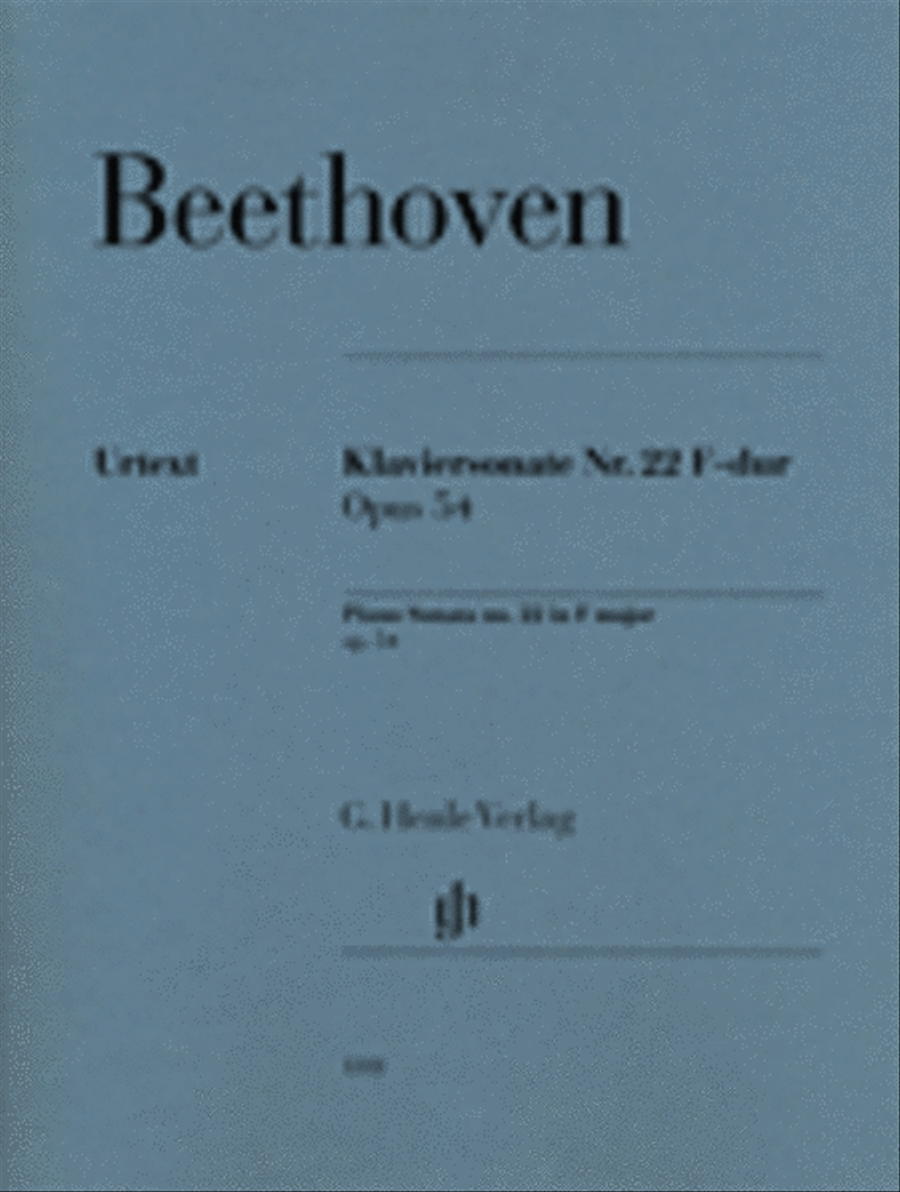
Piano Sonata No. 22 in F Major, Op. 54 Piano Solo - Sheet Music
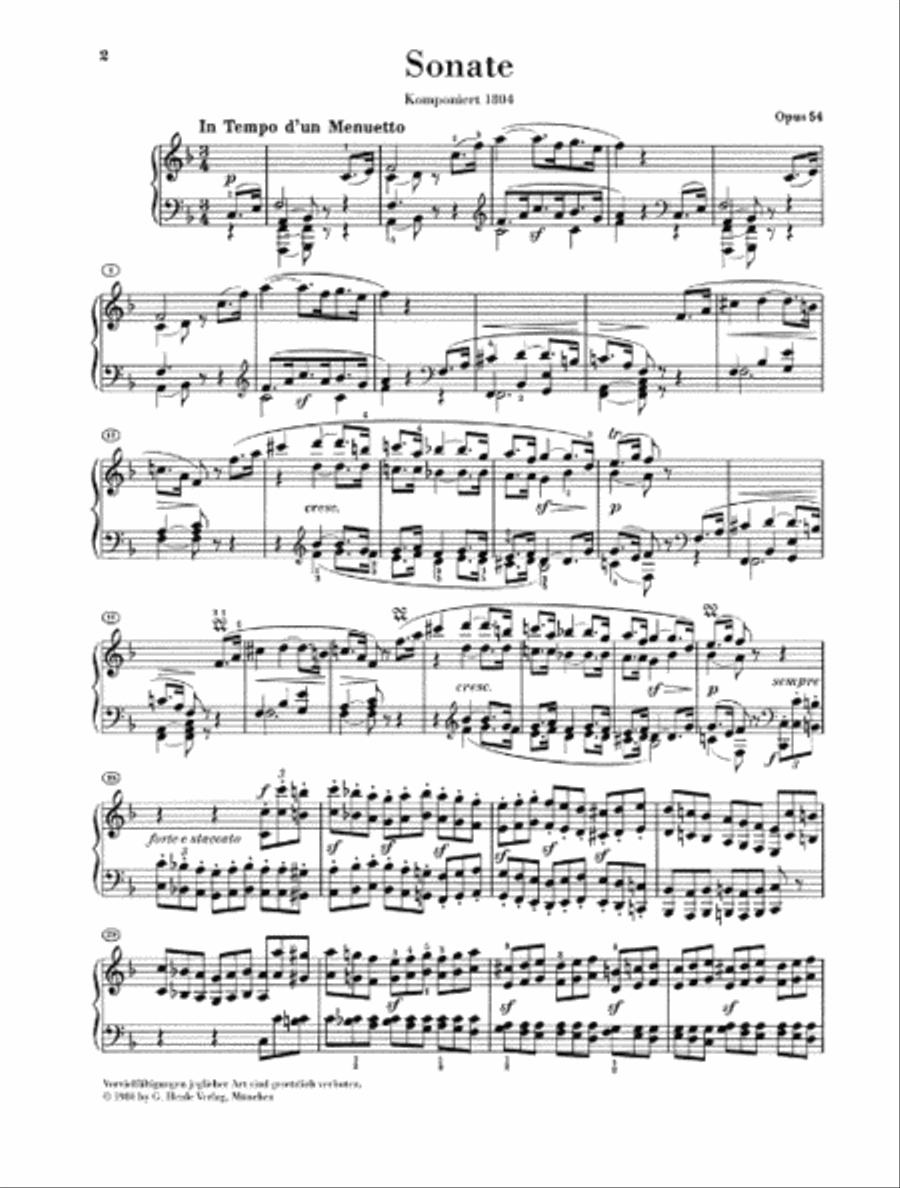
By Bertha Antonia WallnerThis work, in two movements and dating from 1804, is clearly among the lesser-known of Beethoven's 32 piano sonatas. The lack of a sonata-movement form, the old-fashioned heading “in Tempo d'un Menuetto” of the opening movement, and the motor rhythm of the following finale perplexed Beethoven's friends and students. While even in the 19th century people were convinced that external circumstances had caused Beethoven to publish a “torso”, today we belive that the composer was following a particular formal concept that consciously heightened the contrast between the two sections so powerfully that composition of a further movement was unnecessary for the balance of the sonata.
Details
Summary
- Instrument:
- Piano Solo
- Genres:
- Classical
- Publishers:
- G. Henle
- Series:
- Henle Urtext
- UPC:
- 888680662981
- ISBN:
- 9790201813110
- EAN:
- 9790201813110
- Format:
- Collection / Songbook
- Item types:
- Physical
- Musical forms:
- Sonata
- Usages:
- School and Community
- Size:
- 9.25x12.0x0.055 inches
- Number of Pages:
- 12
- Shipping Weight:
- 0.2 pounds
Detailed Description
SKU: HL.51481311
Composed by Ludwig Van Beethoven. Edited by Bertha Antonia Wallner. Sheet Music. Paperbound. Henle Music Folios. Single Edition from HN 34. Classical. Softcover. 12 pages. G. Henle #HN1311. Published by G. Henle (HL.51481311).ISBN 9790201813110. UPC: 888680662981. 9.25x12.0x0.055 inches.
This work, in two movements and dating from 1804, is clearly among the lesser-known of Beethoven's 32 piano sonatas. The lack of a sonata-movement form, the old-fashioned heading “in Tempo d'un Menuetto” of the opening movement, and the motor rhythm of the following finale perplexed Beethoven's friends and students. While even in the 19th century people were convinced that external circumstances had caused Beethoven to publish a “torso”, today we belive that the composer was following a particular formal concept that consciously heightened the contrast between the two sections so powerfully that composition of a further movement was unnecessary for the balance of the sonata.
About Henle Urtext
What I can expect from Henle Urtext editions:
- error-free, reliable musical texts based on meticulous musicological research - fingerings and bowings by famous artists and pedagogues
- preface in 3 languages with information on the genesis and history of the work
- Critical Commentary in 1 – 3 languages with a description and evaluation of the sources and explaining all source discrepancies and editorial decisions
- most beautiful music engraving
- page-turns, fold-out pages, and cues where you need them
- excellent print quality and binding
- largest Urtext catalogue world-wide
- longest Urtext experience (founded 1948 exclusively for "Urtext" editions)
Similar Sheet Music & Digital Downloads
- Series:
- Henle Urtext
- Instrument:
- Piano and Keyboard Piano Piano Solo
- Artists:
- Bertha Antonia Wallner
- Publisher:
- G. Henle