
Details
Summary
- Instrument:
- Piano
- Ensembles:
- Piano Quintet
- Genres:
- Classical
- Composers:
- Miklos Rozsa
- Publishers:
- Breitkopf and Haertel
- ISBN:
- 9790004189429
- Item types:
- Physical
- Artist:
- Miklos Rozsa
- Usages:
- School and Community
- Number of Pages:
- 128
- Size:
- 9 x 12 inches
- Shipping Weight:
- 1.34 pounds
Detailed Description
SKU: BR.EB-9464
Composed by Miklos Rozsa. Chamber music; stapled. Edition Breitkopf. Early modern. Sheet Music. 128 pages. Duration 28:00. Breitkopf and Haertel #EB 9464. Published by Breitkopf and Haertel (BR.EB-9464).ISBN 9790004189429. 9 x 12 inches.
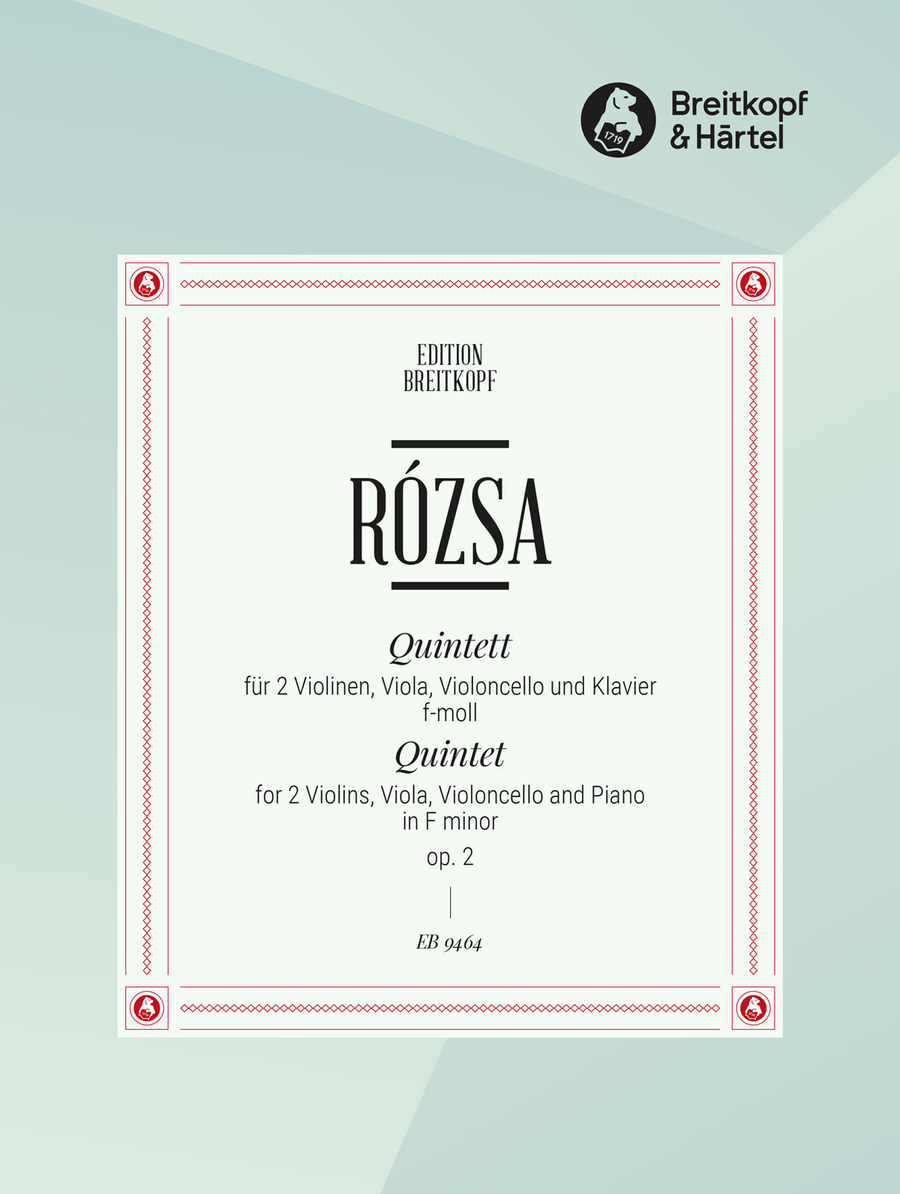
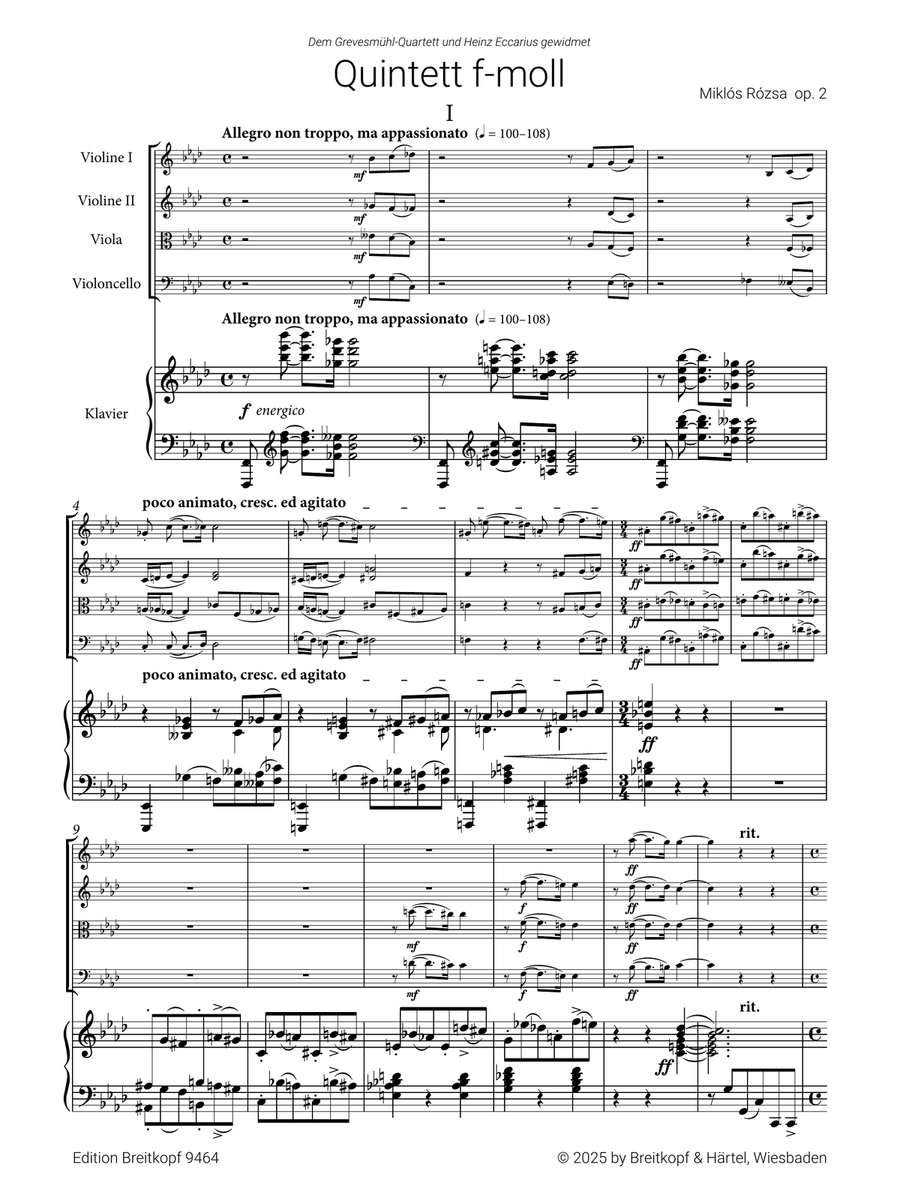
The "Piano Quintet" op. 2 was composed during Miklós Rózsa's student years in Leipzig. It was premiered in 1928 at the end of his third semester at the conservatory with the composer himself playing the viola. A year later, the work was performed outside the academic setting by its later dedicatees, the Grevesmühl Quartet and pianist Heinz Eccarius. This performance received considerable attention in the press, which boosted the young composer's career.
Although Rózsa stuck to the four-movement form with traditional formal models, such as the sonata form or the rondo, and a consistently harmonic tonal language, he also drew inspiration from music that was newer at the time, such as that of Claude Debussy. The central creative principle is the counterpoint, which Rózsa perfected during his studies. In addition, the piano quintet convinces with a wealth of ideas, catchy themes and a passionate tonal language.
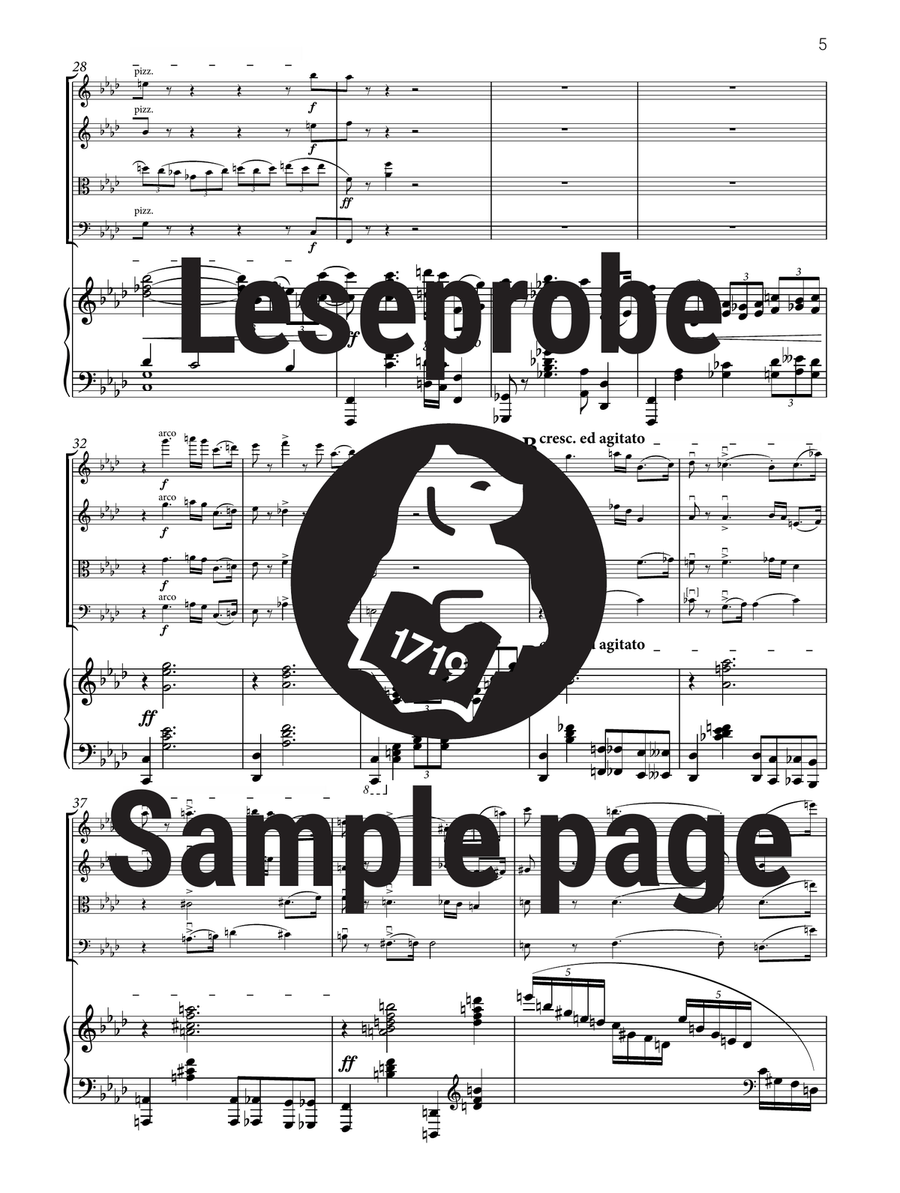
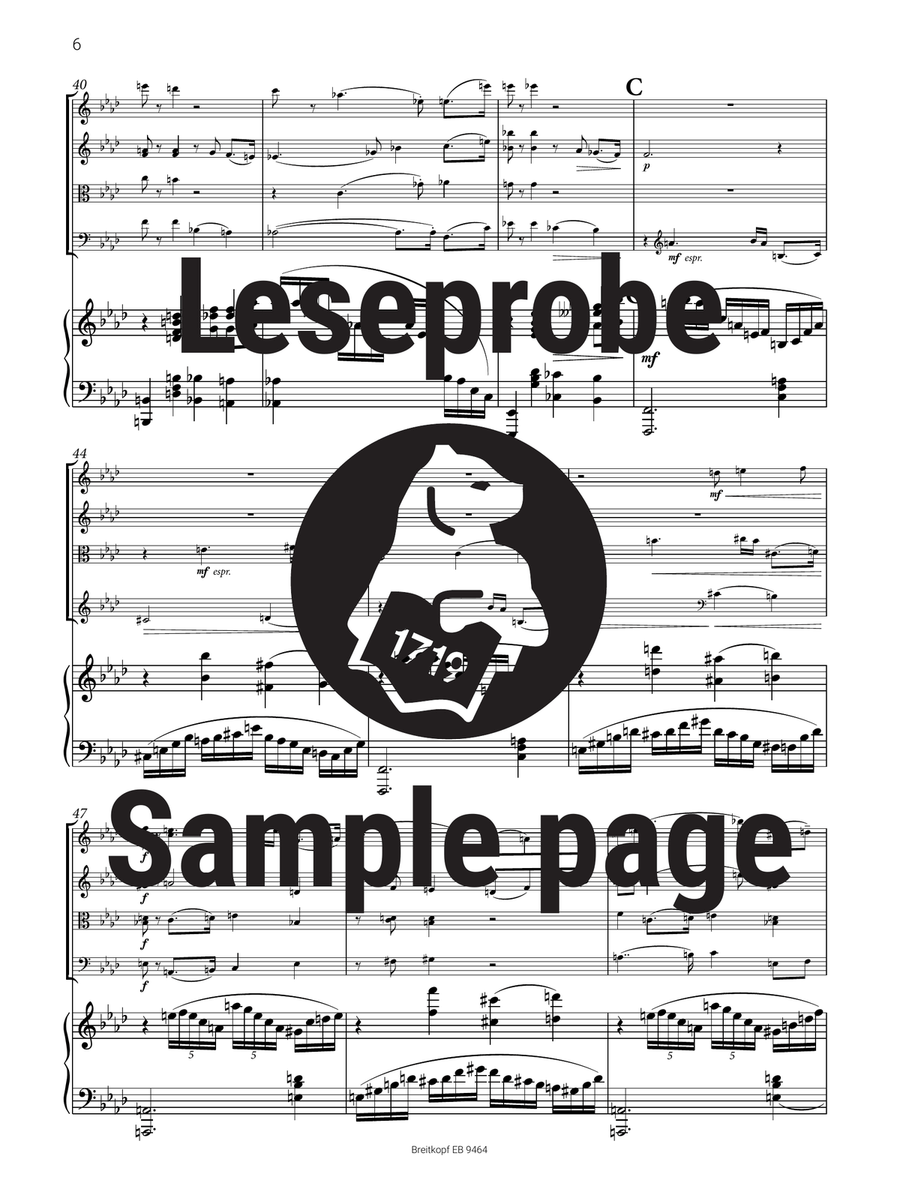
The edition offers excellent legibility with grace notes and good page turns.
Early work with catchy themes. New edition with excellent legibility. Improved page turns and grace notes.
Similar Sheet Music & Digital Downloads
- More by this Composer:
- Miklos Rozsa Miklos Rozsa Piano Miklos Rozsa Piano Solo Miklos Rozsa Violin Solo
- Instrument:
- Piano and Keyboard Piano
- Artists:
- Miklos Rozsa
- Ensemble:
- Piano Quintet
- Publisher:
- Breitkopf and Haertel