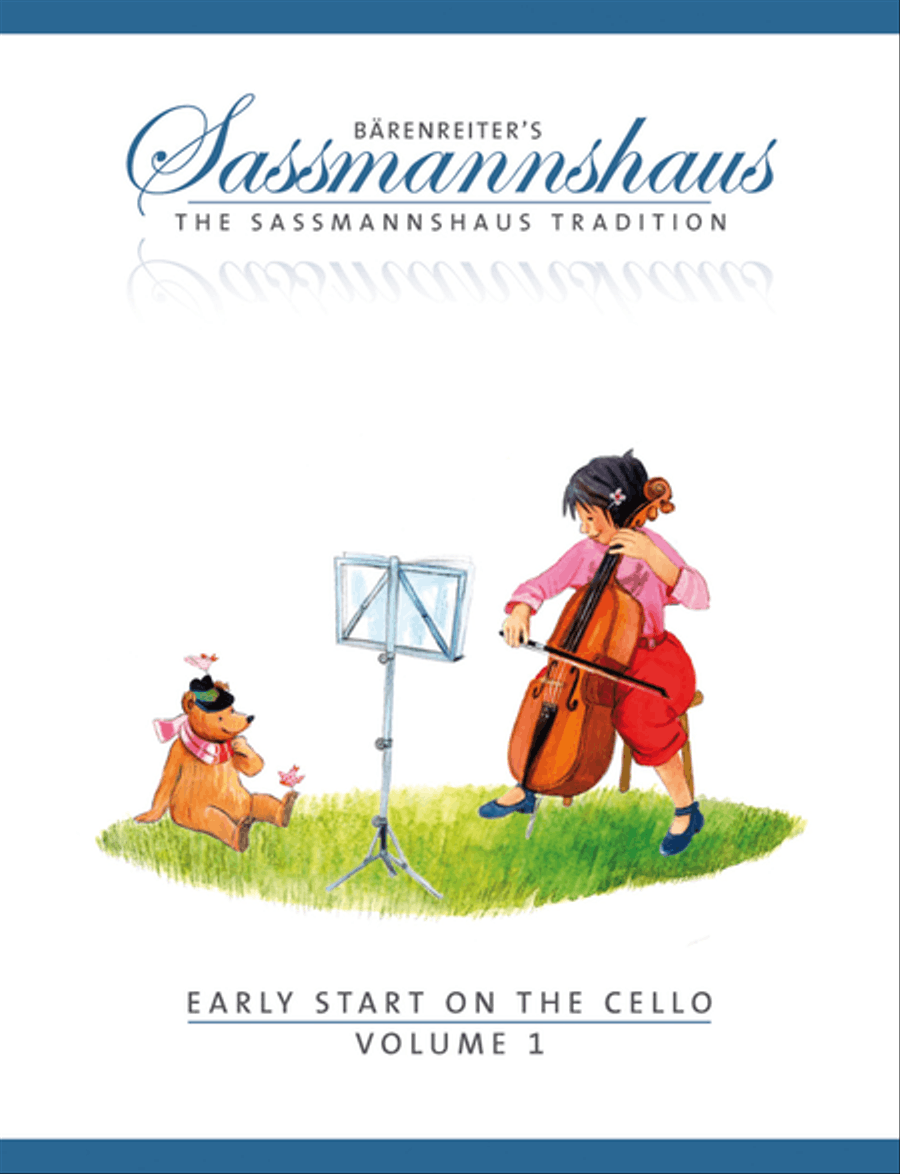
Early Start on the Cello A cello method for children age four and older String Methods - Sheet Music
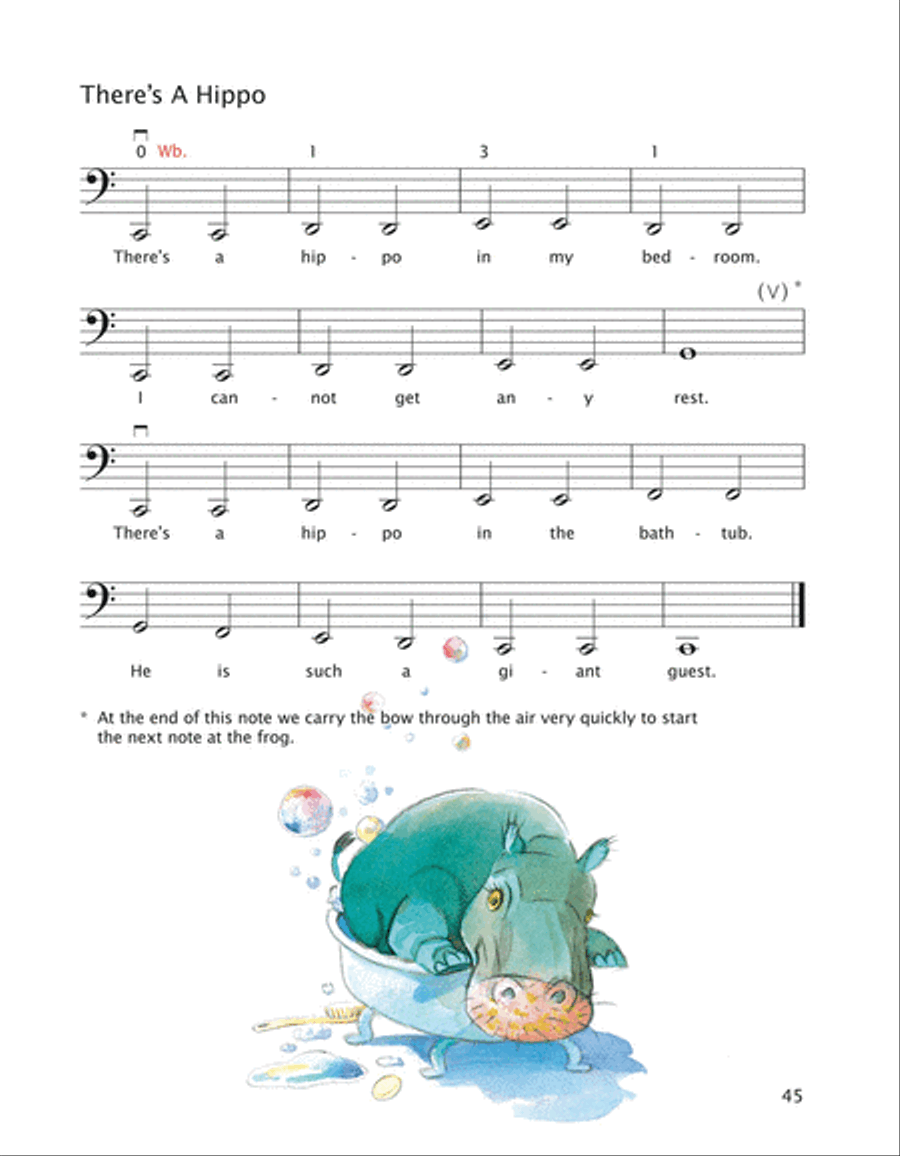
Note reading is introduced from the beginning, and accidentals are explained in the easiest way in the first volume of the Sassmannshaus Cello Method. By the end of the first book, many English children's songs using all fingers have been played and note values from whole to eighth notes have been introduced. Even the easiest exercises are underlaid with text so that melodies can be perceived as a whole.
Details
Summary
- Instrument:
- Cello
- Ensembles:
- String Methods
- Genres:
- Children
- Publishers:
- Baerenreiter Verlag
- Series:
- Baerenreiter's Sassmannshaus
- ISBN:
- 9790006538560
- Format:
- Performance Score
- Item types:
- Physical
- Instructionals:
- Methods and More
- Usages:
- School and Community
- Number of Pages:
- 64
- Size:
- 11.81 x 9.06 inches
- Shipping Weight:
- 0.86 pounds
Detailed Description
SKU: BA.BA08996
Volume 1. A cello method for children age four and older. Composed by Egon Saßmannshaus; Kurt Sassmannshaus. Stapled. Barenreiter's Sassmannshaus. Instructional method. Performance score. 64/2 pages. Baerenreiter Verlag #BA08996. Published by Baerenreiter Verlag (BA.BA08996).ISBN 9790006538560. 11.81 x 9.06 inches. Text Language: English. Preface: Saßmannshaus, Egon / Sassmannshaus, Kurt.
Note reading is introduced from the beginning, and accidentals are explained in the easiest way in the first volume of the Sassmannshaus Cello Method. By the end of the first book, many English children's songs using all fingers have been played and note values from whole to eighth notes have been introduced. Even the easiest exercises are underlaid with text so that melodies can be perceived as a whole.
About Baerenreiter's Sassmannshaus
Children playfully learn reliable technique at the earliest age. For more than three decades the Sassmannshaus Tradition has been the household name for excellence in beginner methods in German-speaking countries. More than half a million students have successfully learned to play using this publication.
This tried and tested German method is now available in English! The best-selling method that gave generations of European musicians their foundation is now available in English, with content and songs newly adapted for today's English speaking children.
What makes this method so special?
- The child-friendly and age-appropriate text underlying the music enables children to perceive melodies as a whole and to understand their singable qualities.
- Songs and scales in different positions are easily explained and mastered within the first year. This is an important advantage over methods that confine children to the first position for many years.
- Note reading is emphasized from the first lesson - children are brought up to become proficient sight-readers and play in chamber music ensembles as early as possible.
- In contrast to other beginner methods, The Sassmannshaus Tradition progresses swiftly by introducing advanced techniques in rudimentary form, such as shifting and varied bow strokes.
- Ensemble playing is encouraged from the very beginning.
- The method is suitable for single instruction as well as for group and class lessons.
- The large print notes and text as well as many colorful illustrations are particularly child-friendly and very attractive to pre-school children and school children alike.
- The substantial volumes contain comprehensive material and carefully calibrated learning curves. They keep children curious and interested for many months and years.
Song List
Preface
Note Values and Symbols
Open Strings
String Crossing
The "Cuckoo's Third" with the Third Finger
The triad
The First Finger
String Crossings and Fingerings On Different Strings
The Fourth Finger
Accidentals
Scales on Two Strings
More Exercises, Songs and Stroke patterns
New Stroke Patterns
Slurred Notes
The Portato Stroke
Similar Sheet Music & Digital Downloads
Ratings + Reviews
5 Rating
1 review
Anonymous
Aug 30, 2010
II am so happy that Barenreiter decided to translate this method in English too. It is a great way to start the cello. The student starts by using the 3rd finger so he has a well balanced and well placed hand. You find different tunes the child can sing. The notes are large and easy to read. It is illustrated with colored drawings the kids love. I highly recommend it.