Order two or more copies of the same title and we'll automatically give you 5% off list price on that title.
To get 2+ Pricing , just add two or more copies of a title to your shopping cart. Your discount will be immediately applied to your order.
Sale titles, hymnals, and ShowKits (MTI's Broadway Junior Collection, Getting to Know... Collection (G2K) and MTI's Kids Collection) do not qualify for 2+ Pricing
If you have any questions or comments regarding 2+ Pricing , please feel free to email us at info@sheetmusicplus.com
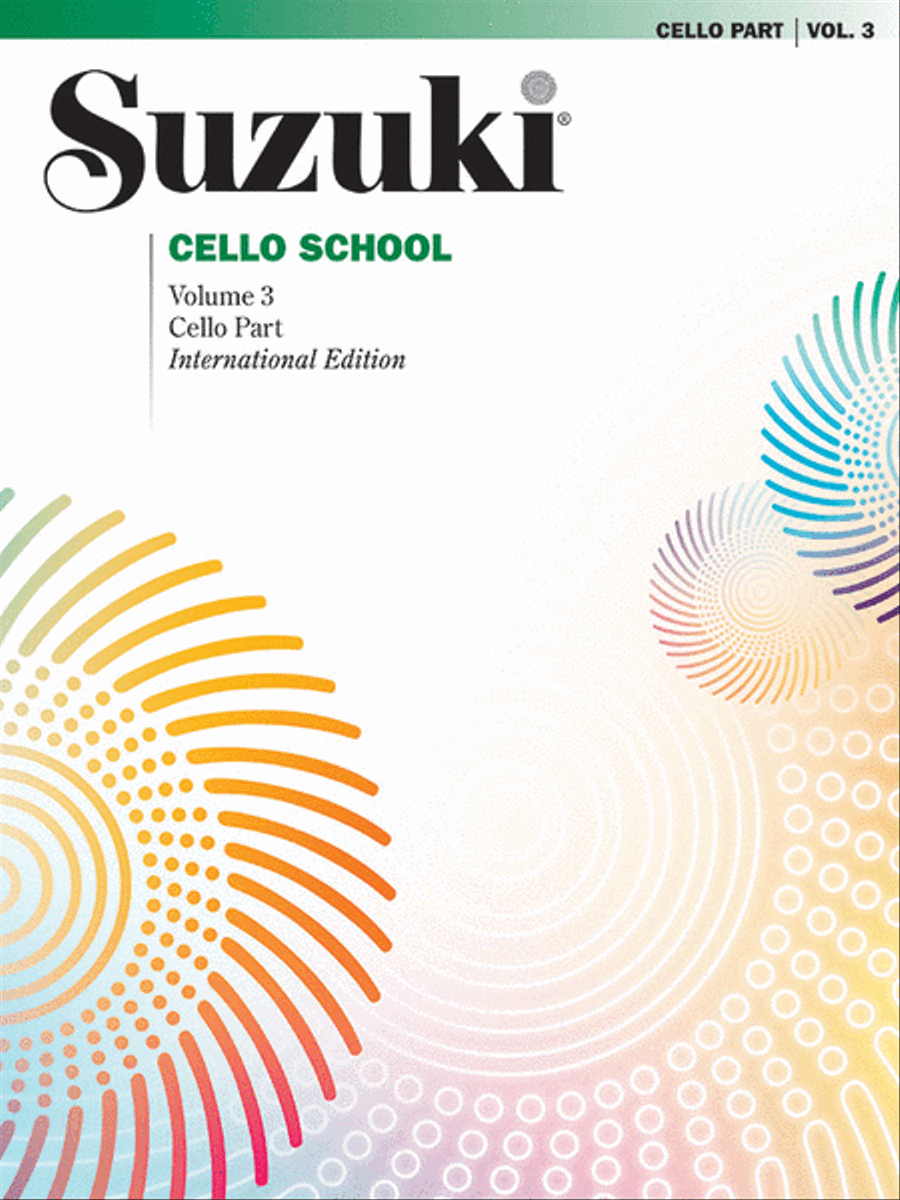
Volume 3. Revised Edition. This edition: International. MakeMusic Cloud; Method/Instruction; String - Cello (Suzuki); Suzuki. Suzuki Cello School. Instructional and Technique. Instructional book. With fingerings, instructional text and introductory text. 28 pages. Alfred Music #00-0483S. Published by Alfred Music (AP.0483S).
ISBN 9780874874839. UPC: 654979003618. 9x12 inches. English.
Additional materials, available separately, for Suzuki Cello School, Volume 3 include: Piano Accompaniments (AP.0484S), Compact Disc (AP.0941), Cassette (AP.0937), Ensemble Parts (WB0299S).
About Suzuki Method
The Suzuki Method is based on the principle that all children possess ability and that this ability can be developed and enhanced through a nurturing environment. All children learn to speak their own language with relative ease and if the same natural learning process is applied in teaching other skills, these can be acquired as successfully. Suzuki referred to the process as the Mother Tongue Method and to the whole system of pedagogy as Talent Education. The important elements of the Suzuki approach to instrumental teaching include the following:an early start (aged 3-4 is normal in most countries); the importance of listening to music; learning to play before learning to read; -the involvement of the parent; a nurturing and positive learning environment; a high standard of teaching by trained teachers; the importance of producing a good sound in a balanced and natural way; core repertoire, used by Suzuki students across the world; social interaction with other children. Suzuki students from all over the world can communicate through the language of music.
Volume 3. Revised Edition. This edition: International. MakeMusic Cloud; Method/Instruction; String - Cello (Suzuki); Suzuki. Suzuki Cello School. Instructional and Technique. Instructional book. With fingerings, instructional text and introductory text. 28 pages. Alfred Music #00-0483S. Published by Alfred Music (AP.0483S).
ISBN 9780874874839. UPC: 654979003618. 9x12 inches. English.
Additional materials, available separately, for Suzuki Cello School, Volume 3 include: Piano Accompaniments (AP.0484S), Compact Disc (AP.0941), Cassette (AP.0937), Ensemble Parts (WB0299S).
About Suzuki Method
The Suzuki Method is based on the principle that all children possess ability and that this ability can be developed and enhanced through a nurturing environment. All children learn to speak their own language with relative ease and if the same natural learning process is applied in teaching other skills, these can be acquired as successfully. Suzuki referred to the process as the Mother Tongue Method and to the whole system of pedagogy as Talent Education. The important elements of the Suzuki approach to instrumental teaching include the following:an early start (aged 3-4 is normal in most countries); the importance of listening to music; learning to play before learning to read; -the involvement of the parent; a nurturing and positive learning environment; a high standard of teaching by trained teachers; the importance of producing a good sound in a balanced and natural way; core repertoire, used by Suzuki students across the world; social interaction with other children. Suzuki students from all over the world can communicate through the language of music.
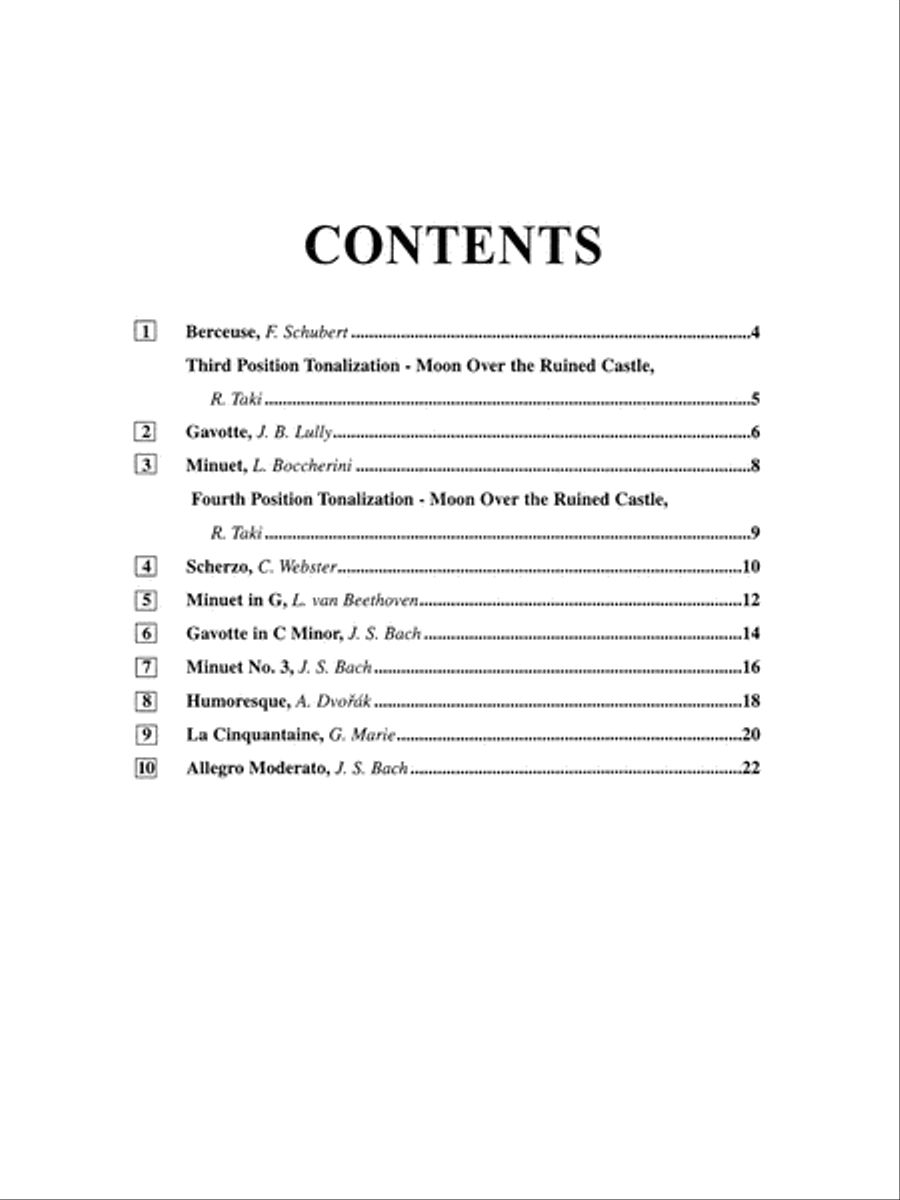
Allegro Moderato
Berceuse
Fourth Position Tonalization - Moon Over The Ruined Castle
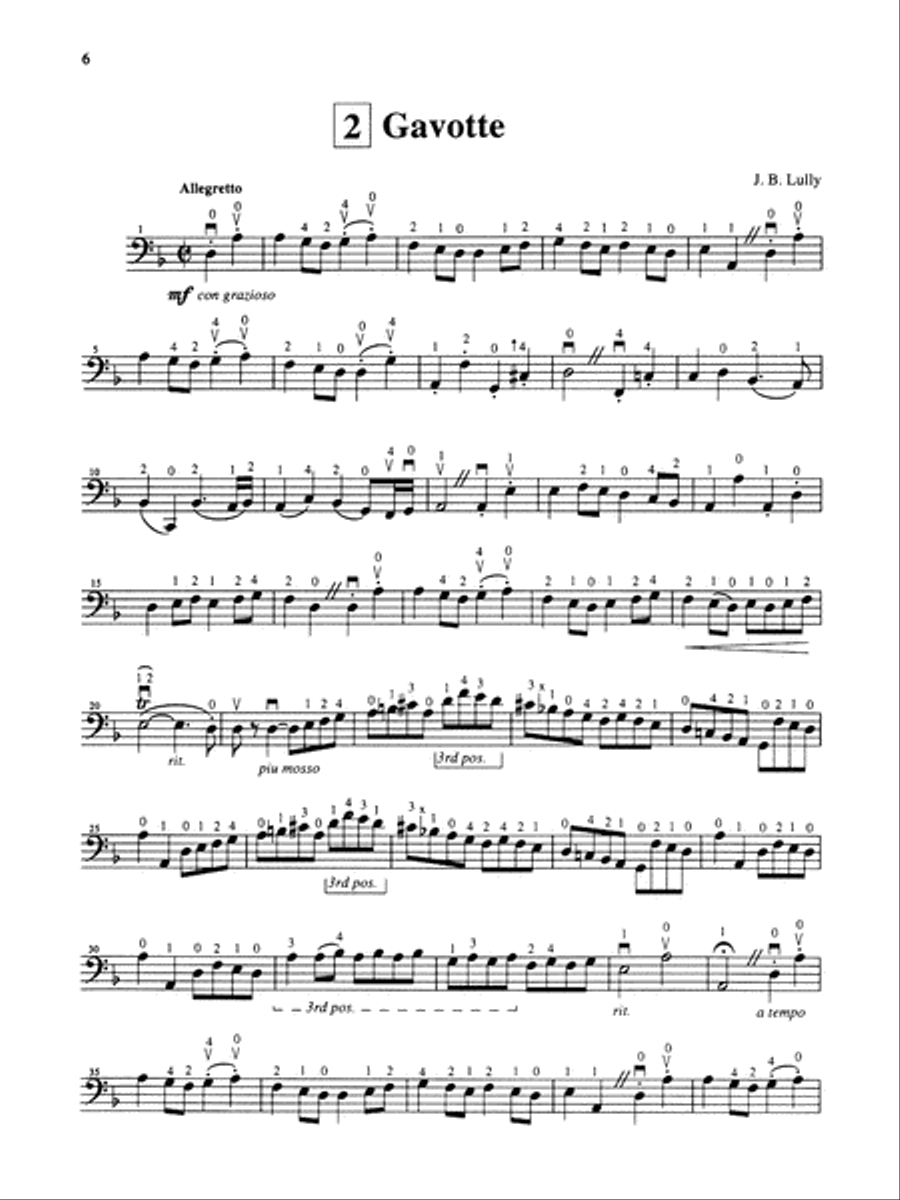
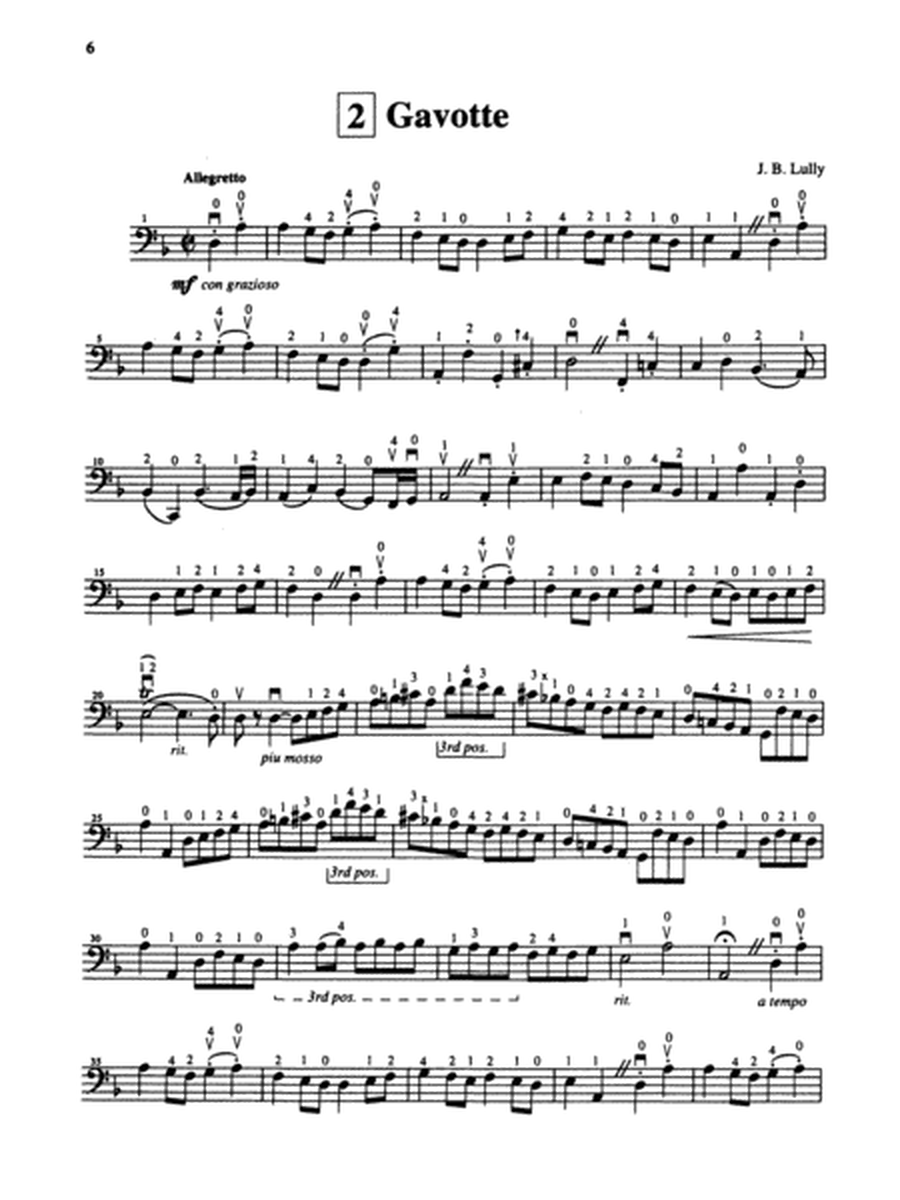
Gavotte
Gavotte In C Minor
Humoresque
La Cinquantaine
Minuet
Minuet In G
Minuet No. 3
Scherzo
Third Position Tonalization - Moon Over The Ruined Castle
Preview: Suzuki Cello School, Volume 3
Ratings + Reviews
Review Guidelines
Explain exactly why you liked or disliked the product. Do you like the artist? Is the transcription accurate? Is it a good teaching tool?
Consider writing about your experience and musical tastes. Are you a beginner who started playing last month? Do you usually like this style of music?
Feel free to recommend similar pieces if you liked this piece, or alternatives if you didn't.
Be respectful of artists, readers, and your fellow reviewers. Please do not use inappropriate language, including profanity, vulgarity, or obscenity.
Avoid disclosing contact information (email addresses, phone numbers, etc.), or including URLs, time-sensitive material or alternative ordering information.
We cannot post your review if it violates these guidelines. If you have any suggestions or comments on the guidelines, please email us.
All submitted reviews become the licensed property of Sheet Music Plus and are subject to all laws pertaining thereto. If you believe that any review contained on our site infringes upon your copyright, please email us.
Tell a friend (or remind yourself) about this product. We'll instantly send an email containing product info and a link to it. You may also enter a personal message.
We do not use or store email addresses from this form for any other purpose than sending your share email.
After purchase, you can download your MP3 from your Sheet Music Plus Digital Library - no software installation is necessary! You can also listen to your MP3 at any time in your Digital Library.
Learn about Smart Music
After purchase, you can download your Smart Music from your Sheet Music Plus Digital Library - no software installation is necessary! You can also download at any time in your Digital Library.
Learn about Digital Video
After purchase you can download your video from your Digital Library. Your video is in XX format and is playable on most pre-installed video players.
This site uses cookies to analyze your use of our products, to assist with promotional and marketing efforts, to analyze our traffic and to provide content from third parties. You consent to our cookies and privacy policy if you continue to use this site. Please see our Privacy Policy for details.