Suzuki Cello School, Volume 2 Revised Edition by Dr. Shinichi Suzuki String Methods - Sheet Music
By Dr. Shinichi SuzukiThe SUZUKI METHOD of Talent Education is based on Dr. Shinichi Suzuki's view that every child is born with ability, and that man is the son of his environment. According to Dr. Suzuki, a world-renowned violinist and teacher, the greatest joy an adult can know comes from developing a child's potential so he/she can express all that is harmonious and best in human beings. Students are taught using the "mother-tongue" approach.
Details
Summary
- Instrument:
- Cello Piano Method Piano Solo
- Ensembles:
- String Methods
- Publishers:
- Alfred Music
- Series:
- Suzuki Method
- UPC:
- 654979009450
- ISBN:
- 9780874874822
- Item types:
- Physical
- Instructionals:
- Technique Books Suzuki Method
- Artist:
- Dr. Shinichi Suzuki
- Usages:
- School and Community
- Size:
- 9x12 inches
- Number of Pages:
- 26
- Shipping Weight:
- 0.25 pounds
Detailed Description
SKU: AP.0482S
Volume 2. Revised Edition. This edition: Accompaniment Book; International. Method/Instruction; String - Cello (Suzuki); Suzuki. Suzuki Cello School. Instructional and Technique. Piano accompaniment part (cello part available separately). 26 pages. Alfred Music #00-0482S. Published by Alfred Music (AP.0482S).ISBN 9780874874822. UPC: 654979009450. 9x12 inches. English.
Additional materials, available separately, for Suzuki Cello School, Volume 2 include: Cello Part (AP.0481S), Compact Disc (AP.0940), Cassette (AP.0936), Ensemble Parts (AP.0298S).
About Suzuki Method
The Suzuki Method is based on the principle that all children possess ability and that this ability can be developed and enhanced through a nurturing environment. All children learn to speak their own language with relative ease and if the same natural learning process is applied in teaching other skills, these can be acquired as successfully. Suzuki referred to the process as the Mother Tongue Method and to the whole system of pedagogy as Talent Education. The important elements of the Suzuki approach to instrumental teaching include the following:an early start (aged 3-4 is normal in most countries); the importance of listening to music; learning to play before learning to read; -the involvement of the parent; a nurturing and positive learning environment; a high standard of teaching by trained teachers; the importance of producing a good sound in a balanced and natural way; core repertoire, used by Suzuki students across the world; social interaction with other children. Suzuki students from all over the world can communicate through the language of music.
Song List
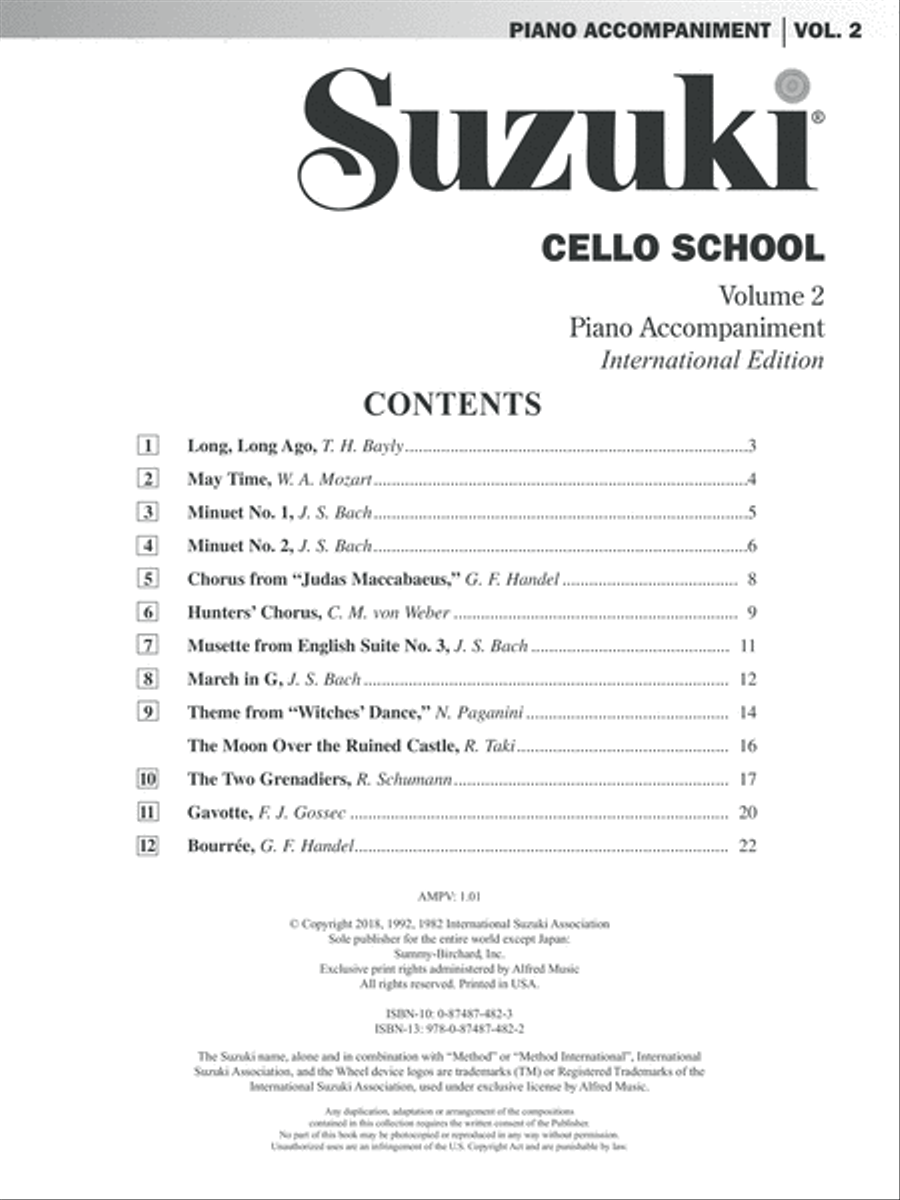
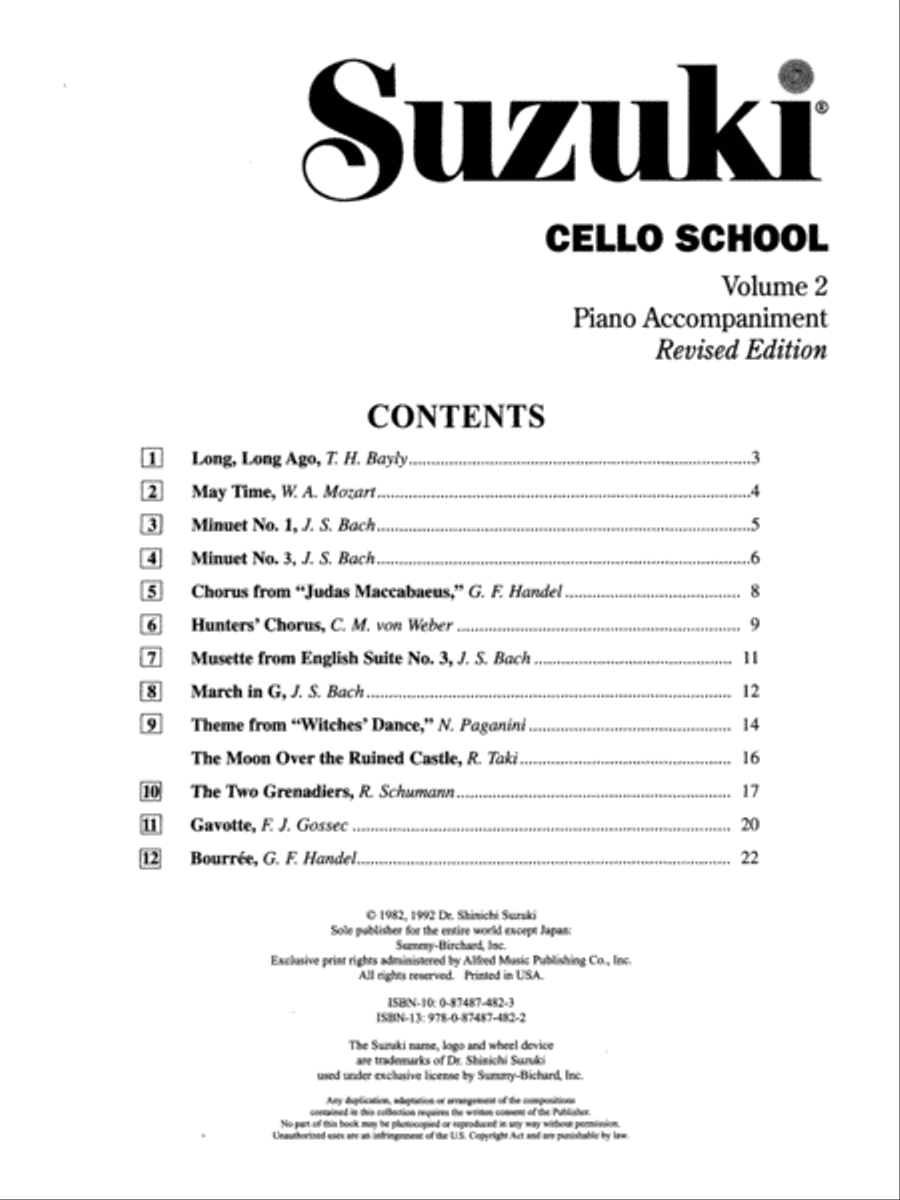
Long, Long Ago
May Time, Komm Lieber Mai (Longing for Spring) from Sehnsucht nach dem Fruhlinge, K. 96
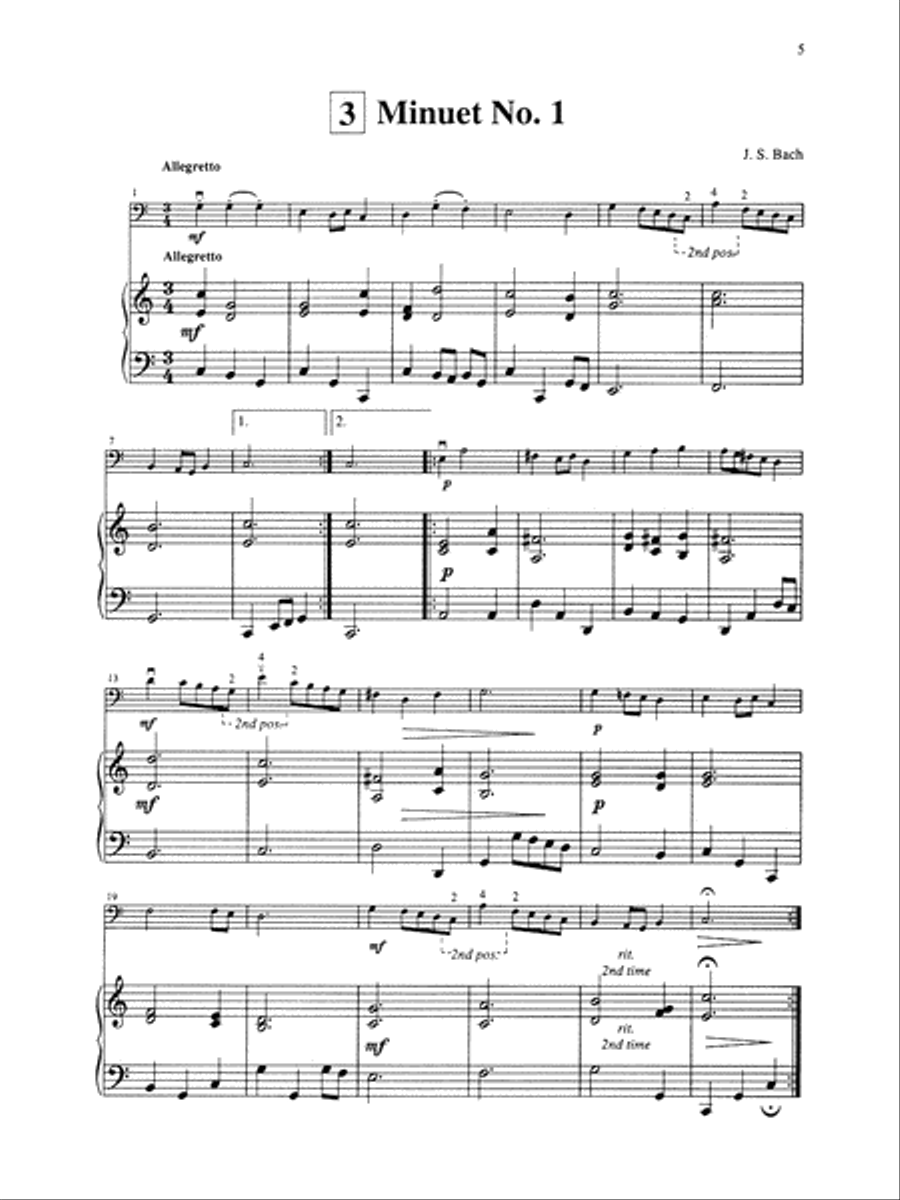
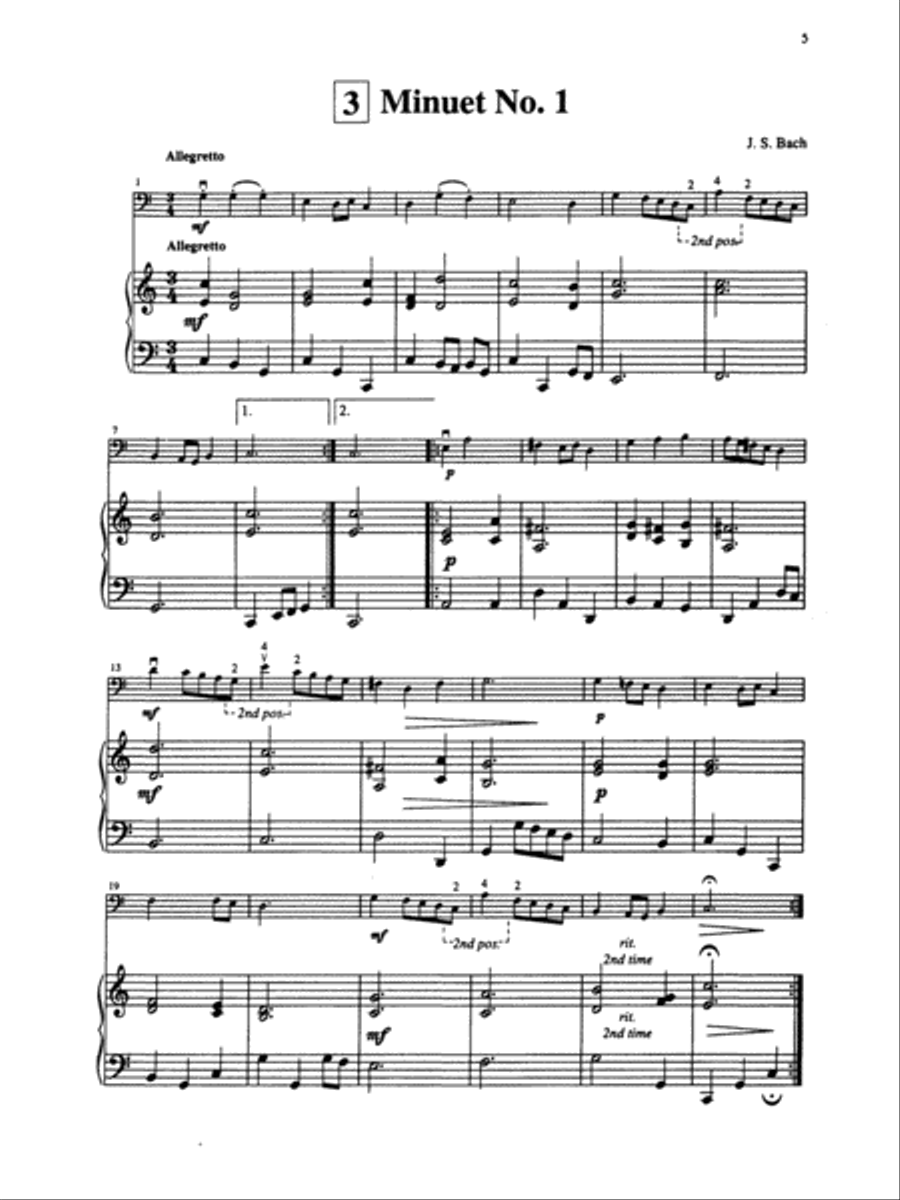
Minuet No. 1, Minuett III from Suite in G Minor for Klavier, BWV 822
Minuet No. 3, Minuet in C, BWV Anh. II
Chorus from Judas Maccabaeus
Hunters' Chorus from 3rd Act of the opera Der Freischutz
Musette in G, Gavotte II or the Musette from English Suite III in G Minor for Klavier, BWV 808
March In G
Theme from Witches' Dance
Tonalization: The Moon over the Ruined Castle
The Two Grenadiers, Die beiden Grenadier, Op. 49, No. 1 for Voice and Piano
Gavotte
Bourree from Sonata in F Major for Oboe and Basso Continuo, HHA IV/18, No. 8-EZ
Similar Sheet Music & Digital Downloads
- More by this Composer:
- Dr. Shinichi Suzuki Dr. Shinichi Suzuki Cello Dr. Shinichi Suzuki Violin Dr. Shinichi Suzuki Piano Solo
- Series:
- Suzuki Method
- Artists:
- Dr. Shinichi Suzuki
- Ensemble:
- String Methods
- Publisher:
- Alfred Music