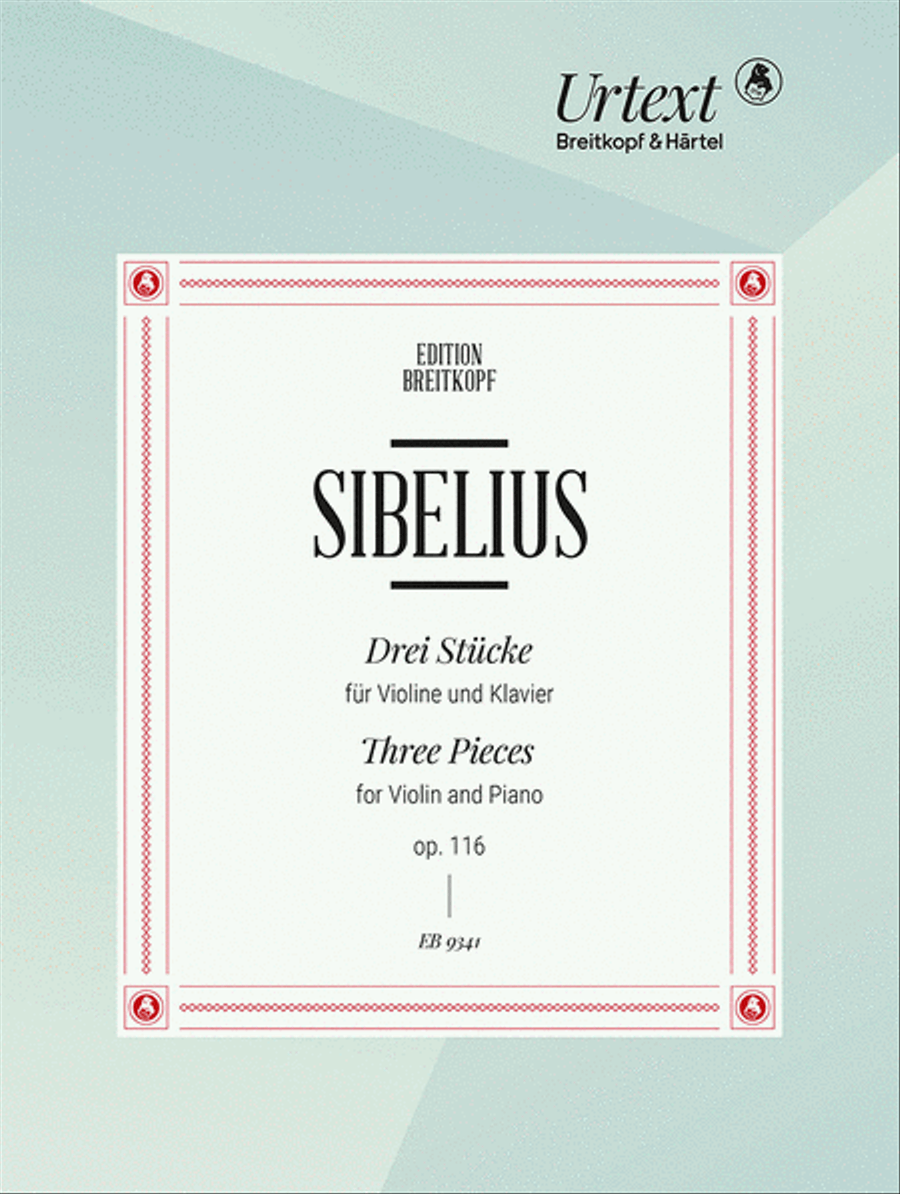
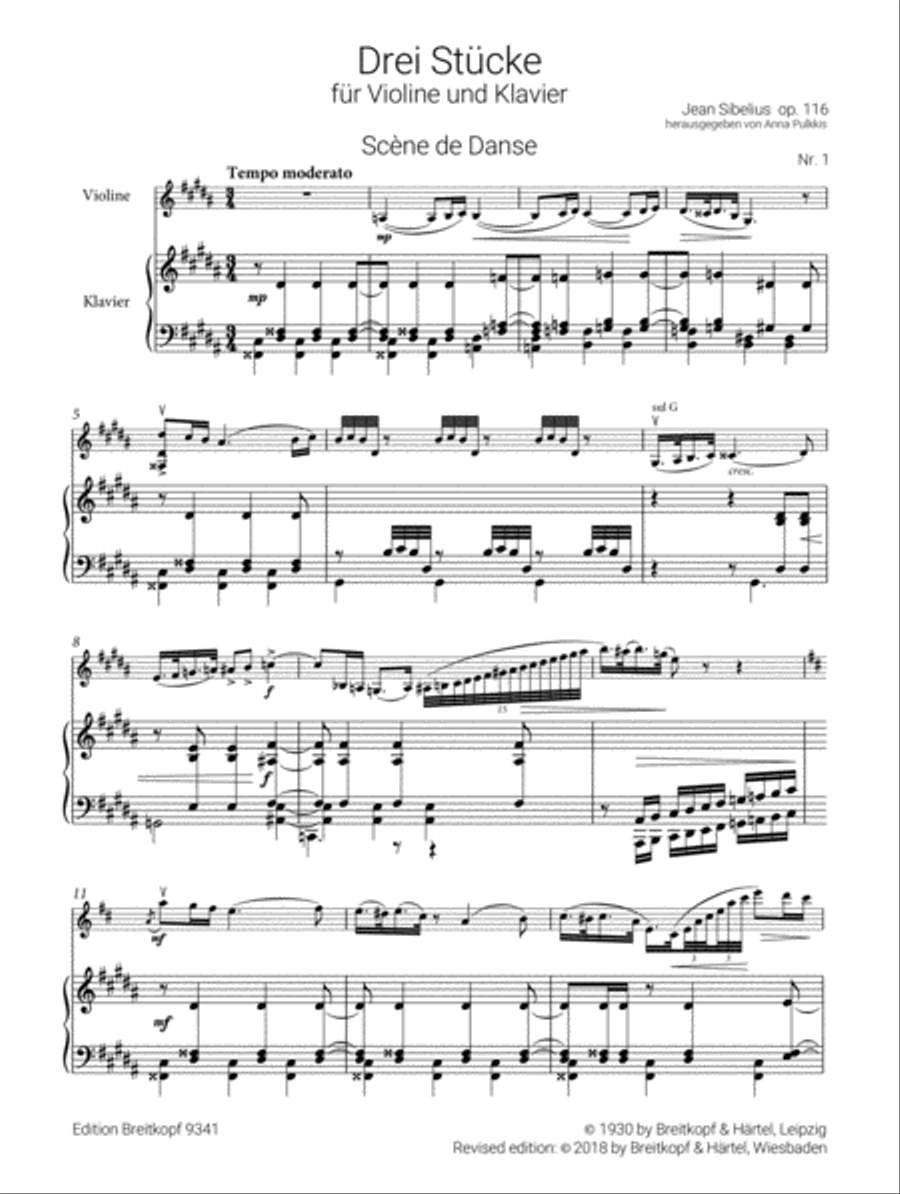
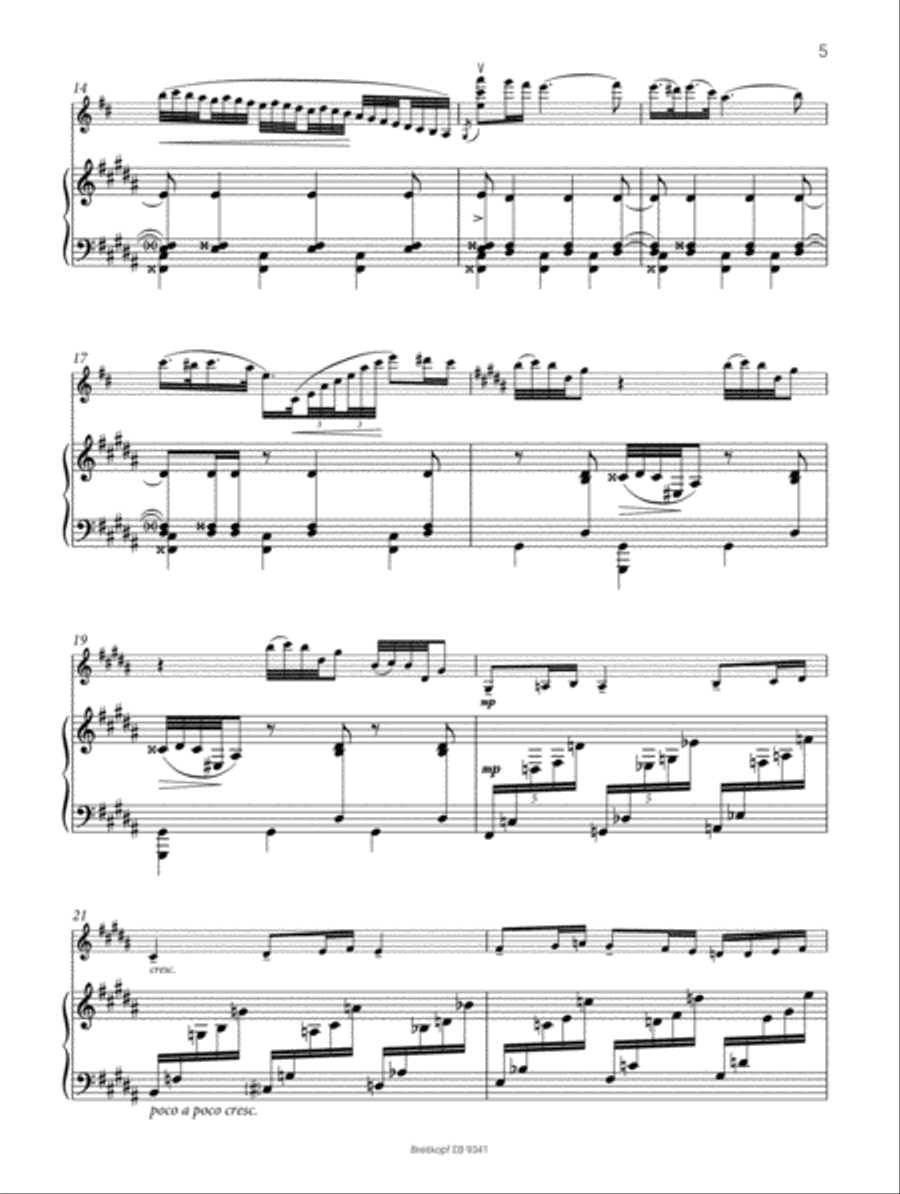
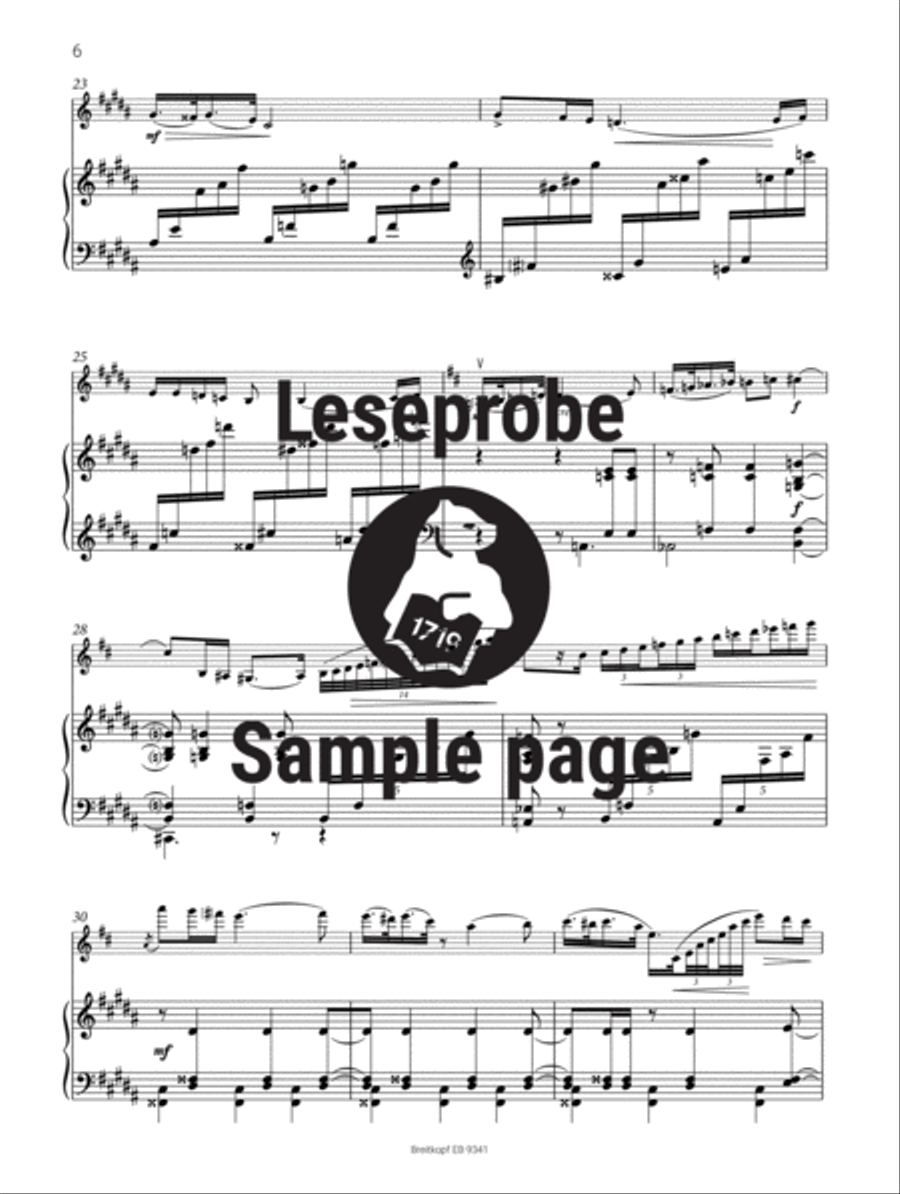
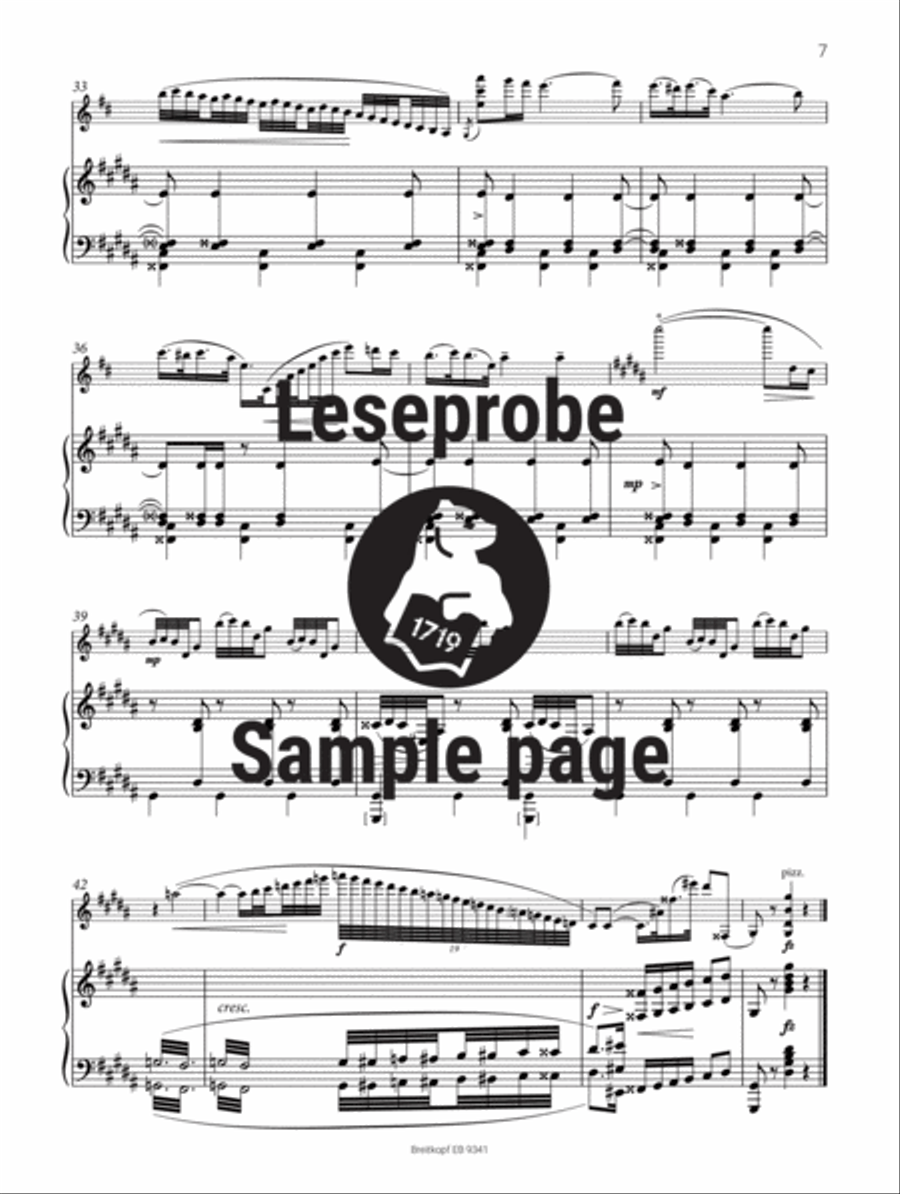
3 Pieces for Violin and Piano Op. 116 Urtext based on the Complete Edition “Jean Sibelius Works” (JSW) by Jean Sibelius Violin Solo - Sheet Music
By Jean SibeliusSibelius completed Three Pieces for Violin and Piano Op. 116 ( Scene de Danse , Danse caracteristique , Rondeau romantique ) in the spring of 1929. The impetus for composing them probably came from the New York publisher Carl Fischer. Fischer rejected the pieces, however, due to "the extremely unfortunate constellation in the music publishing field in the United States." Apparently, he didn't believe in their success, because they were too demanding. Sibelius turned to Breitkopf & Hartel, who gladly accepted Drei Stucke . The musical sources indicate that Sibelius had second thoughts on some details, and he made emendations to the pieces before their publication in December 1930. At the end of the 1920s, Sibelius was working on his Eighth Symphony, which was left unfinished. Thus, Three Pieces remained his last opus-numbered compositions. "Breitkopf has ensured that this is a quality publication, well researched and beautifully laid out." (Susan Pierotti, AUSTA Stringendo)The violin was Sibelius's instrument, and the virtuoso aspect is eminent in Drei Stucke Op. 116 as well as in his entire oeuvre for violin and piano. Apart from that, Op. 116 provides a glimpse into the last active phase of Sibelius's career as a composer.
Details
Summary
- Instrument:
- Piano Accompaniment Violin Solo
- Genres:
- Romantic Period 20th Century Scandinavian
- Composers:
- Jean Sibelius
- Publishers:
- Breitkopf and Haertel
- ISBN:
- 9790004188057
- Format:
- Score
- Item types:
- Physical
- Artist:
- Jean Sibelius
- Usages:
- School and Community
- Size:
- 9 x 12 inches
- Number of Pages:
- 24
- Shipping Weight:
- 0.33 pounds
Detailed Description
SKU: BR.EB-9341
Urtext based on the Complete Edition “Jean Sibelius Works” (JSW). Composed by Jean Sibelius. Edited by Anna Pulkkis. Solo instruments; stapled. Edition Breitkopf.The violin was Sibelius's instrument, and the virtuoso aspect is eminent in Drei Stucke Op. 116 as well as in his entire oeuvre for violin and piano. Apart from that, Op. 116 provides a glimpse into the last active phase of Sibelius's care. Late-romantic; Early modern. Score. 24 pages. Breitkopf and Haertel #EB 9341. Published by Breitkopf and Haertel (BR.EB-9341).
ISBN 9790004188057. 9 x 12 inches.
Sibelius completed Three Pieces for Violin and Piano Op. 116 ( Scene de Danse , Danse caracteristique , Rondeau romantique ) in the spring of 1929. The impetus for composing them probably came from the New York publisher Carl Fischer. Fischer rejected the pieces, however, due to "the extremely unfortunate constellation in the music publishing field in the United States." Apparently, he didn't believe in their success, because they were too demanding. Sibelius turned to Breitkopf & Hartel, who gladly accepted Drei Stucke . The musical sources indicate that Sibelius had second thoughts on some details, and he made emendations to the pieces before their publication in December 1930. At the end of the 1920s, Sibelius was working on his Eighth Symphony, which was left unfinished. Thus, Three Pieces remained his last opus-numbered compositions. "Breitkopf has ensured that this is a quality publication, well researched and beautifully laid out." (Susan Pierotti, AUSTA Stringendo)
The violin was Sibelius's instrument, and the virtuoso aspect is eminent in Drei Stucke Op. 116 as well as in his entire oeuvre for violin and piano. Apart from that, Op. 116 provides a glimpse into the last active phase of Sibelius's career as a composer.
Similar Sheet Music & Digital Downloads
- More by this Composer:
- Jean Sibelius Jean Sibelius Choir Jean Sibelius Piano Accompaniment Jean Sibelius Piano Solo
- Instrument:
- Piano and Keyboard Piano Accompaniment Strings Violin Violin Solo
- Artists:
- Jean Sibelius
- Publisher:
- Breitkopf and Haertel