Three Preludes on Gregorian Sequences Organ - Sheet Music
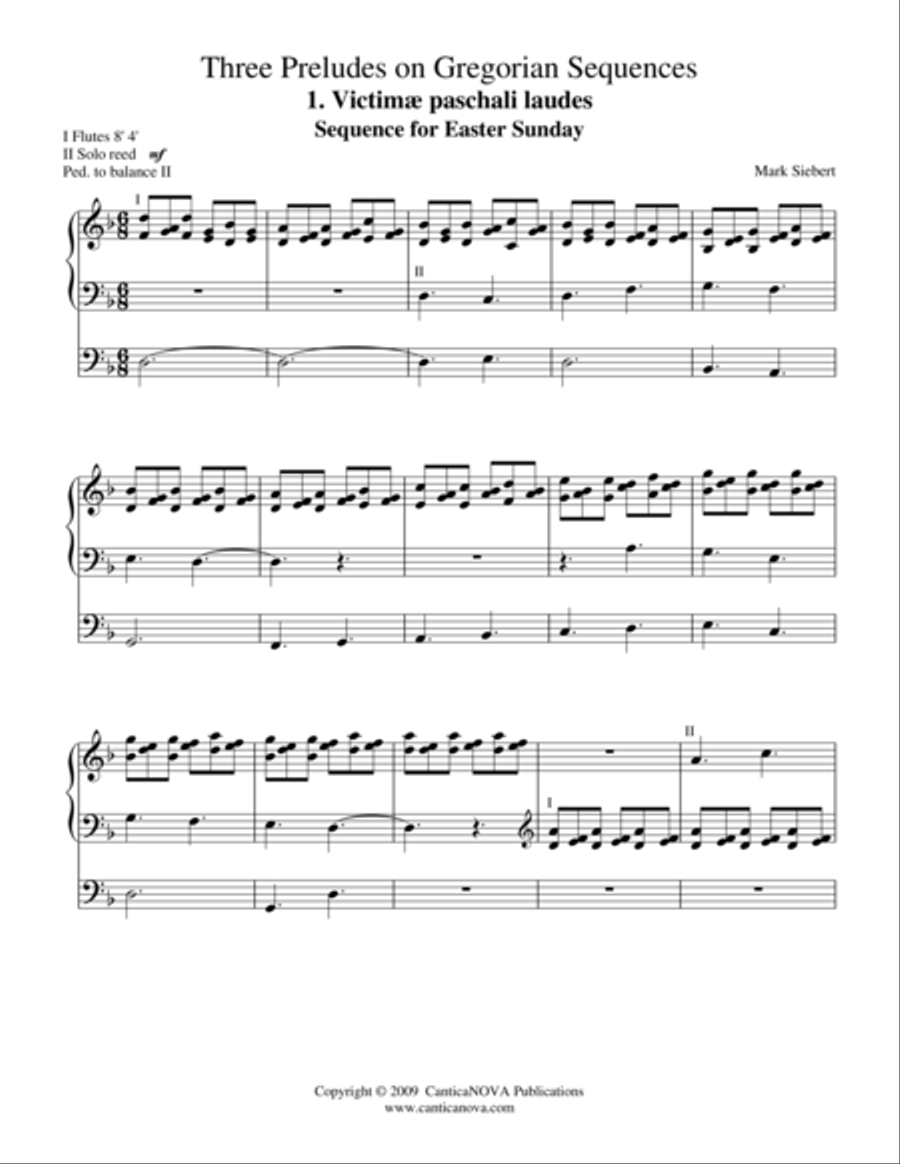
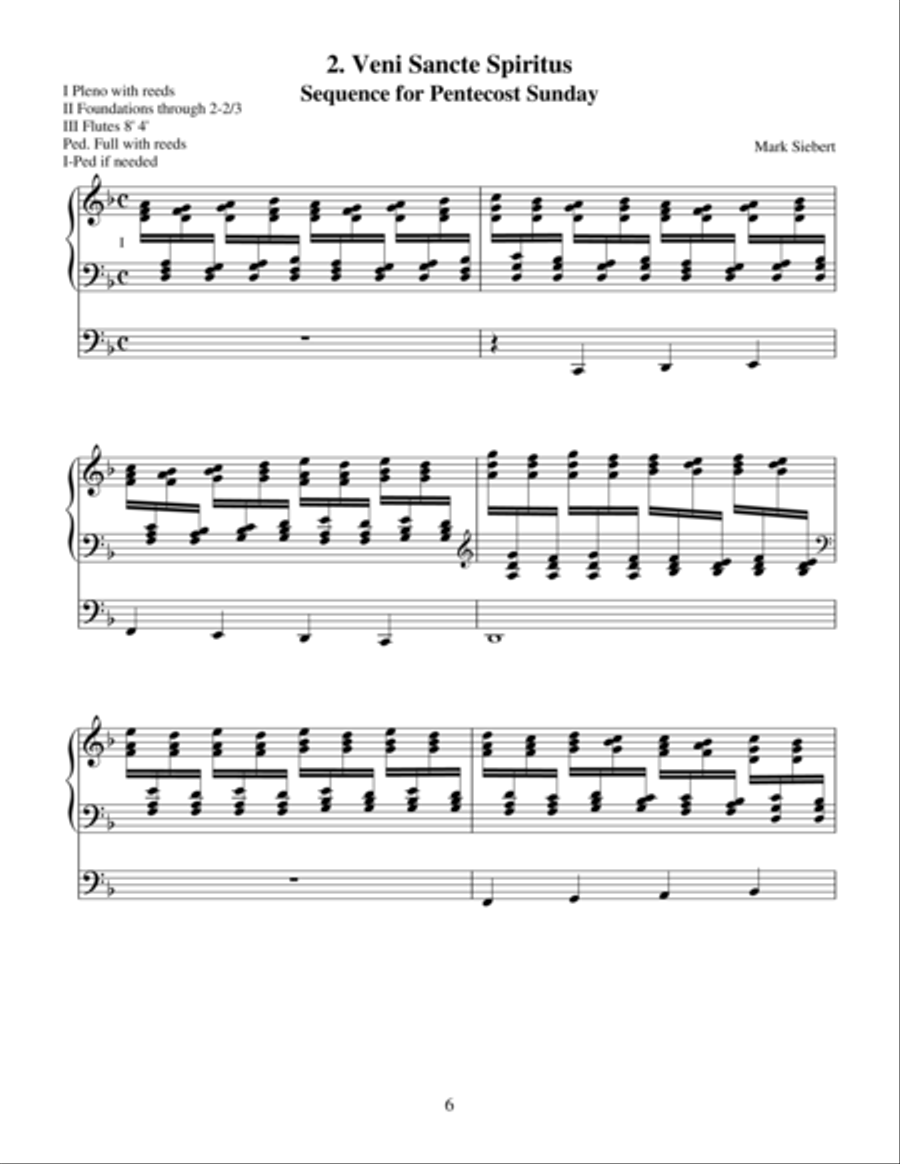
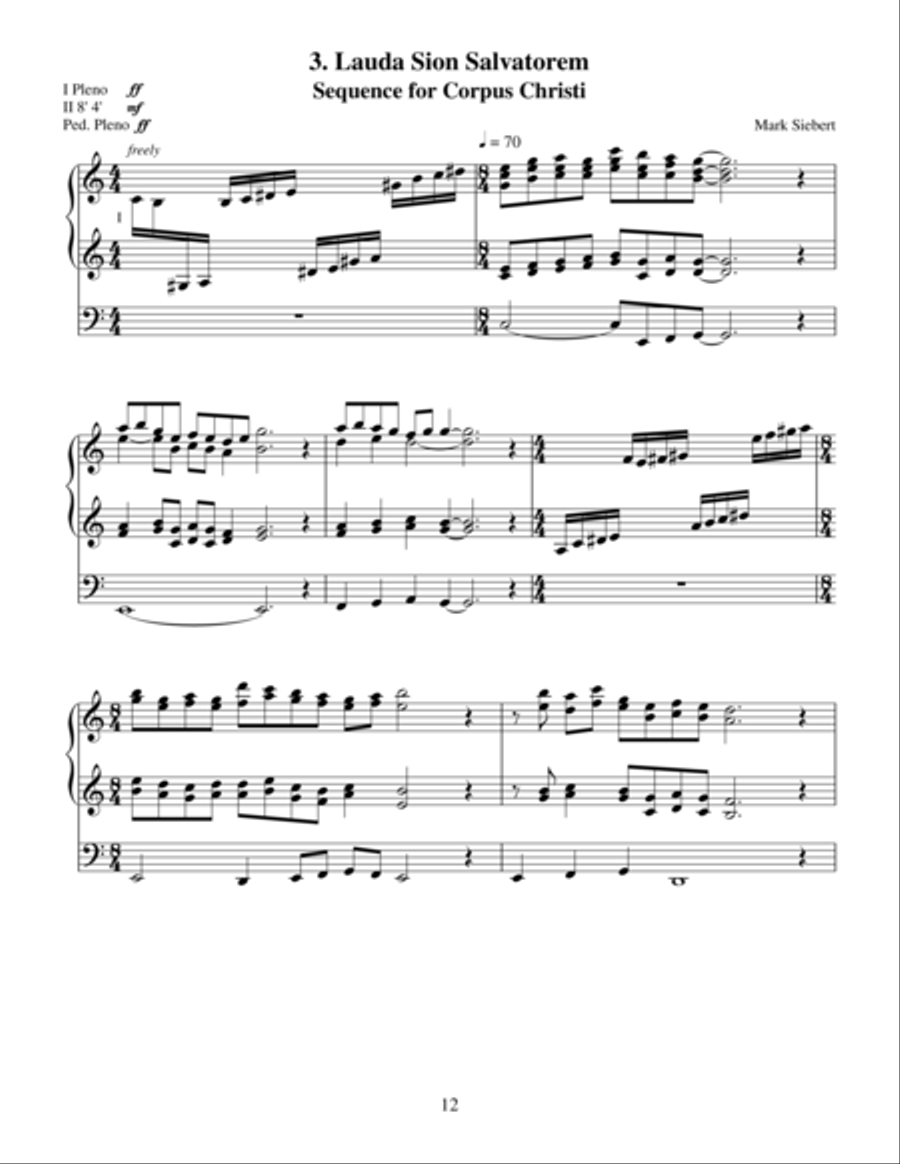
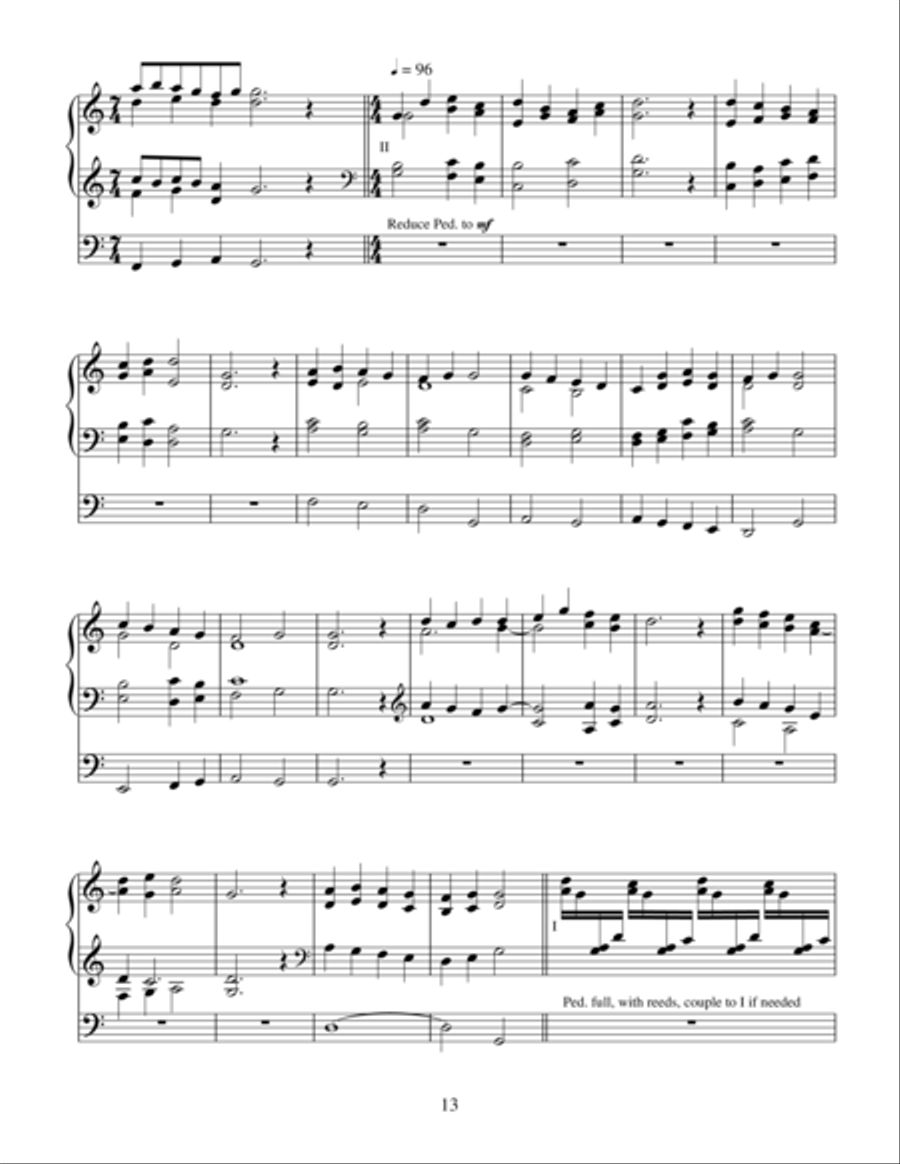
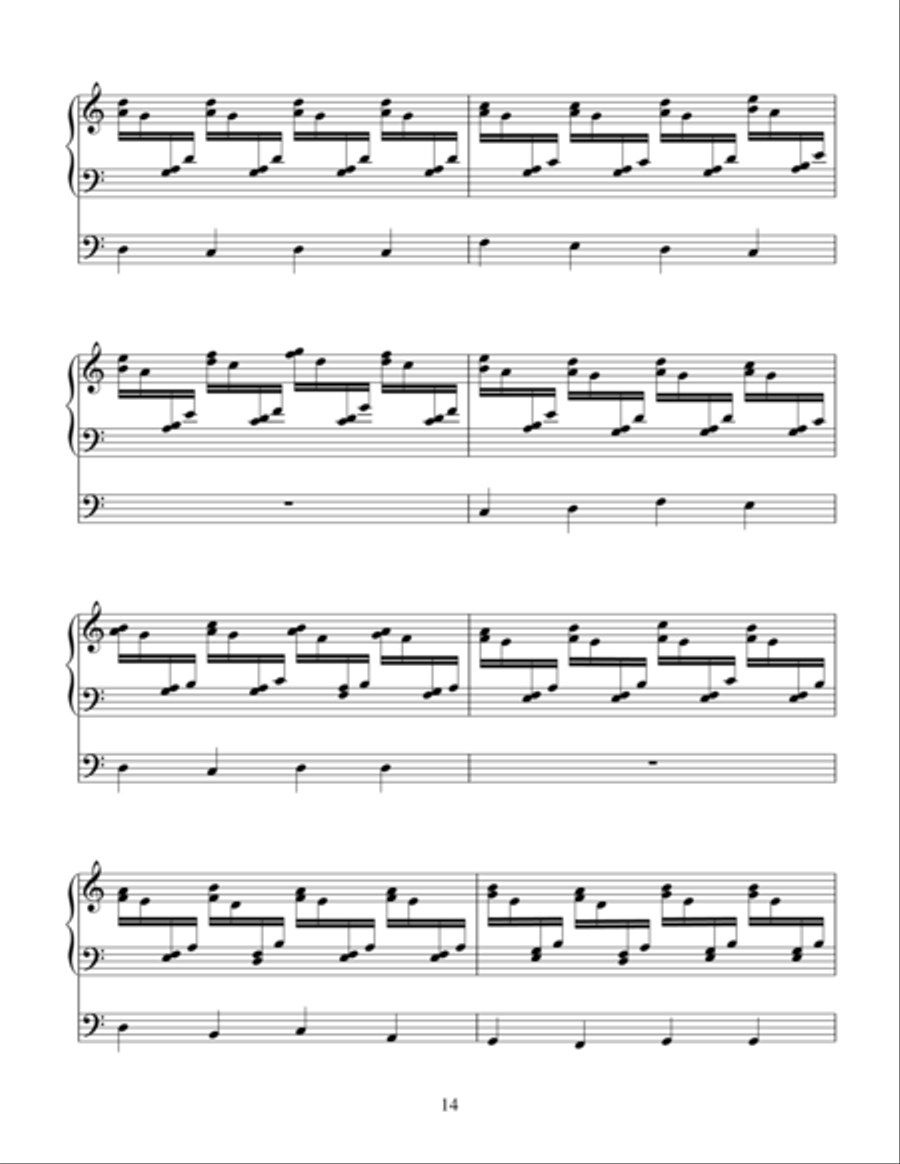
The Gregorian chant melodies for the three primary sequences in the Roman liturgy are presented here in a variety of treatments by organist and composer Mark Siebert. The sequences set include: 1. Easter Sunday - Victimae paschali laudes / 2. Pentecost Sunday - Veni Sancte Spiritus / 3. Corpus Christi - Lauda Sion Salvatorem // The settings are all reminiscent of Mendelssohn's Organ Sonata No.6, based on Vater unser im Himmelreich. "Victimae paschali laudes" begins with the chant melody alternating in either hand, accompanied by undulating eighth notes. The next phrase is assigned to the tenor voice, accompanied by right hand chords and pedal. A 5-part chorale texture places the next phrase in the soprano, while fortissimo half note chords set the "Amen! Alleluia!" All phrases of the sequence appear, however the repeats, inherent in the sequence to accommodate the text, are unnecessary in the organ version and are eliminated. "Veni Sancte Spiritus" is set as a toccata. Passages of flashing sixteenth note manual chords over the melody in the pedal alternate with homophonic phrases on a quieter manual. As in the first sequence, repetitions of the melodic pattern in the chant sequence are not imitated in the toccata. Fantasia-like, and most derivative of the Mendelssohn work mentioned above, "Lauda Sion Salvatorem" incorporates a variety of textures. Eighth note chord progressions alternate with running sixteenth notes; quiet, hymnic passages are interrupted by sixteenth-note broken chords over the chant melody in the pedal. A sonorous reed passage in stately quarter notes ends the work. Of medium difficulty level, these sequence settings can be handled by a well-trained organist.
Details
Detailed Description
SKU: C5.6029
Composed by Mark Siebert. Preludes on the common Sequences. Eastertide, General. Published by CanticaNOVA Publications (C5.6029).The Gregorian chant melodies for the three primary sequences in the Roman liturgy are presented here in a variety of treatments by organist and composer Mark Siebert. The sequences set include: 1. Easter Sunday - Victimae paschali laudes / 2. Pentecost Sunday - Veni Sancte Spiritus / 3. Corpus Christi - Lauda Sion Salvatorem // The settings are all reminiscent of Mendelssohn's Organ Sonata No.6, based on Vater unser im Himmelreich. "Victimae paschali laudes" begins with the chant melody alternating in either hand, accompanied by undulating eighth notes. The next phrase is assigned to the tenor voice, accompanied by right hand chords and pedal. A 5-part chorale texture places the next phrase in the soprano, while fortissimo half note chords set the "Amen! Alleluia!" All phrases of the sequence appear, however the repeats, inherent in the sequence to accommodate the text, are unnecessary in the organ version and are eliminated. "Veni Sancte Spiritus" is set as a toccata. Passages of flashing sixteenth note manual chords over the melody in the pedal alternate with homophonic phrases on a quieter manual. As in the first sequence, repetitions of the melodic pattern in the chant sequence are not imitated in the toccata. Fantasia-like, and most derivative of the Mendelssohn work mentioned above, "Lauda Sion Salvatorem" incorporates a variety of textures. Eighth note chord progressions alternate with running sixteenth notes; quiet, hymnic passages are interrupted by sixteenth-note broken chords over the chant melody in the pedal. A sonorous reed passage in stately quarter notes ends the work. Of medium difficulty level, these sequence settings can be handled by a well-trained organist.
Similar Sheet Music & Digital Downloads
- Instrument:
- Piano and Keyboard Organ
- Publisher:
- CanticaNOVA Publications