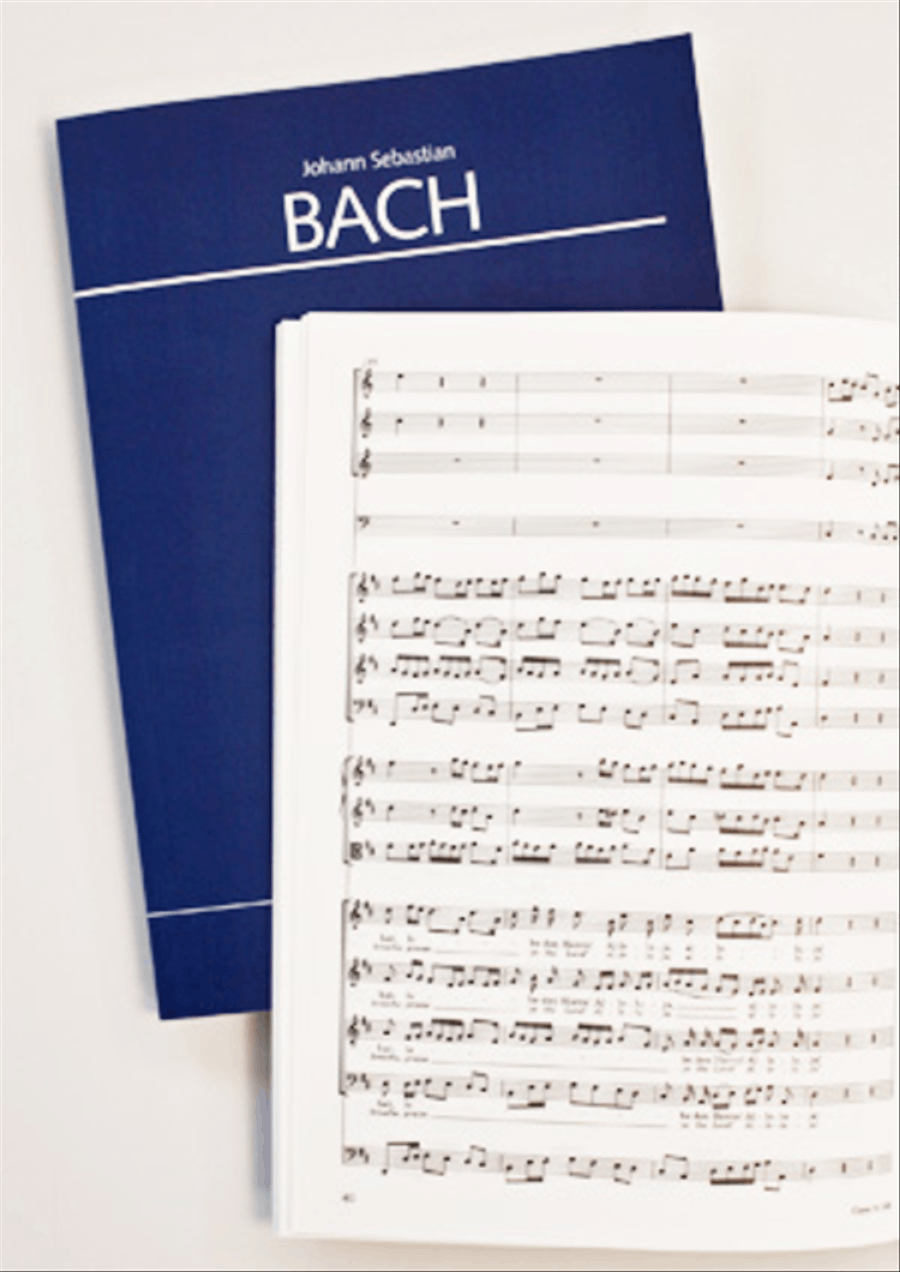
Details
Summary
- Instrument:
- Choir Voice Basso Continuo
- Ensembles:
- 4-Part SATB Orchestra Mixed Choir
- Genres:
- Christian Baroque Period
- Composers:
- Johann Sebastian Bach
- Publishers:
- Carus Verlag
- ISBN:
- 9790007045036
- Format:
- Study Score
- Item types:
- Physical
- Level:
- Grade 3
- Musical forms:
- Cantata
- Artist:
- Johann Sebastian Bach
- Arrangers:
- Paul Horn
- Usages:
- Sacred
- Main Key:
- C major / D minor
- Size:
- DIN A5 inches
- Number of Pages:
- 56
- Shipping Weight:
- 0.25 pounds
Detailed Description
SKU: CA.3107707
Cantata for the 13th Sunday after Trinity. Composed by Johann Sebastian Bach. Edited by Reinhold Kubik. Arranged by Paul Horn. This edition: Paperbound. German title: Du Sollst Gott, Deinen Herren, Lieben. Sacred vocal music, Cantatas, Trinity. Study score. Composed 1723. BWV 77. 56 pages. Duration 17 minutes. Carus Verlag #CV 31.077/07. Published by Carus Verlag (CA.3107707).ISBN 9790007045036. DIN A5 inches. Key: C major / d minor. Language: German/English. Text: Johann Oswald Knauer.
Bach composed the cantata Du sollst Gott, deinen Herrn lieben (The Lord your God you shall now be loving), BWV 77, for the 13th Sunday after Trinity in 1723. Together with BWV 64 and 69.1, it belongs to a small group of cantatas on texts by Johann Oswald Knauer which were written for Gottfried Heinrich Stölzel. The work commences with one of Bach’s most artful cantata movements. The opening chorus with accompanying string ensemble is embedded, as it were, in the instrumental chorale "Dies sind die heiligen zehn Gebot" (These are the Holy Ten Commandments), performed canonically (according to God’s law!) by trumpet (from above) and basso continuo (from below, where it is augmented), with a total of ten entries; thus all the Ten Commandments are contained within the command to love God and one’s neighbor. We can only speculate about the use of the trumpet in the second aria, "Ach, es bleibt in meiner Liebe lauter Unvollkommenheit" (Yes, my love is never perfect), for trumpet, alto and basso continuo. Does the frequent occurrence of the C-sharp, which is difficult to play on the baroque instrument, really indicate the use of slide trumpet? Or may it not instead be intended as a representation of imperfection?
Similar Sheet Music & Digital Downloads
- More by this Composer:
- Johann Sebastian Bach Johann Sebastian Bach Choir Johann Sebastian Bach Piano Johann Sebastian Bach Piano Accompaniment
- Instrument:
- Vocal Choir Vocal Voice Piano and Keyboard Basso Continuo
- Artists:
- Johann Sebastian Bach Paul Horn Reinhold Kubik
- Ensemble:
- 4-Part SATB Orchestra Mixed Choir
- Publisher:
- Carus Verlag