
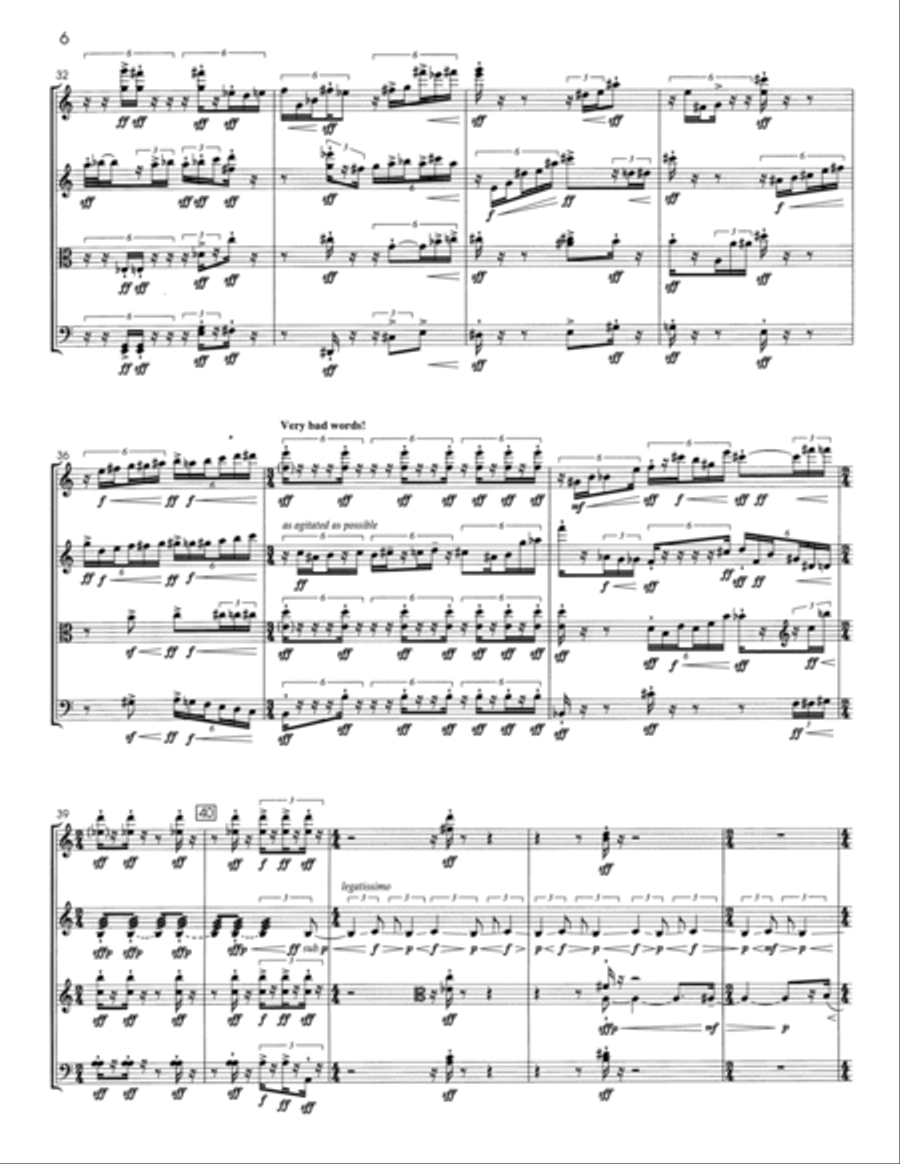
String Quartet No. 3: Among Friends String Quartet - Digital Sheet Music
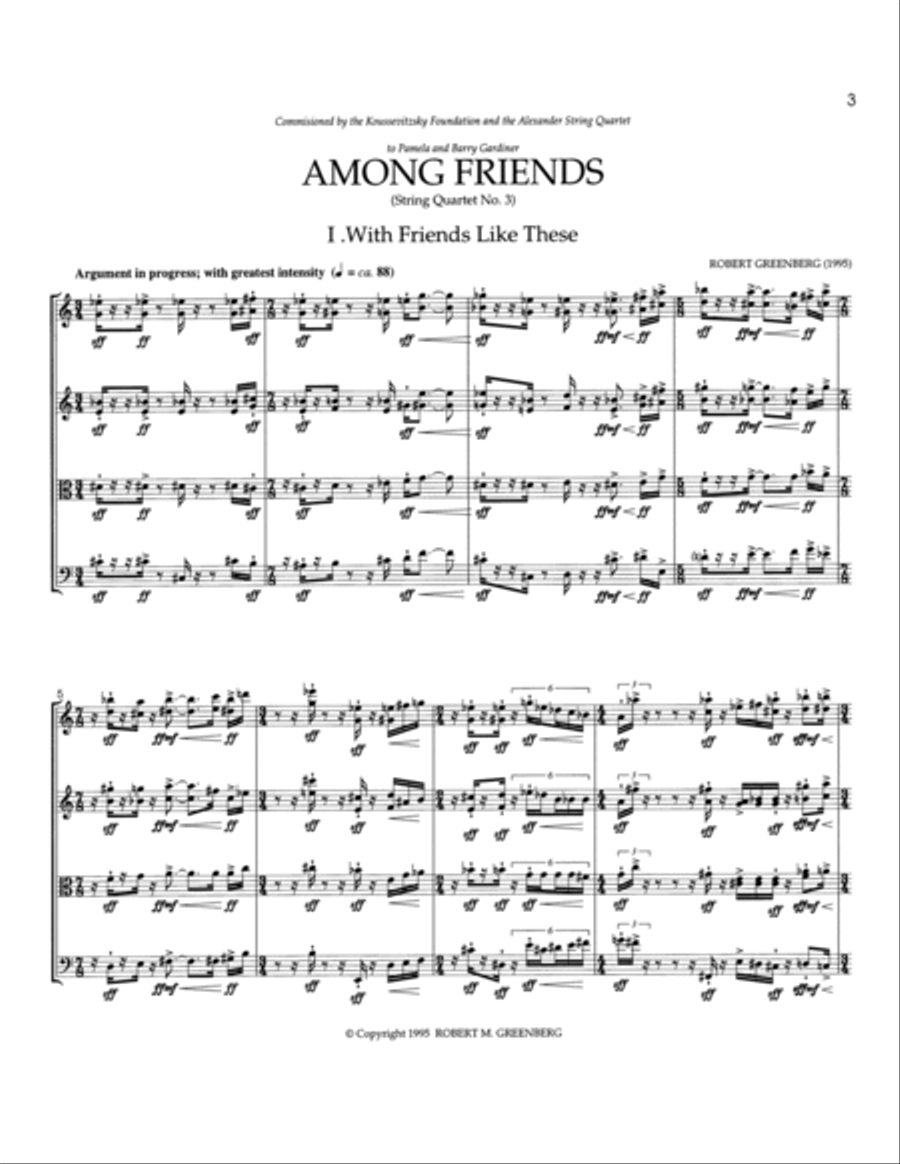
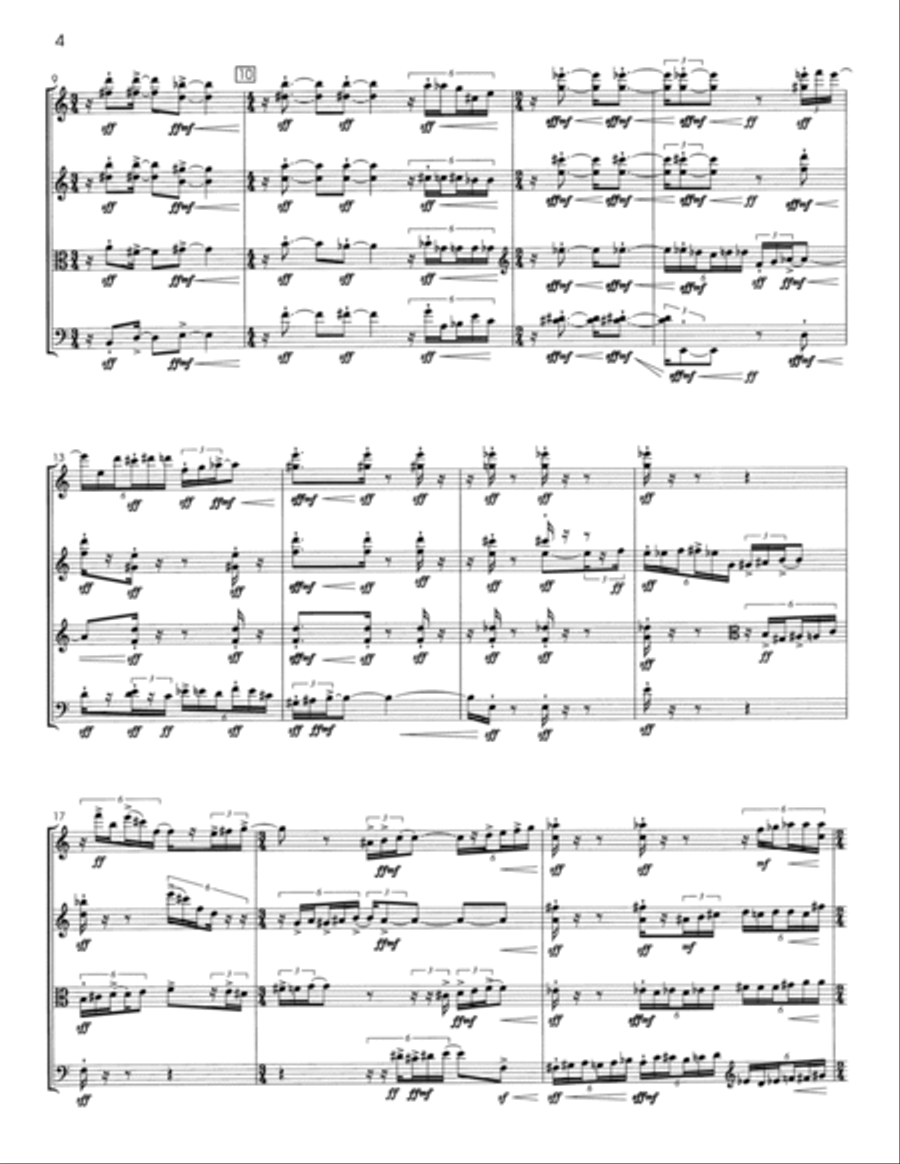
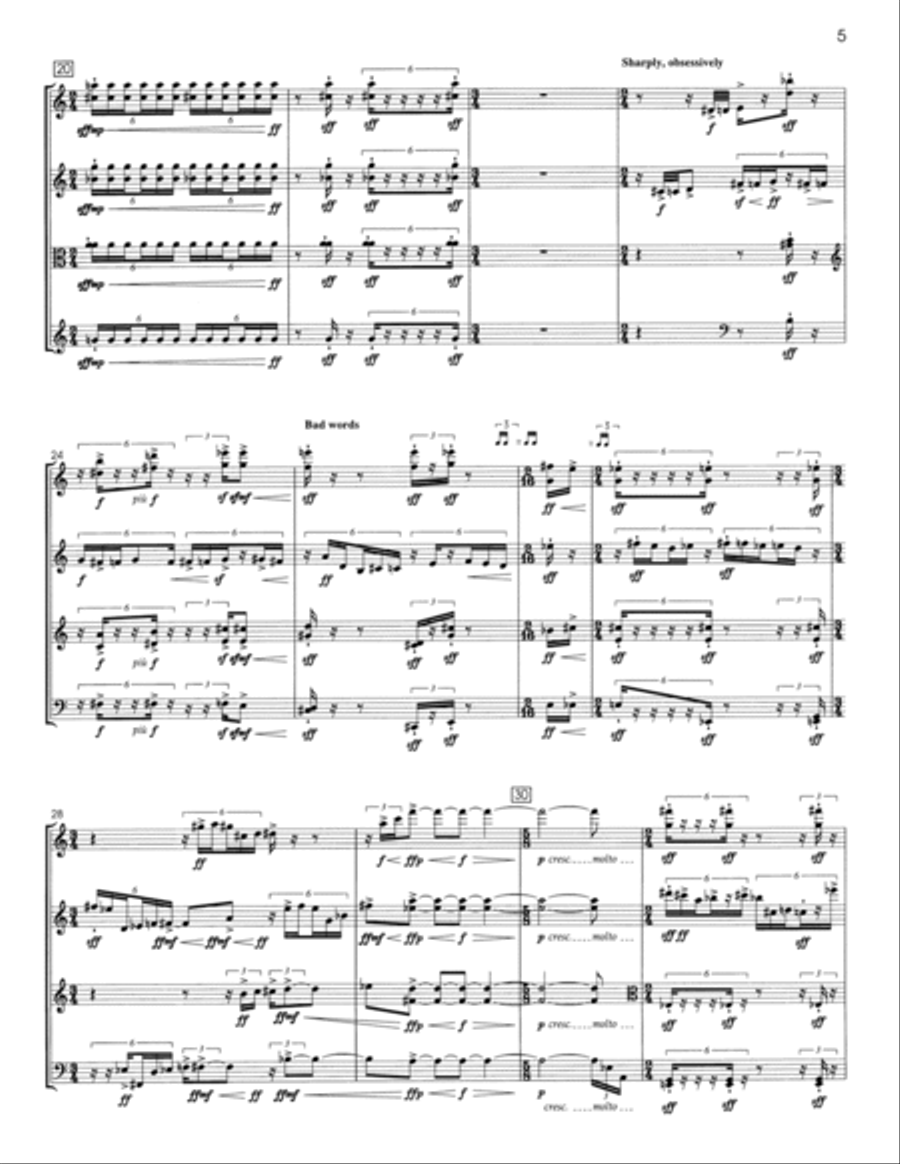
Preferred Contact Information: RMonteverdi@comcast.net Performing Rights Organization: BMI Website: robertgreenbergmusic.com Facebook Band Page: facebook.com/RobertGreenbergMusic Duration: ca. 33 minutes Year of composition: 1995 Program Note: I. With Friends Like These II. Inner Voices III. Little Hands and Little Feet IV. Freund Barry V. Friendly Persuasion VI. All For One and One For All I've known the Alexander String Quartet since 1987. More than just colleagues, they have become my friends: I've traveled with them, performed with them, watched them rehearse, dined with them in their homes and they in mine; I know their children and they know my children. Throughout the time I've known the members of the quartet I have observed the relationship between them, that special bond shared by the members of any touring band, described by one pundit as being "like a bad marriage with no sex." Such issues notwithstanding, this particular marriage works. A string quartet represents, perhaps, the ultimate musical compromise between individual incentive and the common good. In a string quartet, by definition, four distinct instrumental voices and four different instrumental roles unite to create a whole greater than its parts. And, lest we forget, behind each instrument is a person, with his own particular attitudes, feelings, needs, and, yes, issues, all of which must be tempered and blended for the common good of a good performance. "Among Friends" is, its liberties aside, about the four people behind the instruments of the Alexander String Quartet and their relationships with one another; the way they play, rehearse, get along and, on occasion, not get along. The first movement, "With Friends Like These" is gritty and contentious in tone. The players argue, debate, annoy, tease, irk, cajole, abuse, harass, form brief alliances, heap merde upon, gang up on, and otherwise find endless ways to irritate each other. It is in this movement that the individual characters of the four instrumental parts stand in highest relief: the first violin as coloratura "prima donna," forever attempting to soar above it all; the second violin as "the voice in the wilderness," the viola as "the voice of reason" and the 'cello as "mover and shaker." The opening of the movement is marked "argument in progress; with greatest intensity." The second, third and fourth movements are a series of portraits, played without a break. In movement two, "Inner Voices," the second violin and viola are featured in a collegial and decidedly non-contentious dialogue. Movement three, "Little Hands and Little Feet," is the quiet center of the quartet. It is here that the first violin finally attains the lyric heights vainly sought in the first movement. The fourth movement is a vigorous dance entitled "Freund Barry." This movement honors three great friends: Dr. Barry Gardiner, whose friendship and support made the writing of this quartet possible; Gustav Mahler, whose Symphony No. 4, second movement ("Freund Heine") inspired this one; and Sandy Wilson, who first encouraged me to compose my second string quartet ("Child's Play") for the Alexander in 1987 and whose boisterous 'cello is "Freund Barry's" alter-ego. The fifth movement is entitled "Friendly Persuasion." Rapid fire repeated notes, accompanimental figures and melodic lines are shuttled about from voice to voice, each time elaborated or altered in some way. In this way the music slowly metamorphoses, ultimately arriving at a version of the argumentative music that concluded the first movement. Movement six, "All For One and One For All" is a fast, brief coda/finale, during which the quartet plays primarily in unison, the musical antithesis of the contentious argument that began the quartet. "Among Friends" was commissioned by the Koussevitzky Foundation in the Library of Congress and the Alexander String Quartet. "Among Friends" i
Details
Summary
- Format:
- Set of Parts Score and Parts
- Item types:
- Digital
- Level:
- Advanced
- Usages:
- School and Community
- Number of Pages:
- 178
Detailed Description
SKU: A0.987847
Composed by Robert M. Greenberg. 20th Century. Score and parts. 178 pages. Robert M. Greenberg #90283. Published by Robert M. Greenberg (A0.987847).Preferred Contact Information: RMonteverdi@comcast.net Performing Rights Organization: BMI Website: robertgreenbergmusic.com Facebook Band Page: facebook.com/RobertGreenbergMusic Duration: ca. 33 minutes Year of composition: 1995 Program Note: I. With Friends Like These II. Inner Voices III. Little Hands and Little Feet IV. Freund Barry V. Friendly Persuasion VI. All For One and One For All I've known the Alexander String Quartet since 1987. More than just colleagues, they have become my friends: I've traveled with them, performed with them, watched them rehearse, dined with them in their homes and they in mine; I know their children and they know my children. Throughout the time I've known the members of the quartet I have observed the relationship between them, that special bond shared by the members of any touring band, described by one pundit as being "like a bad marriage with no sex." Such issues notwithstanding, this particular marriage works. A string quartet represents, perhaps, the ultimate musical compromise between individual incentive and the common good. In a string quartet, by definition, four distinct instrumental voices and four different instrumental roles unite to create a whole greater than its parts. And, lest we forget, behind each instrument is a person, with his own particular attitudes, feelings, needs, and, yes, issues, all of which must be tempered and blended for the common good of a good performance. "Among Friends" is, its liberties aside, about the four people behind the instruments of the Alexander String Quartet and their relationships with one another; the way they play, rehearse, get along and, on occasion, not get along. The first movement, "With Friends Like These" is gritty and contentious in tone. The players argue, debate, annoy, tease, irk, cajole, abuse, harass, form brief alliances, heap merde upon, gang up on, and otherwise find endless ways to irritate each other. It is in this movement that the individual characters of the four instrumental parts stand in highest relief: the first violin as coloratura "prima donna," forever attempting to soar above it all; the second violin as "the voice in the wilderness," the viola as "the voice of reason" and the 'cello as "mover and shaker." The opening of the movement is marked "argument in progress; with greatest intensity." The second, third and fourth movements are a series of portraits, played without a break. In movement two, "Inner Voices," the second violin and viola are featured in a collegial and decidedly non-contentious dialogue. Movement three, "Little Hands and Little Feet," is the quiet center of the quartet. It is here that the first violin finally attains the lyric heights vainly sought in the first movement. The fourth movement is a vigorous dance entitled "Freund Barry." This movement honors three great friends: Dr. Barry Gardiner, whose friendship and support made the writing of this quartet possible; Gustav Mahler, whose Symphony No. 4, second movement ("Freund Heine") inspired this one; and Sandy Wilson, who first encouraged me to compose my second string quartet ("Child's Play") for the Alexander in 1987 and whose boisterous 'cello is "Freund Barry's" alter-ego. The fifth movement is entitled "Friendly Persuasion." Rapid fire repeated notes, accompanimental figures and melodic lines are shuttled about from voice to voice, each time elaborated or altered in some way. In this way the music slowly metamorphoses, ultimately arriving at a version of the argumentative music that concluded the first movement. Movement six, "All For One and One For All" is a fast, brief coda/finale, during which the quartet plays primarily in unison, the musical antithesis of the contentious argument that began the quartet. "Among Friends" was commissioned by the Koussevitzky Foundation in the Library of Congress and the Alexander String Quartet. "Among Friends" i.
About ArrangeMe
This product was created by a member of ArrangeMe, Hal Leonard's self-publishing community for independent composers, arrangers, and songwriters. Discover unique arrangements of popular titles and original compositions from diverse creators. The length, difficulty, and pricing are determined by the arranger or composer.
About Digital Downloads
Digital Downloads let you instantly access sheet music on your computer, tablet, or mobile device. Print your sheet music anywhere, anytime, or play it straight from your device—no internet connection is required after download.
Each Digital Download includes a watermark with your name, purchase date, and the number of copies purchased. You may only print or use the number of copies purchased. Redistribution or unauthorized printing is prohibited.
Similar Sheet Music & Digital Downloads
- ArrangeMe:
- Robert M. Greenberg
- Series:
- ArrangeMe
- Ensemble:
- String Quartet
- Publisher:
- Robert M. Greenberg