
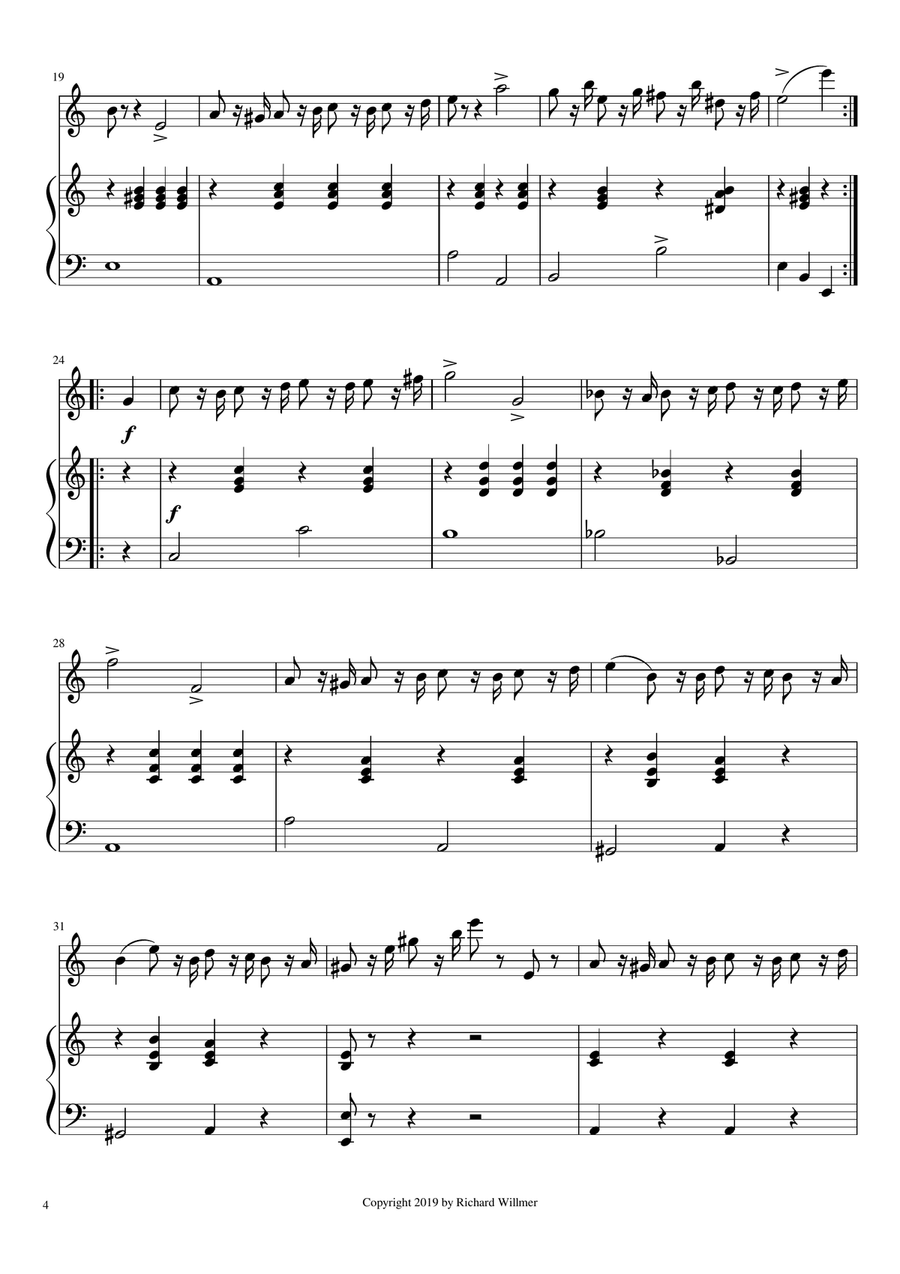
Sonata I in la minore, from Centone di Sonate MS 112/A by Nicolo Paganini Chamber Music - Digital Sheet Music
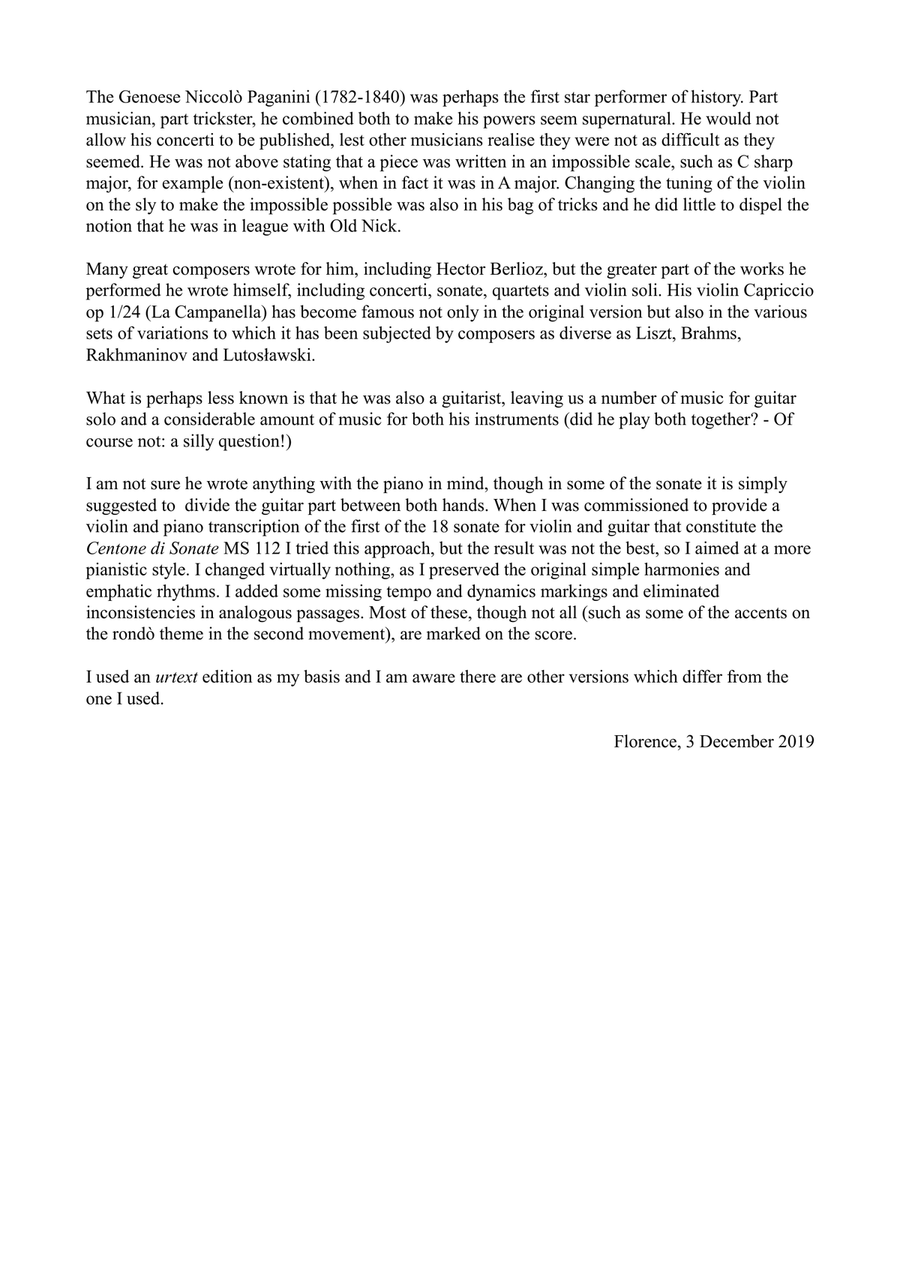
By Nicolo PaganiniThe Genoese Niccolò Paganini (1782-1840) was perhaps the first star performer in history. Part musician, part trickster, he combined both to make his powers seem supernatural. He would not allow his concerti to be published, lest other musicians realise they were not as difficult as they seemed. He was not above stating that a piece was written in an impossible scale, such as C sharp major, for example, when in fact it was in A major. Changing the tuning of the violin on the sly to make the impossible possible was also in his bag of tricks, and he did little to dispel the notion that he was in league with Old Nick himself (Niccolò!).Many great composers wrote for him, including Hector Berlioz, but the greater part of the works he performed he wrote himself, including concerti, sonate, quartets and violin soli. His violin Capriccio op 1/24 (La Campanella) has become famous not only in the original version but also in the various sets of variations to which it has been subjected by composers as diverse as Liszt, Brahms, Rakhmaninov and Lutosławski.What is perhaps less known is that he was also a guitarist, leaving us a number of music for guitar solo and a considerable amount of music for both his instruments (did he play both together? - Of course not: a silly question!)I am not sure he wrote anything with the piano in mind, though in some of the sonate it is simply suggested to distribute the guitar part between both hands. When I was commissioned to provide a violin and piano transcription of the first of the 18 sonate for violin and guitar that constitute the Centone di Sonate MS 112 I tried this approach, but the result was not the best, so I aimed at a more pianistic style. I changed virtually nothing, as I preserved the original simple harmonies and emphatic rhythms. I added some missing tempo and dynamics markings and eliminated inconsistencies in analogous passages. Most of these, though not all (such as some of the accents on the rondò theme in the second movement), are marked on the score.I used an urtext edition as my basis, and I am aware there are other versions which differ from the one I used.
Details
Summary
- Instrument:
- Piano Violin Solo
- Ensembles:
- Chamber Music
- Genres:
- Classical Period Romantic Period
- Composers:
- Nicolo Paganini
- Publishers:
- Richard Willmer
- Series:
- ArrangeMe
- Item types:
- Digital
- Level:
- Advanced
- Musical forms:
- Sonata
- Artist:
- Nicolo Paganini
- Usages:
- School and Community
- Number of Pages:
- 24
Detailed Description
SKU: A0.1565218
Composed by Nicolo Paganini. Arranged by Richard Willmer. This edition: pdf. 19th Century, Chamber, Classical, Historic. 24 pages. Richard Willmer #1137329. Published by Richard Willmer (A0.1565218).The Genoese Niccolò Paganini (1782-1840) was perhaps the first star performer in history. Part musician, part trickster, he combined both to make his powers seem supernatural. He would not allow his concerti to be published, lest other musicians realise they were not as difficult as they seemed. He was not above stating that a piece was written in an impossible scale, such as C sharp major, for example, when in fact it was in A major. Changing the tuning of the violin on the sly to make the impossible possible was also in his bag of tricks, and he did little to dispel the notion that he was in league with Old Nick himself (Niccolò!).
Many great composers wrote for him, including Hector Berlioz, but the greater part of the works he performed he wrote himself, including concerti, sonate, quartets and violin soli. His violin Capriccio op 1/24 (La Campanella) has become famous not only in the original version but also in the various sets of variations to which it has been subjected by composers as diverse as Liszt, Brahms, Rakhmaninov and Lutosławski.
What is perhaps less known is that he was also a guitarist, leaving us a number of music for guitar solo and a considerable amount of music for both his instruments (did he play both together? - Of course not: a silly question!)
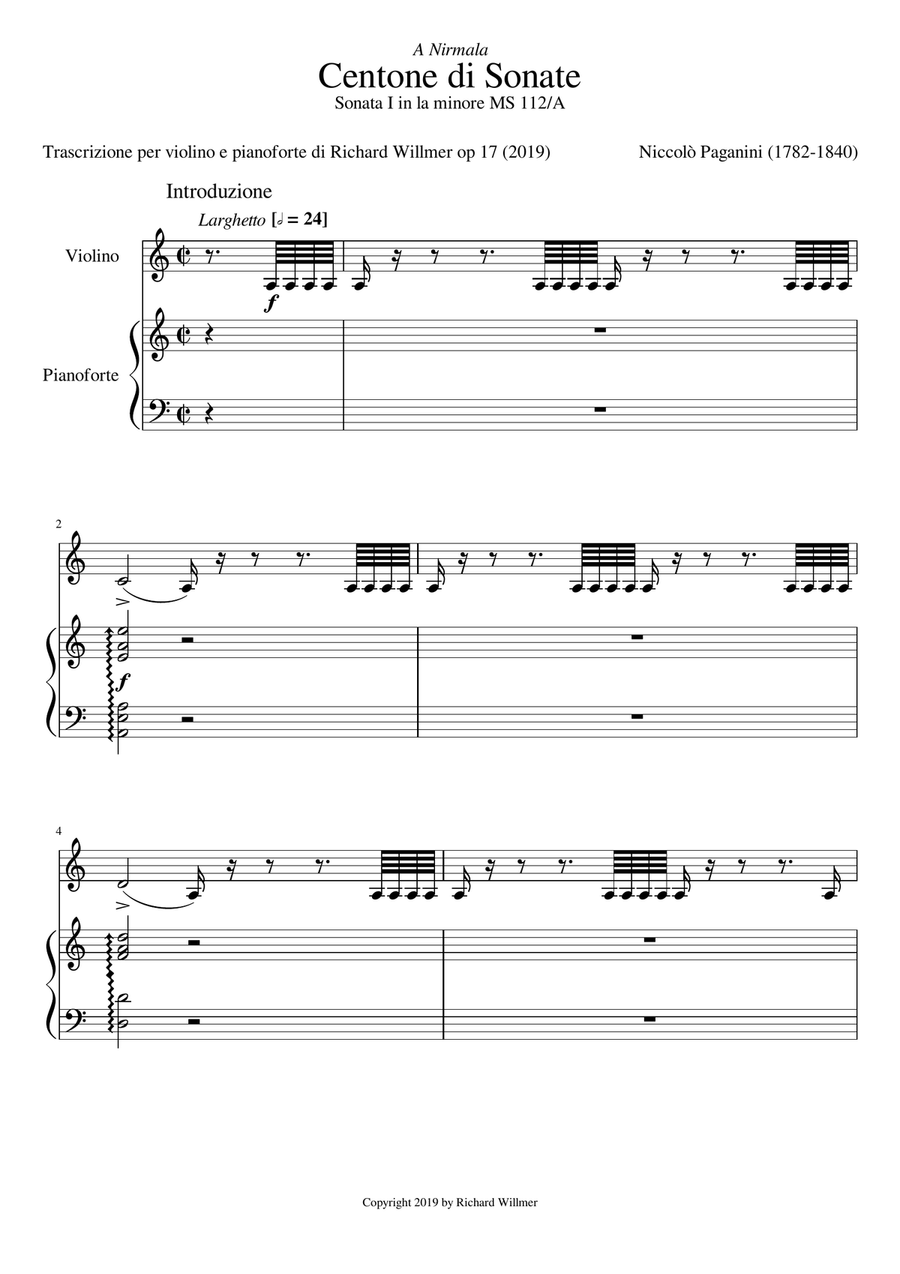
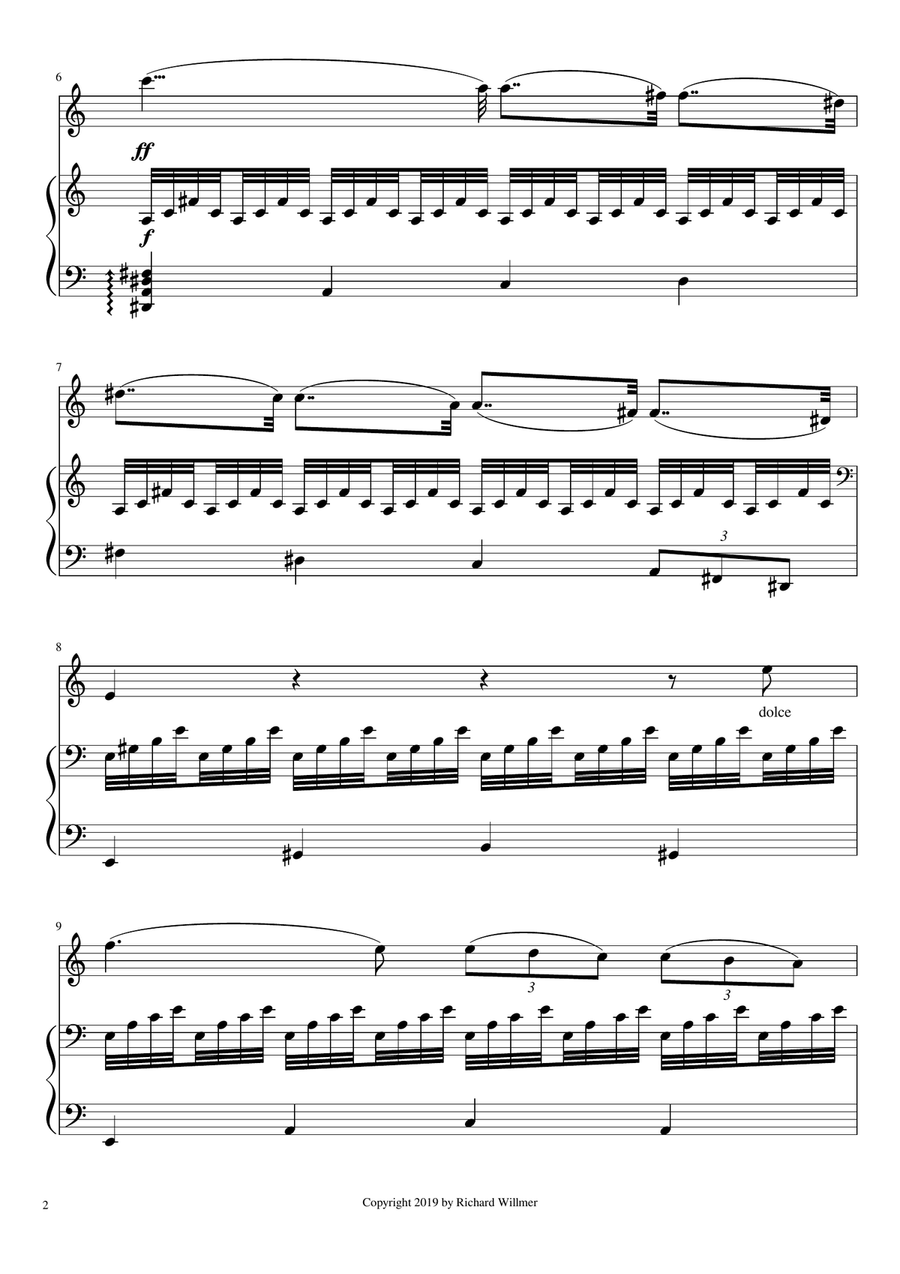
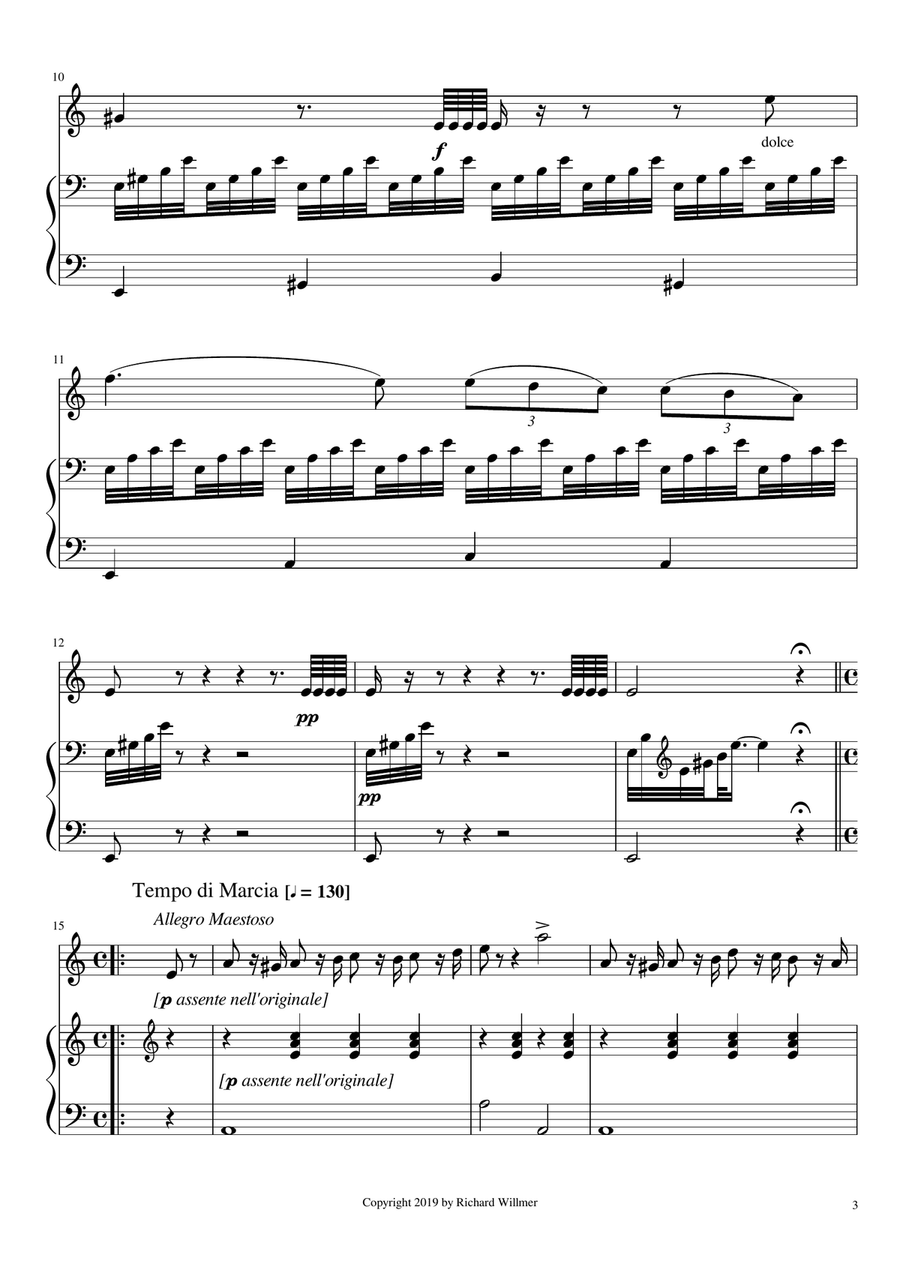
I am not sure he wrote anything with the piano in mind, though in some of the sonate it is simply suggested to distribute the guitar part between both hands. When I was commissioned to provide a violin and piano transcription of the first of the 18 sonate for violin and guitar that constitute the Centone di Sonate MS 112 I tried this approach, but the result was not the best, so I aimed at a more pianistic style. I changed virtually nothing, as I preserved the original simple harmonies and emphatic rhythms. I added some missing tempo and dynamics markings and eliminated inconsistencies in analogous passages. Most of these, though not all (such as some of the accents on the rondò theme in the second movement), are marked on the score.
I used an urtext edition as my basis, and I am aware there are other versions which differ from the one I used.
About ArrangeMe
This product was created by a member of ArrangeMe, Hal Leonard's self-publishing community for independent composers, arrangers, and songwriters. Discover unique arrangements of popular titles and original compositions from diverse creators. The length, difficulty, and pricing are determined by the arranger or composer.
About Digital Downloads
Digital Downloads let you instantly access sheet music on your computer, tablet, or mobile device. Print your sheet music anywhere, anytime, or play it straight from your device—no internet connection is required after download.
Each Digital Download includes a watermark with your name, purchase date, and the number of copies purchased. You may only print or use the number of copies purchased. Redistribution or unauthorized printing is prohibited.
Similar Sheet Music & Digital Downloads
- More by this Composer:
- Nicolo Paganini Nicolo Paganini Classical Guitar Nicolo Paganini Piano Accompaniment Nicolo Paganini Violin Solo
- ArrangeMe:
- Richard Willmer
- Series:
- ArrangeMe
- Instrument:
- Piano and Keyboard Piano Strings Violin Violin Solo
- Artists:
- Nicolo Paganini
- Ensemble:
- Chamber Music
- Publisher:
- Richard Willmer