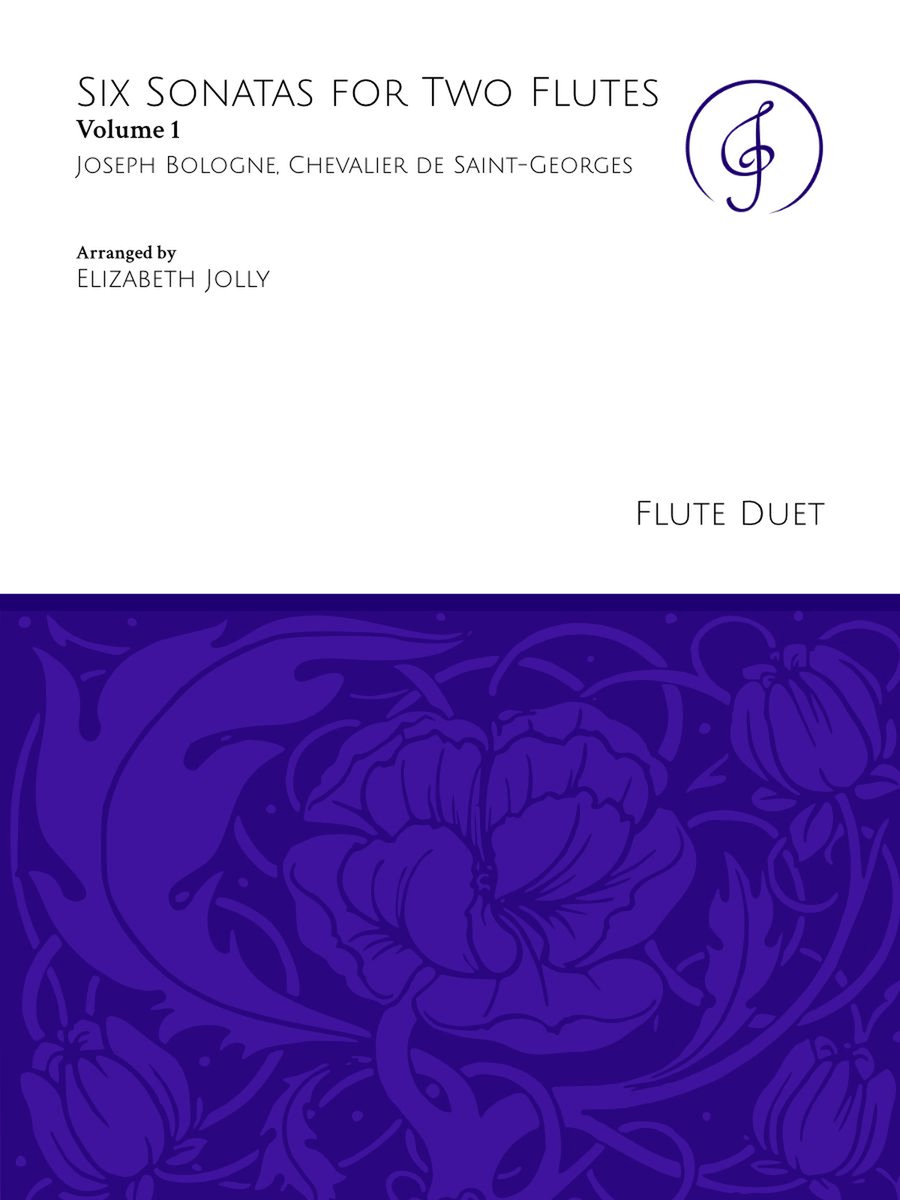
Six Sonatas for Two Flutes Volume 1 Flute Duet - Sheet Music
Joseph Bologne, Chevalier de Saint-Georges (1745–1799) was a French-Caribbean composer, violinist, and conductor, often hailed as the first known classical composer of African descent. A virtuoso musician and accomplished athlete and dancer, he was a prominent figure in 18th-century French society, leading orchestras and composing symphonies, concertos, and chamber music. His Six Sonatas were originally written for solo violin with a second violin accompaniment. In this arrangement for two flutes, the first part is more technically demanding while the second part provides rhythmic and harmonic structure. These duets are suitable for teachers to play with students as a precursor to studying the Mozart concerti, or for duos of mixed abilities who want to explore Classical-era repertoire.
Details
Summary
- Instrument:
- Flute
- Ensembles:
- Flute Duet
- Genres:
- Classical
- Publishers:
- Theodore Presser Company
- UPC:
- 680160696871
- Item types:
- Physical
- Musical forms:
- Sonata
- Usages:
- School and Community
- Shipping Weight:
- 0.51 pounds
Detailed Description
SKU: PR.JM022
Volume 1. Composed by Joseph Bologne. Arranged by Elizabeth Jolly. This edition: saddle-wire stitch. Collection - Score and Parts. Theodore Presser Company #JM022. Published by Theodore Presser Company (PR.JM022).UPC: 680160696871.
Joseph Bologne, Chevalier de Saint-Georges (1745–1799) was a French-Caribbean composer, violinist, and conductor, often hailed as the first known classical composer of African descent. A virtuoso musician and accomplished athlete and dancer, he was a prominent figure in 18th-century French society, leading orchestras and composing symphonies, concertos, and chamber music. His Six Sonatas were originally written for solo violin with a second violin accompaniment. In this arrangement for two flutes, the first part is more technically demanding while the second part provides rhythmic and harmonic structure. These duets are suitable for teachers to play with students as a precursor to studying the Mozart concerti, or for duos of mixed abilities who want to explore Classical-era repertoire.