
Shadow of the Sphinx Concert Band - Sheet Music
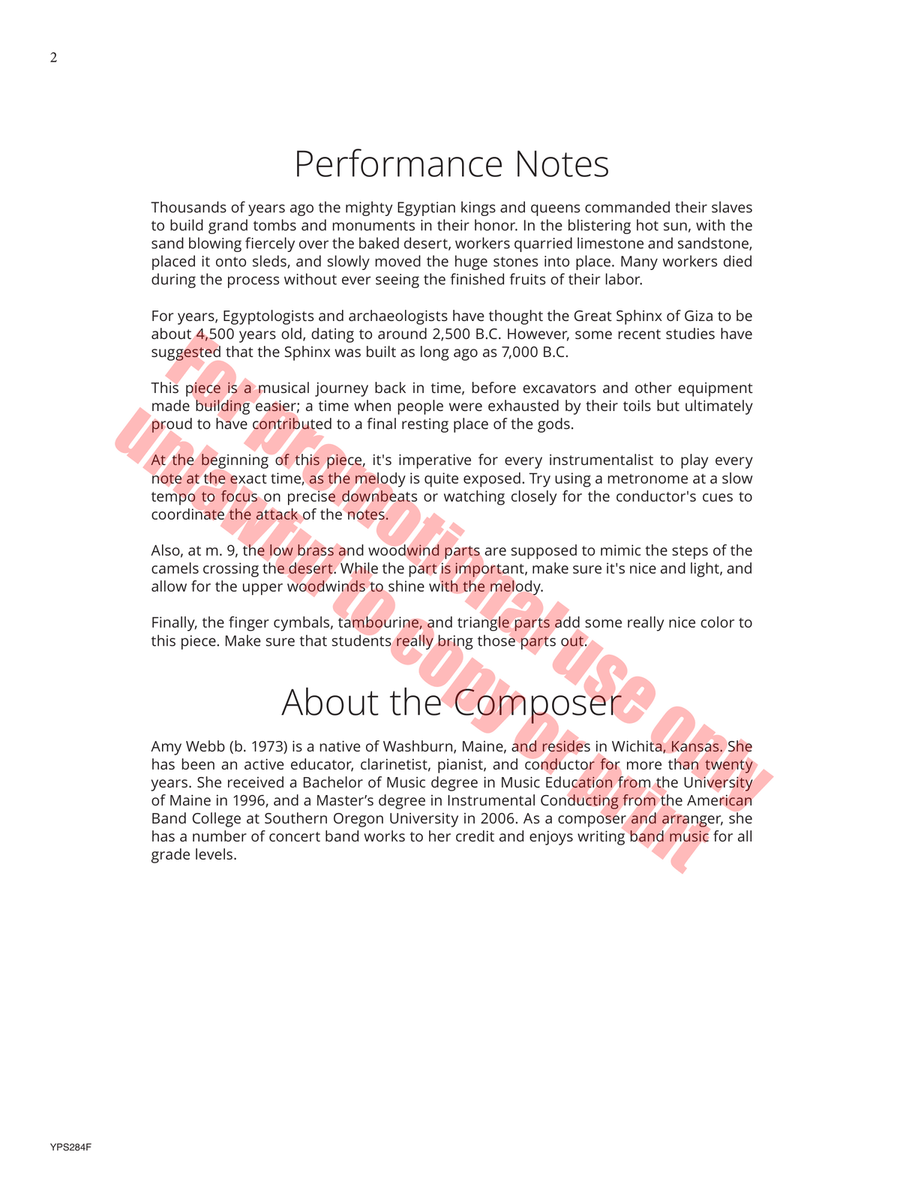
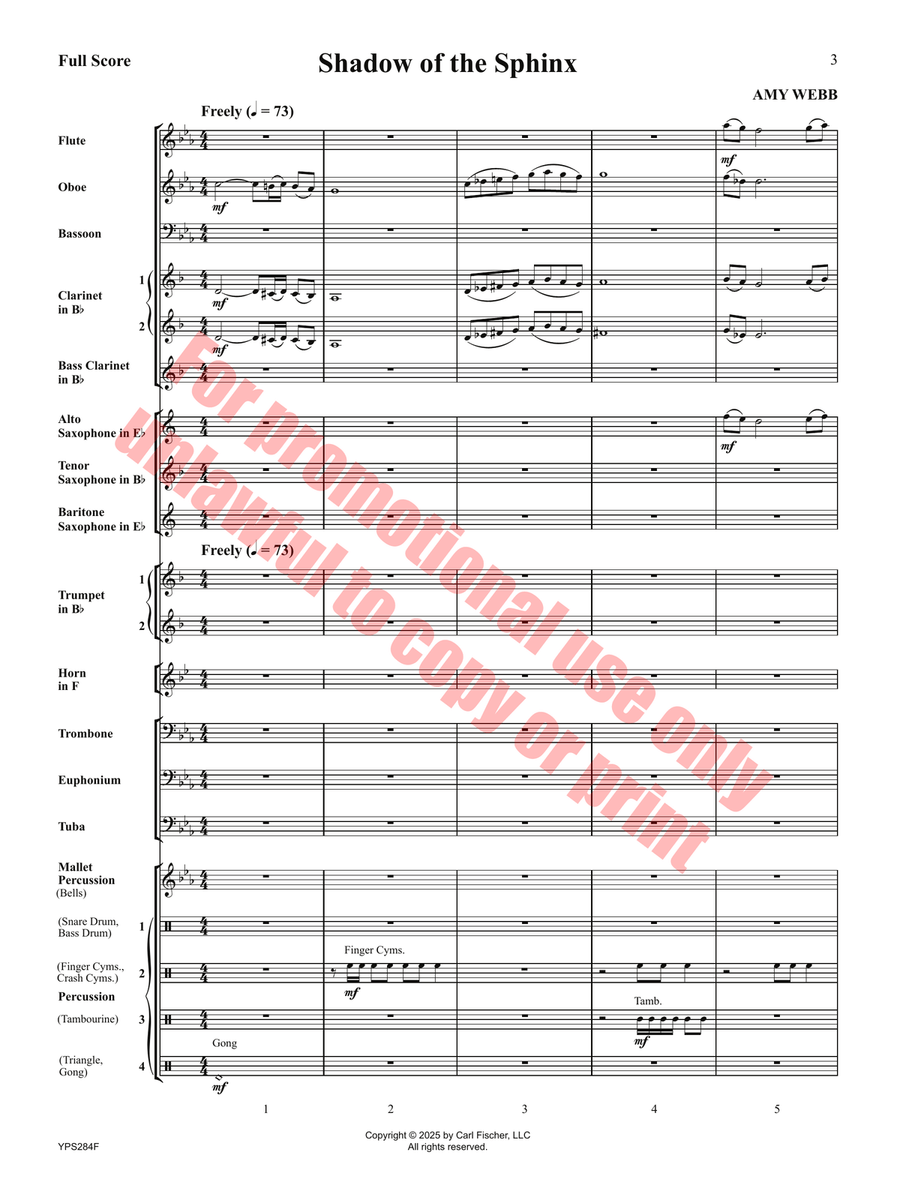
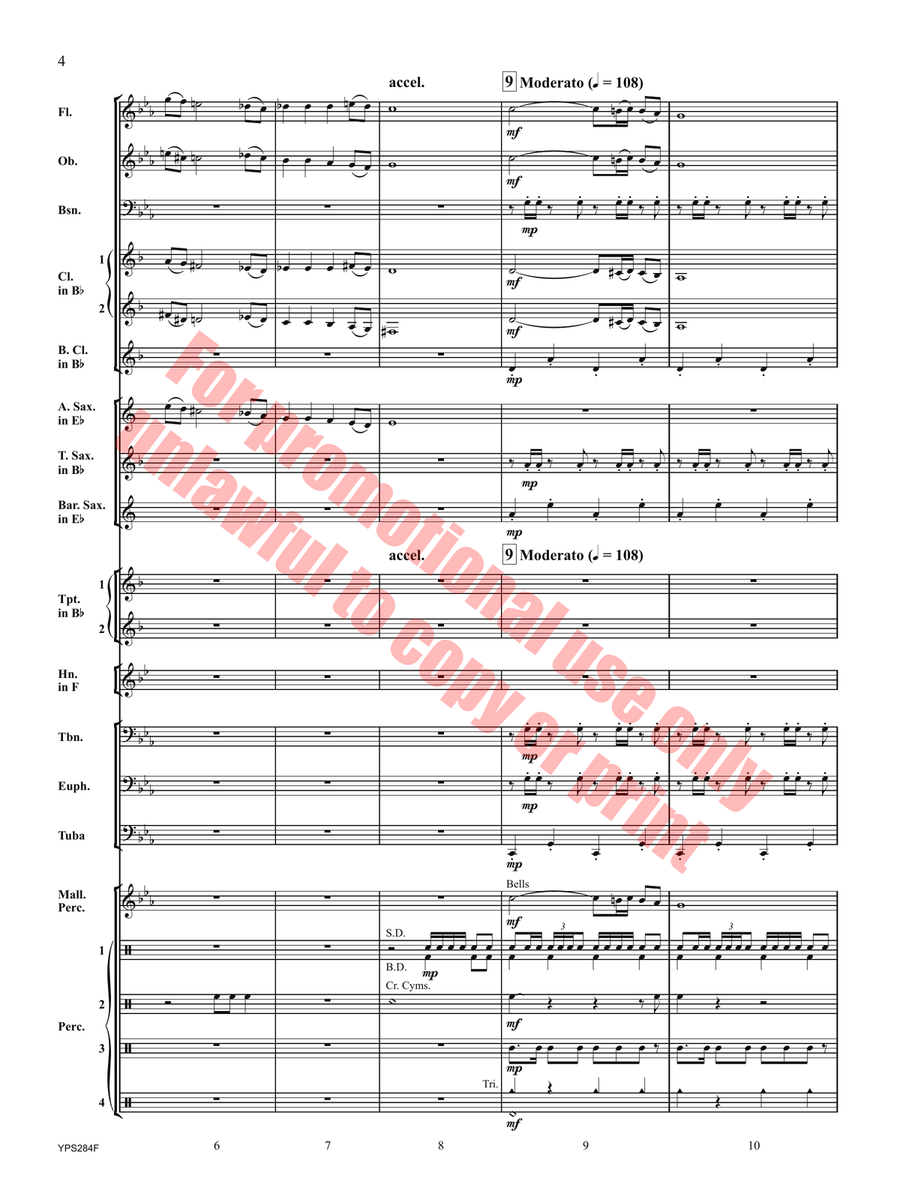
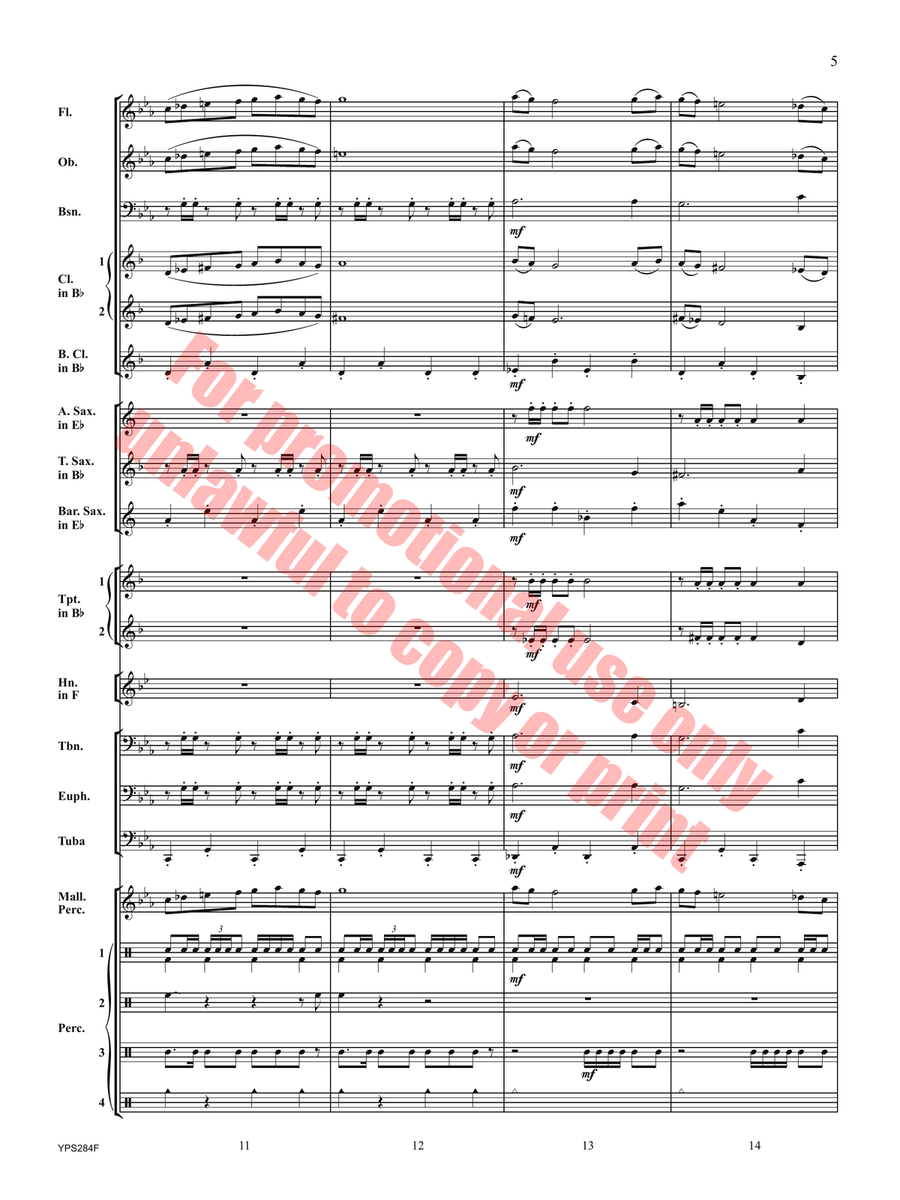
Thousands of years ago the mighty Egyptian kings and queens commanded their slaves to build grand tombs and monuments in their honor. In the blistering hot sun, with the sand blowing fiercely over the baked desert, workers quarried limestone and sandstone, placed it onto sleds, and slowly moved the huge stones into place. Many workers died during the process without ever seeing the finished fruits of their labor.For years, Egyptologists and archaeologists have thought the Great Sphinx of Giza to be about 4,500 years old, dating to around 2,500 B.C. However, some recent studies have suggested that the Sphinx was built as long ago as 7,000 B.C.This piece is a musical journey back in time, before excavators and other equipment made building easier; a time when people were exhausted by their toils but ultimately proud to have contributed to a final resting place of the gods.At the beginning of this piece, it's imperative for every instrumentalist to play every note at the exact time, as the melody is quite exposed. Try using a metronome at a slow tempo to focus on precise downbeats or watching closely for the conductor's cues to coordinate the attack of the notes.Also, at m. 9, the low brass and woodwind parts are supposed to mimic the steps of the camels crossing the desert. While the part is important, make sure it's nice and light, and allow for the upper woodwinds to shine with the melody.Finally, the finger cymbals, tambourine, and triangle parts add some really nice color to this piece. Make sure that students really bring those parts out.
Details
Summary
- Instrument:
- B-Flat Clarinet Bass Clarinet Snare Drum Tenor Saxophone Baritone Saxophone Alto Saxophone B-Flat Trumpet
- Ensembles:
- Concert Band
- Publishers:
- Carl Fischer Music
- UPC:
- 798408101923
- ISBN:
- 9781491169353
- Format:
- Score
- Item types:
- Physical
- Level:
- Grade 2
- Usages:
- School and Community
- Main Key:
- C minor
- Size:
- 9x12 inches
- Number of Pages:
- 20
- Shipping Weight:
- 0.53 pounds
Detailed Description
SKU: CF.YPS284F
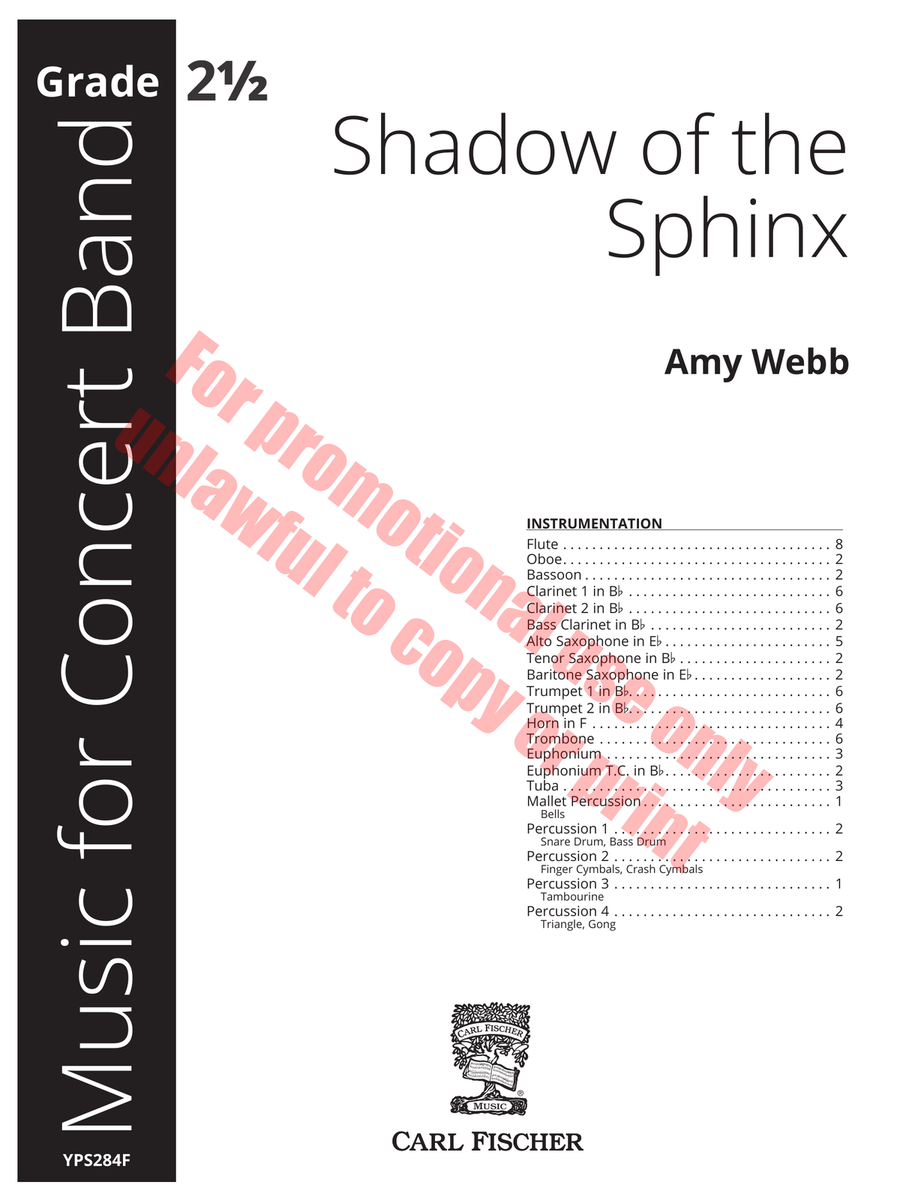
Composed by Amy Webb. This edition: saddle-wire stitch. Freely (q=73). Full score. Composed 2025. 20 pages. Duration 0:04:05. Carl Fischer Music #YPS284F. Published by Carl Fischer Music (CF.YPS284F).ISBN 9781491169353. UPC: 798408101923. 9x12 inches. Key: C minor.
Thousands of years ago the mighty Egyptian kings and queens commanded their slaves to build grand tombs and monuments in their honor. In the blistering hot sun, with the sand blowing fiercely over the baked desert, workers quarried limestone and sandstone, placed it onto sleds, and slowly moved the huge stones into place. Many workers died during the process without ever seeing the finished fruits of their labor.For years, Egyptologists and archaeologists have thought the Great Sphinx of Giza to be about 4,500 years old, dating to around 2,500 B.C. However, some recent studies have suggested that the Sphinx was built as long ago as 7,000 B.C.This piece is a musical journey back in time, before excavators and other equipment made building easier; a time when people were exhausted by their toils but ultimately proud to have contributed to a final resting place of the gods.At the beginning of this piece, it's imperative for every instrumentalist to play every note at the exact time, as the melody is quite exposed. Try using a metronome at a slow tempo to focus on precise downbeats or watching closely for the conductor's cues to coordinate the attack of the notes.Also, at m. 9, the low brass and woodwind parts are supposed to mimic the steps of the camels crossing the desert. While the part is important, make sure it's nice and light, and allow for the upper woodwinds to shine with the melody.Finally, the finger cymbals, tambourine, and triangle parts add some really nice color to this piece. Make sure that students really bring those parts out.