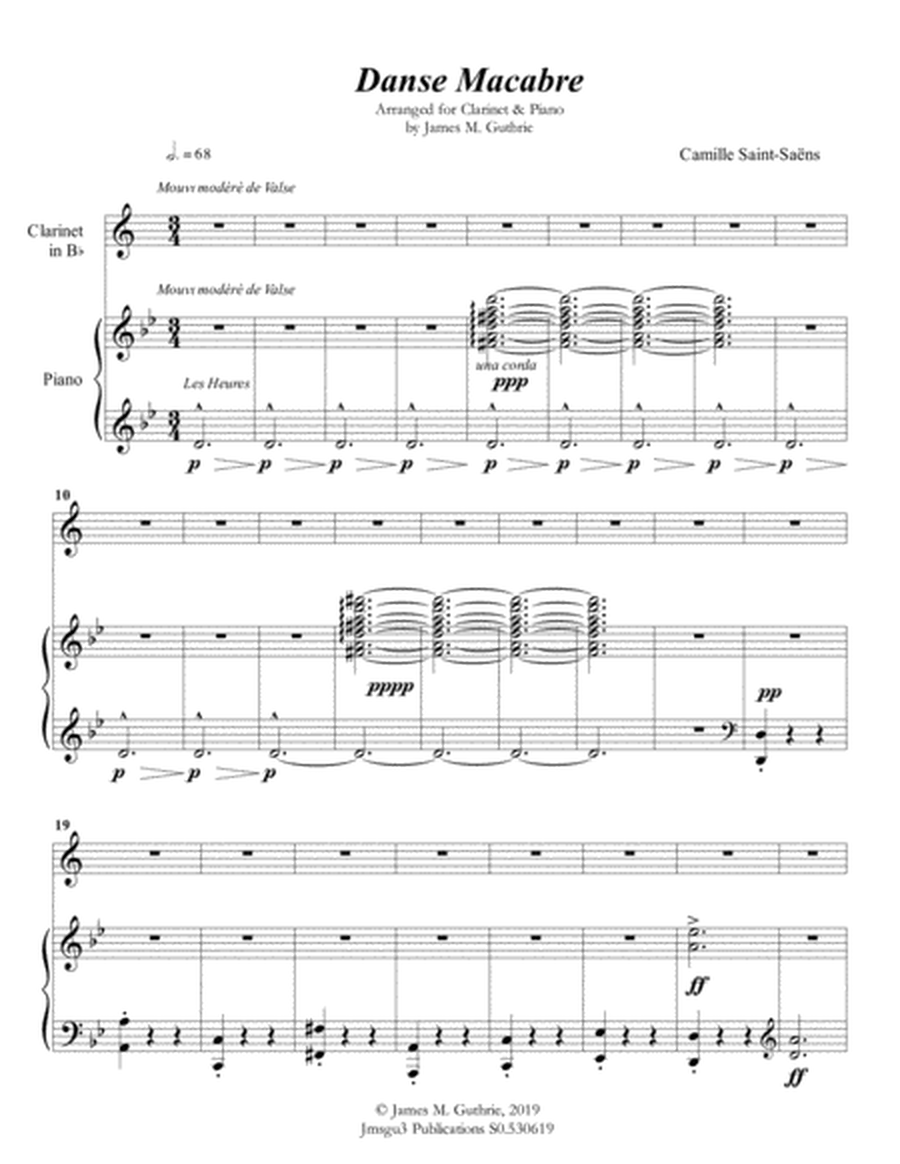
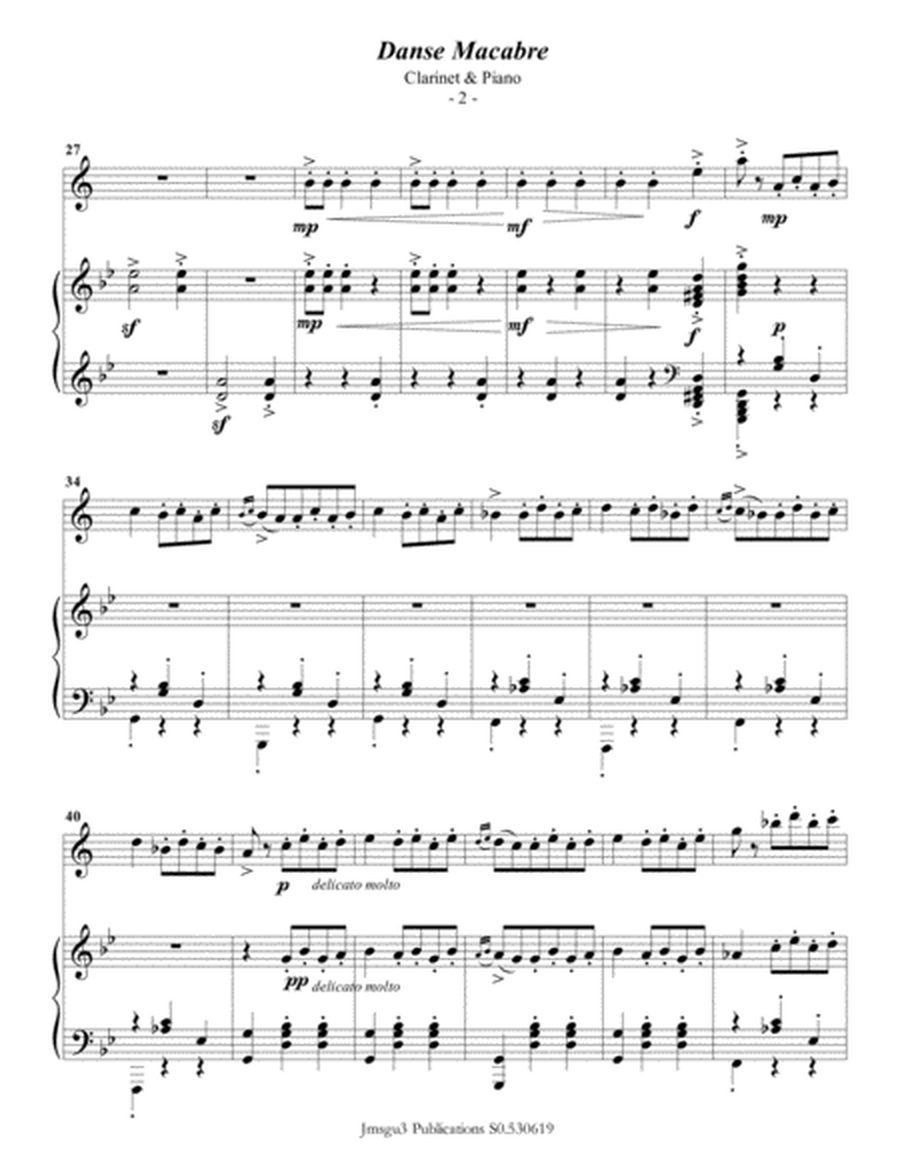
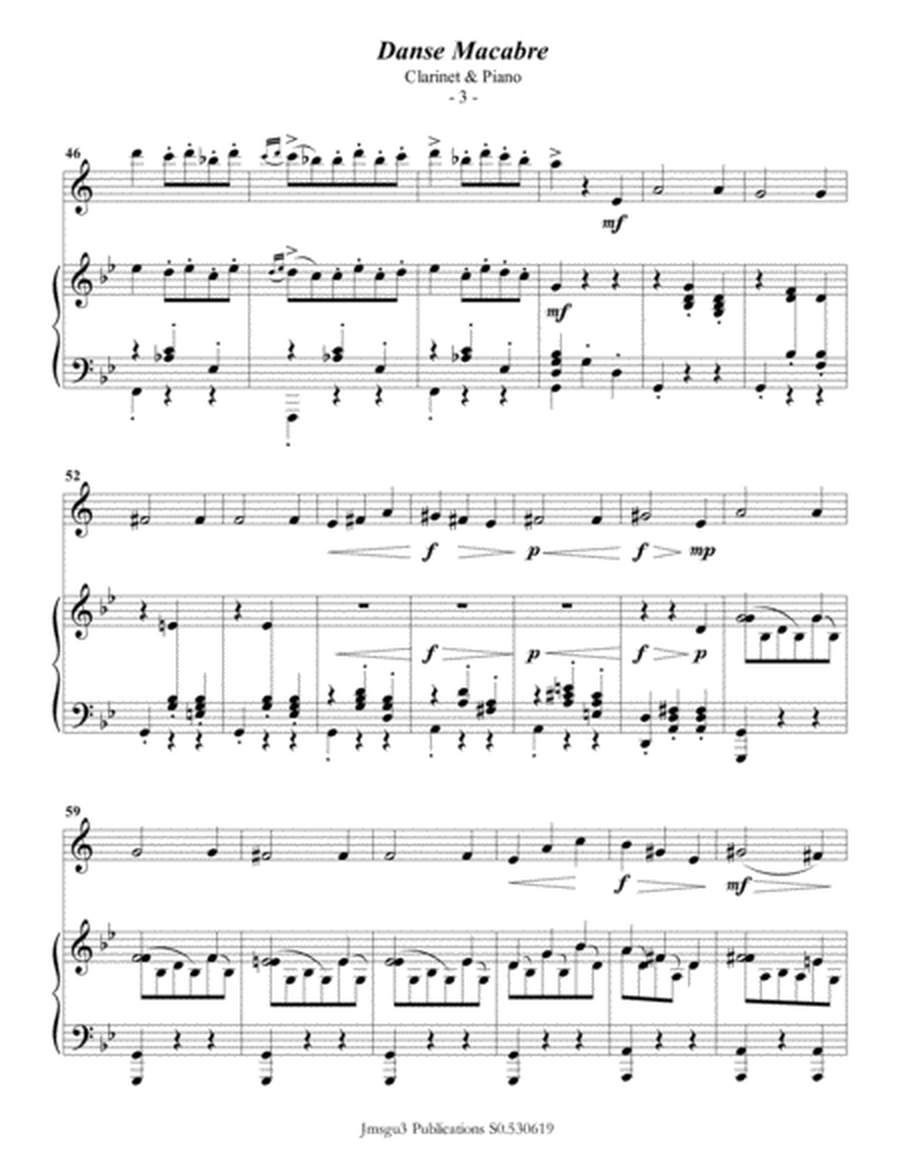
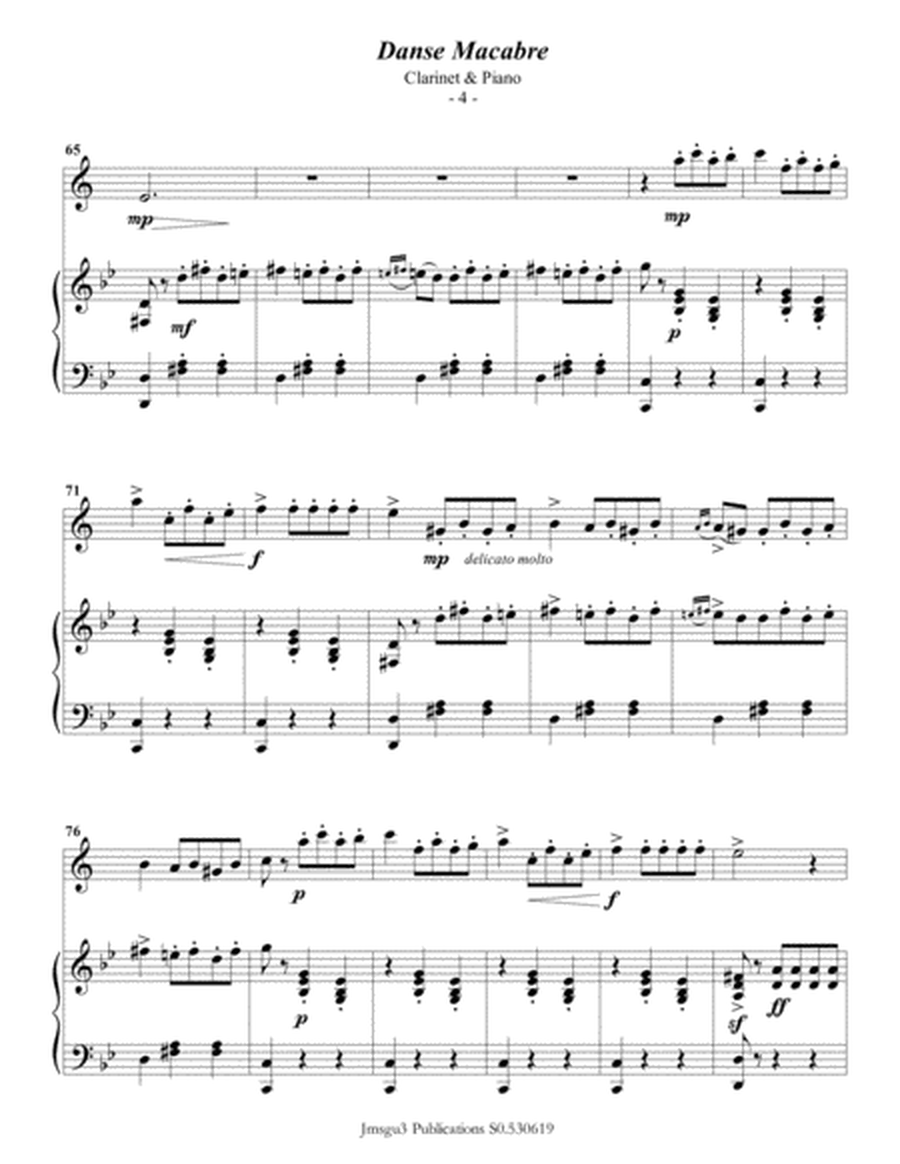
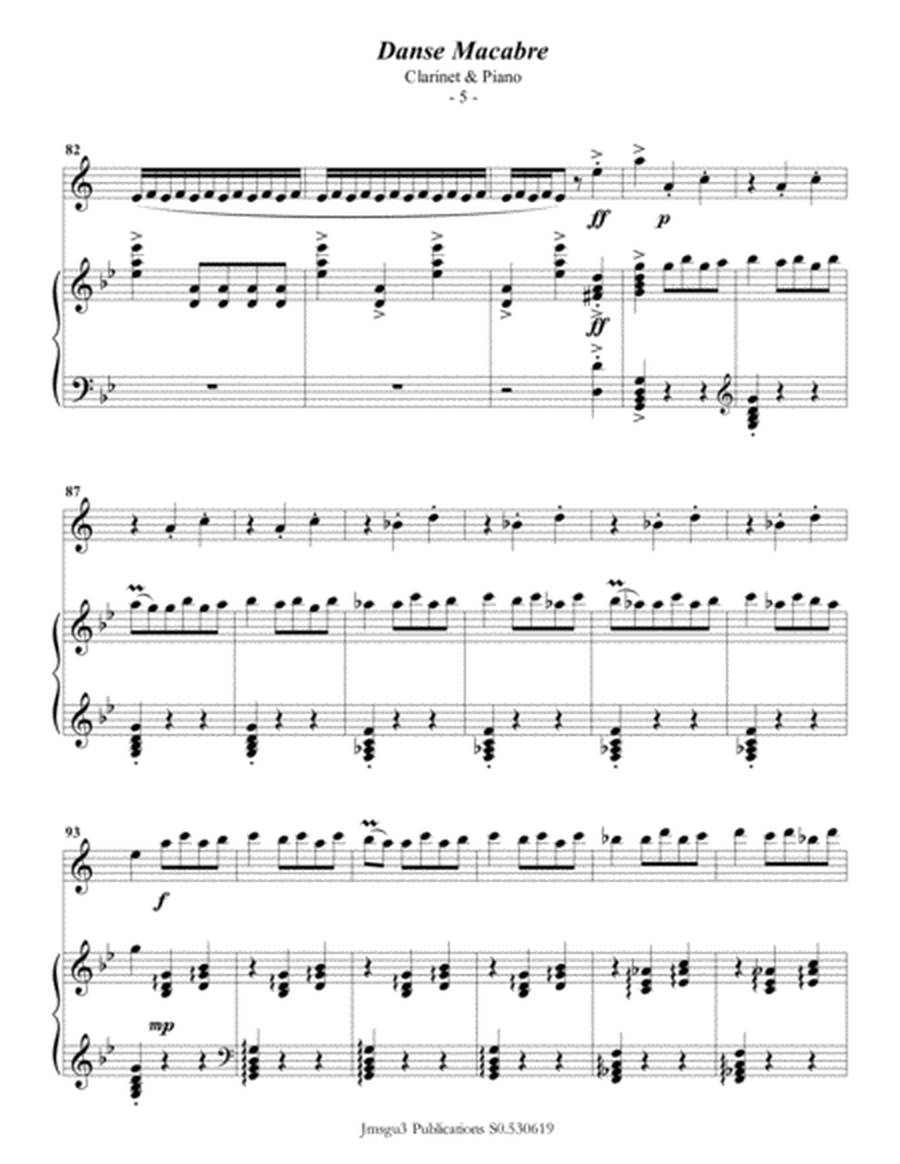
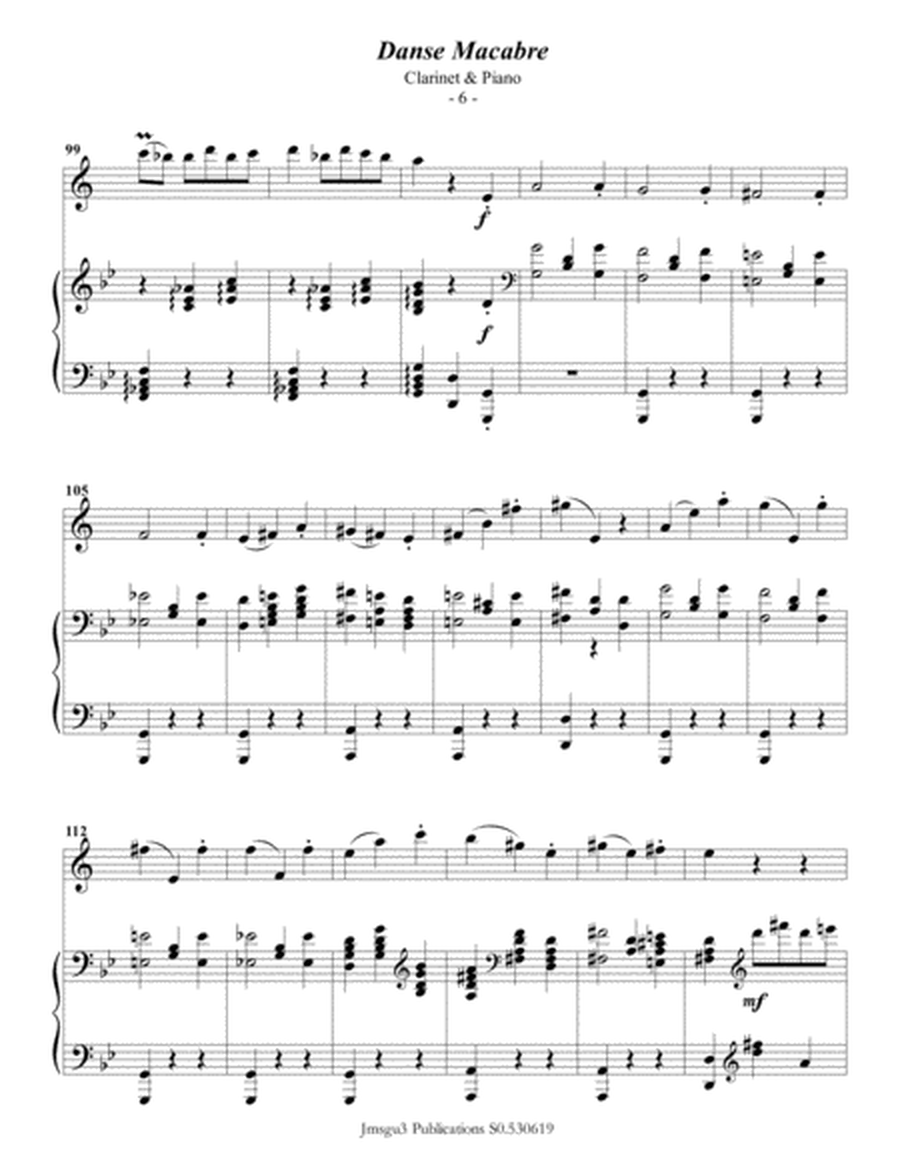
Saint-Saëns: Danse Macabre for Clarinet & Piano by Camille Saint-Saens B-Flat Clarinet - Digital Sheet Music
By Camille Saint-SaensThe significance of Saint-Saëns' "Danse Macabre" lies in its representation of Death as the great social equalizer and its association with Halloween and the macabre. Originally an art song for voice and piano, the piece was later expanded and reworked into a tone poem for violin and large orchestra, becoming one of Saint-Saëns' most famous works. "Danse Macabre" was inspired by the French legend that Death plays the fiddle at midnight on Halloween, causing the skeletons in the cemetery to crawl out of their graves for a dance party. The theme of Death as the great social equalizer, where no one can escape the dance with Death, is depicted in the music and has inspired various paintings and art pieces.The piece is in the key of G minor and scored for an obbligato violin and an orchestra of various instruments. When it was first performed in 1875, "Danse Macabre" received mixed reviews, with some critics expressing anxiety due to its dissonance, use of a xylophone, and hypnotic repetitions. However, it is now considered one of Saint-Saëns' masterpieces and is widely regarded and reproduced in high and popular culture. Due to its connection with the French legend and its depiction of the macabre, "Danse Macabre" has become the official anthem for Halloween and is often used in spooky or dramatic contexts. The piece has been referenced in various works, including Neil Gaiman's novel "The Graveyard Book" and his book "American Gods," it has been performed by figure skaters Timothy Goebel and Yuna Kim. "Danse Macabre" is one of four tone poems composed by Saint-Saëns in the 1870s, all inspired to some degree by examples from Franz Liszt. The piece explores Liszt's thematic transformation concept and uses novel instrumentation, such as the xylophone, to depict the rattling of skeleton bones.
Details
Summary
- Instrument:
- B-Flat Clarinet Piano Piano Accompaniment Clarinet Solo
- Genres:
- Romantic Period Standards Halloween
- Composers:
- Camille Saint-Saens
- Publishers:
- jmsgu3
- Series:
- ArrangeMe
- Format:
- Score Score and Part
- Item types:
- Digital
- Level:
- Intermediate
- Artist:
- Camille Saint-Saens
- Arrangers:
- James M. Guthrie
- Usages:
- School and Community
- Number of Pages:
- 57
Detailed Description
SKU: A0.549960
Composed by Camille Saint-Saens. Arranged by James M. Guthrie. Halloween,Romantic Period,Standards. Score and part. 57 pages. Jmsgu3 #4354837. Published by jmsgu3 (A0.549960).The significance of Saint-Saëns' "Danse Macabre" lies in its representation of Death as the great social equalizer and its association with Halloween and the macabre. Originally an art song for voice and piano, the piece was later expanded and reworked into a tone poem for violin and large orchestra, becoming one of Saint-Saëns' most famous works. "Danse Macabre" was inspired by the French legend that Death plays the fiddle at midnight on Halloween, causing the skeletons in the cemetery to crawl out of their graves for a dance party. The theme of Death as the great social equalizer, where no one can escape the dance with Death, is depicted in the music and has inspired various paintings and art pieces.
The piece is in the key of G minor and scored for an obbligato violin and an orchestra of various instruments. When it was first performed in 1875, "Danse Macabre" received mixed reviews, with some critics expressing anxiety due to its dissonance, use of a xylophone, and hypnotic repetitions. However, it is now considered one of Saint-Saëns' masterpieces and is widely regarded and reproduced in high and popular culture. Due to its connection with the French legend and its depiction of the macabre, "Danse Macabre" has become the official anthem for Halloween and is often used in spooky or dramatic contexts. The piece has been referenced in various works, including Neil Gaiman's novel "The Graveyard Book" and his book "American Gods," it has been performed by figure skaters Timothy Goebel and Yuna Kim. "Danse Macabre" is one of four tone poems composed by Saint-Saëns in the 1870s, all inspired to some degree by examples from Franz Liszt. The piece explores Liszt's thematic transformation concept and uses novel instrumentation, such as the xylophone, to depict the rattling of skeleton bones.
About ArrangeMe
This product was created by a member of ArrangeMe, Hal Leonard's self-publishing community for independent composers, arrangers, and songwriters. Discover unique arrangements of popular titles and original compositions from diverse creators. The length, difficulty, and pricing are determined by the arranger or composer.
About Digital Downloads
Digital Downloads let you instantly access sheet music on your computer, tablet, or mobile device. Print your sheet music anywhere, anytime, or play it straight from your device—no internet connection is required after download.
Each Digital Download includes a watermark with your name, purchase date, and the number of copies purchased. You may only print or use the number of copies purchased. Redistribution or unauthorized printing is prohibited.
Similar Sheet Music & Digital Downloads
- More by this Composer:
- Camille Saint-Saens Camille Saint-Saens Piano Camille Saint-Saens Piano Accompaniment Camille Saint-Saens Violin
- ArrangeMe:
- jmsgu3
- Series:
- ArrangeMe
- Instrument:
- Woodwinds Clarinet B-Flat Clarinet Piano and Keyboard Piano Piano and Keyboard Piano Accompaniment Woodwinds Clarinet Clarinet Solo
- Artists:
- Camille Saint-Saens James M. Guthrie
- Publisher:
- jmsgu3