Reflex 15 Studies for the Intermediate Multi-Percussionist Percussion Ensemble - Sheet Music
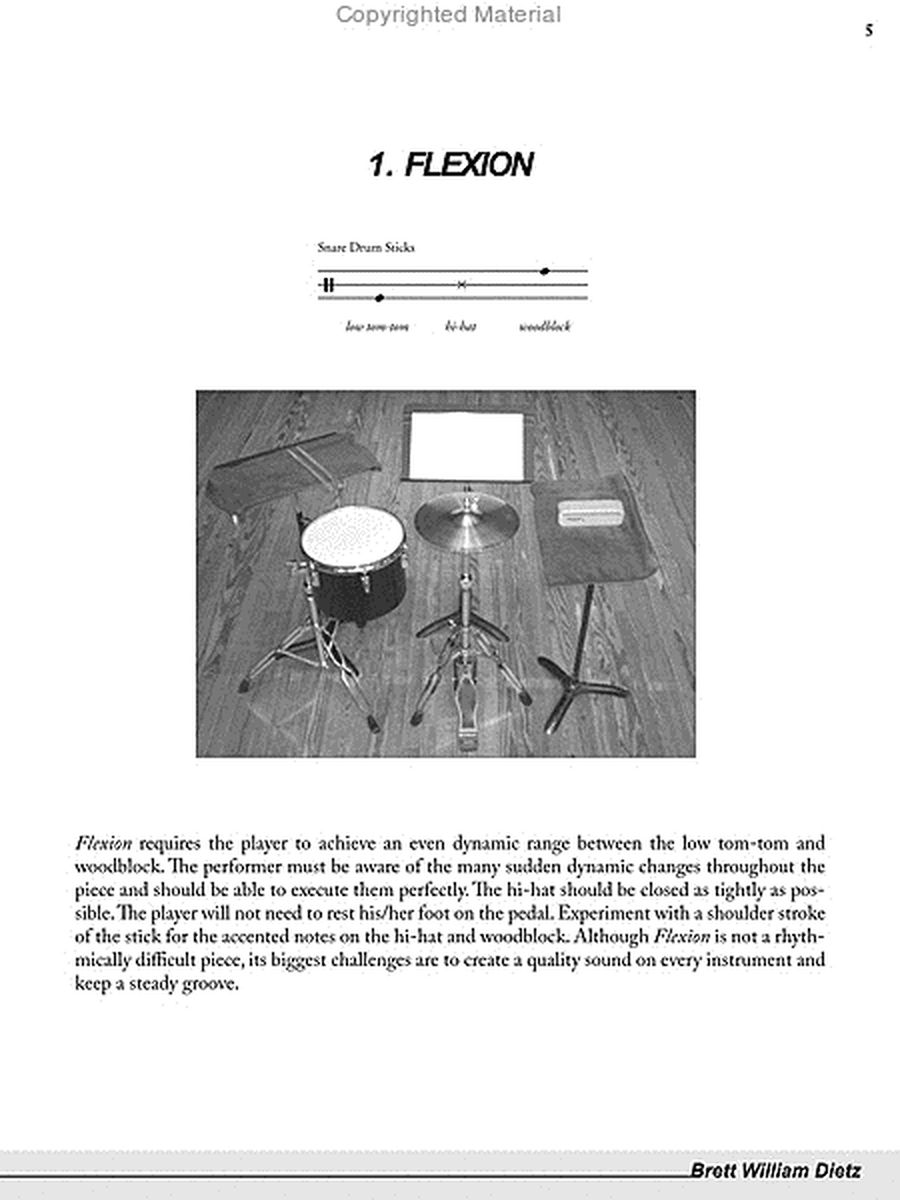
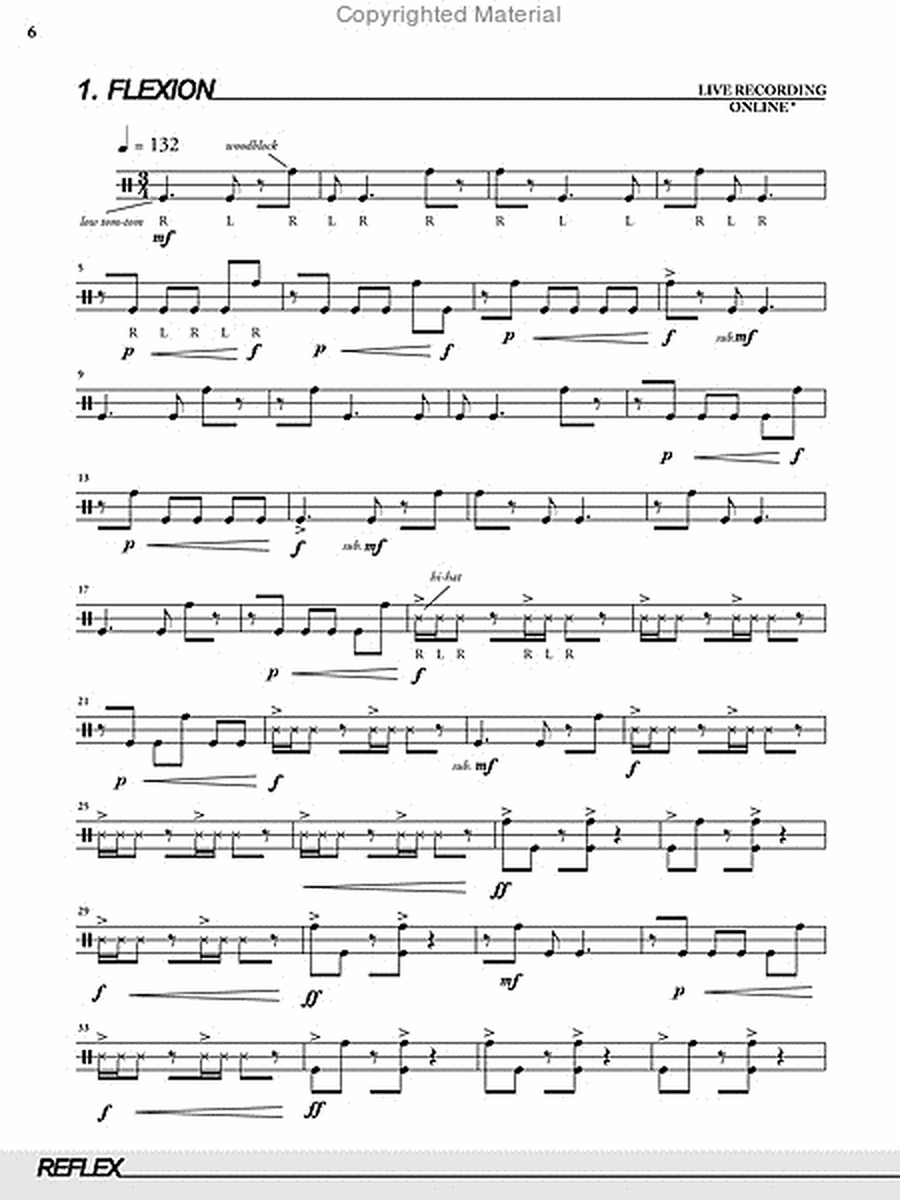
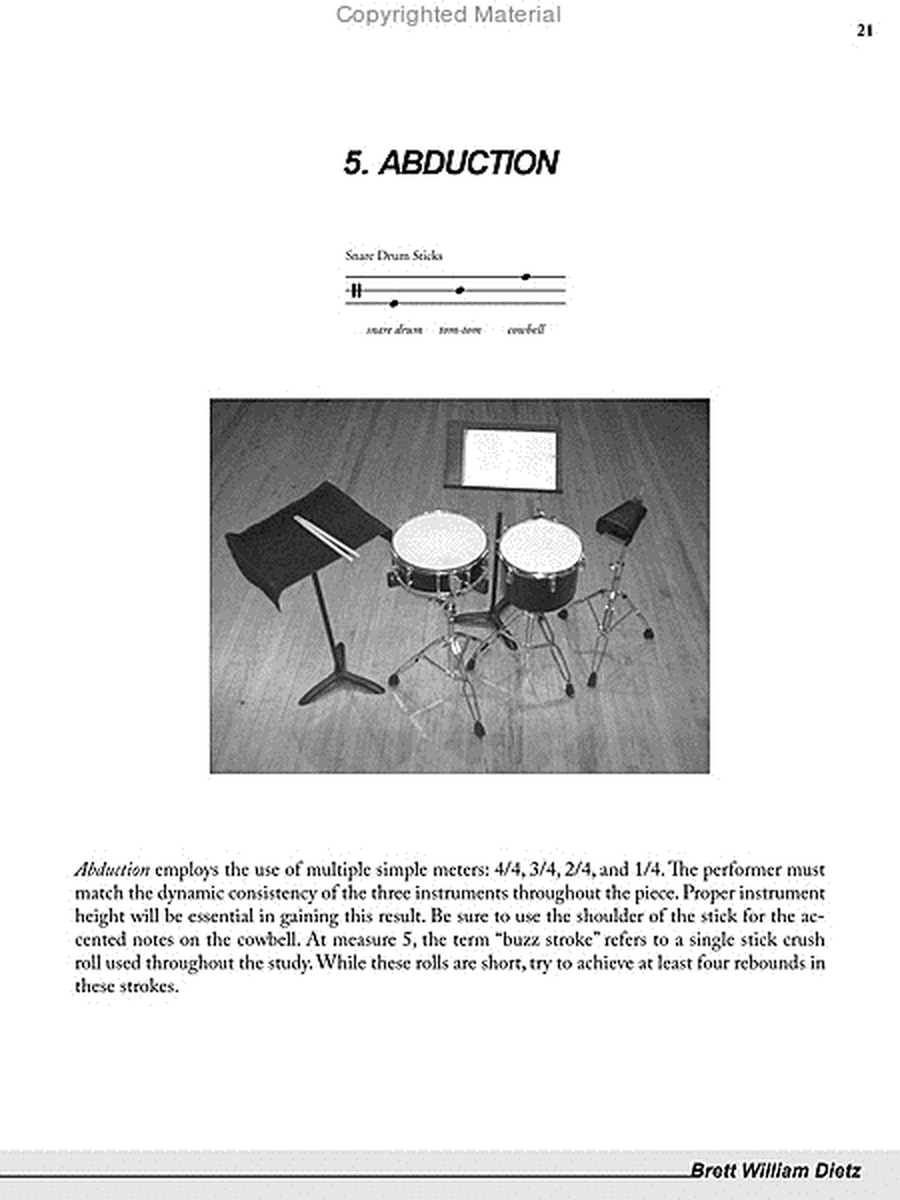
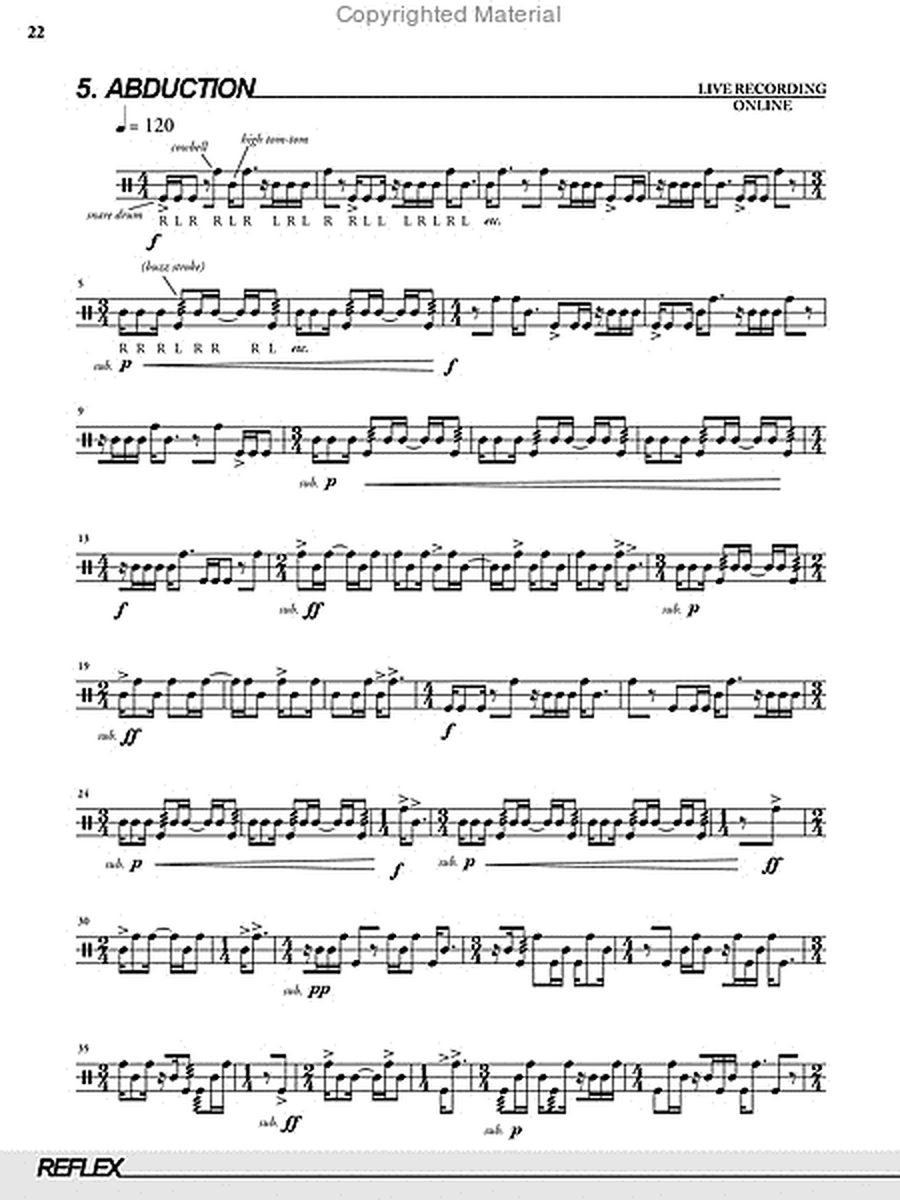
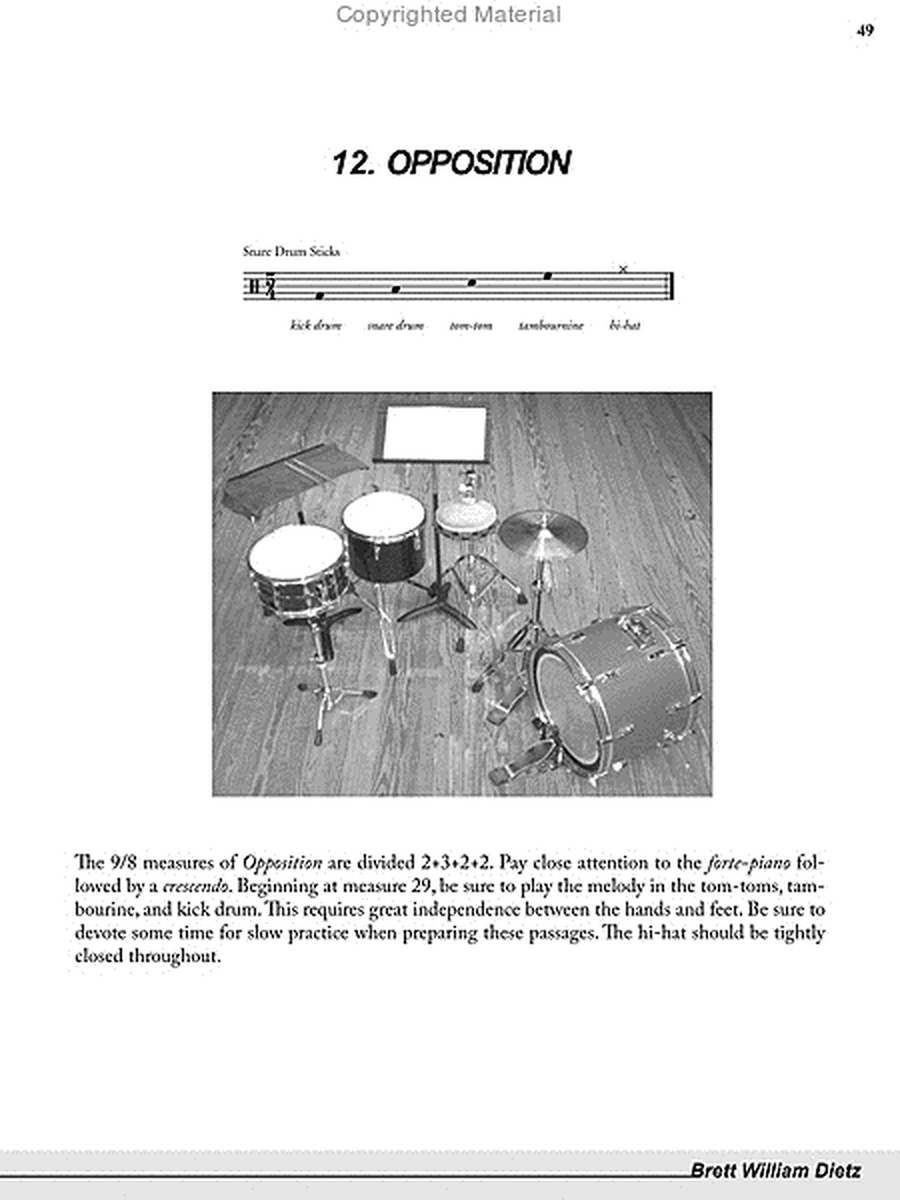
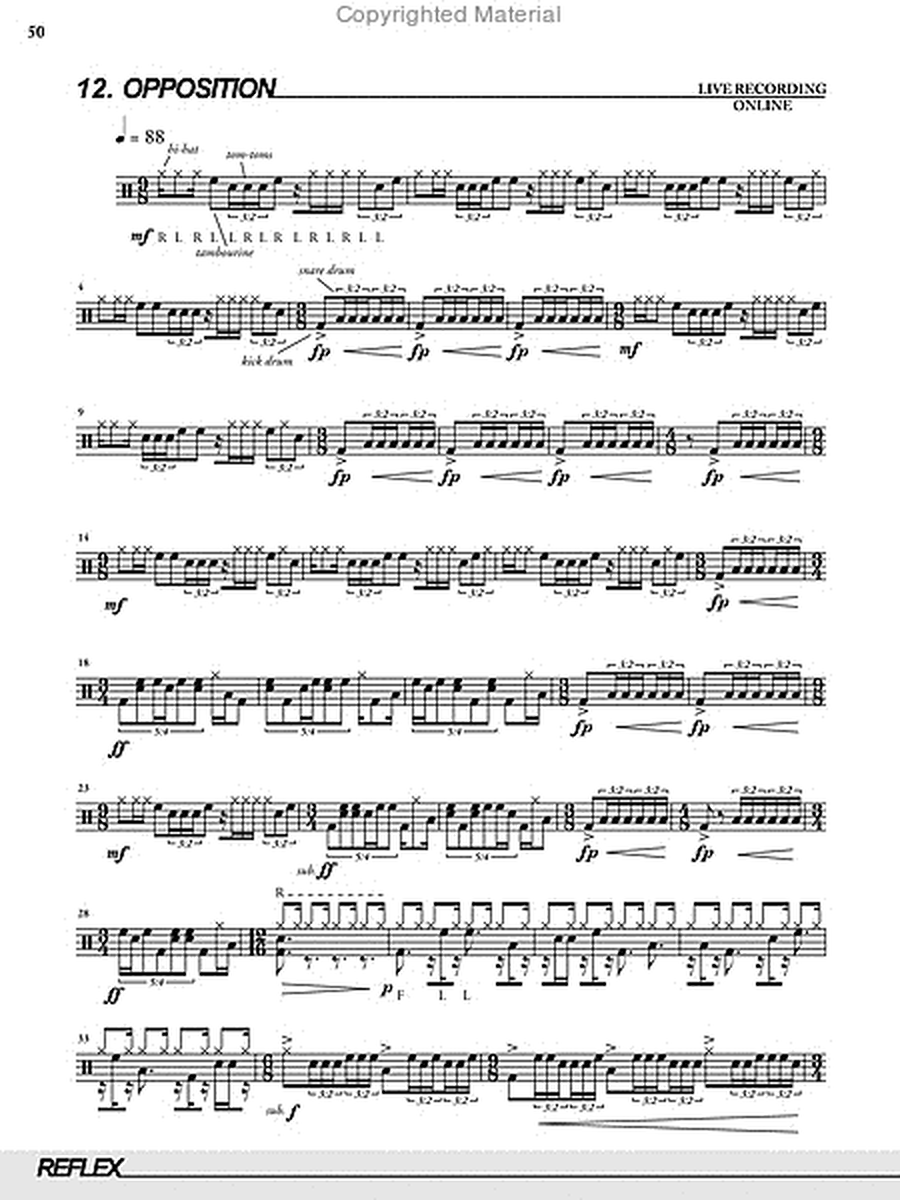
As the multi-percussion repertoire increases, it becomes necessary for modern students to increase their skills in this genre. Reflex is a collection of 15 studies for the multi-percussionist. The pieces are short and designed to improve percussionists' ability to move fluently among different playing surfaces. The studies are written at the intermediate level and require a small number of instruments.15 Studies for the Intermediate Multi-Percussionist Reflex - A quick, automatic or habitual response; the ability to react quickly and effectively. Composers throughout the 20th century demanded more from percussionists. Pieces such as Igor Stravinsky's L-Histoire du Soldat (1918) and Darius Milhaud's La Creation du Monde (1922-1923) require skill on a wide array of instruments and the ability to move seamlessly from one instrument to the next. These compositions, along with many others, created a new repertoire for percussionists. Solo multi-percussion pieces, such as William Kraft's French Suite (1962) and Rick Tagawa's Inspirations Diabolique (1964), quickly became well-known solo works for percussionists. Today, composers write percussion parts and solos that are increasingly challenging. As the multi-percussion repertoire increases, it becomes necessary for modern students to increase their skills in this genre. Reflex is a collection of 15 studies for the multi-percussionist. The pieces are short and designed to improve percussionists' ability to move fluently among different playing surfaces. The studies are written at the intermediate level and require a small number of instruments. They become more difficult as the book progresses and can be used for both study and performance. A picture of each study's set-up and an instrument key are provided to help the performer. The pieces are named after skeletal-muscular motions of the human body.
Details
Summary
- Item types:
- Physical
- Instructionals:
- Etudes and Exercises
- Level:
- Intermediate Advanced
- Usages:
- School and Community Sacred
- Shipping Weight:
- 0.7 pounds
Detailed Description
SKU: CN.16560
15 Studies for the Intermediate Multi-Percussionist. Composed by Brett Dietz. Duration 30:00. Published by C. Alan Publications (CN.16560).As the multi-percussion repertoire increases, it becomes necessary for modern students to increase their skills in this genre. Reflex is a collection of 15 studies for the multi-percussionist. The pieces are short and designed to improve percussionists' ability to move fluently among different playing surfaces. The studies are written at the intermediate level and require a small number of instruments.
15 Studies for the Intermediate Multi-Percussionist Reflex - A quick, automatic or habitual response; the ability to react quickly and effectively. Composers throughout the 20th century demanded more from percussionists. Pieces such as Igor Stravinsky's L-Histoire du Soldat (1918) and Darius Milhaud's La Creation du Monde (1922-1923) require skill on a wide array of instruments and the ability to move seamlessly from one instrument to the next. These compositions, along with many others, created a new repertoire for percussionists. Solo multi-percussion pieces, such as William Kraft's French Suite (1962) and Rick Tagawa's Inspirations Diabolique (1964), quickly became well-known solo works for percussionists. Today, composers write percussion parts and solos that are increasingly challenging. As the multi-percussion repertoire increases, it becomes necessary for modern students to increase their skills in this genre. Reflex is a collection of 15 studies for the multi-percussionist. The pieces are short and designed to improve percussionists' ability to move fluently among different playing surfaces. The studies are written at the intermediate level and require a small number of instruments. They become more difficult as the book progresses and can be used for both study and performance. A picture of each study's set-up and an instrument key are provided to help the performer. The pieces are named after skeletal-muscular motions of the human body.