Details
Summary
- Ensembles:
- Piano Trio String Trio
- Genres:
- Contemporary
- Publishers:
- Modrana Music Publishers Ltd
- Series:
- ArrangeMe
- Format:
- Set of Parts Score and Parts
- Item types:
- Digital
- Level:
- Advanced
- Usages:
- School and Community
- Number of Pages:
- 151
Detailed Description
SKU: A0.966297
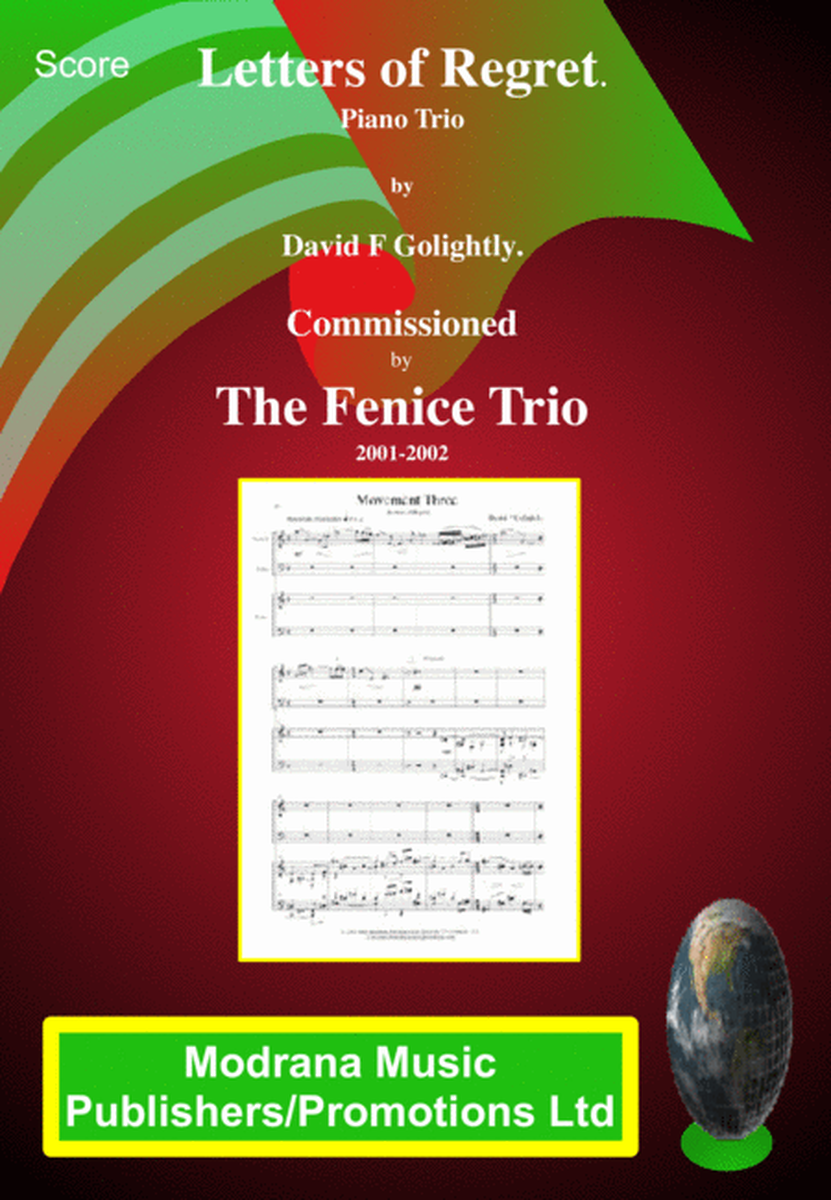
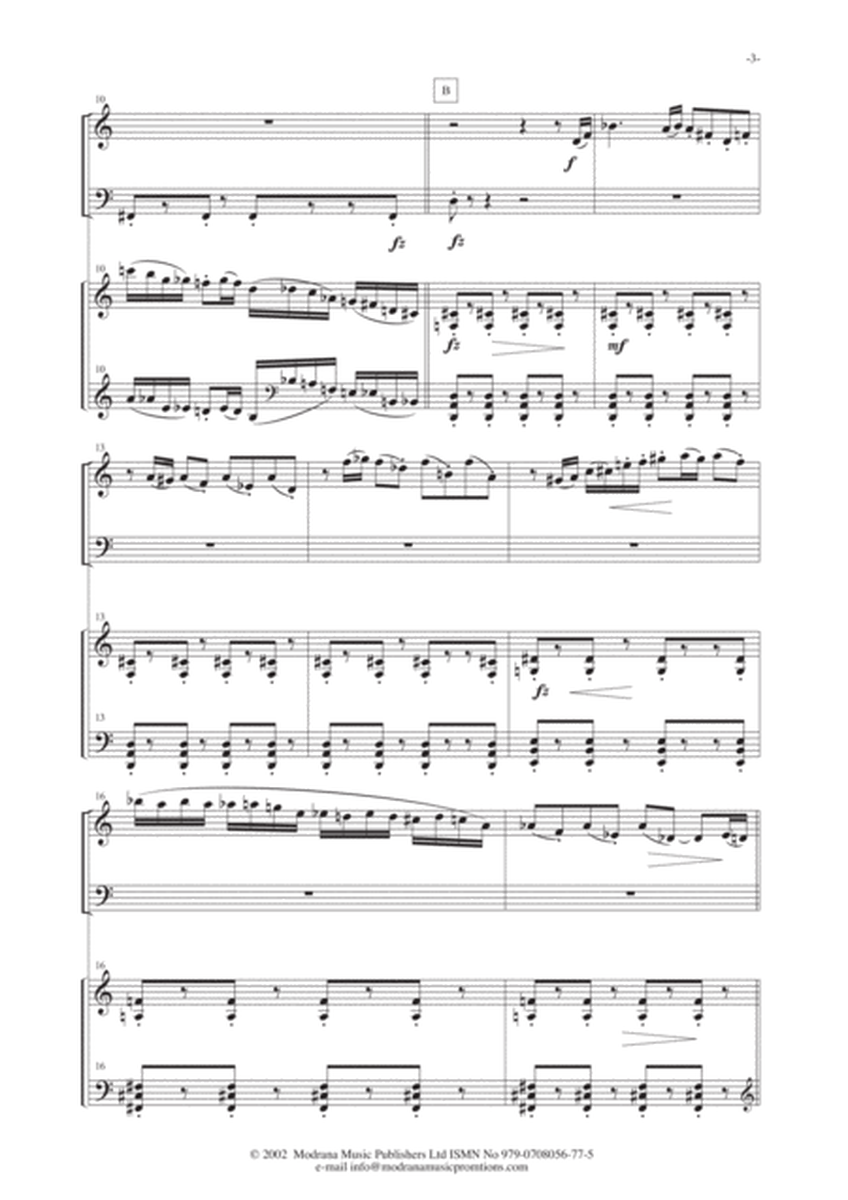
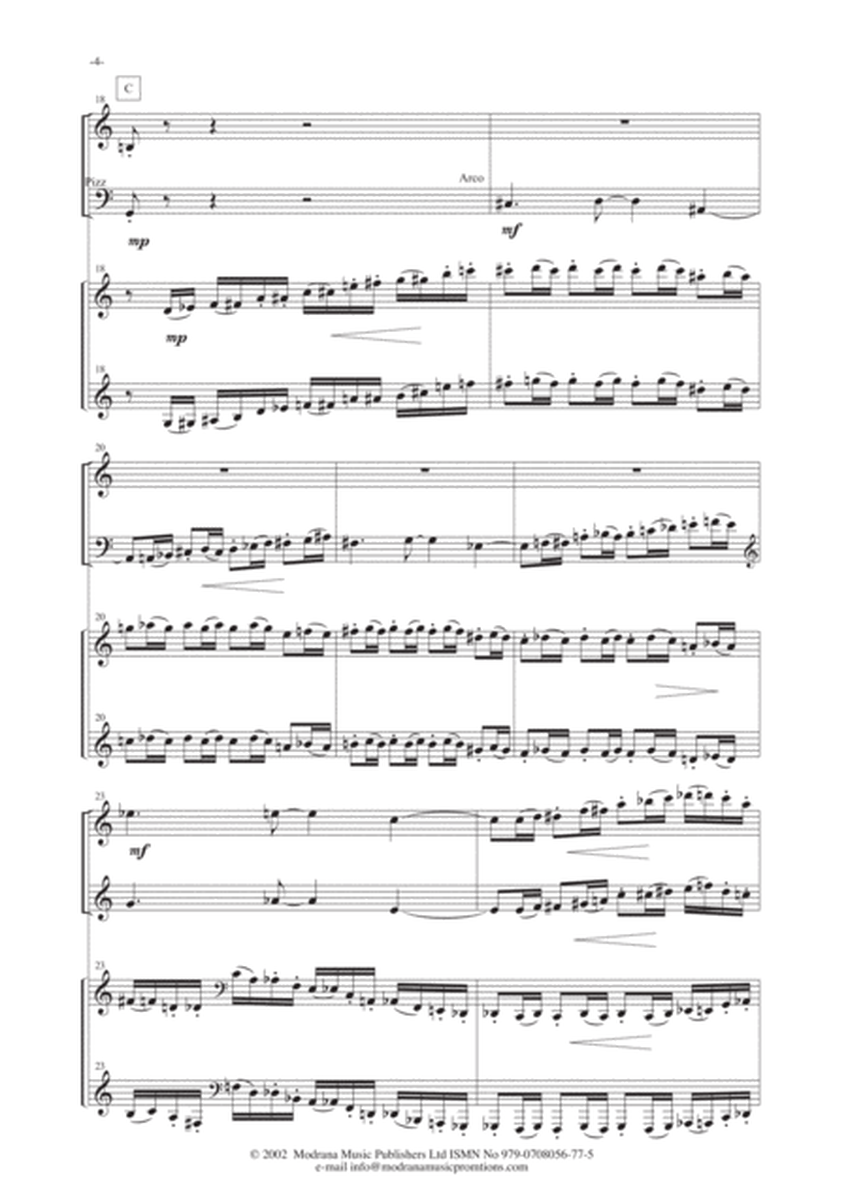
Composed by David F Golightly. Contemporary. Score and parts. 151 pages. Modrana Music Publishers Ltd #3002975. Published by Modrana Music Publishers Ltd (A0.966297).The Piano Trio no 1 was commissioned, premiered and recorded by the Fenice Trio in 2002. This substantial piano trio contained much of Golightly's symbolism and is festooned with the composers use of DFG codes. Stylistically, it represents a landmark in the genre development of Golightly, linked as it is to much of the melodic and harmonic language of his first symphony. I highly personal work it is only for the most advanced piano trios. The duration is 26 minutes. Score and parts.
Review.
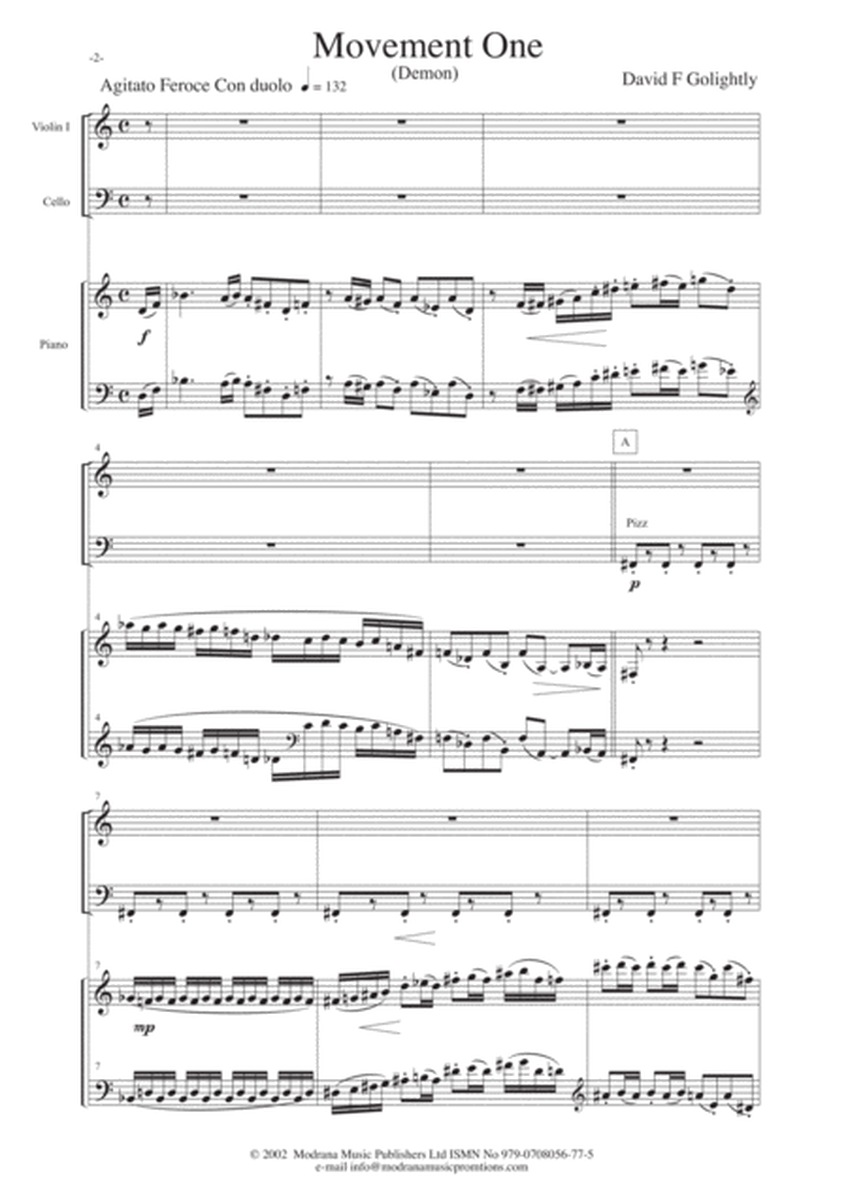
Piano Trio Letters of Regret. (2001/2)David Golightly's piano trio Letters of Regret was commissioned by The Fenice Trio, composed during the summer of 2001 and completed in February 2002. The first performance took place at the Middlesbrough Theatre in June 2002. The work is in three movements (Demon, Angel and Regrets). Demon, the shortest movement of the work, opens with a rhythmical gesture from the piano, soon joined by the strings. This moderately fast movement is actually some sort of whimsical Allegretto sometimes of Russian flavour. Reviewing David's First Symphony, the composerArthur Butterworth remarked "that Golightly might well be a British Shostakovich".Indeed, the Piano Trio calls the Russian composer to mind, particularly so in this slightly ironic movement that rises up to a short-lived ghostly climax abruptly cut short. Angel opens mysteriously with ethereal static string textures softly punctuated by the piano. Later, the string's sustained notes are gently accompanied by piano arpeggios. Then the strings, and later the piano, make some unsuccessful attempts at a tune, hesitantly so and with some glissandi contradicting the attempted melody. Eventually, the cello, followed by the violin, launches a sorrowful lyrical song, still disrupted by nervous interjections eventually short-lived.The Angel movement, though remains emotionally and harmonically ambiguous throughout. It too ends unobtrusively. The Demon and Angel movements actually act as a twofold introduction to the last movement. Regrets that is some sort of theme and seven variations, "a series of letters, written but not sent",as the composer remarks. This predominantly lyrical, often nostalgic movement is the emotional heart of what is obviously a deeply personal statement on the composer's part. Golightly's Piano Trio is a superbly crafted, beautifully moving work, not unworthy its models(Shostakovich or John Ireland), and a highly personal, quite accessible work of substance that deserves wider recognition and that should be eagerly picked-up by trios willing to add a new substantial work to their repertoire.
Hubert Culot. British Music Society
About ArrangeMe
This product was created by a member of ArrangeMe, Hal Leonard's self-publishing community for independent composers, arrangers, and songwriters. Discover unique arrangements of popular titles and original compositions from diverse creators. The length, difficulty, and pricing are determined by the arranger or composer.
About Digital Downloads
Digital Downloads let you instantly access sheet music on your computer, tablet, or mobile device. Print your sheet music anywhere, anytime, or play it straight from your device—no internet connection is required after download.
Each Digital Download includes a watermark with your name, purchase date, and the number of copies purchased. You may only print or use the number of copies purchased. Redistribution or unauthorized printing is prohibited.
Similar Sheet Music & Digital Downloads
- ArrangeMe:
- Modrana Music Publishers Ltd
- Series:
- ArrangeMe
- Instrument:
- Piano and Keyboard Piano Strings Violin
- Ensemble:
- Piano Trio String Trio
- Publisher:
- Modrana Music Publishers Ltd