Details
Summary
- Instrument:
- Cello B-Flat Clarinet Viola Violin
- Ensembles:
- Small Ensemble
- Genres:
- 20th Century Contemporary
- Publishers:
- Jeremy Graham Hart
- Series:
- ArrangeMe
- Format:
- Set of Parts Score and Parts
- Item types:
- Digital
- Level:
- Advanced
- Usages:
- School and Community
- Number of Pages:
- 37
Detailed Description
SKU: A0.1028192
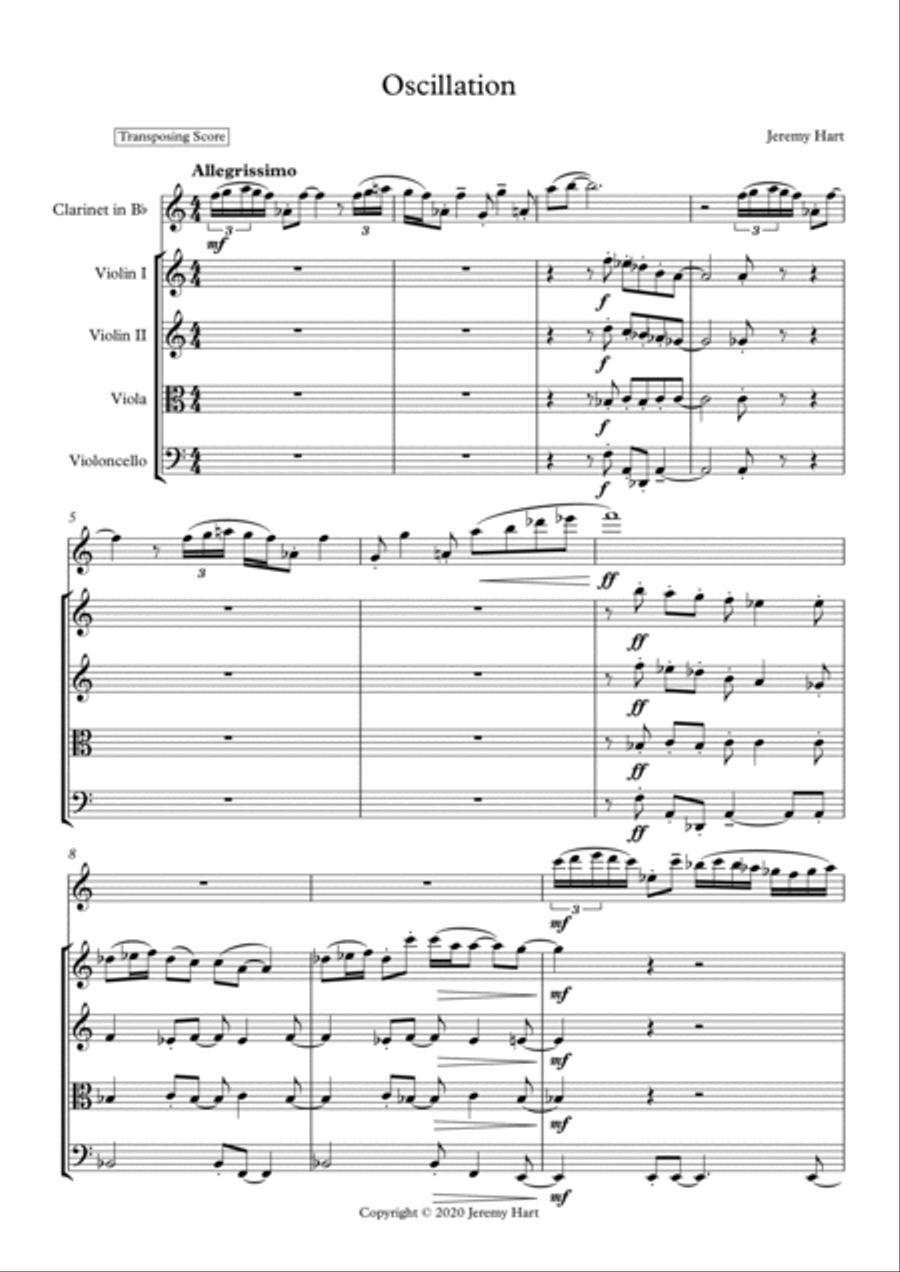
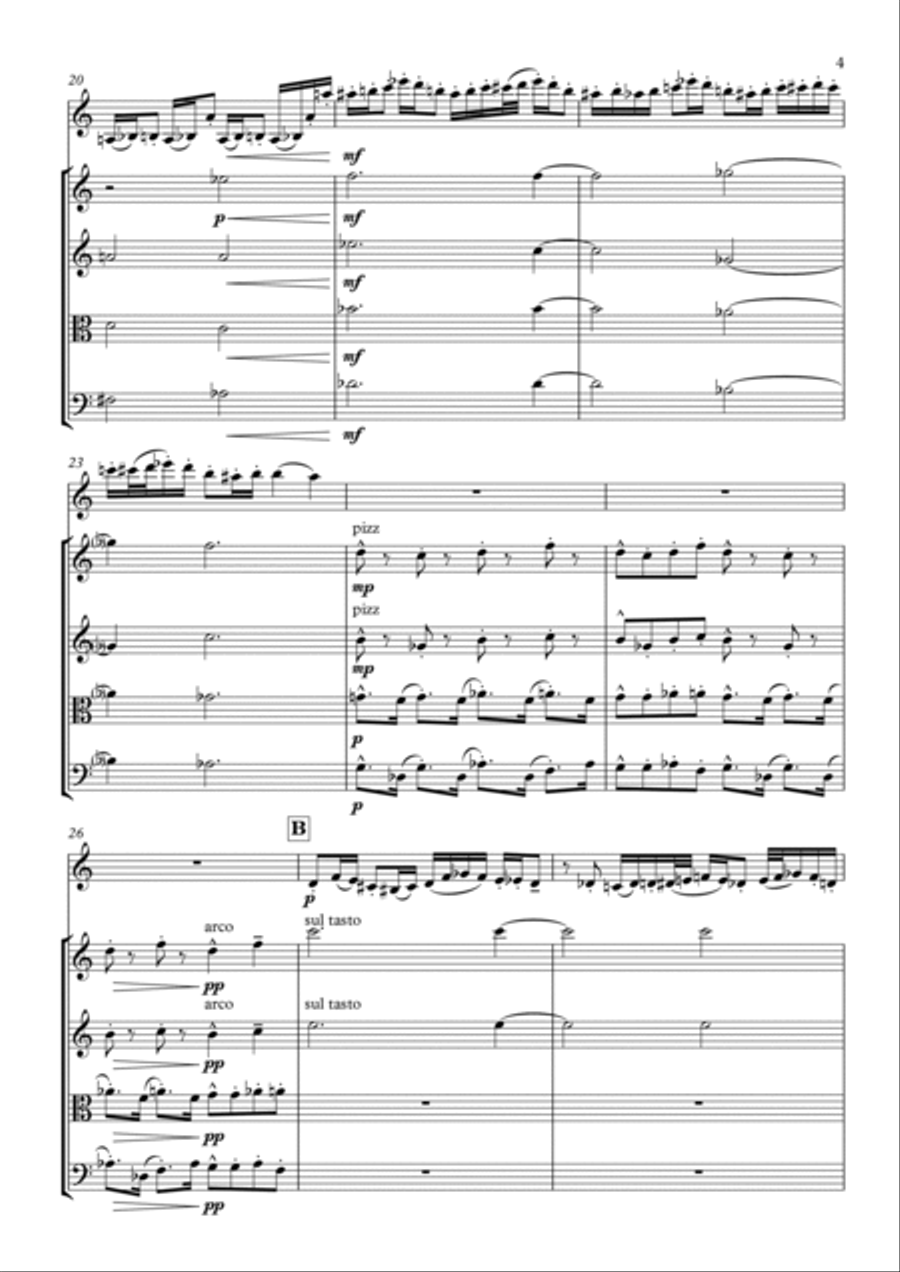
Composed by Jeremy Hart. 20th Century,Contemporary. Score and parts. 37 pages. Jeremy Graham Hart #6590413. Published by Jeremy Graham Hart (A0.1028192).Oscillation began as an experiment in coordination of a melody and harmony which are based on different means of organization. To this end, the clarinet is treated separately from the string quartet. The clarinet melody is constructed by means of limited interval usage. In mm.1–3 it can be observed that the melodic intervals are strictly limited to the use of a major 2nd/minor 7th or a major 6th/minor 3rd. By contrast, the string quartet has no limitation on its intervallic usage but always strives towards triadic harmonies in its accompanimental capacity and tends to converge on harmonies diatonic to the key. In addition, despite the proliferation of non-chord tones and transitionary passages in the string quartets’ music, the stable harmonies are written to have fairly parsimonious motion between them (if one were to reduce out the NCTs etc.)
The coordination of these two separate logics is done by the selection of anchor-pitches for the melodic phrases. For example, the melodic phrase in mm.4–7 oscillates around the pitch of G natural (transposed in the score), which it shares with the F major/minor 7th chord that is heard as the harmonic goal of the strings in m.7.
The teleology of the work can largely be traced in its melodic construction. Its opening phrase of mm.1–3 is anchored on G natural and ends on a C sharp, a tritone above the anchor, to simulate a half-cadence effect. The second phrase of mm.4–7 is still written on G natural but it ends on G as well, forming the authentic cadence and establishing a basic period as well as the work’s first theme.
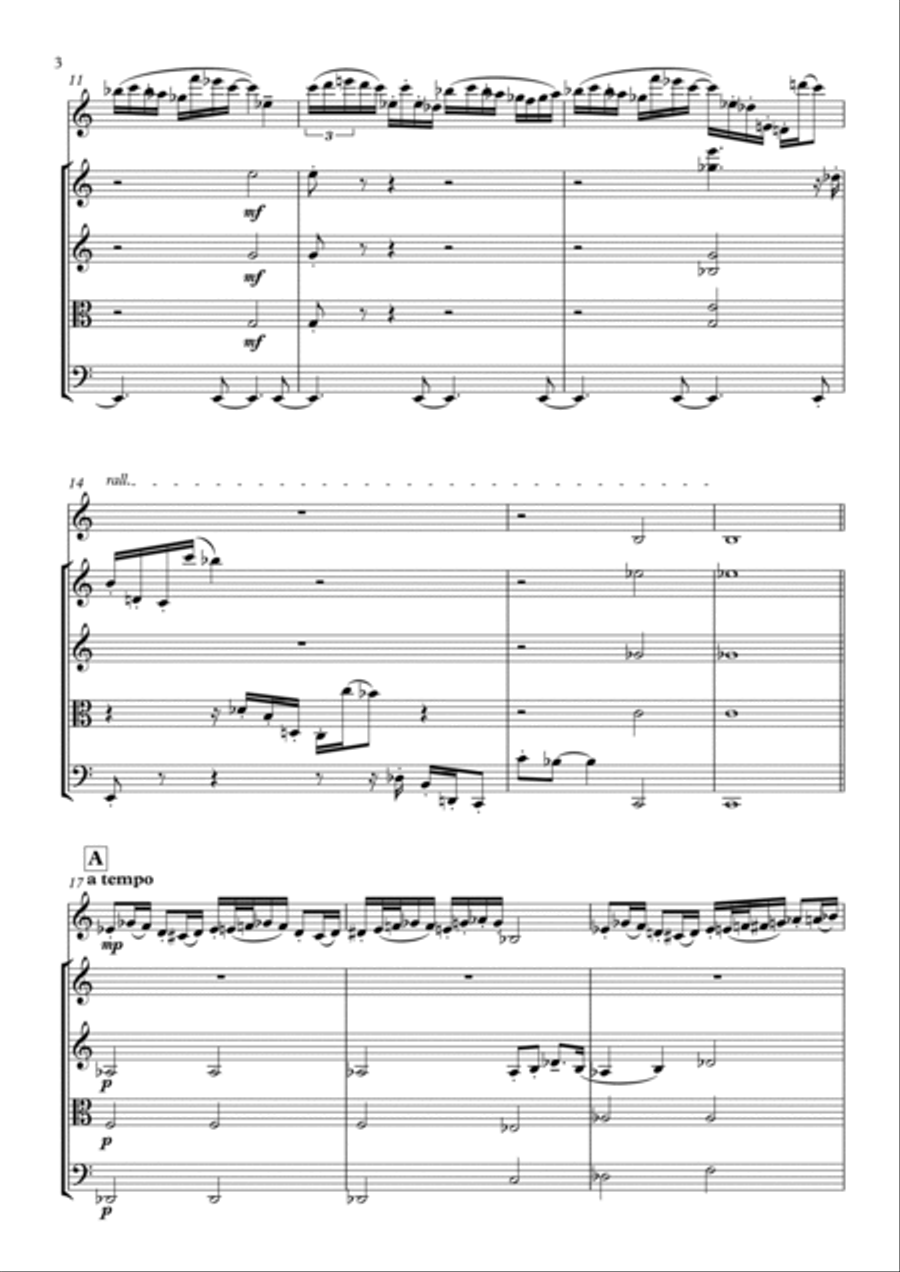
This is followed by second period which represents a dominant relationship to the first. The phrase at mm.10–13.2 is a rather extended utterance in comparison to the first two and is anchored on D natural. This is followed by 4-stage call and response across the ensemble (excluding the second violin) that leads the first section to a close at m.16 on a C diminished triad. Melodically, the first section is characterised by its limited used of a major 2nd/minor 7th or a major 6th/minor 3rd interval.
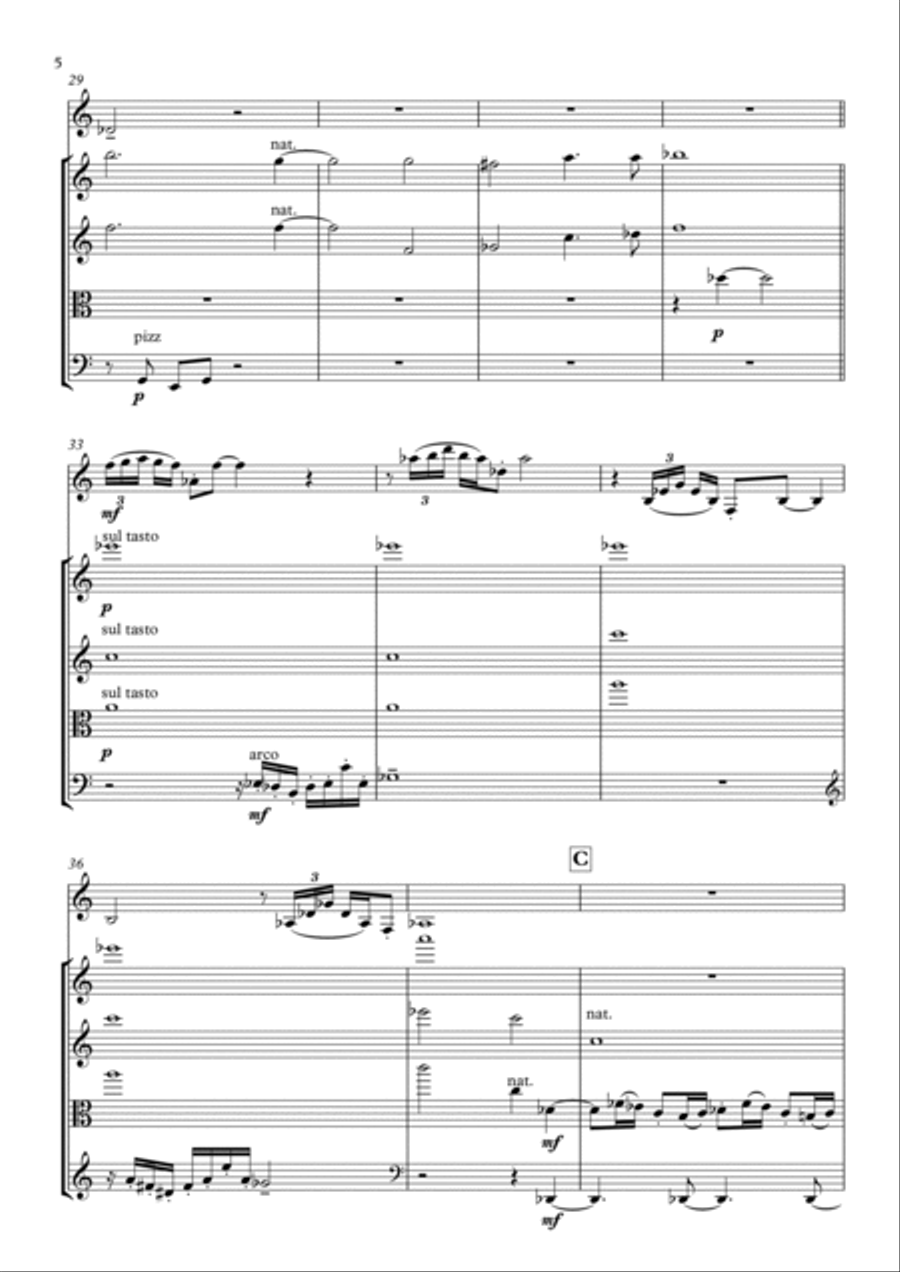
At m.17, the second section follows much the same process as the first, using anchor pitches as a means of coordination and formal definition, and alternating soloistic clarinet playing with activated harmonies in the strings. The primary difference is in the character of the second section’s theme with regards to its rhythmic profile as well as its intervallic content. Namely, these are limited to the use of a minor 3rd or minor 2nd and their inversions. The second section draws to a close at m.32, returning to the tonic harmony of the key. With the first and second sections complete, the work now proceeds into a developmental section.
Mm.33–84 largely consists of development of the two themes by manipulation of intervallic content as well as adjusting the placement of the thematic material withing the accompanimental context. This does include juxtaposition of the two themes (though one typicall becomes integrated into to accompaniment) as can be seen between the violin and viola at m.39. Variety is heightened by the introduction of episodic material such as the secondary melody performed by the clarinet at mm.40–41. The "Lento" section starting at m.53 introduces further rhythmic and metric adjustment of the thematic content.
A varied recapitulation occurs at mm.85–113 and is followed by a coda at mm.114–131.
About ArrangeMe
This product was created by a member of ArrangeMe, Hal Leonard's self-publishing community for independent composers, arrangers, and songwriters. Discover unique arrangements of popular titles and original compositions from diverse creators. The length, difficulty, and pricing are determined by the arranger or composer.
About Digital Downloads
Digital Downloads let you instantly access sheet music on your computer, tablet, or mobile device. Print your sheet music anywhere, anytime, or play it straight from your device—no internet connection is required after download.
Each Digital Download includes a watermark with your name, purchase date, and the number of copies purchased. You may only print or use the number of copies purchased. Redistribution or unauthorized printing is prohibited.
Similar Sheet Music & Digital Downloads
- ArrangeMe:
- Jeremy Graham Hart
- Series:
- ArrangeMe
- Ensemble:
- Small Ensemble
- Publisher:
- Jeremy Graham Hart