

Music for Children Minor: Dominant and Subdominant Triads by Gunild Keetman Recorder - Digital Sheet Music
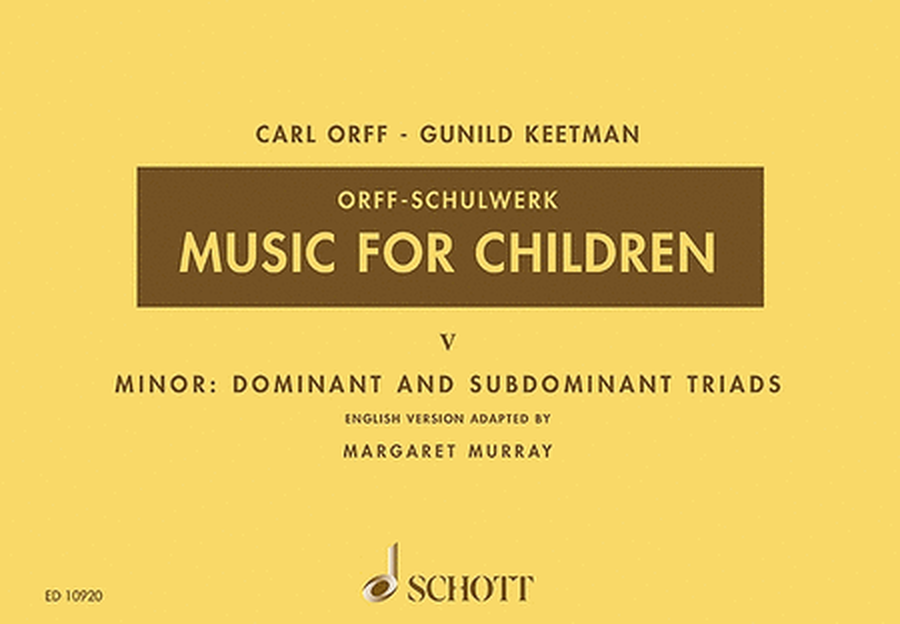
By Carl OrffCarl Orff devoted much of his life to the development of a philosophy of "Music for Children", based on his belief that music is the natural outcome of speech, rhythm and movement. His ideas and pioneering work have had a major influence on music and dance education throughout the world and today that work continues under the guidance of leading teachers and educators in many countries. The five basic German volumes of "Music for Children" by Carl Orff and Gunild Keetman were published between 1950 and 1954. Editions have since been published in Bolivia, Brazil, Canada, Czechoslovakia, Denmark, Estonia, France, Ghana, Great Britain (including a special Welsh edition), Greece, Italy, Japan, Korea, Latin-America, the Netherlands, Portugal, Spain, Sweden, Taiwan and the USA. In 1952 the first edition in translation appeared an English language adaptation by Doreen Hall and Arnold Walter for their Canadian and American students. A few years later, Margaret Murray independently developed a version (1957-1966), essentially to fulfil the needs of United Kingdom teachers. Inevitably the considerable growth of Orff-Schulwerk in the United States led to the publication of the American Edition (1977) to satisfy the requirements of a different educational system and national heritage. Orff-Schulwerk: Music for Children has proved itself to be a stimulating source of material for music teaching. Carl Orff's fundamental educational ideas have revitalized music education in nursery schools, at all levels of primary and secondary education and in special music schools, based on the concepts that: - music, dance and language are inter-related and animated through rhythm. - when children discover, invent, improvise and compose, their experience of music is intensified. These creative activities are complementary to those of interpreting and listening to music. - all who take part are encouraged to contribute, not only vocally but also instrumentally. - the Orff approach to music education is many sided; it is concerned with practical music-making, it provides fundamental experiences and it lays the foundation for a comprehensive musical training. - movement games and activities for body awareness in space, time and flow, lead to movement improvisation and dance forms. - music and dance have been notated in many different ways in history. Various ways of writing down sounds and music, as well as playing from and interpreting different kinds of sources are being explored. Today, countless teachers and institutions are using these ideas. More and more teachers look for ways of involving their students in active music making. In particular, they seek to challenge their pupils' creativity by the use of music, dance and speech - as media of human expression - as a foundation of all education. A prerequisite for work in Orff-Schulwerk is the artistic and pedagogical training of teachers. The Orff Institute was founded in 1961 as a Department of the 'Mozarteum', in Salzburg, Austria. Training offered includes a four-year diploma course, a two-year post-graduate course, and a one-year-course in English. At the opening of the Orff Institute in Salzburg in 1963, Carl Orff ended his speech with a quotation from Schiller: 'I have done my part, now do yours.' That challenge has been taken up by teachers worldwide. Murray Edition English adaption, with additional material, by Margaret Murray. Besed on, and containing all the rhythmic and instrumental material from the main five volumes of the original German edition. Contents of this fifth volume: Songs and pieces making further use of the modes introduced in Vol. 4, with the addition of the more usual forms of the minor scale with the sharpened seventh. The settings of short dramatic scenes concludes the book.
Details
Summary
- Publishers:
- Schott Music - Digital
- Format:
- Performance Score Vocal Score
- Item types:
- Digital
- Instructionals:
- Orff Schulwerk
- Artist:
- Gunild Keetman
- Usages:
- School and Community
Detailed Description
SKU: S9.Q49516
Minor: Dominant and Subdominant Triads. Arranged by Margaret Murray. This edition: score for voice and/or instruments. Orff-Schulwerk. Vocal Score and performing score. Op. 5. Schott Music - Digital #Q49516. Published by Schott Music - Digital (S9.Q49516).English.
Carl Orff devoted much of his life to the development of a philosophy of "Music for Children", based on his belief that music is the natural outcome of speech, rhythm and movement. His ideas and pioneering work have had a major influence on music and dance education throughout the world and today that work continues under the guidance of leading teachers and educators in many countries. The five basic German volumes of "Music for Children" by Carl Orff and Gunild Keetman were published between 1950 and 1954. Editions have since been published in Bolivia, Brazil, Canada, Czechoslovakia, Denmark, Estonia, France, Ghana, Great Britain (including a special Welsh edition), Greece, Italy, Japan, Korea, Latin-America, the Netherlands, Portugal, Spain, Sweden, Taiwan and the USA. In 1952 the first edition in translation appeared an English language adaptation by Doreen Hall and Arnold Walter for their Canadian and American students. A few years later, Margaret Murray independently developed a version (1957-1966), essentially to fulfil the needs of United Kingdom teachers. Inevitably the considerable growth of Orff-Schulwerk in the United States led to the publication of the American Edition (1977) to satisfy the requirements of a different educational system and national heritage. Orff-Schulwerk: Music for Children has proved itself to be a stimulating source of material for music teaching. Carl Orff's fundamental educational ideas have revitalized music education in nursery schools, at all levels of primary and secondary education and in special music schools, based on the concepts that: - music, dance and language are inter-related and animated through rhythm. - when children discover, invent, improvise and compose, their experience of music is intensified. These creative activities are complementary to those of interpreting and listening to music. - all who take part are encouraged to contribute, not only vocally but also instrumentally. - the Orff approach to music education is many sided; it is concerned with practical music-making, it provides fundamental experiences and it lays the foundation for a comprehensive musical training. - movement games and activities for body awareness in space, time and flow, lead to movement improvisation and dance forms. - music and dance have been notated in many different ways in history. Various ways of writing down sounds and music, as well as playing from and interpreting different kinds of sources are being explored. Today, countless teachers and institutions are using these ideas. More and more teachers look for ways of involving their students in active music making. In particular, they seek to challenge their pupils' creativity by the use of music, dance and speech - as media of human expression - as a foundation of all education. A prerequisite for work in Orff-Schulwerk is the artistic and pedagogical training of teachers. The Orff Institute was founded in 1961 as a Department of the 'Mozarteum', in Salzburg, Austria. Training offered includes a four-year diploma course, a two-year post-graduate course, and a one-year-course in English. At the opening of the Orff Institute in Salzburg in 1963, Carl Orff ended his speech with a quotation from Schiller: 'I have done my part, now do yours.' That challenge has been taken up by teachers worldwide. Murray Edition English adaption, with additional material, by Margaret Murray. Besed on, and containing all the rhythmic and instrumental material from the main five volumes of the original German edition. Contents of this fifth volume: Songs and pieces making further use of the modes introduced in Vol. 4, with the addition of the more usual forms of the minor scale with the sharpened seventh. The settings of short dramatic scenes concludes the book.
About Digital Downloads
Digital Downloads let you instantly access sheet music on your computer, tablet, or mobile device. Print your sheet music anywhere, anytime, or play it straight from your device—no internet connection is required after download.
Each Digital Download includes a watermark with your name, purchase date, and the number of copies purchased. You may only print or use the number of copies purchased. Redistribution or unauthorized printing is prohibited.
Song List
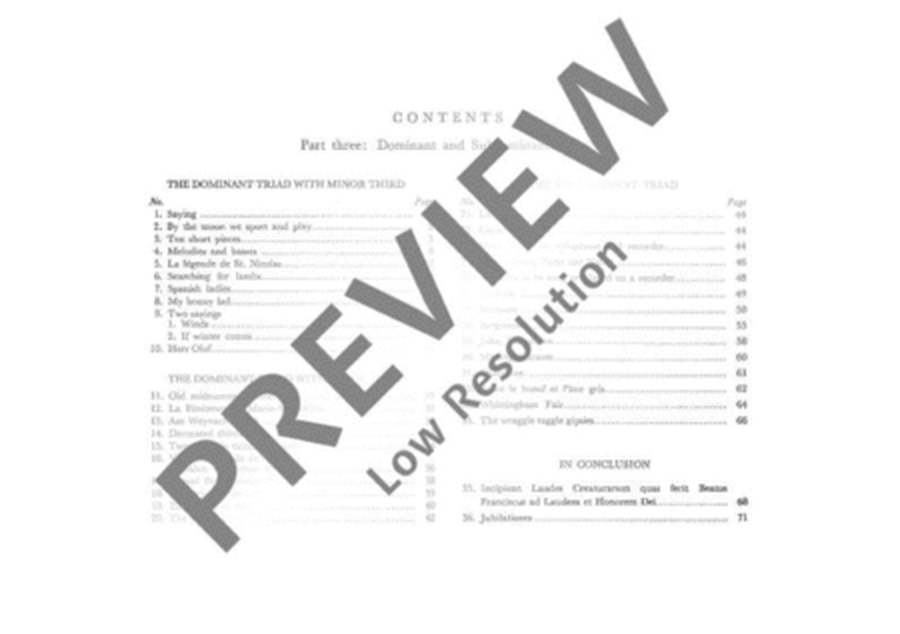
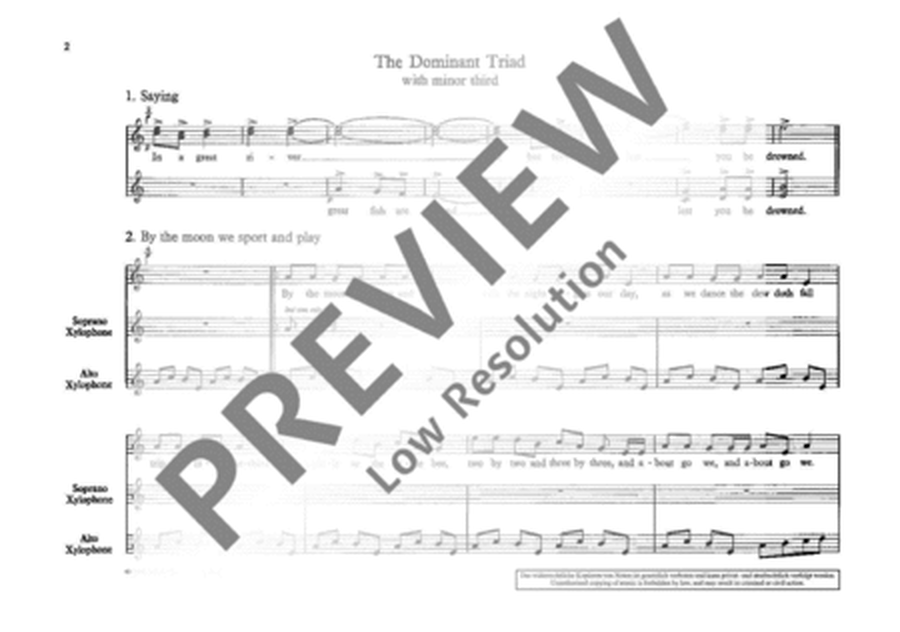
The Dominant Triad With Minor Third: Sying
By the moon we sport and play
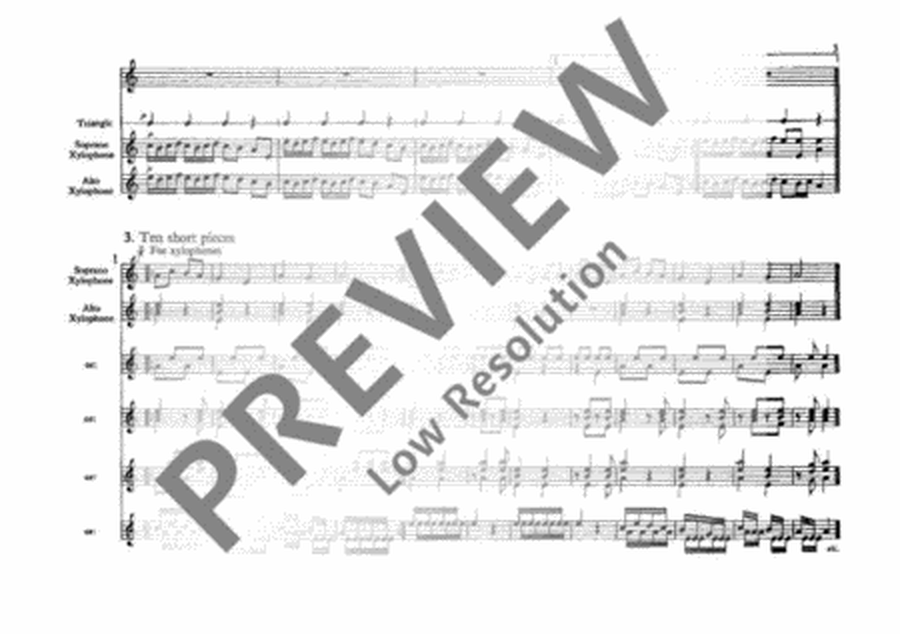
Ten short pieces
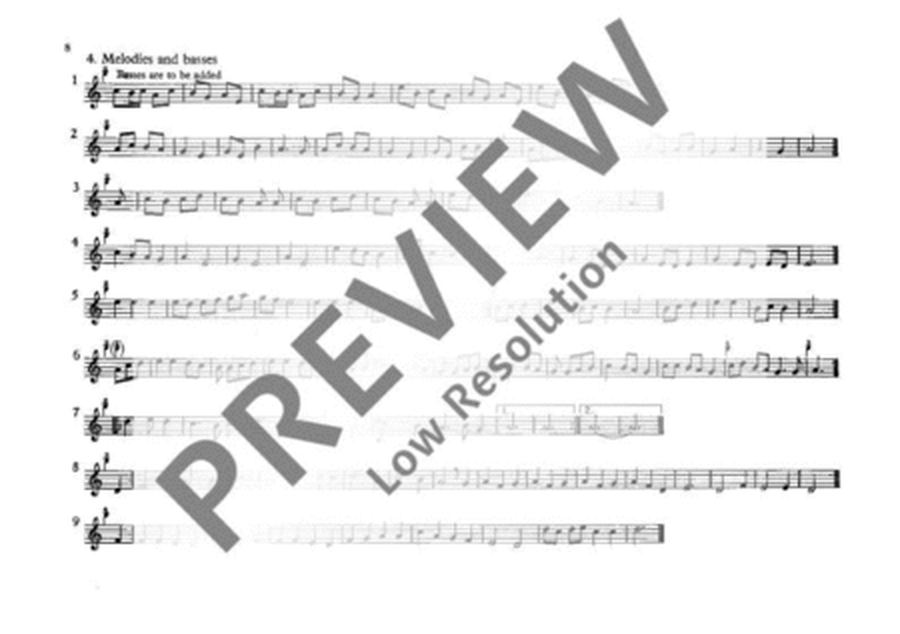
Melodies and basses
La legende de St. Nicolas
Searching for Lambs
Spanish Ladies
My Bonny Lad
Two sayings: Winds
If winter comes
Herr Olof
The Dominant Triad With Major Third: Old midsummer dance
La Penitence de Marie-Madeleine
Am Weynachabend
Decorated thirds
Two pieces in thirds and sixths
Villancico-Baile de Nadal
Quand Biron Voulut Danser
Country sayings
Zu Maien, zu Maien
The loyal lover
The Subdominant Triad: Lamento
Country saying
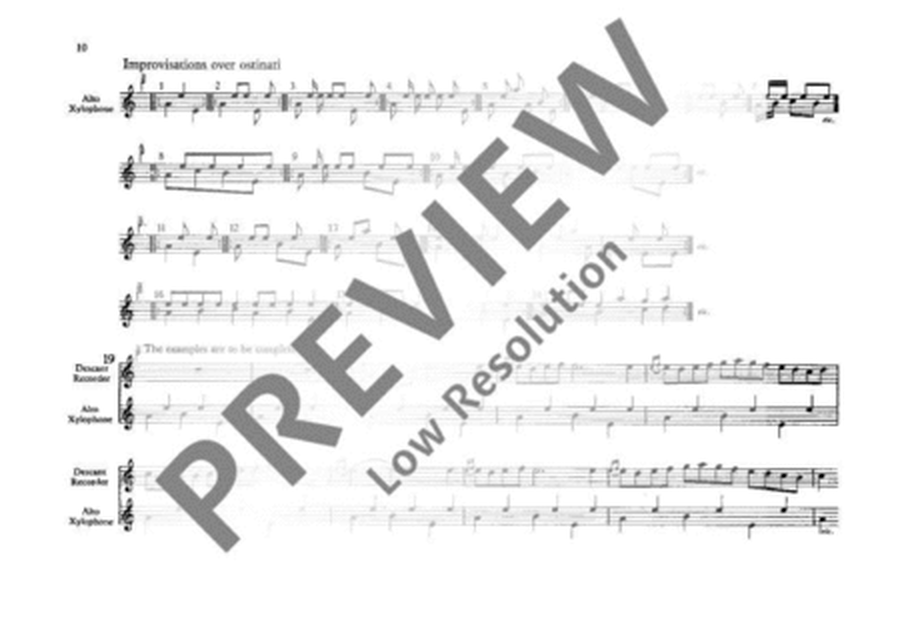
Short pieces for xylophone and recorder
Aria: Komm Trost der Nacht
Melodies to be sung or played on a recorder
Carillon
Berceuse
Bergerettes
John Barleycorn
Making descants
Chaconne
Entre Le Boeuf Et L'ane Gris
Whittingham Fair
The Wraggle Taggle Gipsies
In Conclusion: Incipiunt Laudes Creaturarum quas fecit Beatus Franciscus ad Laudem et Honorem Dei
Jubilationes
Thythms for Development
Two Dances
Pieces Using Speech
Recitative
Finale
Similar Sheet Music & Digital Downloads
- More by this Composer:
- Gunild Keetman Gunild Keetman Orff Instrument Gunild Keetman Choir Gunild Keetman Voice
- Artists:
- Carl Orff Gunild Keetman
- Publisher:
- Schott Music - Digital