
Details
Summary
- Instrument:
- Violin
- Ensembles:
- String Orchestra String Trio
- Genres:
- Classical Standards Traditional
- Composers:
- Wolfgang Amadeus Mozart
- Publishers:
- jmsgu3
- Series:
- ArrangeMe
- Format:
- Score and Parts
- Item types:
- Digital
- Level:
- Beginning
- Artist:
- Wolfgang Amadeus Mozart
- Arrangers:
- James M. Guthrie
- Usages:
- School and Community
- Number of Pages:
- 11
Detailed Description
SKU: A0.1657120
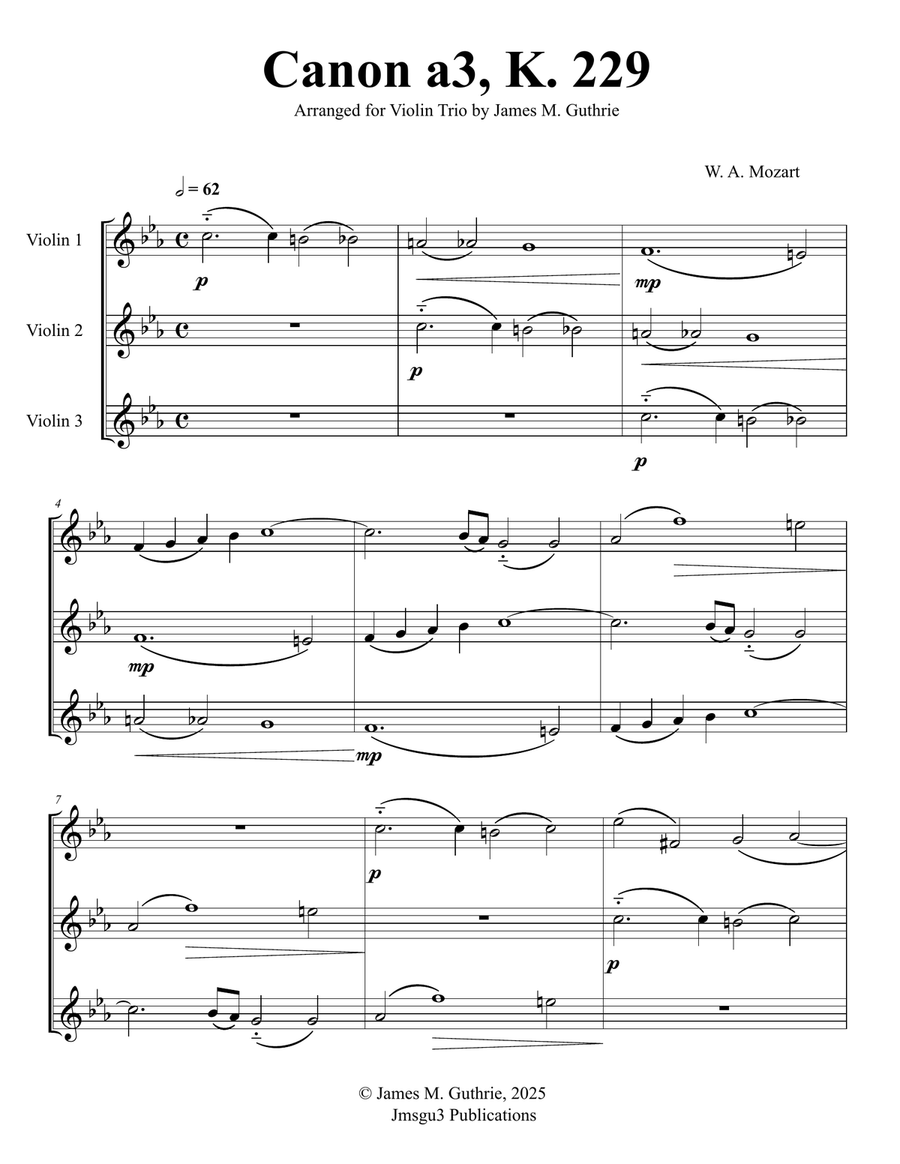
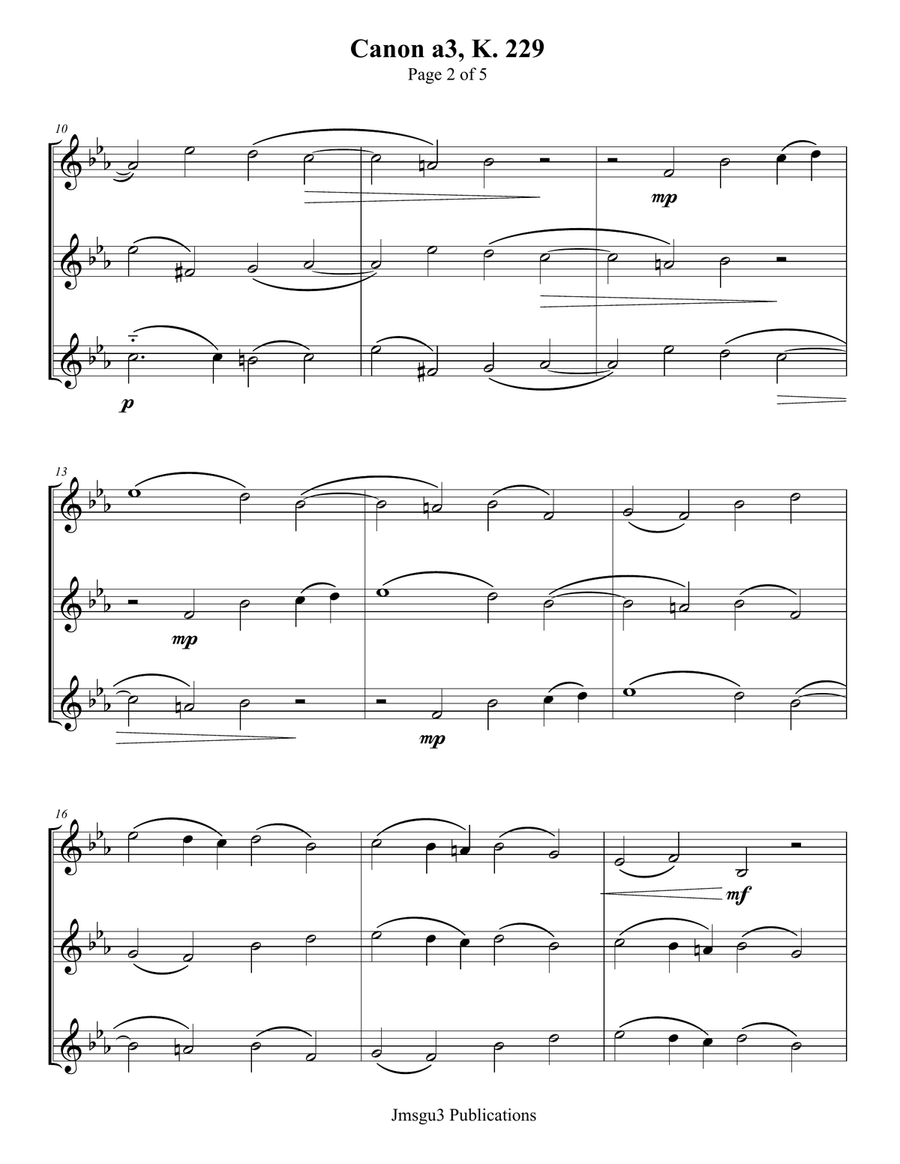
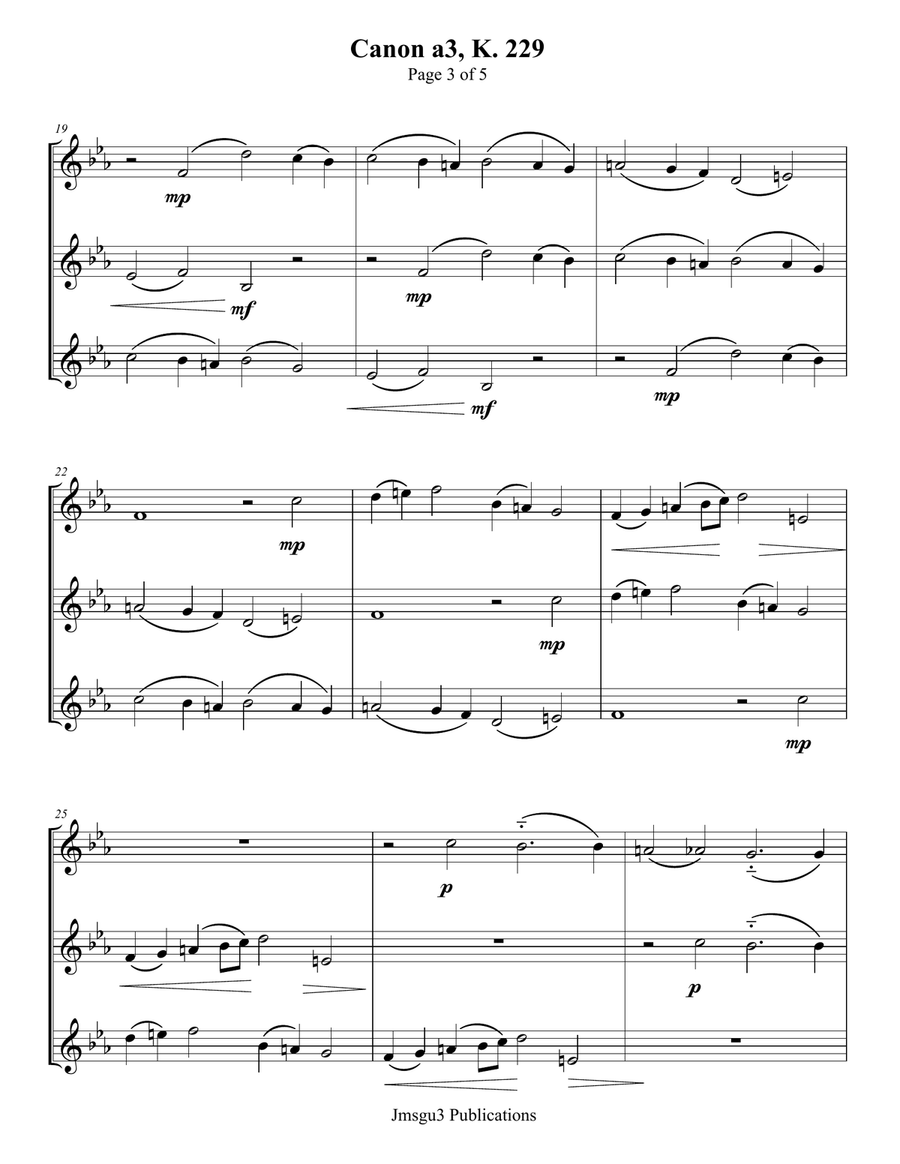
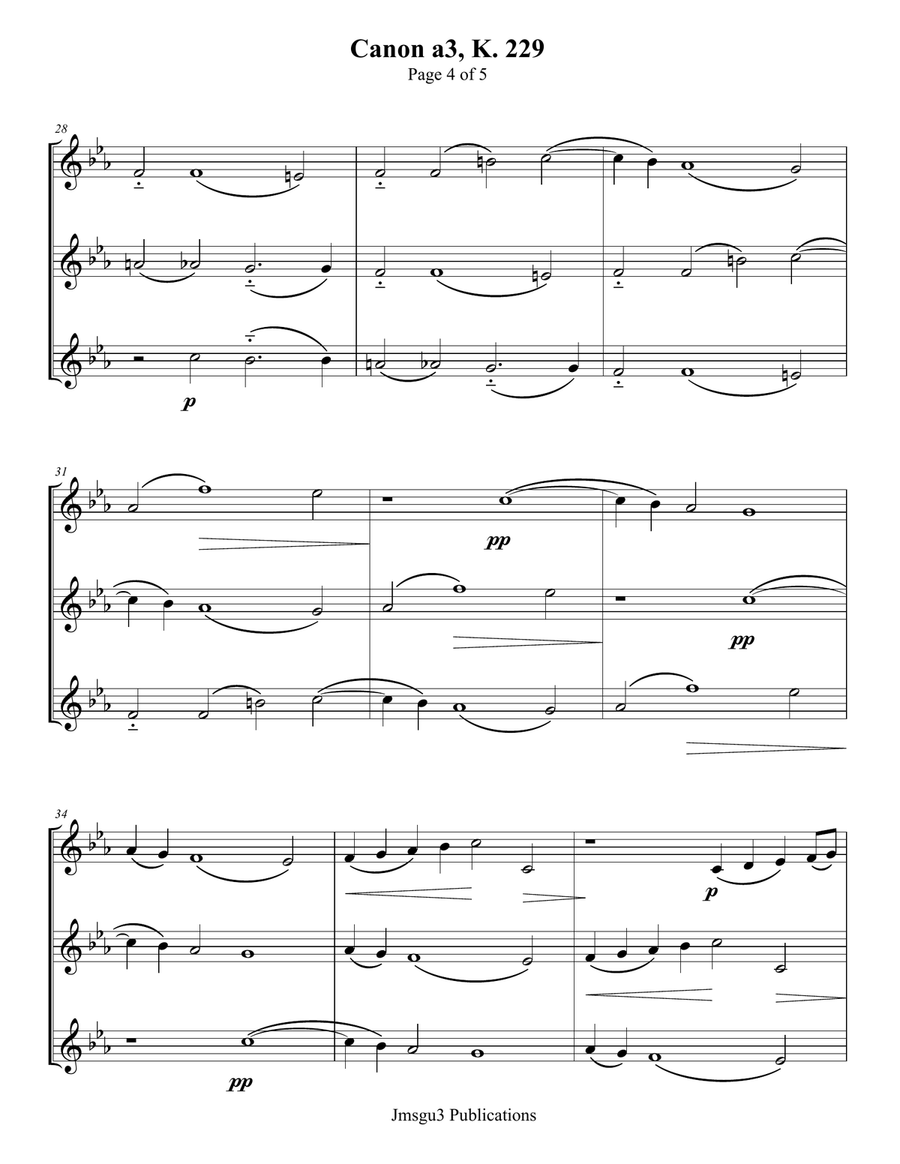
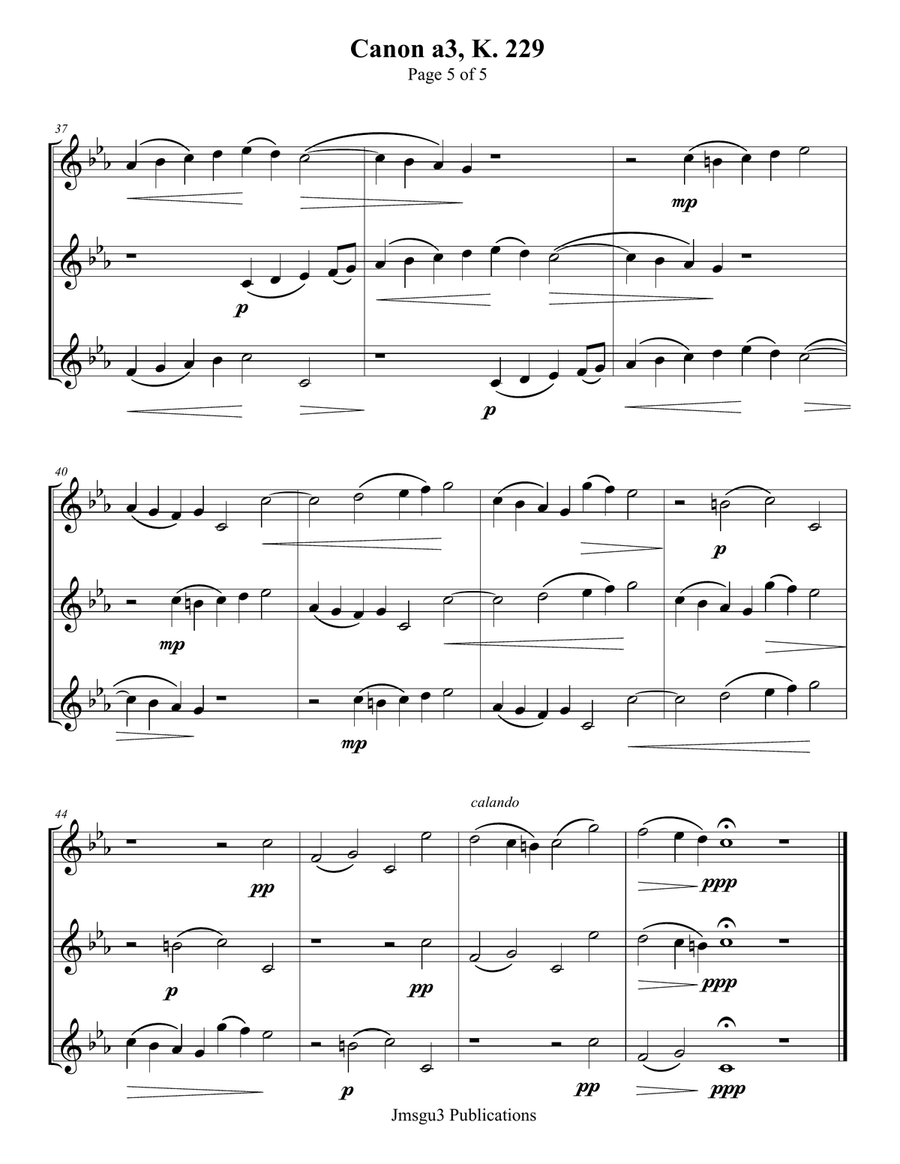
Composed by Wolfgang Amadeus Mozart. Arranged by James M. Guthrie. This edition: pdf, streaming. Chamber, Classical, Historic, Standards, Traditional. 11 pages. Jmsgu3 #1223481. Published by jmsgu3 (A0.1657120).K. 229 (K⁶.382a): A canon for 3 voices in C minor, "Sie ist dahin," composed in 1782.
How Mozart's Canon "Sie ist dahin" Reflects His Style in 1782
Integration of Contrapuntal Technique
"Sie ist dahin" is a pure three-part canon, showcasing Mozart’s mastery of counterpoint, a technique he valued throughout his career and revisited in mature works like the Requiem. His exposure to the stile osservato under Padre Martini and his ongoing interest in fusing contrapuntal rigor with expressive clarity are evident in this piece.
Expressive Harmony and Chromaticism
The canon’s harmonic language, particularly its use of chromaticism and expressive dissonance, reflects Mozart’s late 18th-century style, where he pushed the boundaries of harmony for emotional effect. For example, at the phrase "sie ist dahin," the music features a poignant clash (F♮ against E and D♯), making the sense of loss palpable and demonstrating Mozart’s ability to heighten text through harmonic color.
Text Setting and Emotional Depth
Setting a poem by Hölty, Mozart moves beyond the lighter, often humorous tone of his earlier canons, instead engaging with themes of loss and melancholy. This aligns with the broader trend in his 1782 works, where he increasingly explored deeper emotional territory, both in vocal and instrumental music.
Economy and Clarity
Despite the contrapuntal complexity, the canon is concise and clear, hallmarks of Mozart’s Viennese style in the early 1780s. His mature works often strike a balance between technical sophistication and accessibility, making even complex forms like the canon feel natural and expressive.
Summary
"Sie ist dahin" encapsulates Mozart’s 1782 style by blending contrapuntal craftsmanship, expressive harmonic language, and emotional depth within a compact, vocally idiomatic framework. It stands as a testament to his ability to infuse even small-scale forms with profound artistry
About ArrangeMe
This product was created by a member of ArrangeMe, Hal Leonard's self-publishing community for independent composers, arrangers, and songwriters. Discover unique arrangements of popular titles and original compositions from diverse creators. The length, difficulty, and pricing are determined by the arranger or composer.
About Digital Downloads
Digital Downloads let you instantly access sheet music on your computer, tablet, or mobile device. Print your sheet music anywhere, anytime, or play it straight from your device—no internet connection is required after download.
Each Digital Download includes a watermark with your name, purchase date, and the number of copies purchased. You may only print or use the number of copies purchased. Redistribution or unauthorized printing is prohibited.
Similar Sheet Music & Digital Downloads
- More by this Composer:
- Wolfgang Amadeus Mozart Wolfgang Amadeus Mozart Piano Wolfgang Amadeus Mozart Piano Accompaniment Wolfgang Amadeus Mozart Violin
- ArrangeMe:
- jmsgu3
- Series:
- ArrangeMe
- Artists:
- Wolfgang Amadeus Mozart James M. Guthrie
- Ensemble:
- String Orchestra String Trio
- Publisher:
- jmsgu3