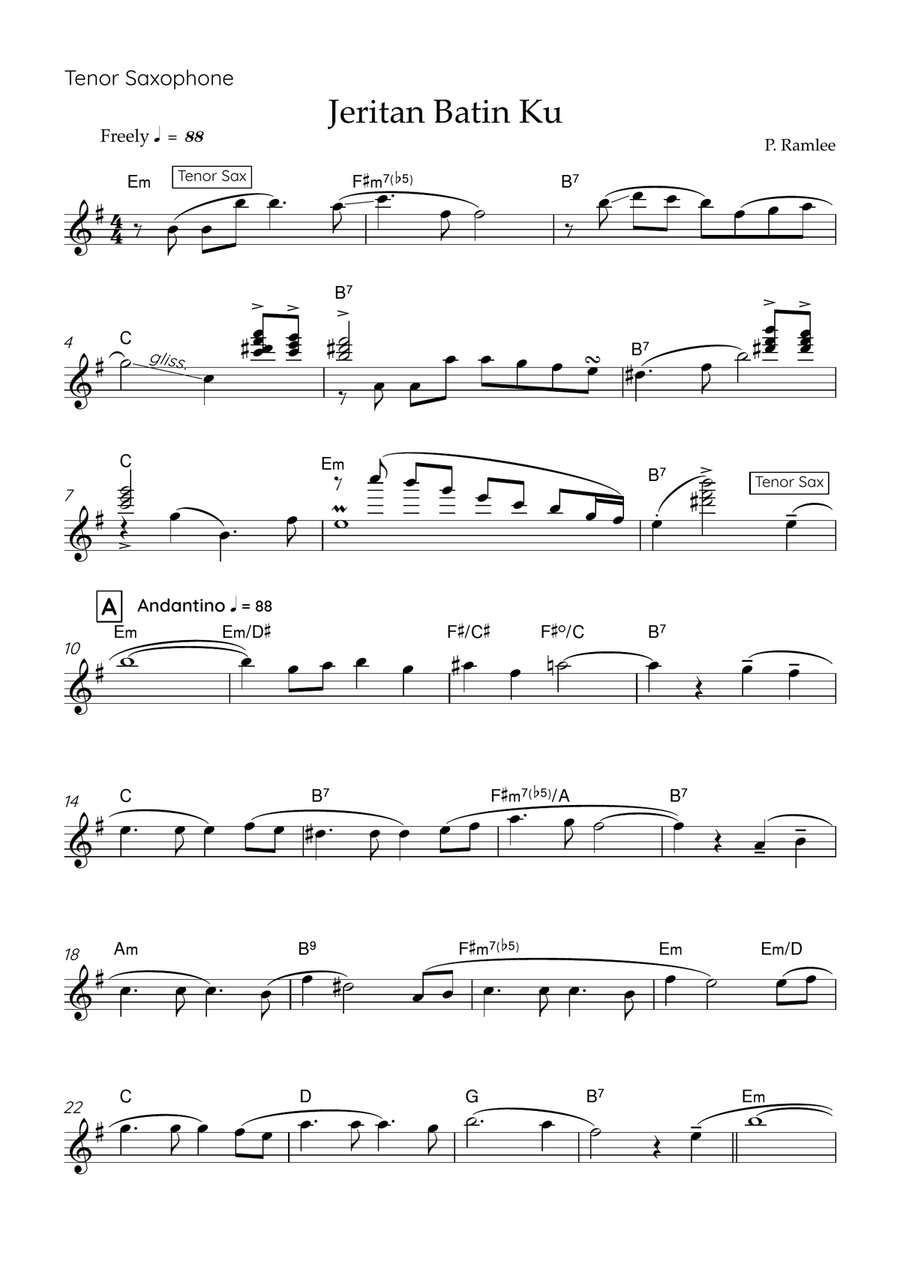
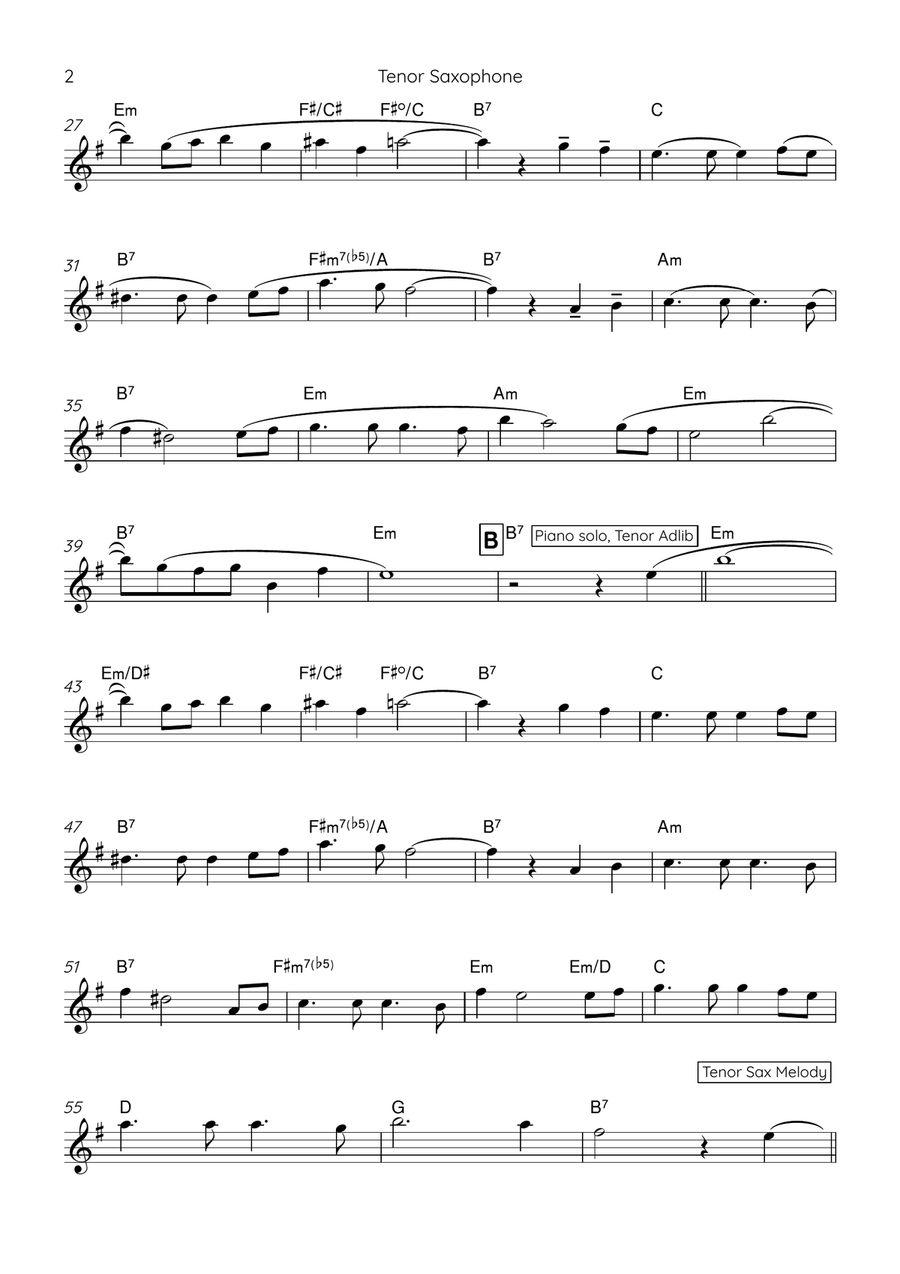
Jeritan Batin Ku B-Flat Instrument - Digital Sheet Music
The Genius Behind the Scream P. Ramlee was an iconic Malaysian-Singaporean actor, director, singer, songwriter, and composer. Often called the "renaissance man" of Malay entertainment, he is best known for pioneering the Golden Age of Malay Cinema in the 1950s and 1960s, composing over 250 timeless songs. He mastered every single dimension of the filmmaking and musical process; rather than specialising in one craft, he simultaneously served as an actor, director, scriptwriter, lyricist, singer, and musical composer. Nowhere is this multi-dimensional mastery more hauntingly evident than in "Jeritan Batinku" (Screams of My Soul), the legendary centerpiece of his 1962 cinematic masterpiece, Ibu Mertua-ku. In his films and music, P. Ramlee used sharp, satirical dialogue to highlight serious societal issues, such as the destructive class divide in Antara Dua Darjat. In Ibu Mertua-ku, that same critique of elite snobbery culminates in "Jeritan Batinku"—a track born from the utter despair of a working-class musician crushed by bourgeois cruelty. Instead of treating songs as random musical breaks, he pioneered using music as a functional narrative device. In his films, tracks directly pushed the plot forward or served as a thematic bridge between characters. "Jeritan Batinku" acts as the ultimate narrative anchor; it is not just a song, but the literal sonic manifestation of the protagonist Kassim Selamat's descent into blindness, heartbreak, and madness. P. Ramlee did not have formal musical training, yet he successfully blended traditional Malay melodies, theater (bangsawan), and street dance rhythms (ronggeng) with Western jazz harmonies, Latin arrangements, and Middle Eastern melodies. With "Jeritan Batinku", he strips away traditional bounds to deliver a masterclass in melancholy, leaning heavily into a western jazz-blues progression. The song features a weeping, prominent tenor saxophone solo that echoes the protagonist’s internal torment perfectly. He studied the distinct working styles of Hollywood, Japanese, and Indian directors, extracted their core technical frameworks, and refashioned them into a completely unique Malay cinematic identity. "Jeritan Batinku" stands as the crowning achievement of this cross-cultural synthesis—a piece of music where global cinematic melodrama and raw jazz-blues instrumentation fuse seamlessly with a deeply resonant Malay soul.
Details
Summary
- Format:
- Fake Book
- Item types:
- Digital
- Level:
- Early Intermediate
- Usages:
- School and Community
- Number of Pages:
- 3
Detailed Description
SKU: A0.1916577
By P Ramlee. Composed by P Ramlee. Arranged by Johnson Lee. This edition: pdf. Film/TV. Lead Sheet / Fake Book. 3 pages. Johnson lee #1474327. Published by johnson lee (A0.1916577).The Genius Behind the Scream P. Ramlee was an iconic Malaysian-Singaporean actor, director, singer, songwriter, and composer. Often called the "renaissance man" of Malay entertainment, he is best known for pioneering the Golden Age of Malay Cinema in the 1950s and 1960s, composing over 250 timeless songs. He mastered every single dimension of the filmmaking and musical process; rather than specialising in one craft, he simultaneously served as an actor, director, scriptwriter, lyricist, singer, and musical composer. Nowhere is this multi-dimensional mastery more hauntingly evident than in "Jeritan Batinku" (Screams of My Soul), the legendary centerpiece of his 1962 cinematic masterpiece, Ibu Mertua-ku. In his films and music, P. Ramlee used sharp, satirical dialogue to highlight serious societal issues, such as the destructive class divide in Antara Dua Darjat. In Ibu Mertua-ku, that same critique of elite snobbery culminates in "Jeritan Batinku"—a track born from the utter despair of a working-class musician crushed by bourgeois cruelty. Instead of treating songs as random musical breaks, he pioneered using music as a functional narrative device. In his films, tracks directly pushed the plot forward or served as a thematic bridge between characters. "Jeritan Batinku" acts as the ultimate narrative anchor; it is not just a song, but the literal sonic manifestation of the protagonist Kassim Selamat's descent into blindness, heartbreak, and madness. P. Ramlee did not have formal musical training, yet he successfully blended traditional Malay melodies, theater (bangsawan), and street dance rhythms (ronggeng) with Western jazz harmonies, Latin arrangements, and Middle Eastern melodies. With "Jeritan Batinku", he strips away traditional bounds to deliver a masterclass in melancholy, leaning heavily into a western jazz-blues progression. The song features a weeping, prominent tenor saxophone solo that echoes the protagonist’s internal torment perfectly. He studied the distinct working styles of Hollywood, Japanese, and Indian directors, extracted their core technical frameworks, and refashioned them into a completely unique Malay cinematic identity. "Jeritan Batinku" stands as the crowning achievement of this cross-cultural synthesis—a piece of music where global cinematic melodrama and raw jazz-blues instrumentation fuse seamlessly with a deeply resonant Malay soul.
About ArrangeMe
This product was created by a member of ArrangeMe, Hal Leonard's self-publishing community for independent composers, arrangers, and songwriters. Discover unique arrangements of popular titles and original compositions from diverse creators. The length, difficulty, and pricing are determined by the arranger or composer.
About Digital Downloads
Digital Downloads let you instantly access sheet music on your computer, tablet, or mobile device. Print your sheet music anywhere, anytime, or play it straight from your device—no internet connection is required after download.
Each Digital Download includes a watermark with your name, purchase date, and the number of copies purchased. You may only print or use the number of copies purchased. Redistribution or unauthorized printing is prohibited.