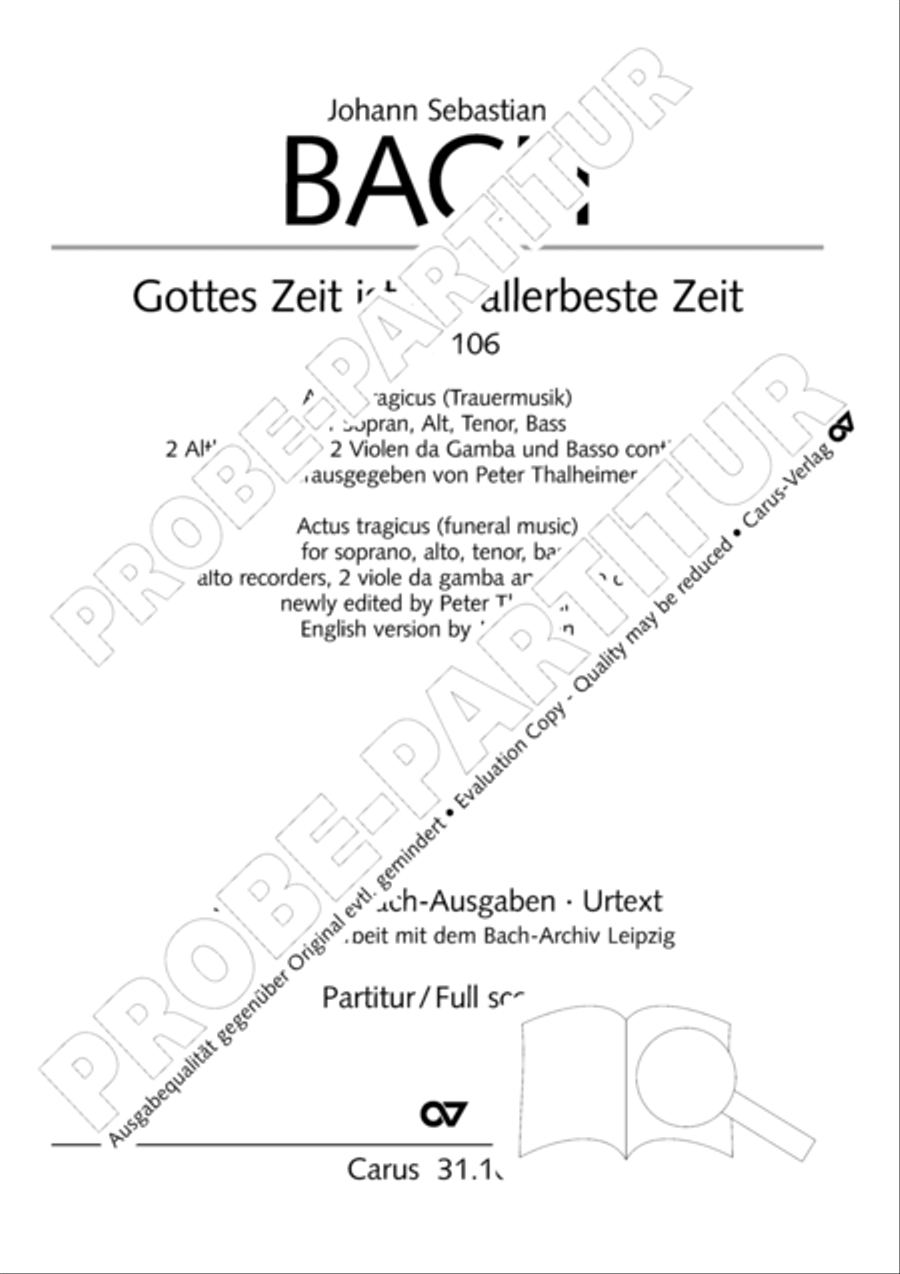


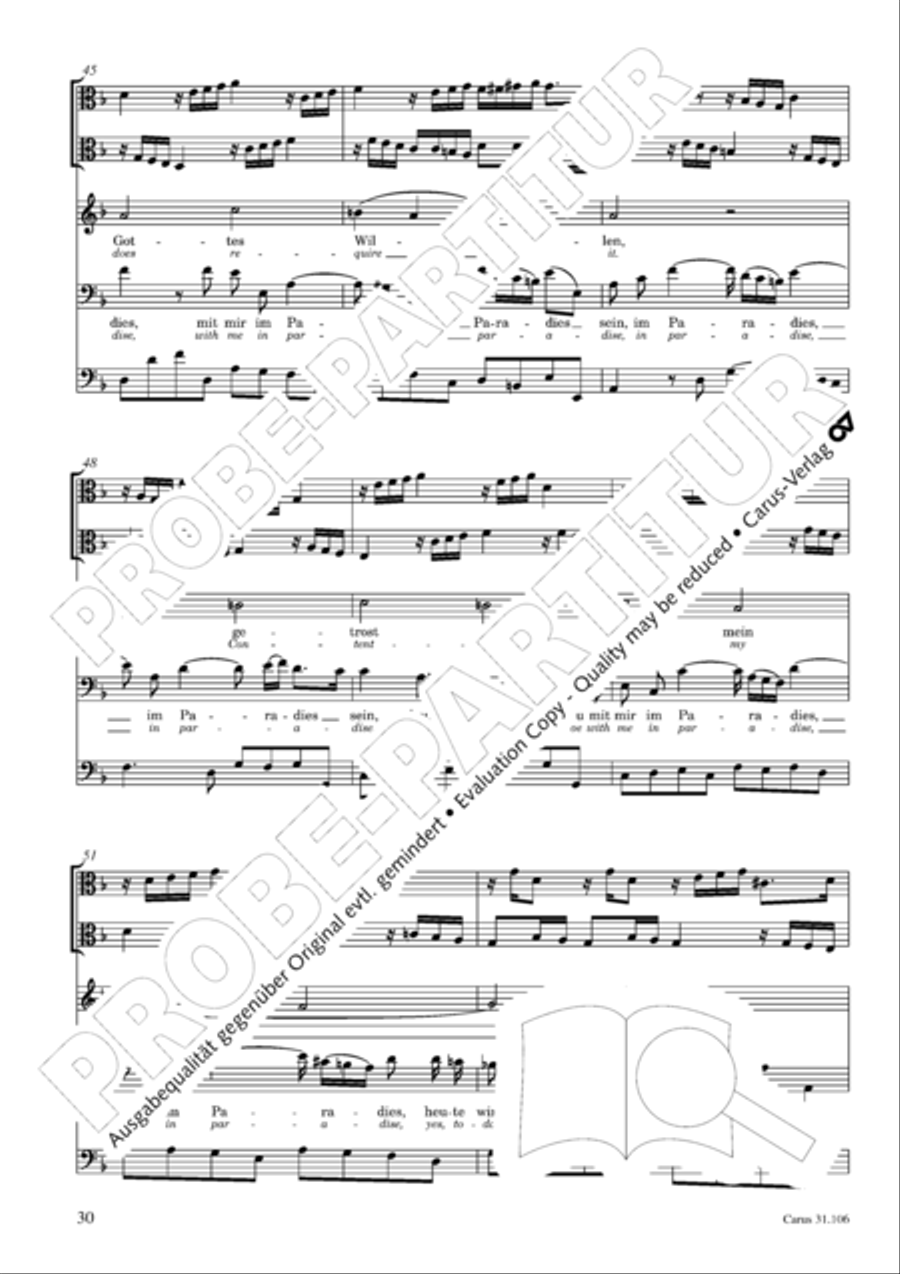
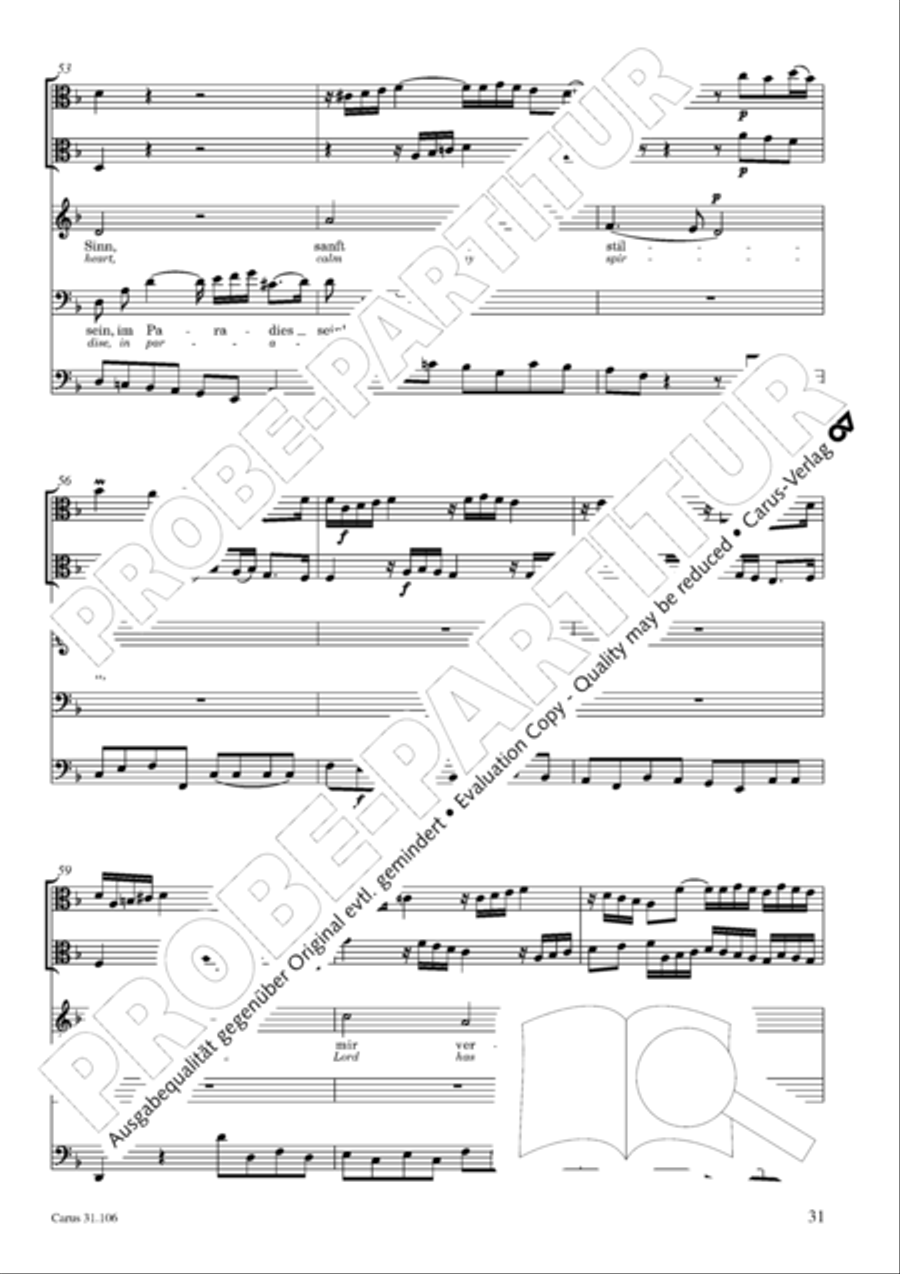
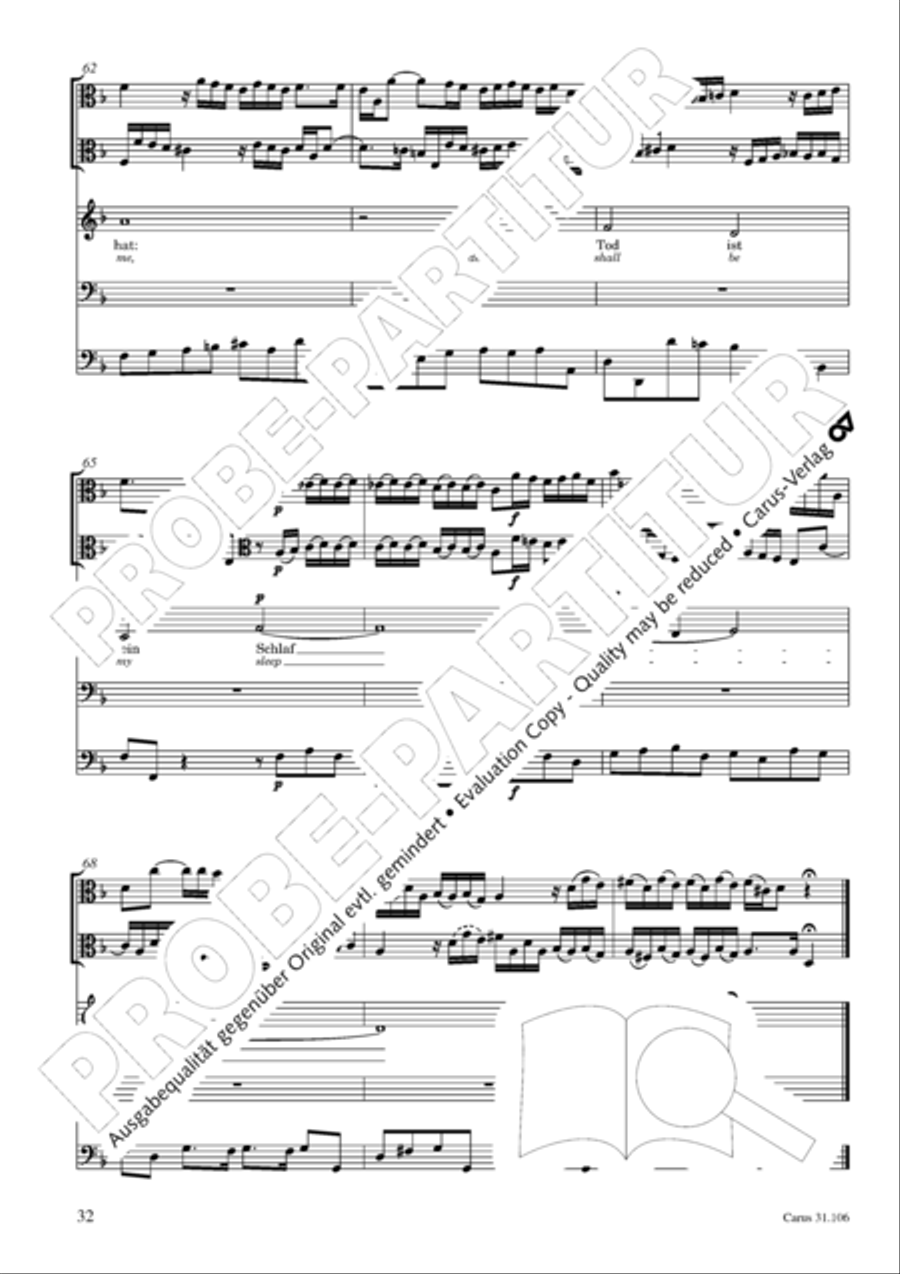
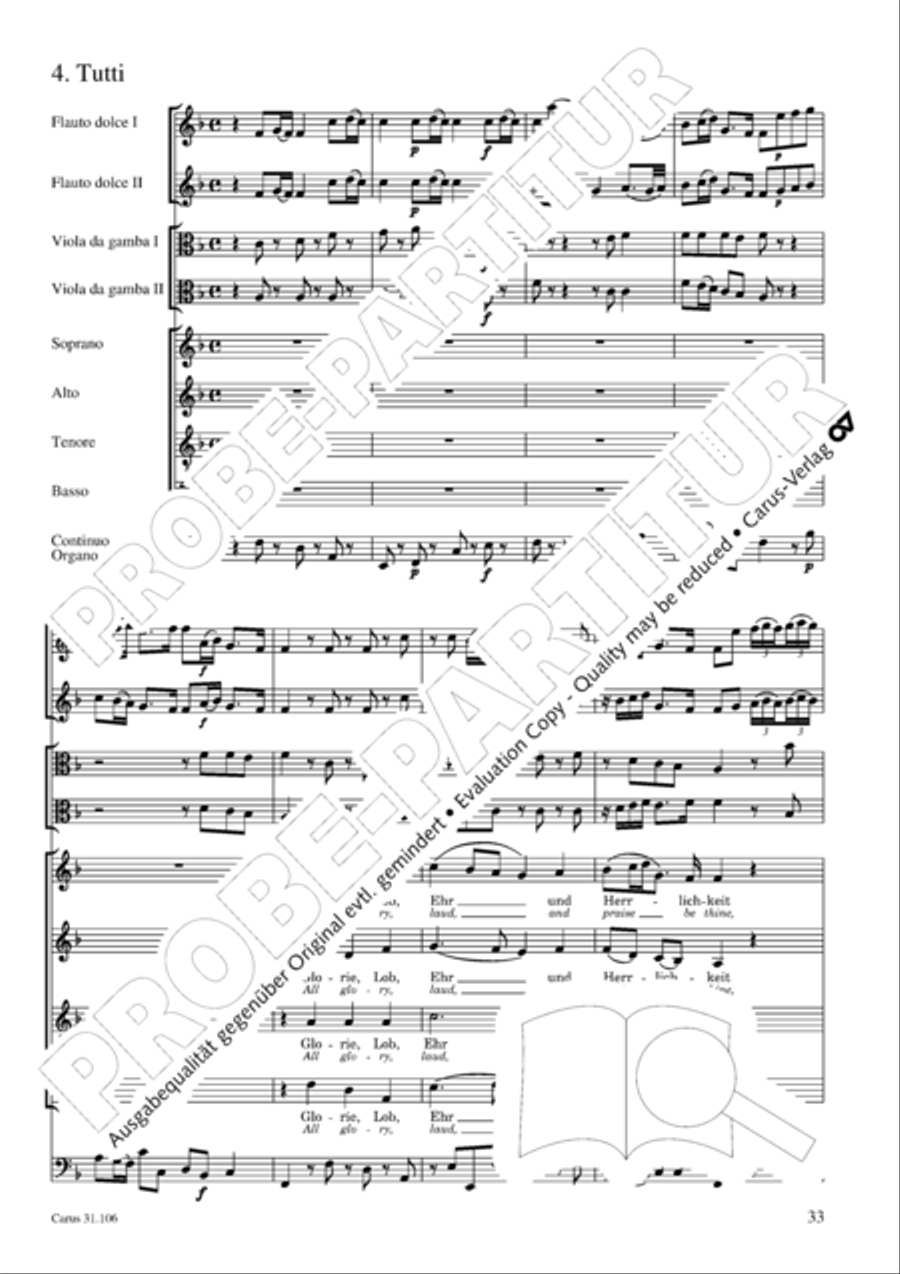
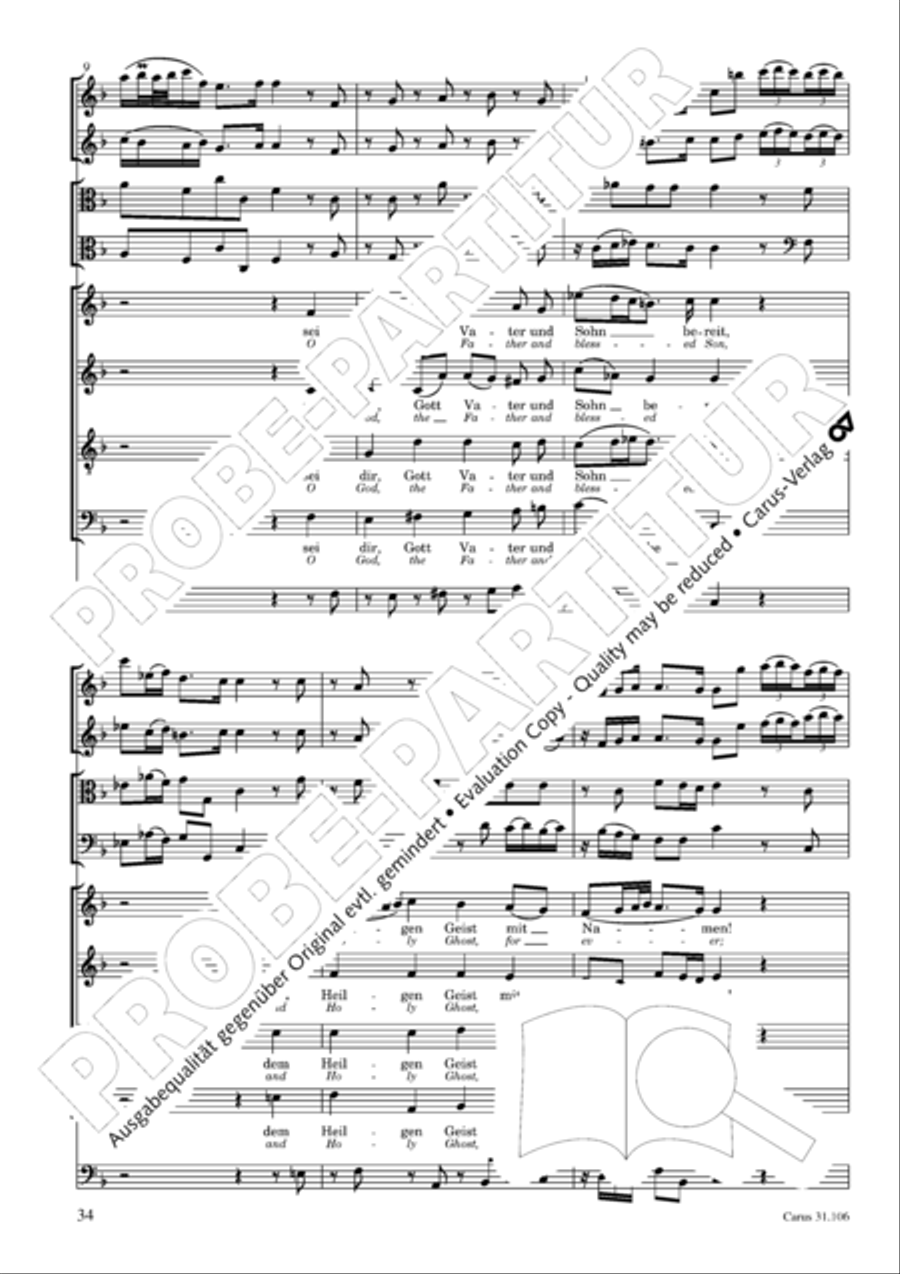
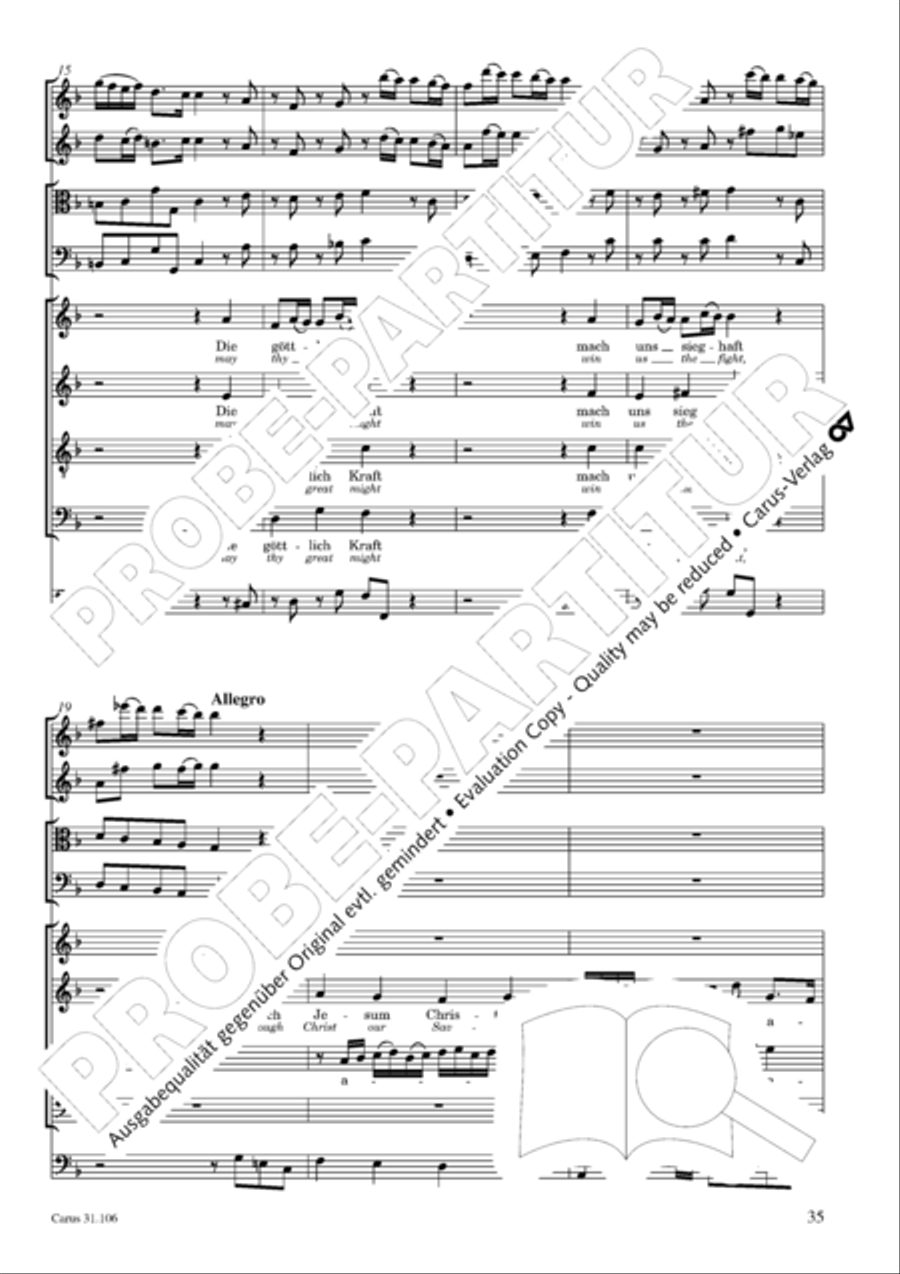
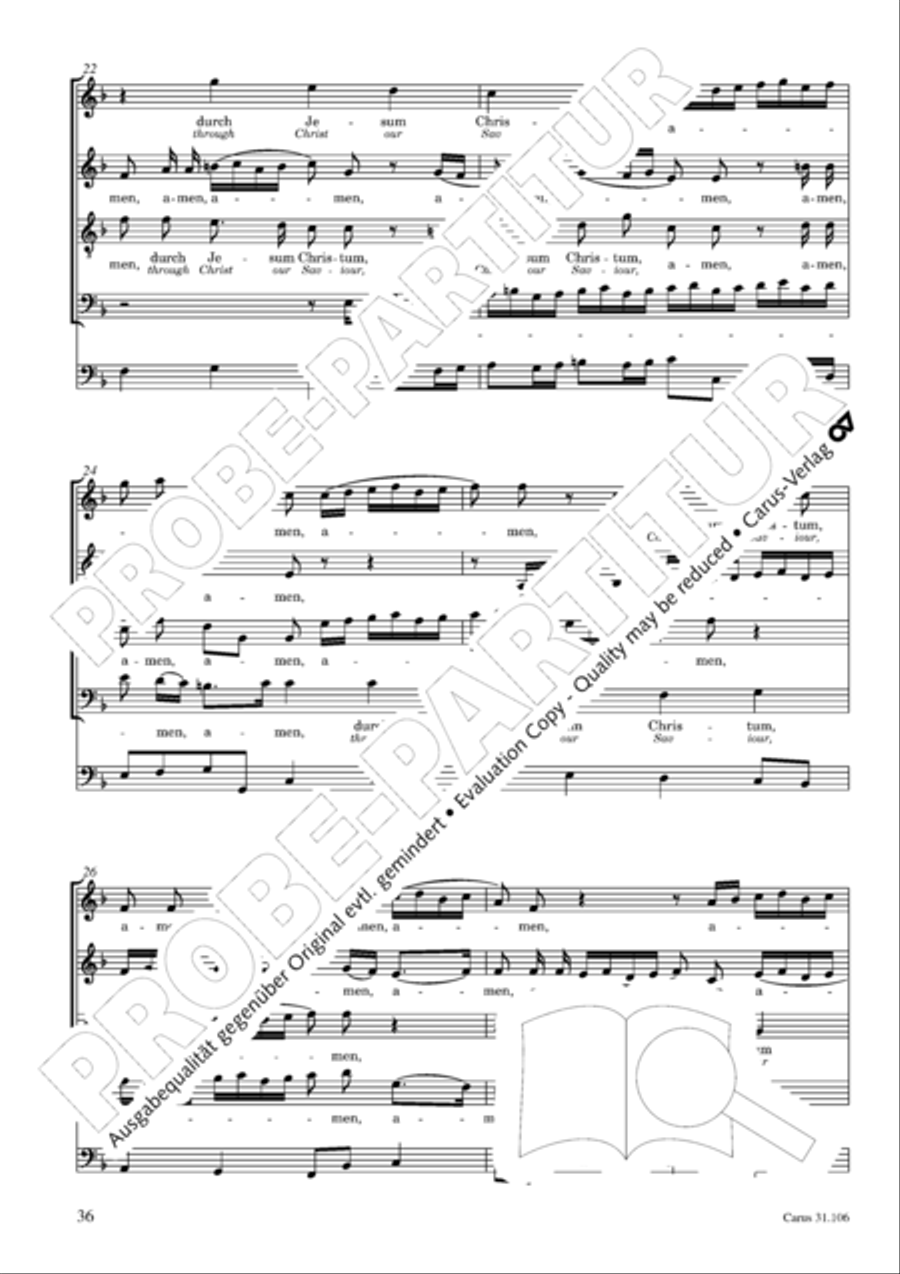
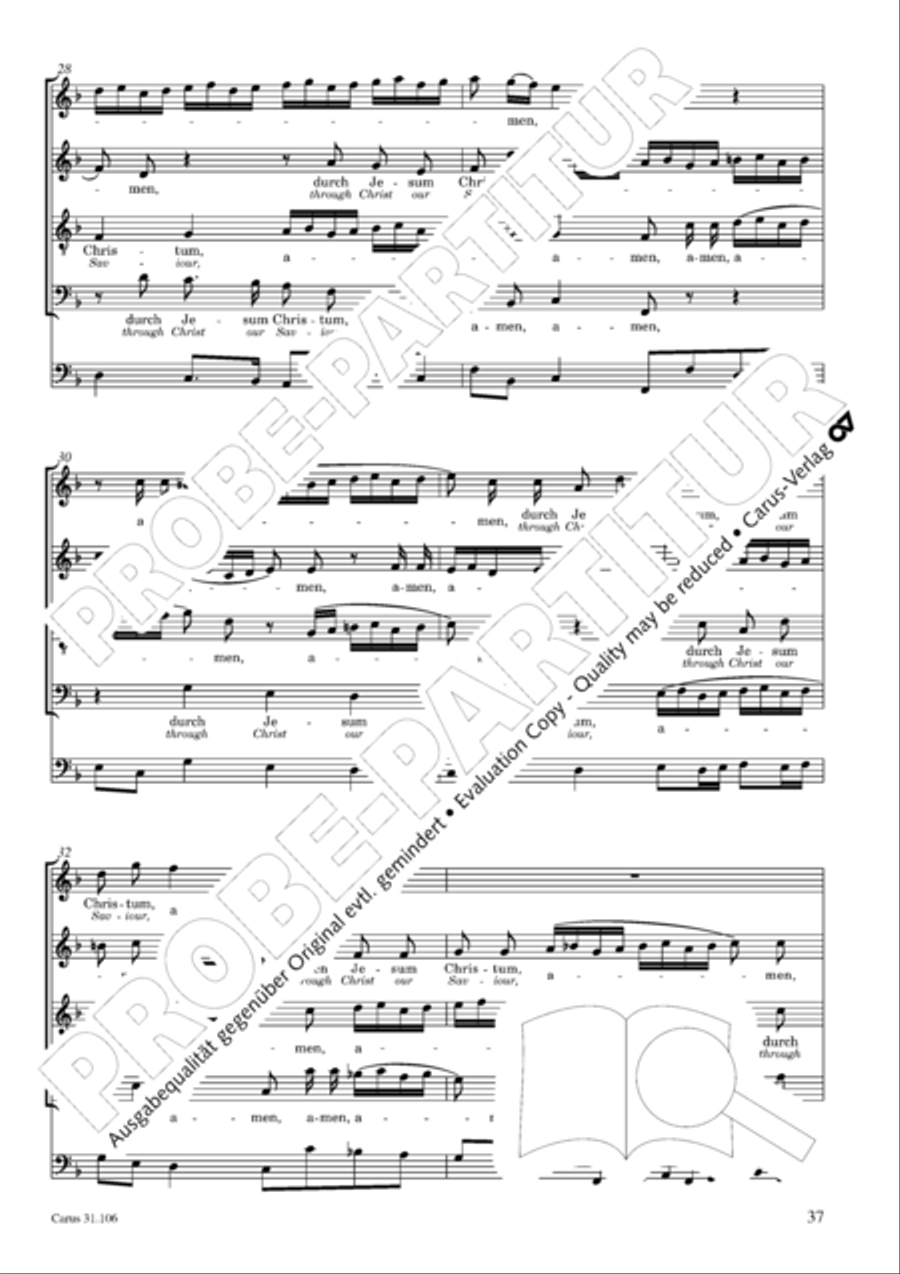

God's own time is the time appointed Actus tragicus. Funeral music by Johann Sebastian Bach 4-Part - Sheet Music
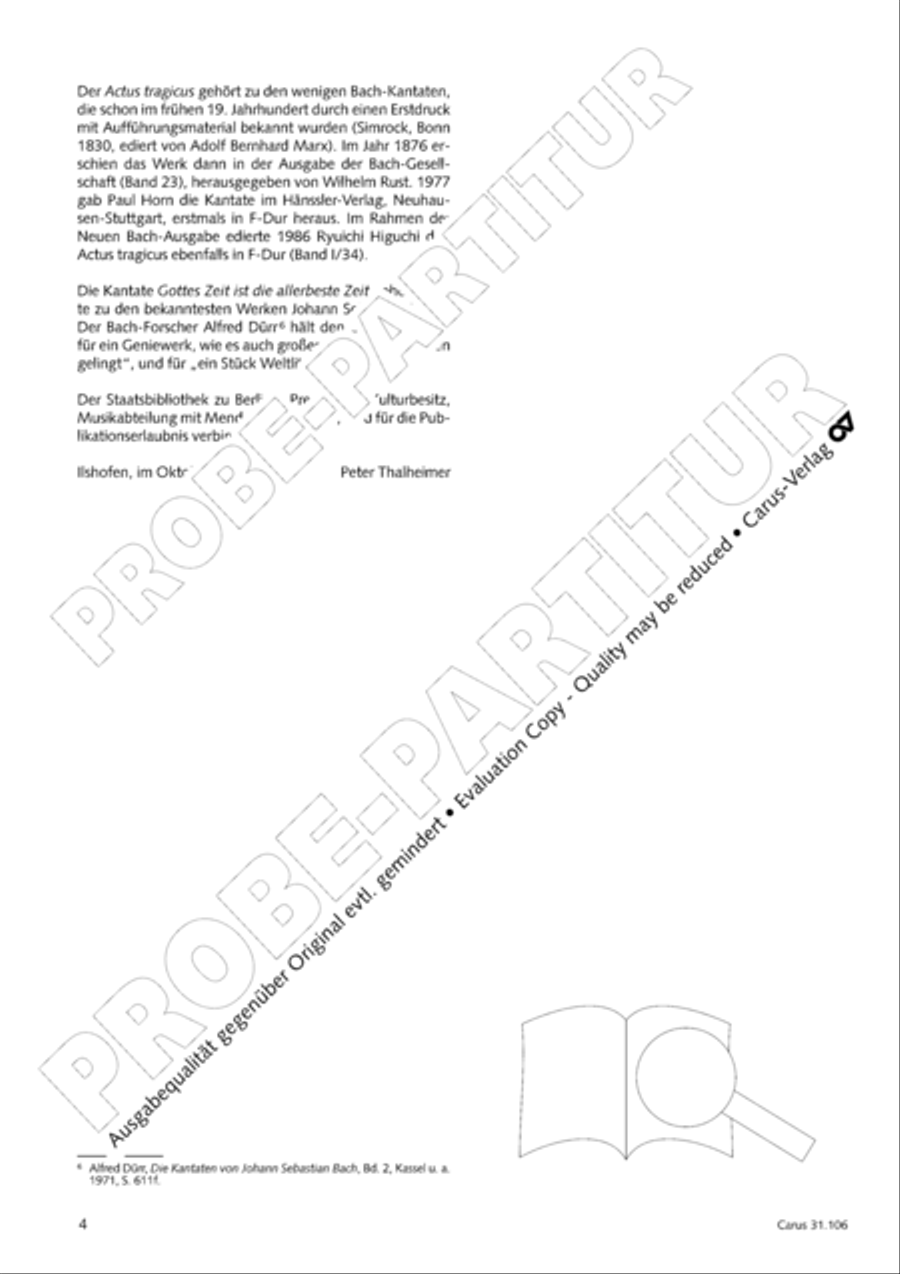
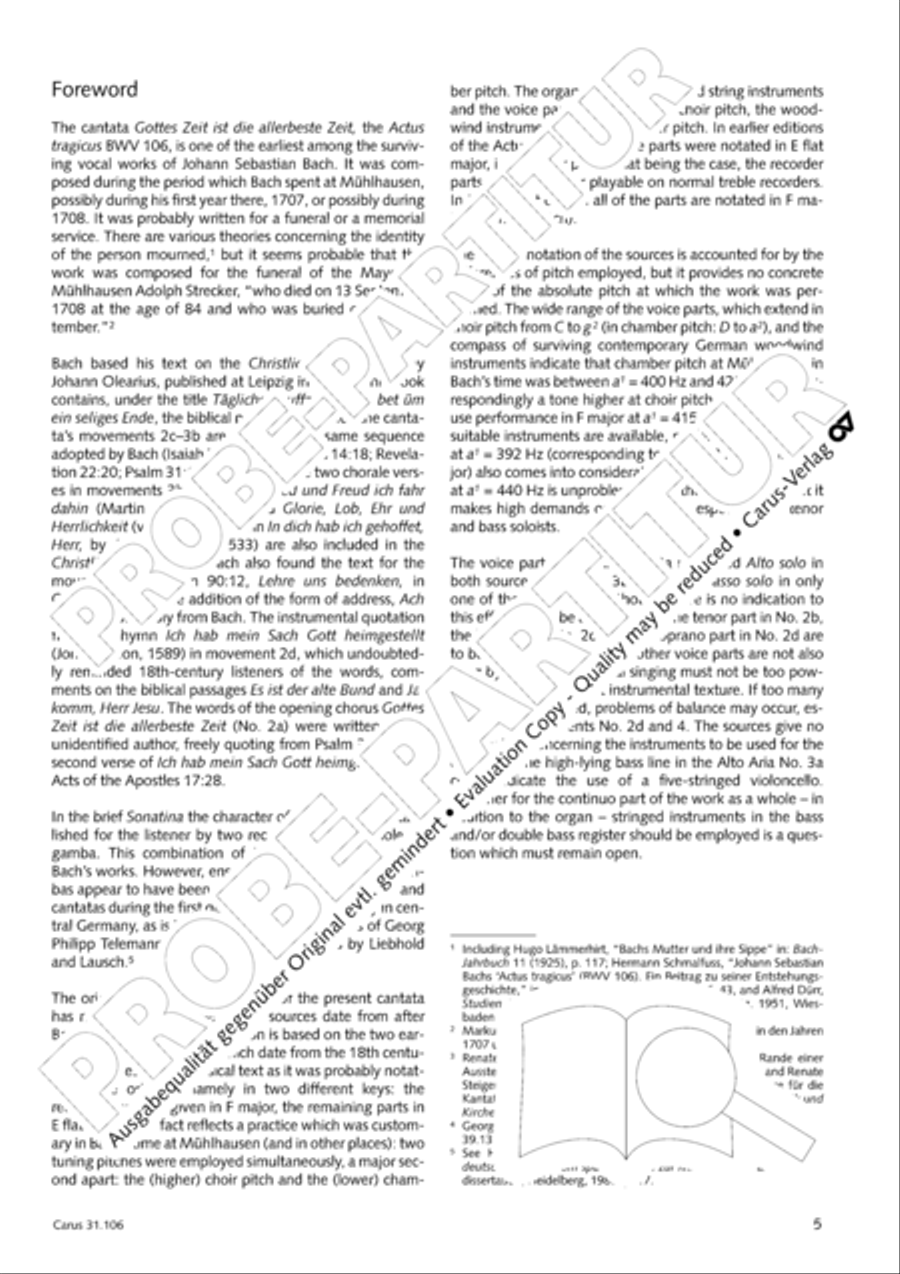
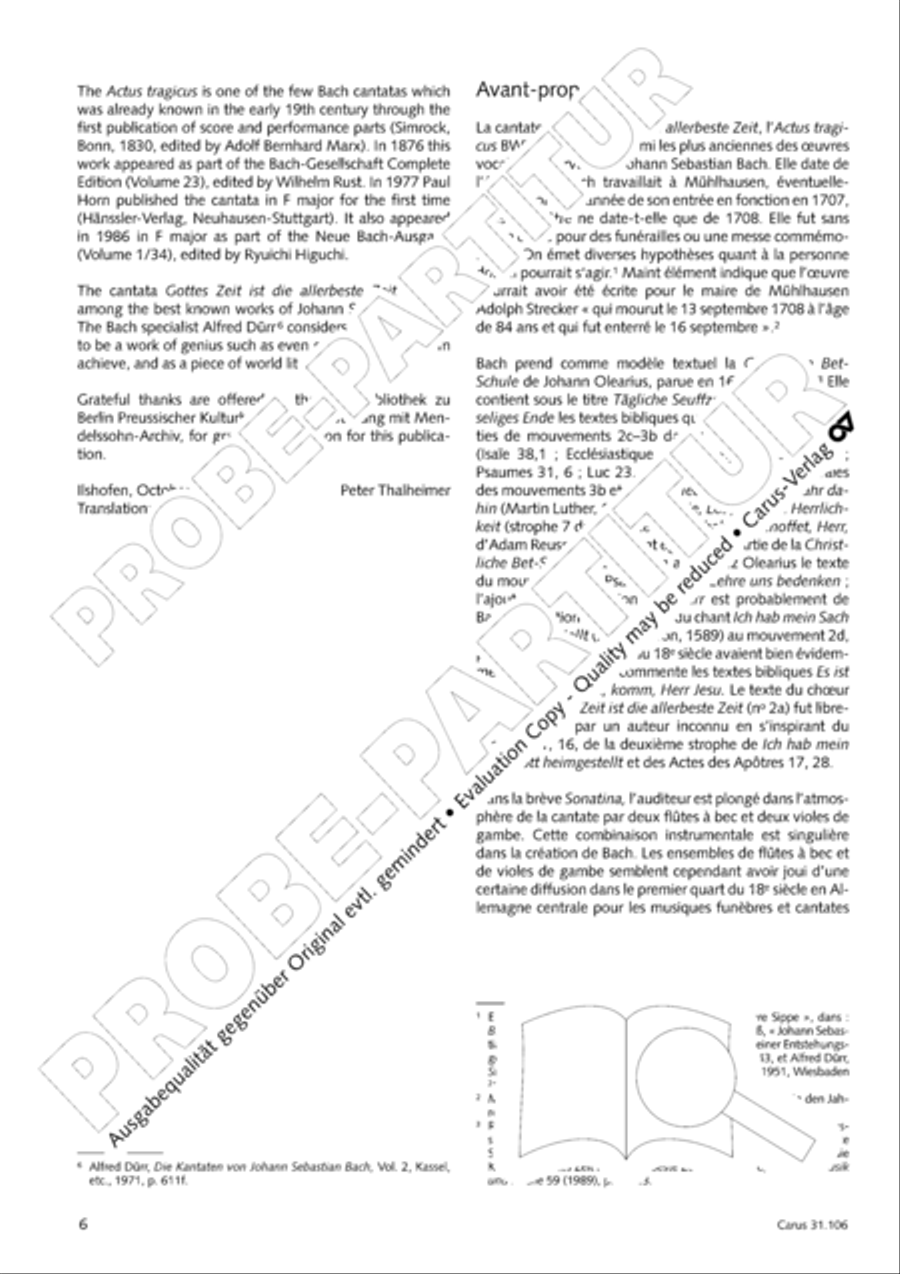
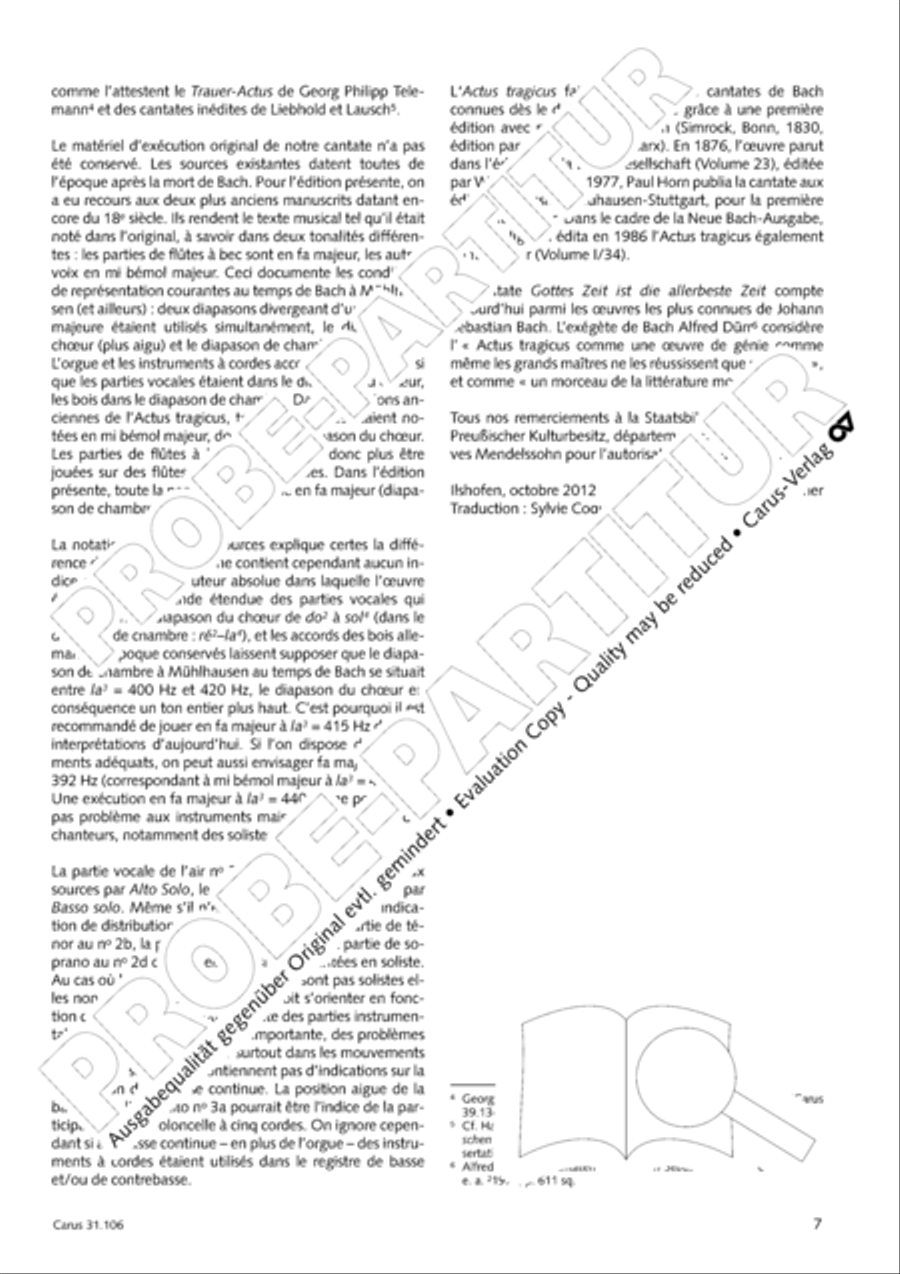
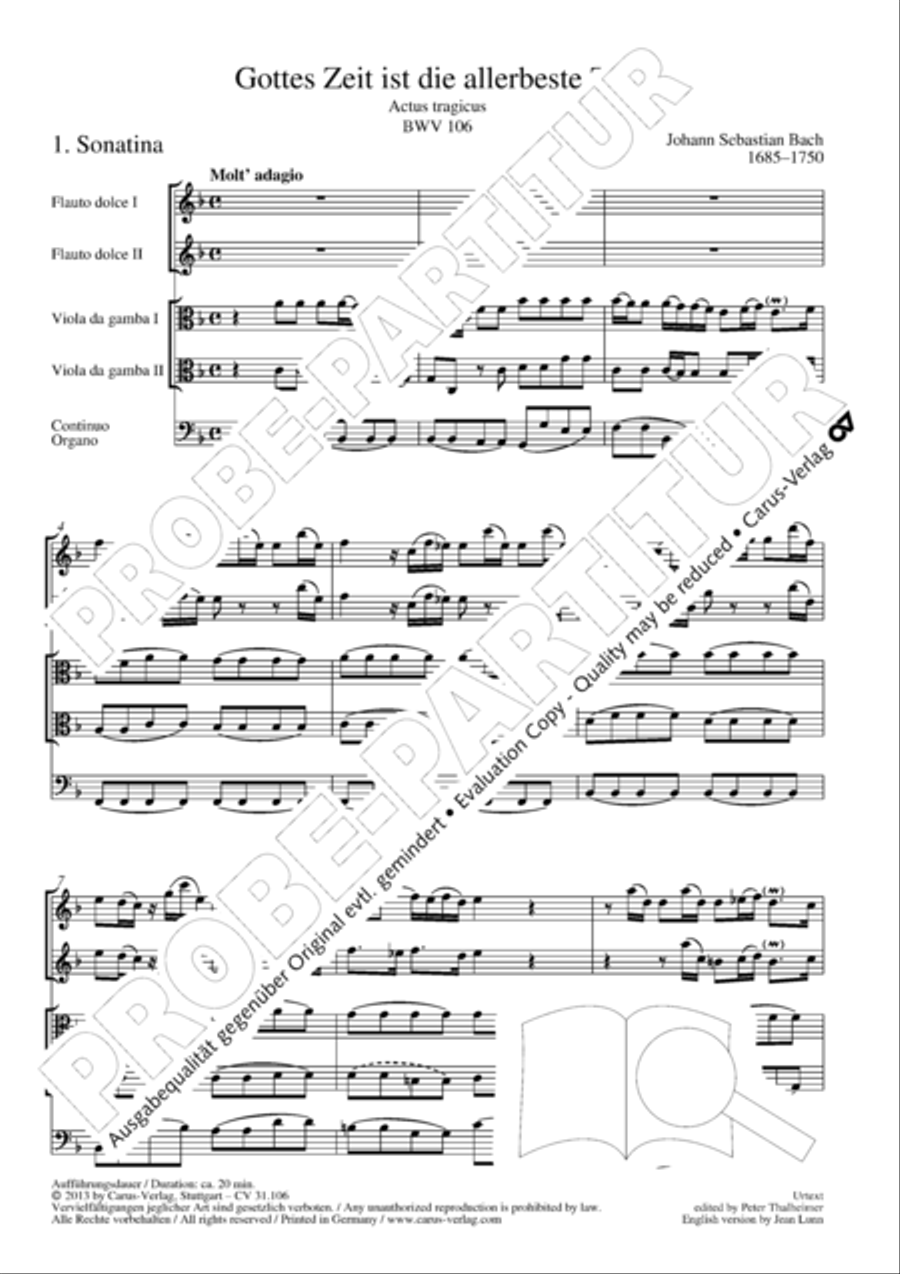
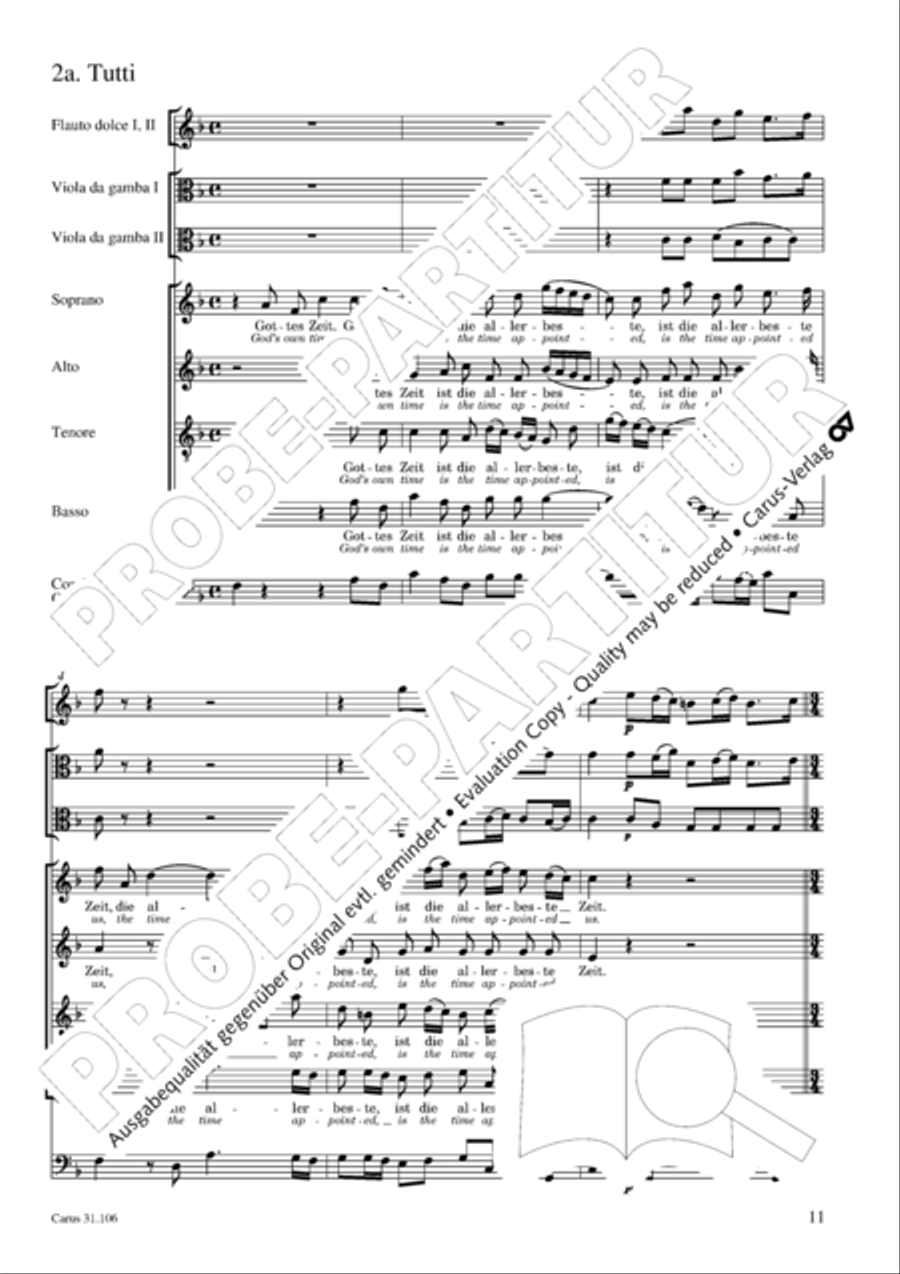
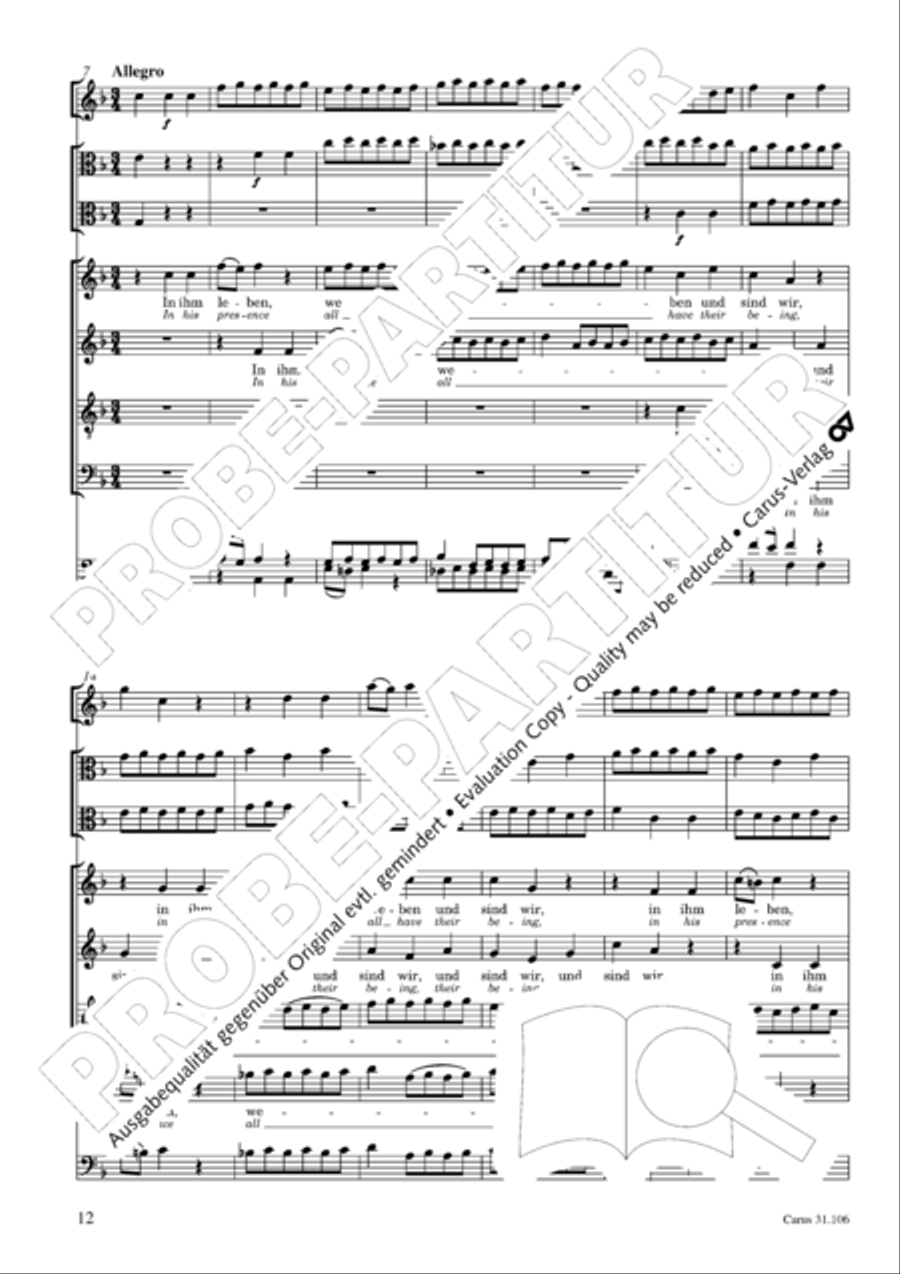
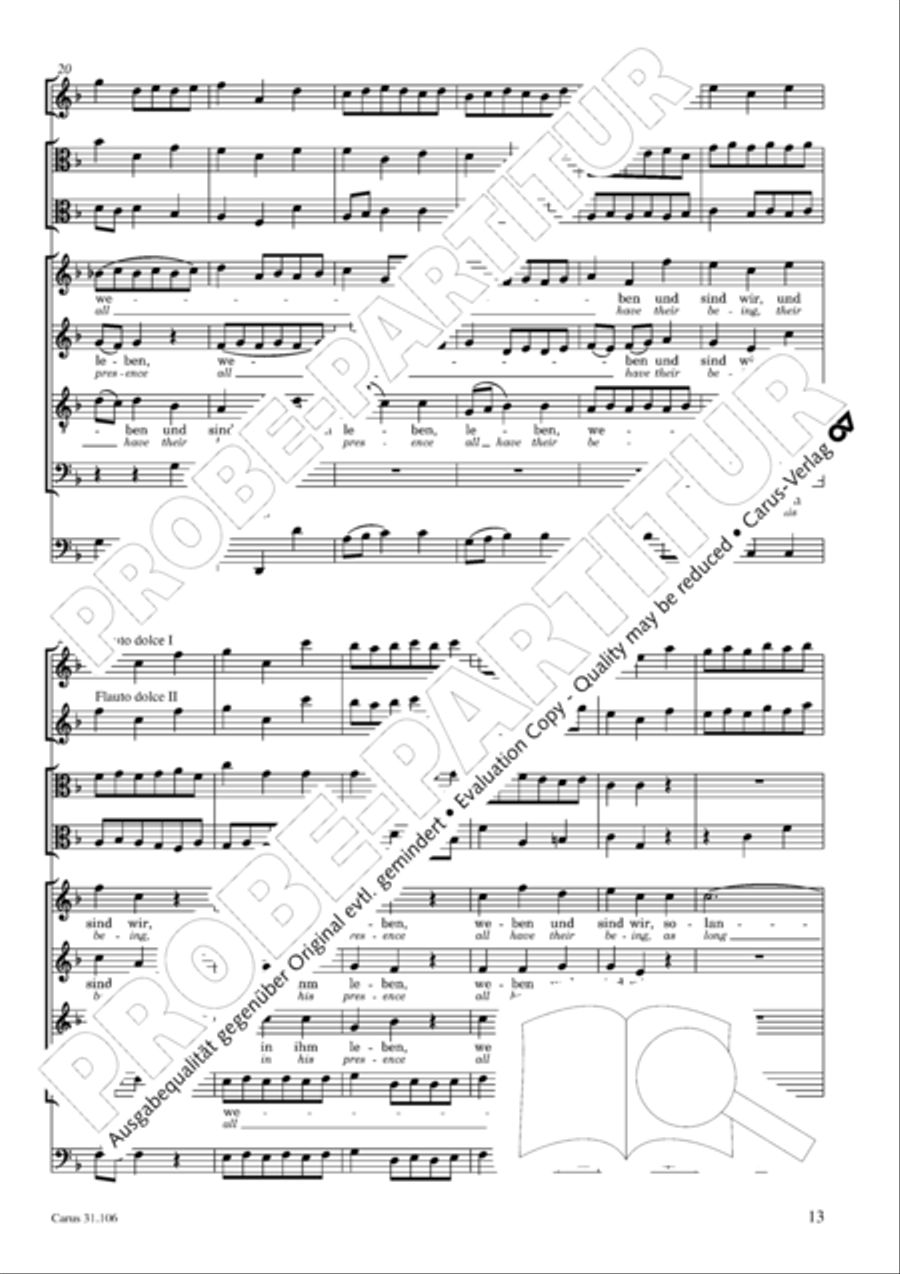
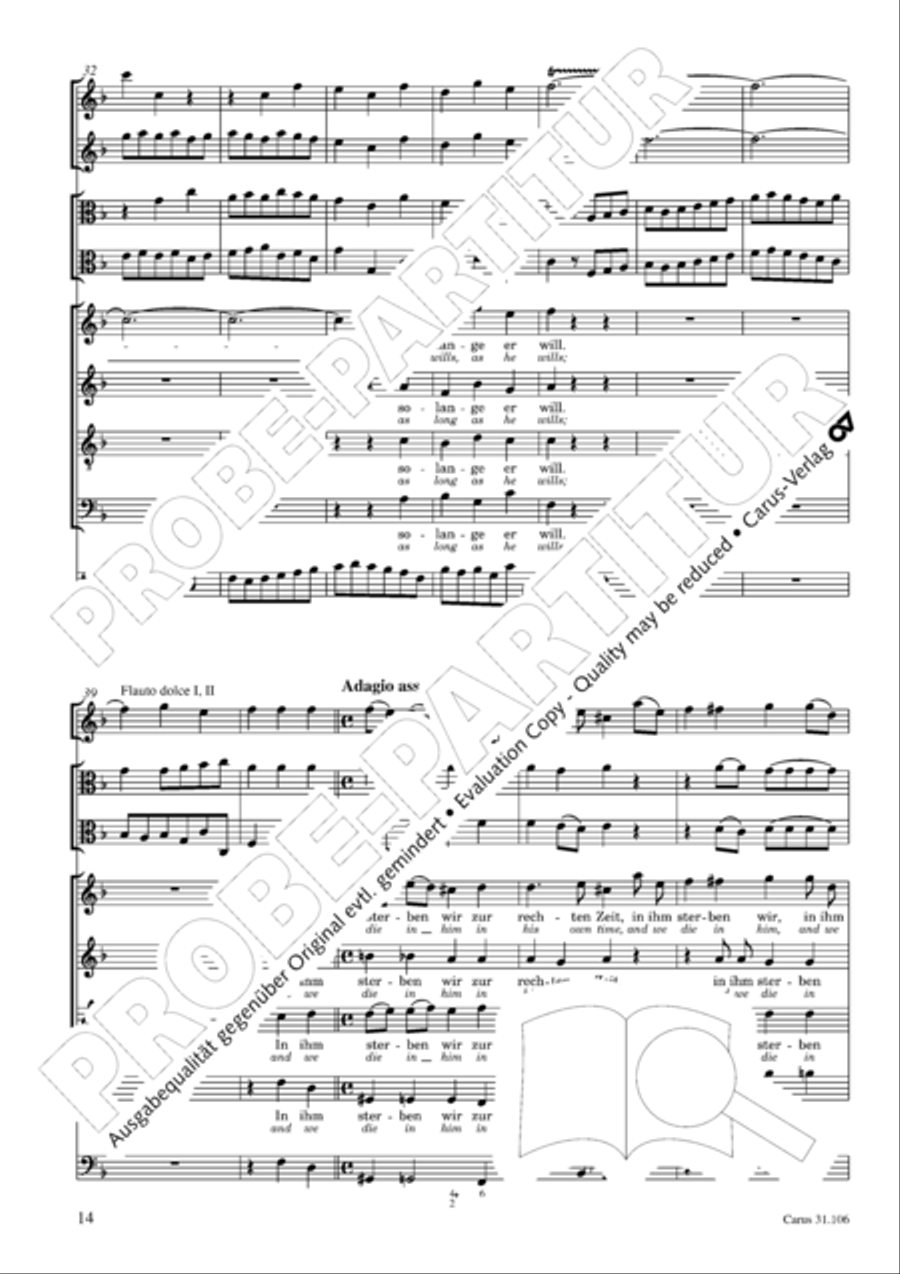
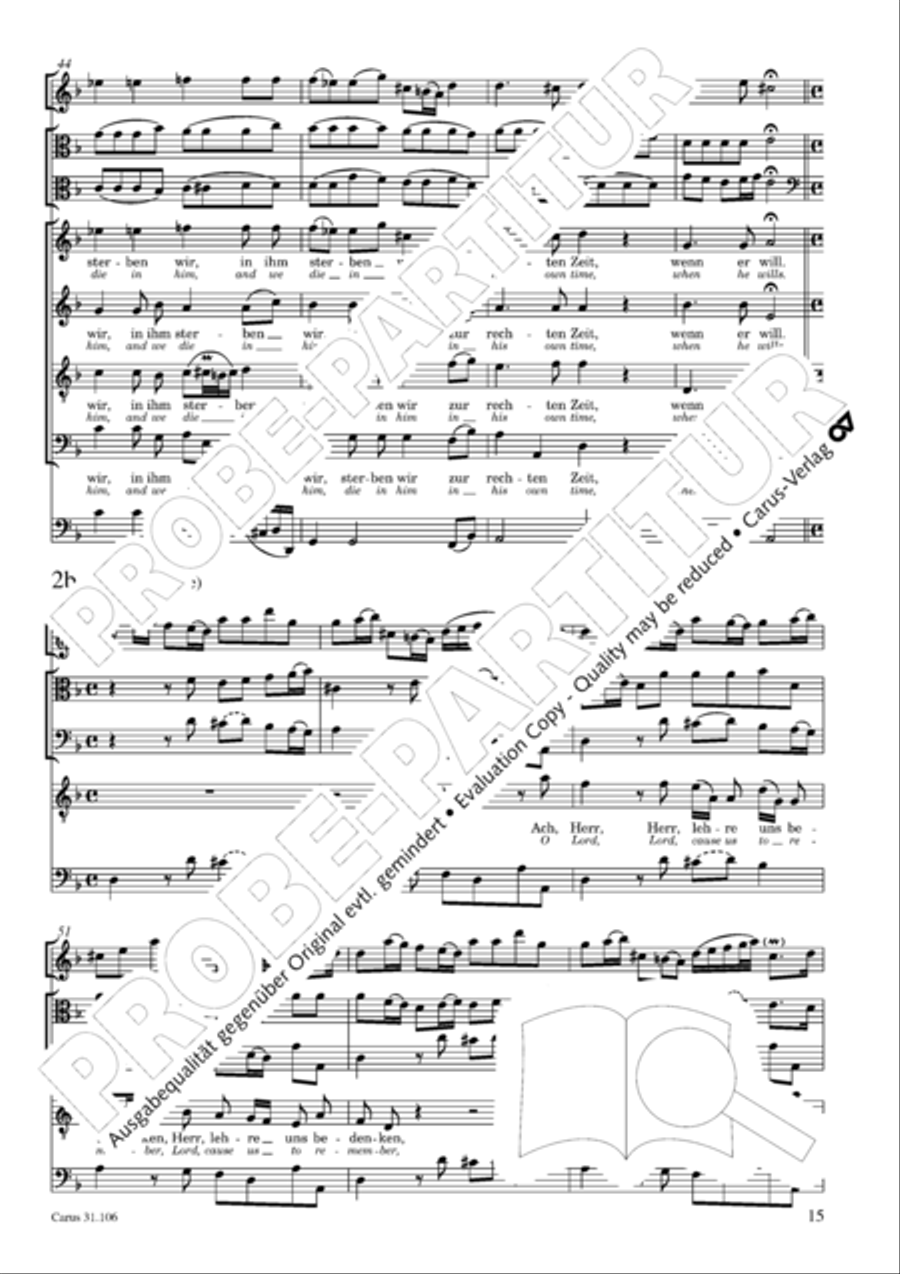
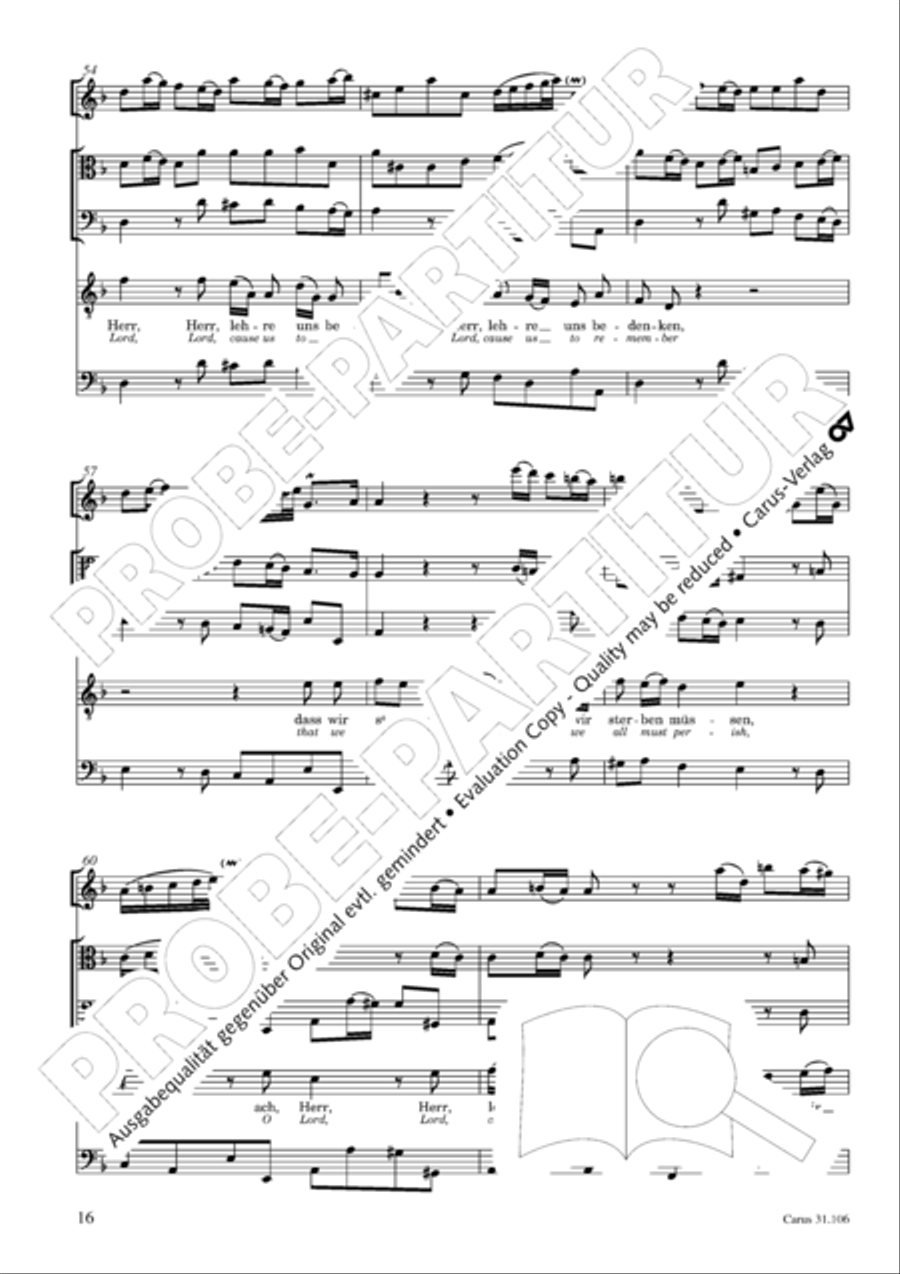
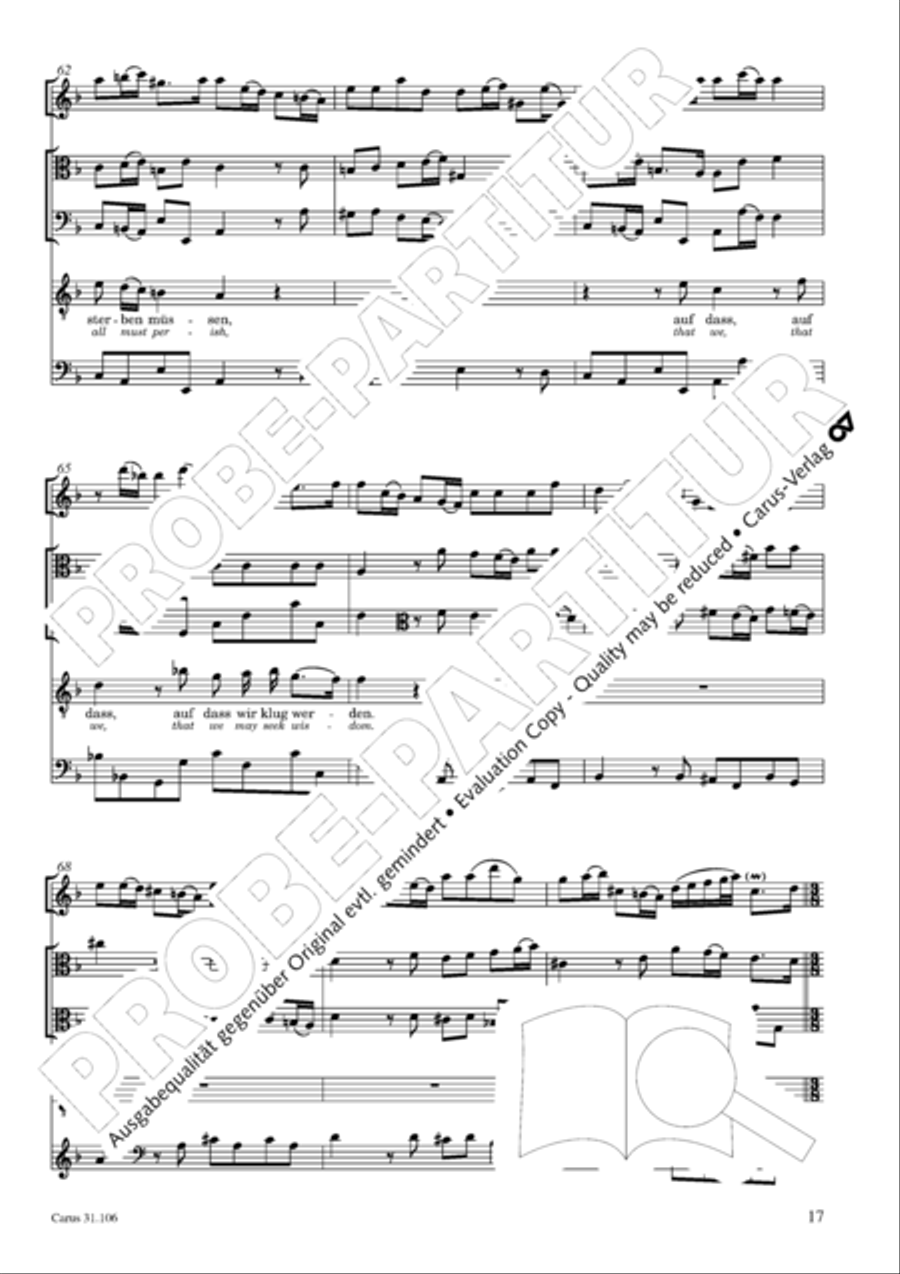
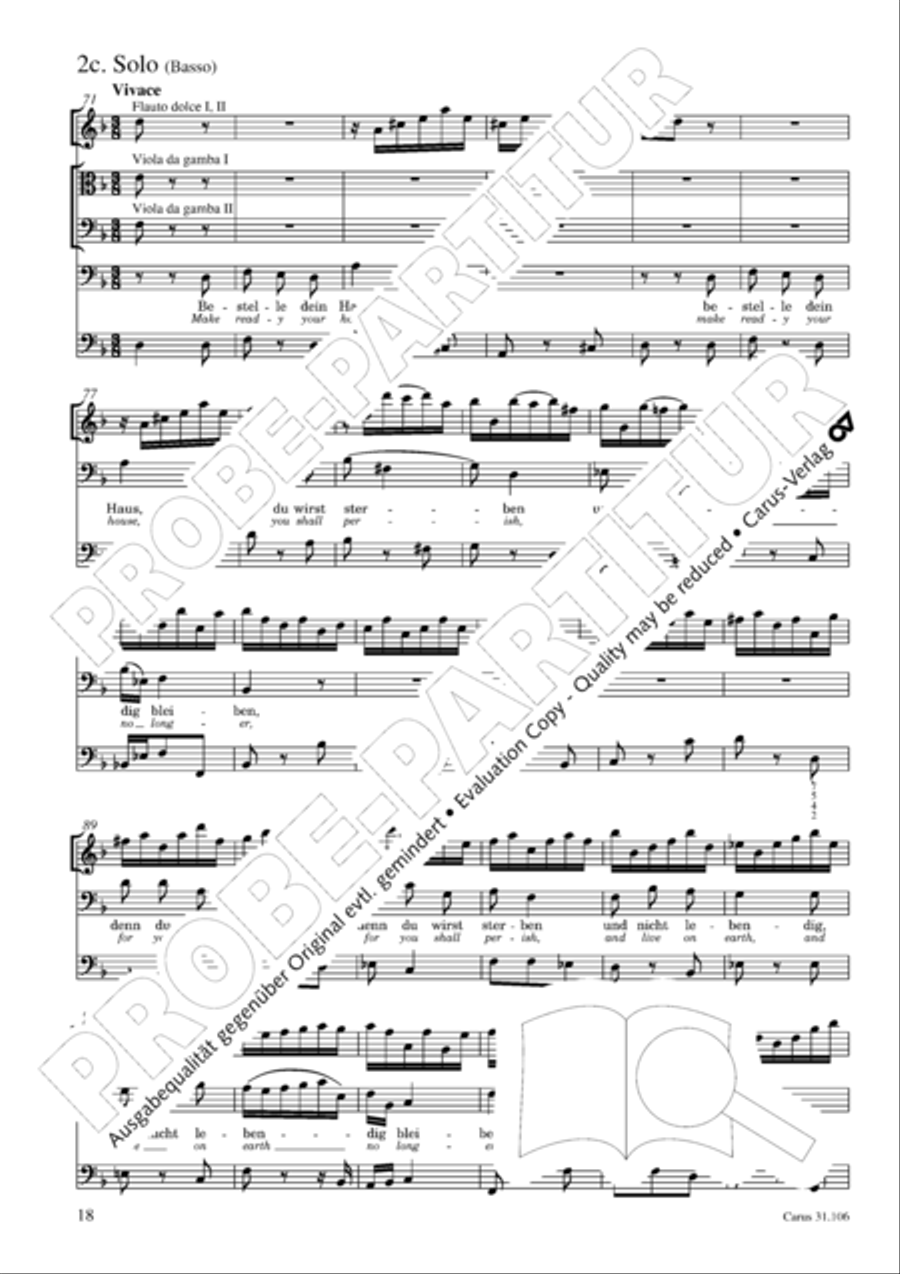
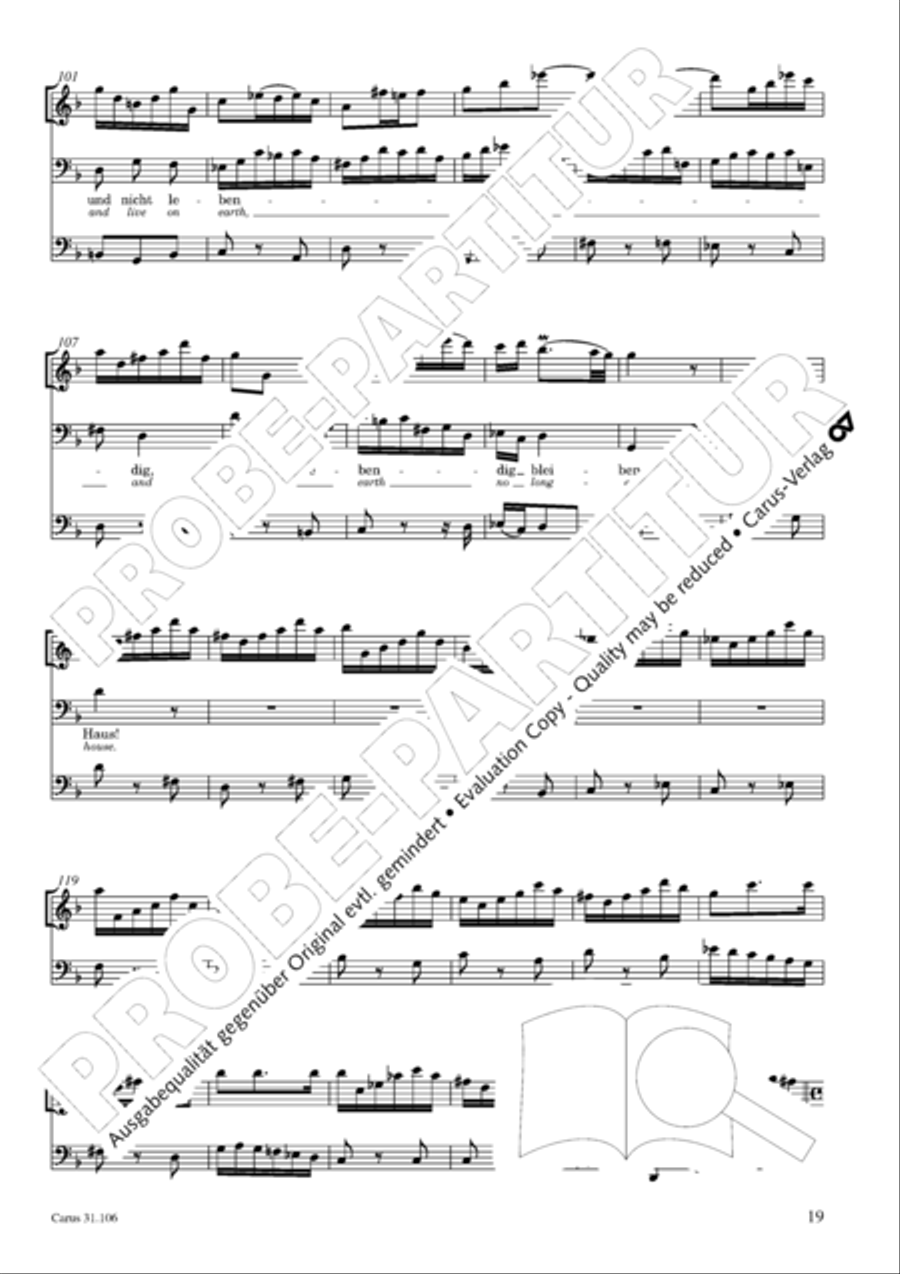
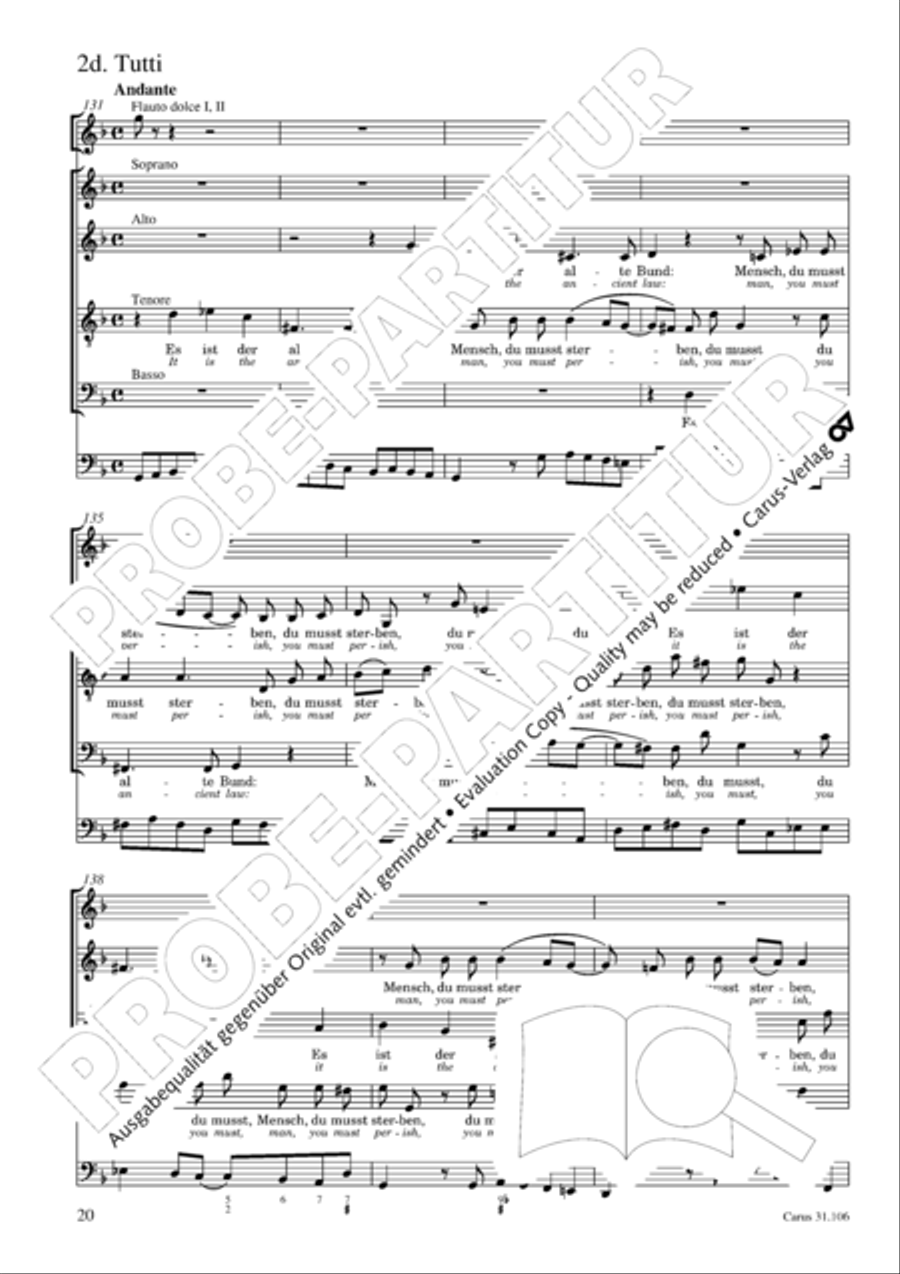
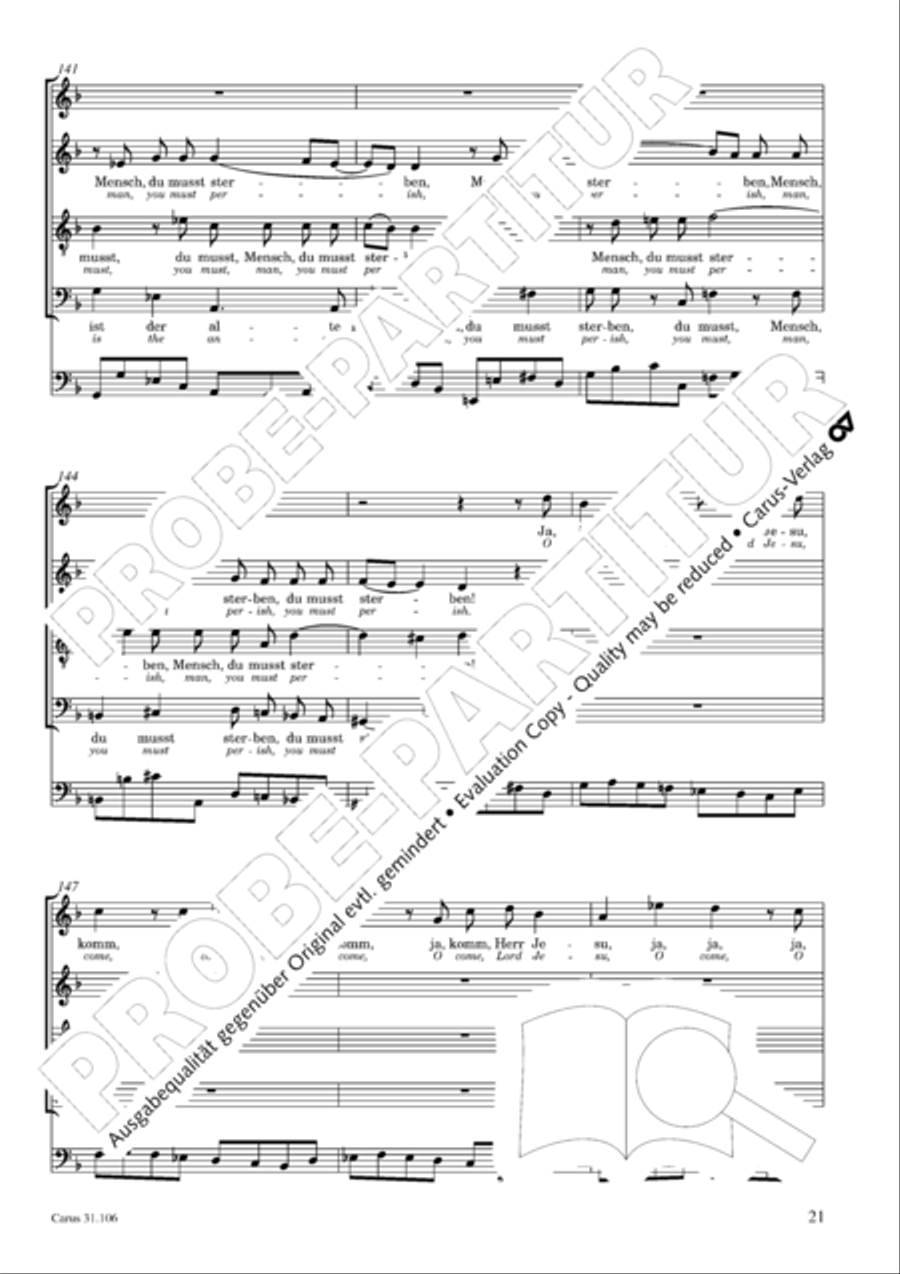
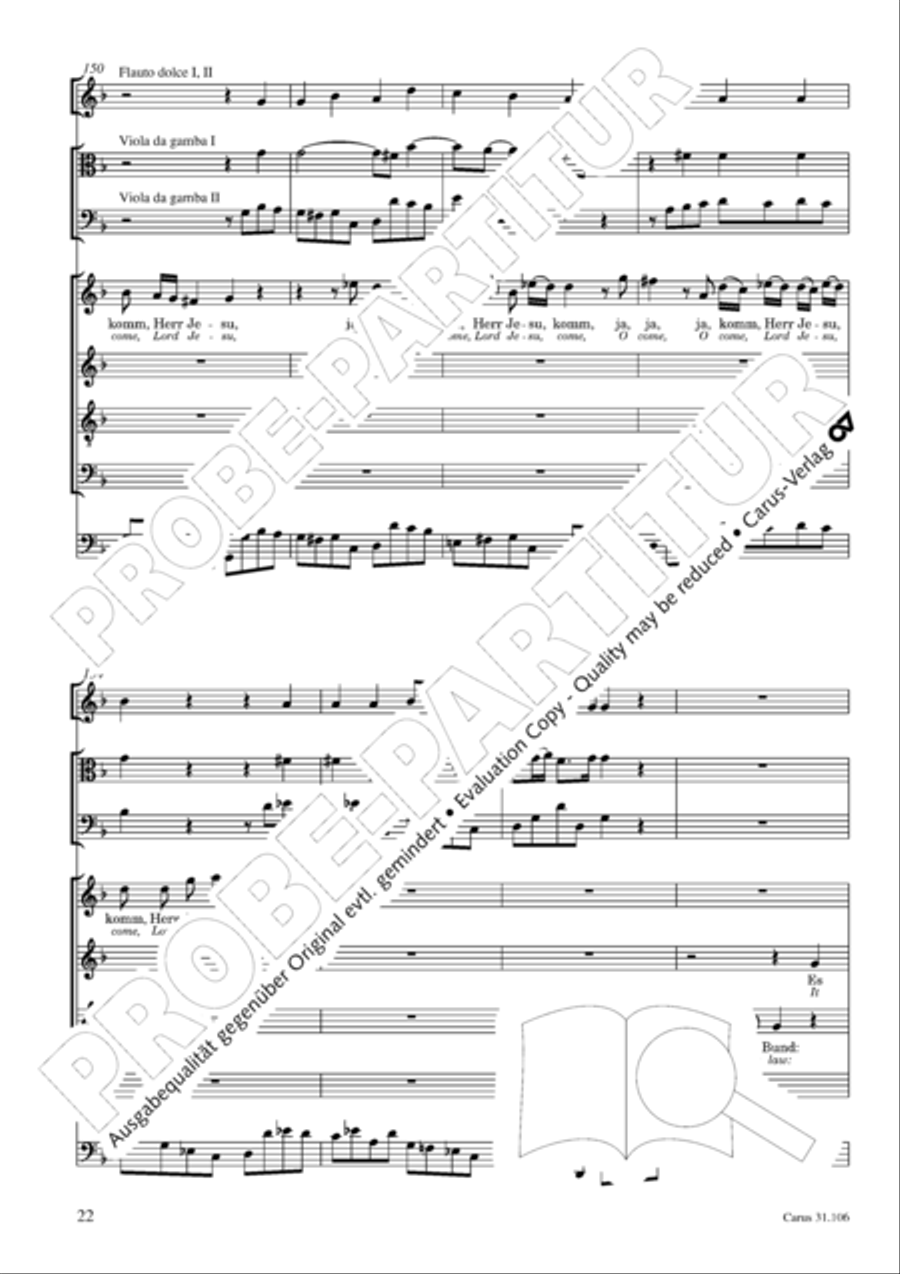
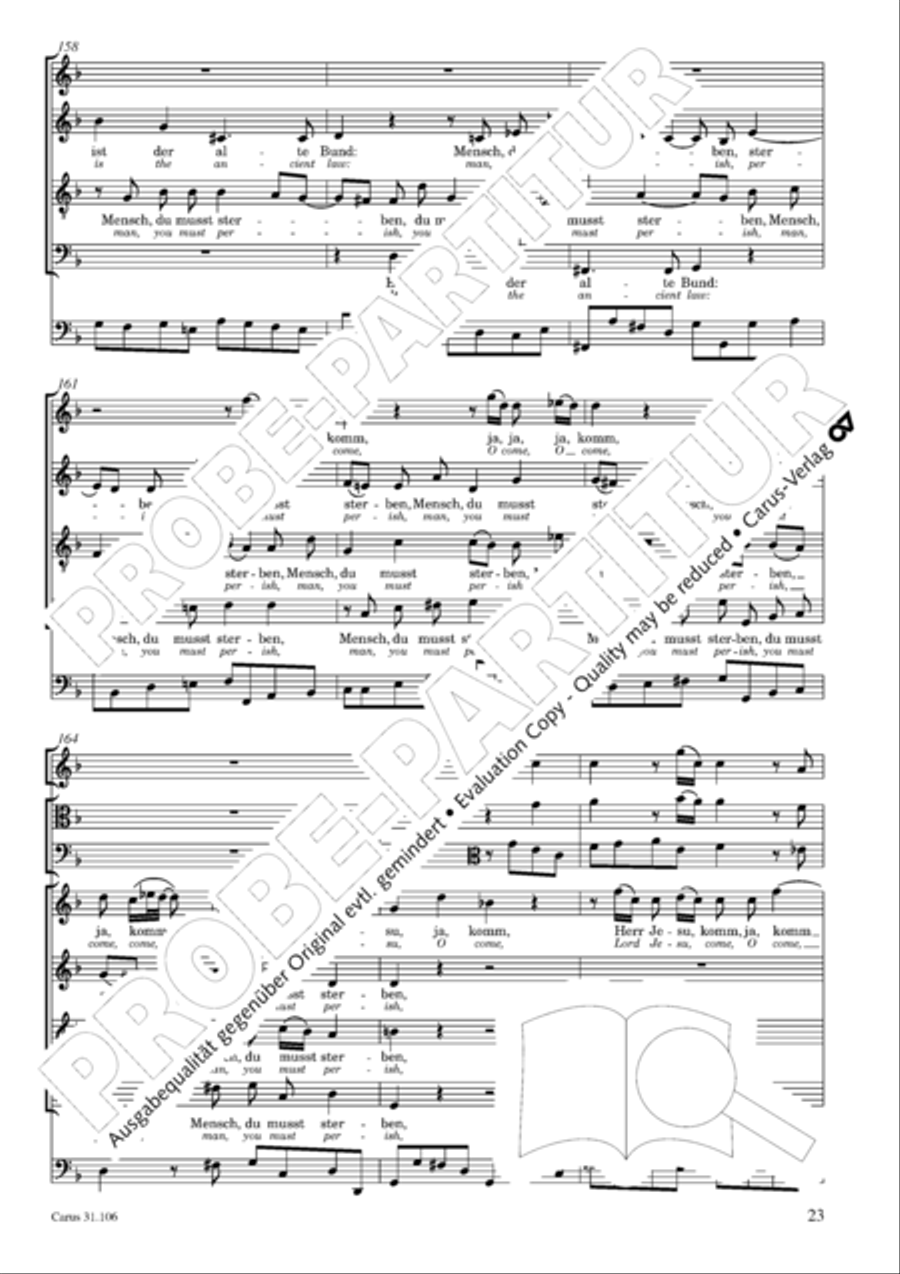
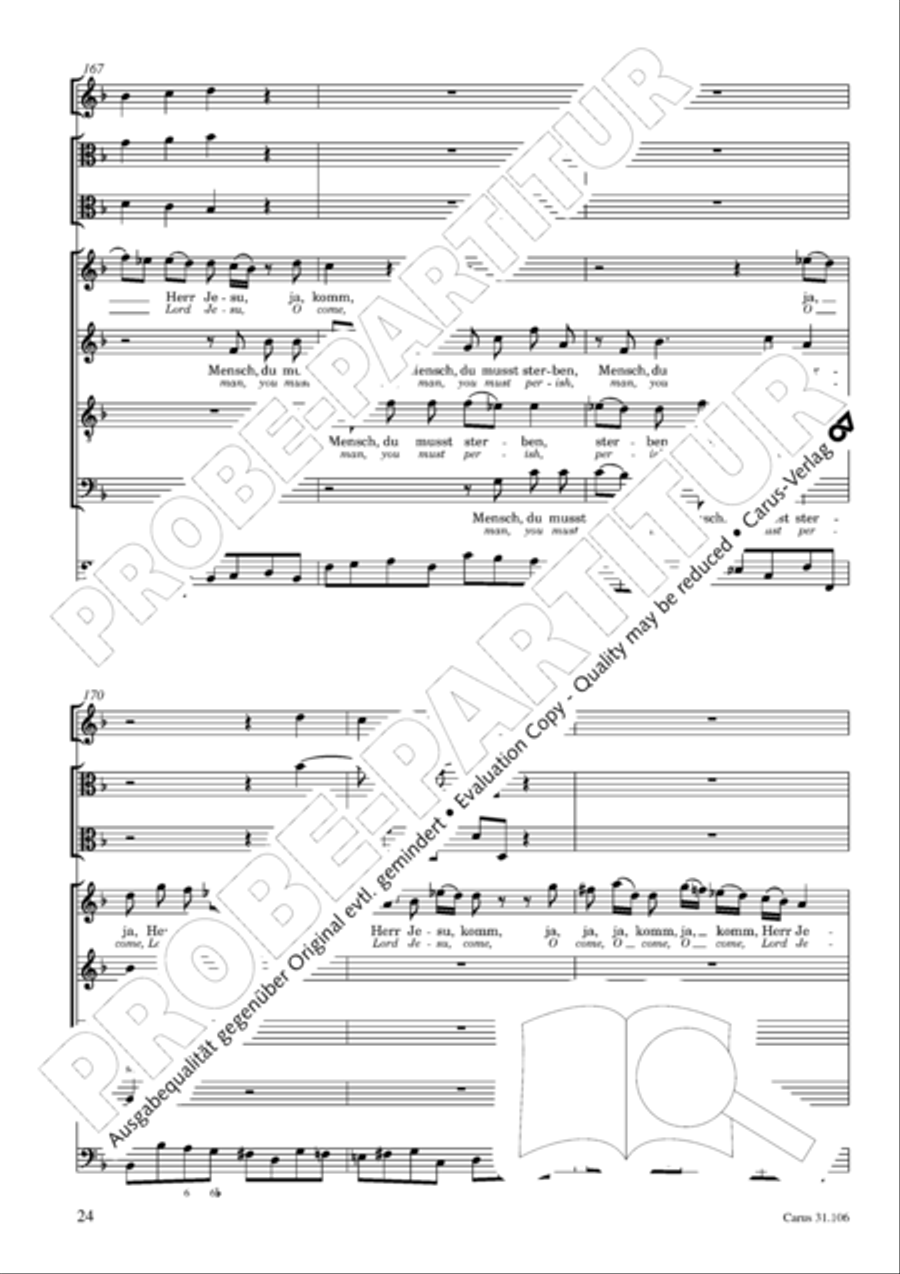
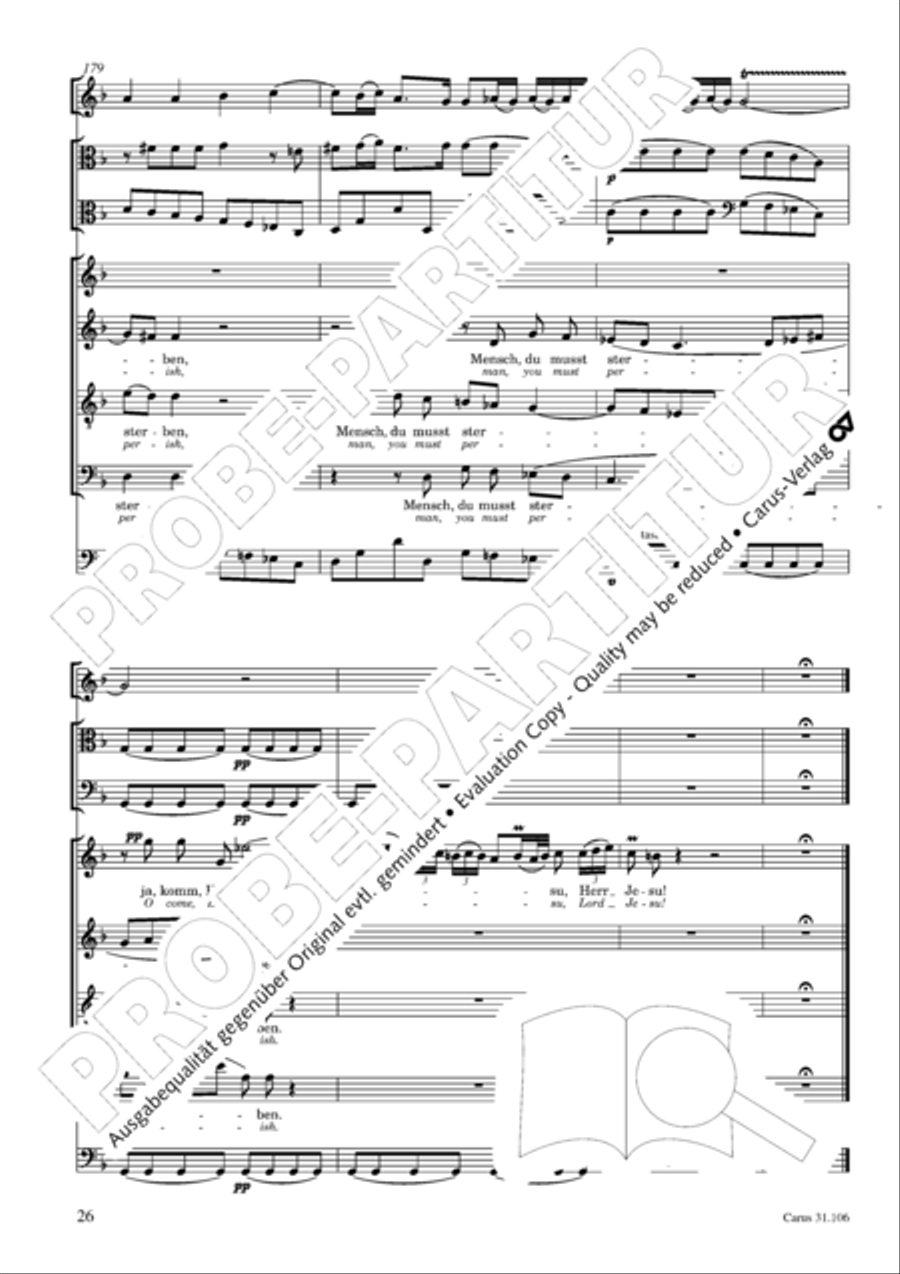
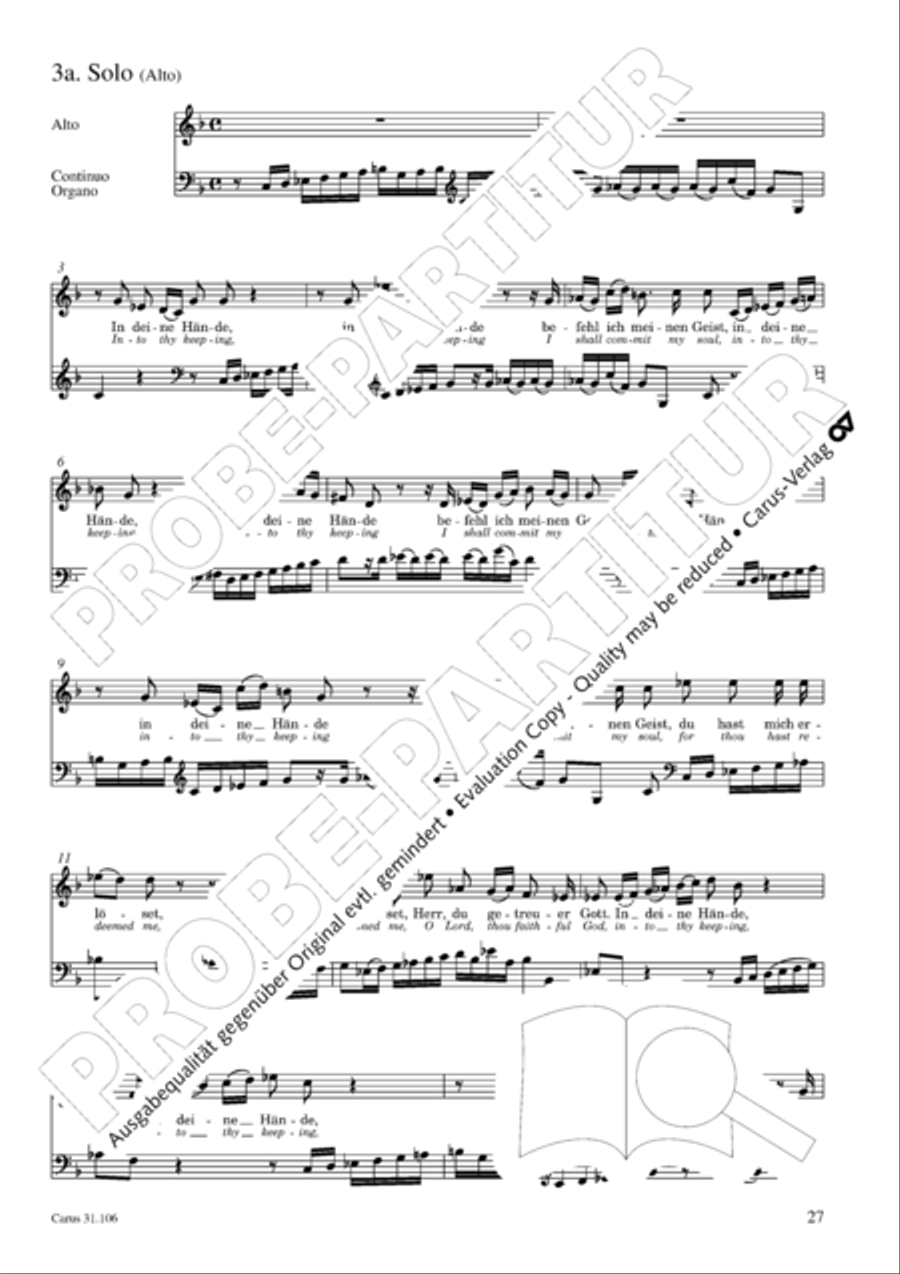
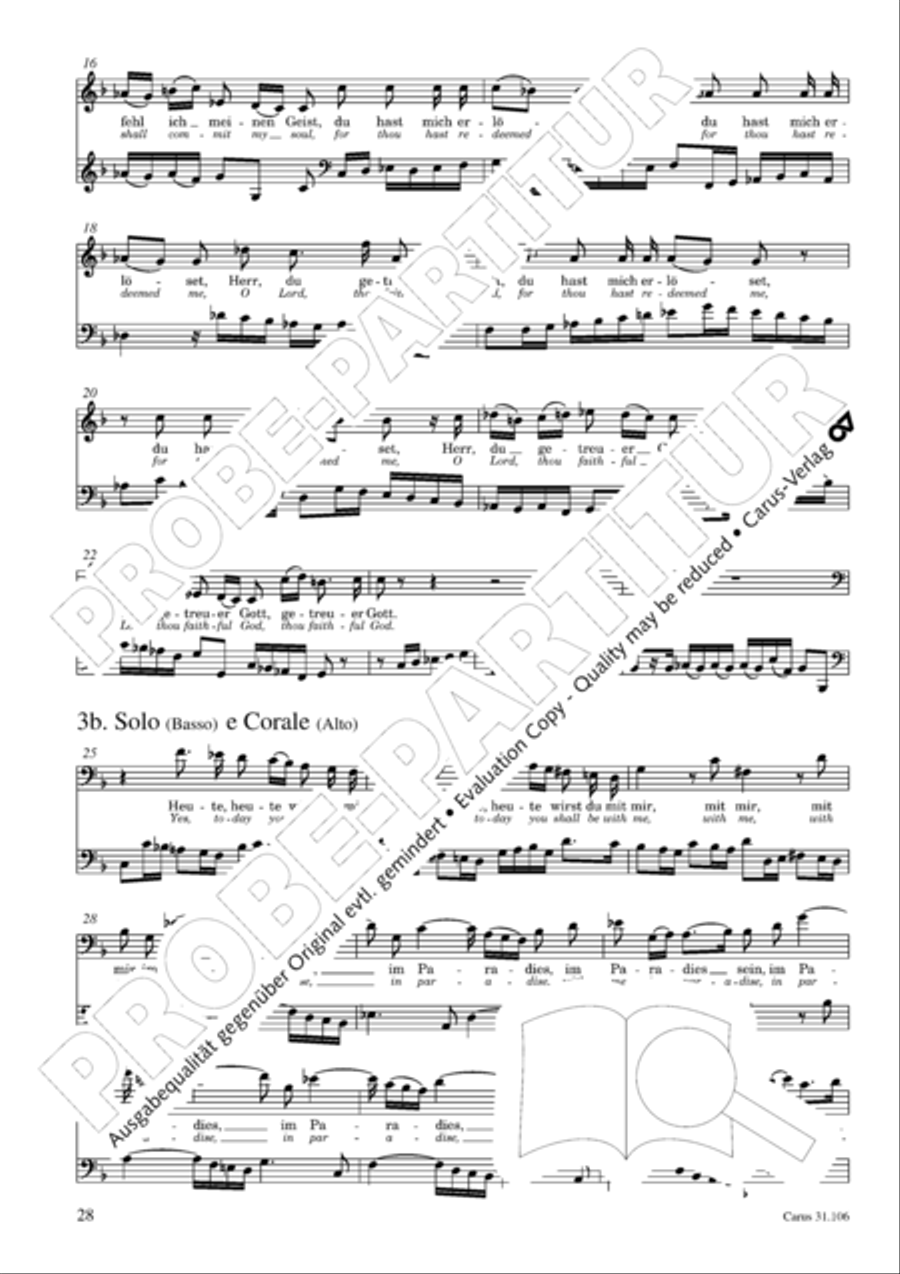
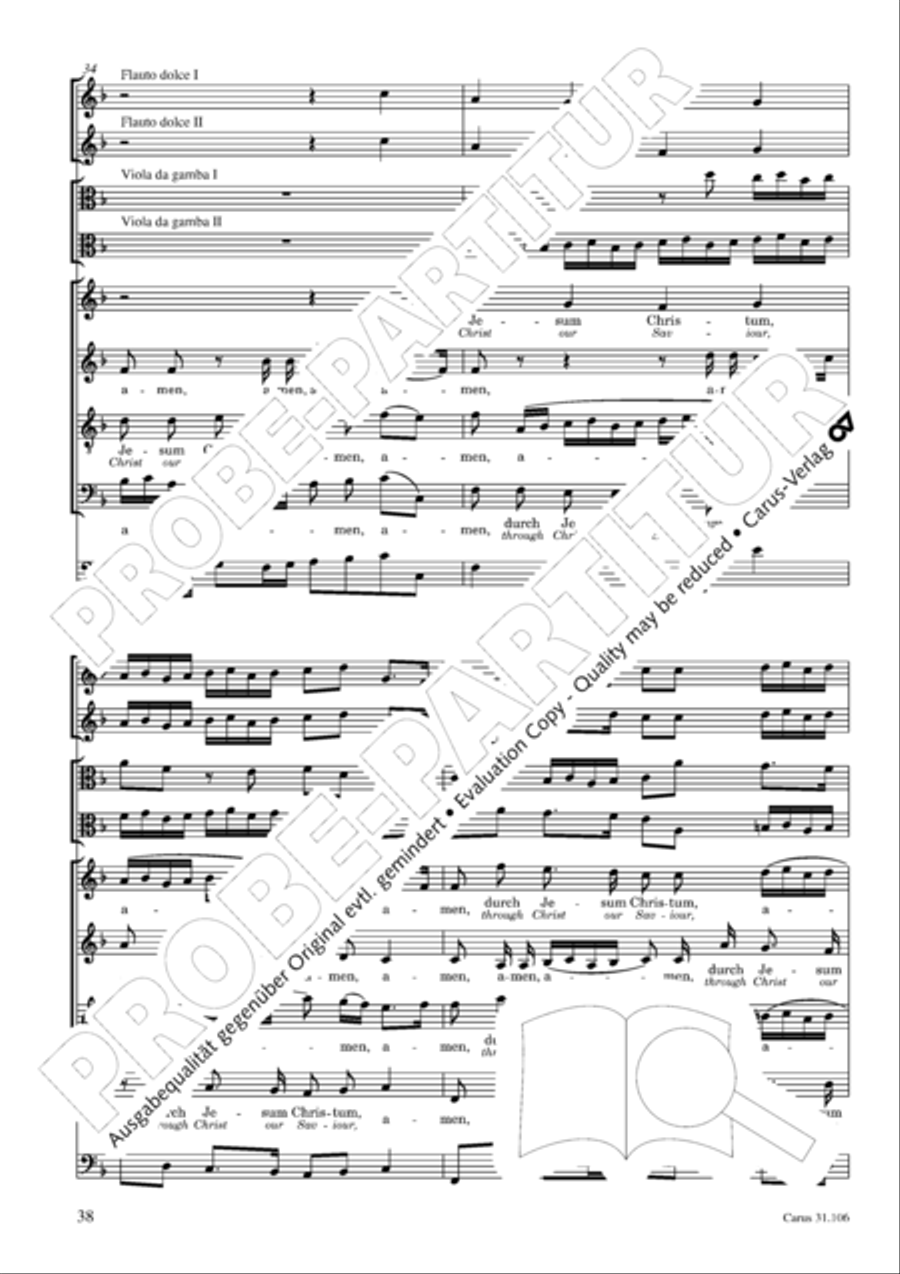
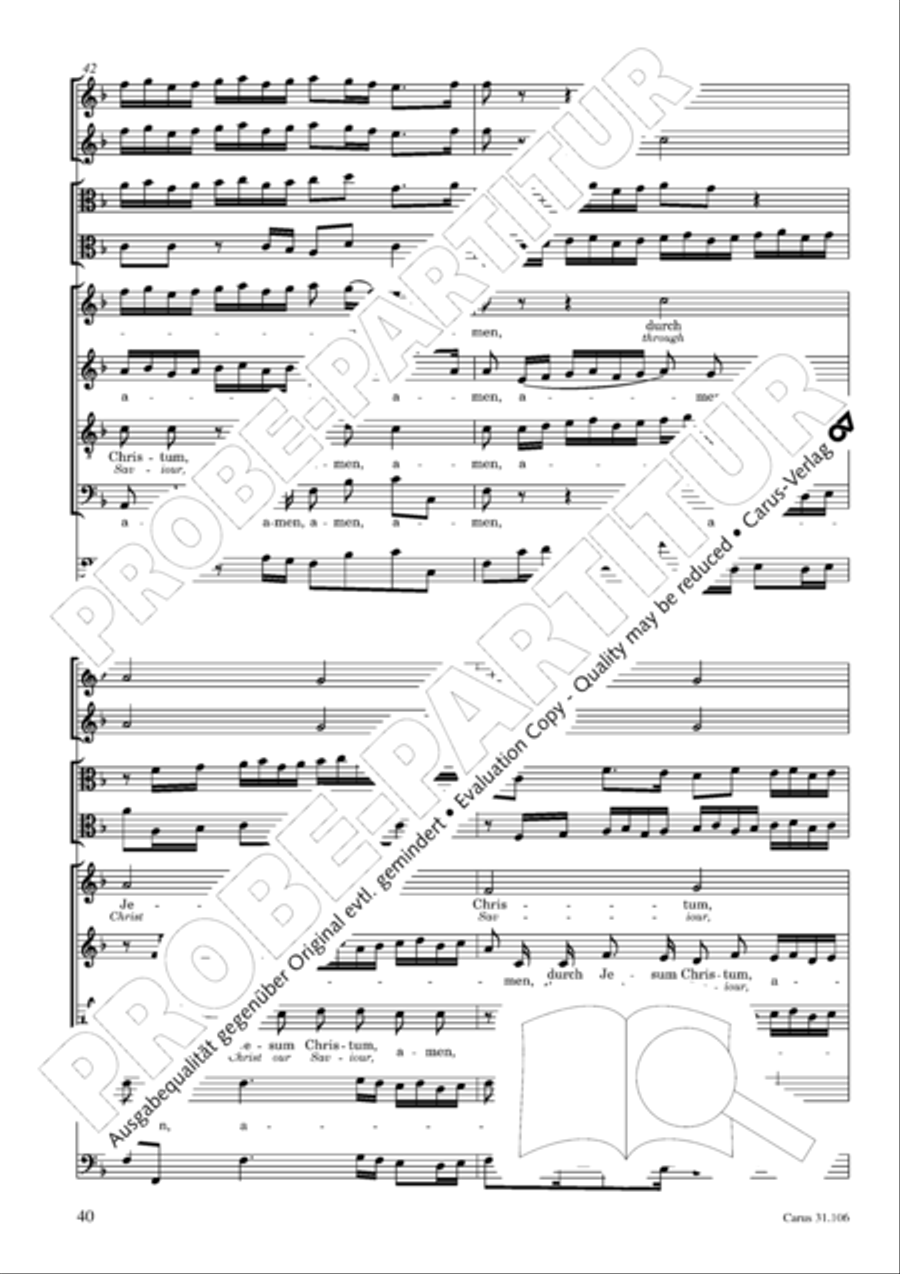
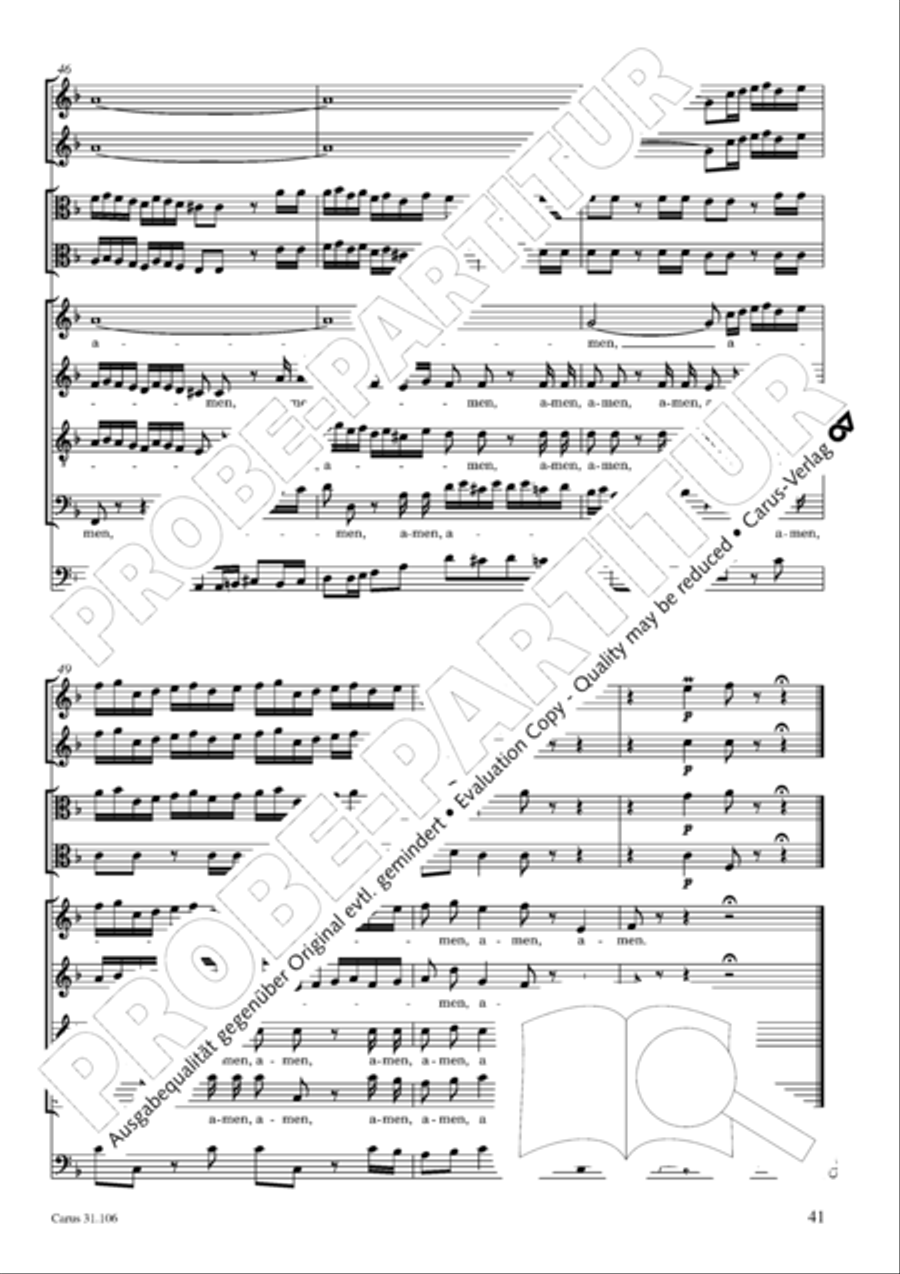
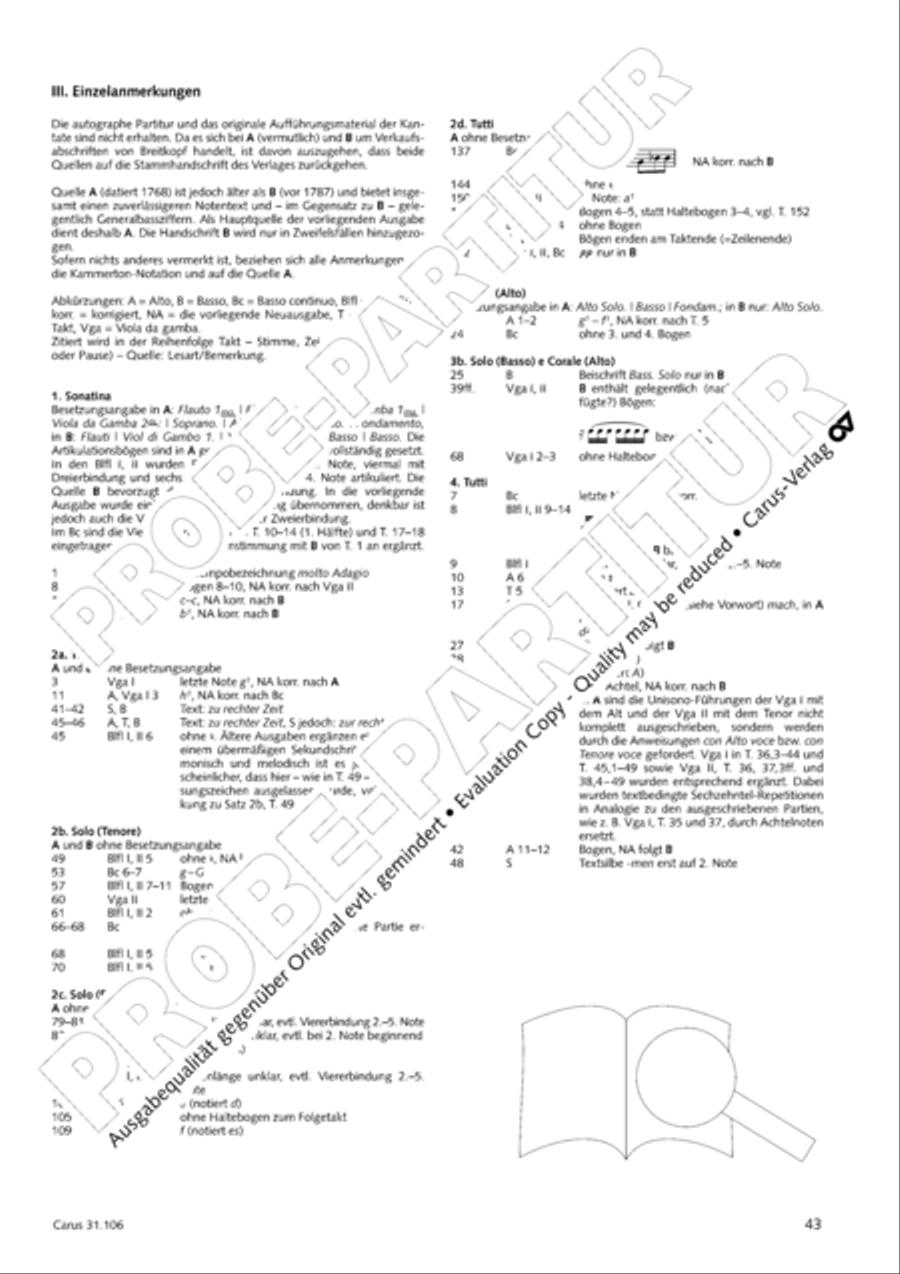
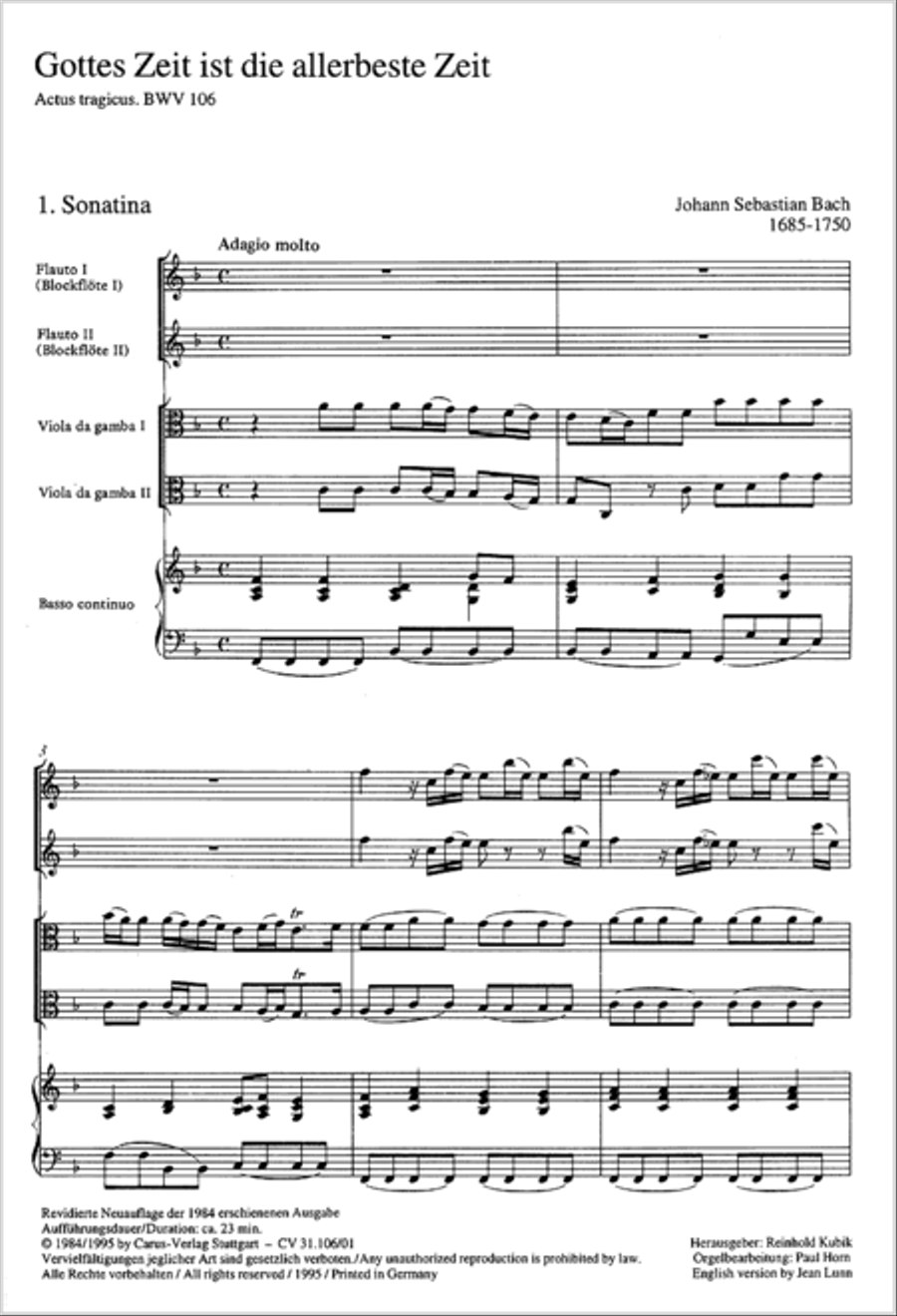
By Johann Sebastian BachThe Actus tragicus or Gottes Zeit ist die allerbeste Zeit BWV 106 remains one of Bach’s best-known and most admired works, one which continues to resonate to this day – a "work of genius such as even great masters seldom achieve" (Alfred Dürr). The cantata is one of the earliest known vocal works by Johann Sebastian Bach. It was written during his time at Mühlhausen, probably in 1707, when Bach took up the position of organist at the Divi Blasii Church. A possible occasion for its composition may have been the funeral of the mayor of Mühlhausen, Adolph Strecker.The short, slow "Sonatina" with two recorders, two gambas and continuo gets the listener into the mood of the character of the cantata. This instrumental combination is unique in Bach’s vocal output, but could derive from a central German tradition.This new edition is a critical-practical edition which combines both the latest discoveries in Bach research with a detailed Critical Report as well as addressing current questions on performance practice.
Details
Summary
- Instrument:
- Choir Recorder Viola da Gamba Voice Basso Continuo
- Ensembles:
- 4-Part SATB Mixed Choir
- Genres:
- Christian Baroque Period
- Composers:
- Johann Sebastian Bach
- Publishers:
- Carus Verlag
- Series:
- Stuttgart Urtext Edition
- ISBN:
- 9790007140137
Detailed Description
SKU: CA.3110600
Actus tragicus. Funeral music. Composed by Johann Sebastian Bach. Edited by Peter Thalheimer. Arranged by Paul Horn. This edition: urtext. Stuttgart Urtext Edition: Bach vocal. Carus digital: Sheet music as PDF. Sacred vocal music, Cantatas, Mourning, death. Full score. Composed 1707/1708. BWV 106. 44 pages. Duration 23 minutes. Carus Verlag #CV 31.106/00. Published by Carus Verlag (CA.3110600).ISBN 9790007140137. 8.27 x 11.69 inches. Key: F major. Language: German/English.
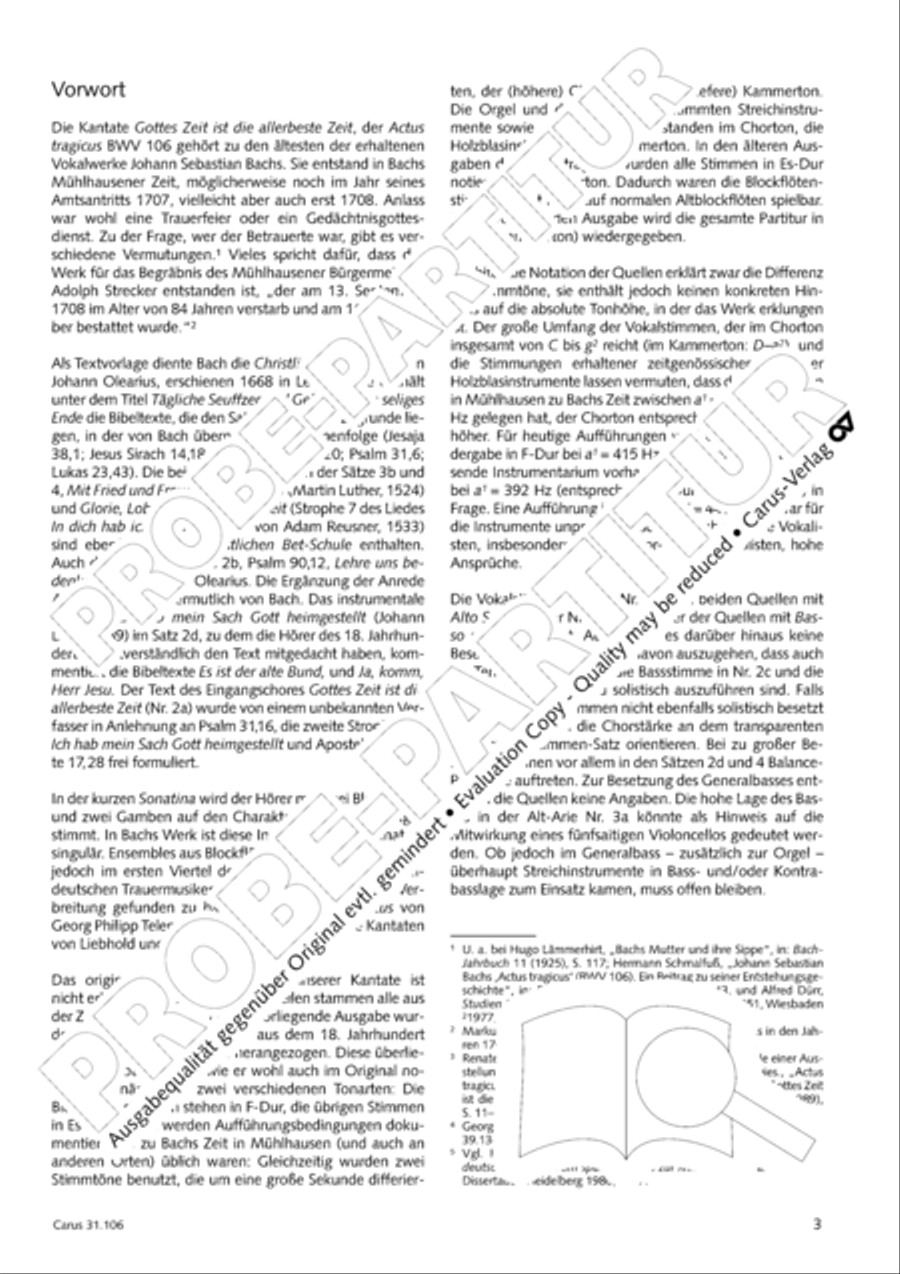
The Actus tragicus or Gottes Zeit ist die allerbeste Zeit BWV 106 remains one of Bach’s best-known and most admired works, one which continues to resonate to this day – a "work of genius such as even great masters seldom achieve" (Alfred Dürr). The cantata is one of the earliest known vocal works by Johann Sebastian Bach. It was written during his time at Mühlhausen, probably in 1707, when Bach took up the position of organist at the Divi Blasii Church. A possible occasion for its composition may have been the funeral of the mayor of Mühlhausen, Adolph Strecker.
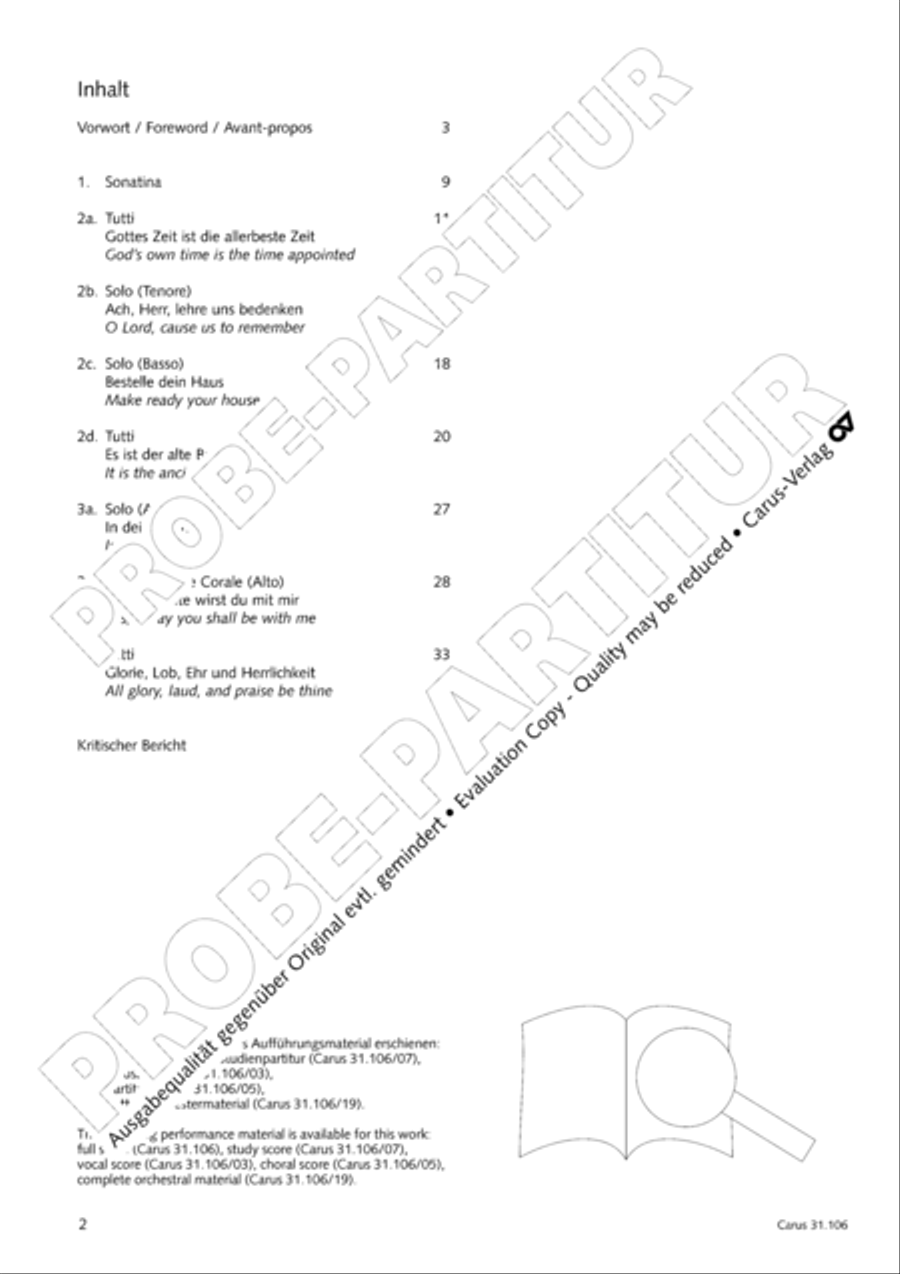
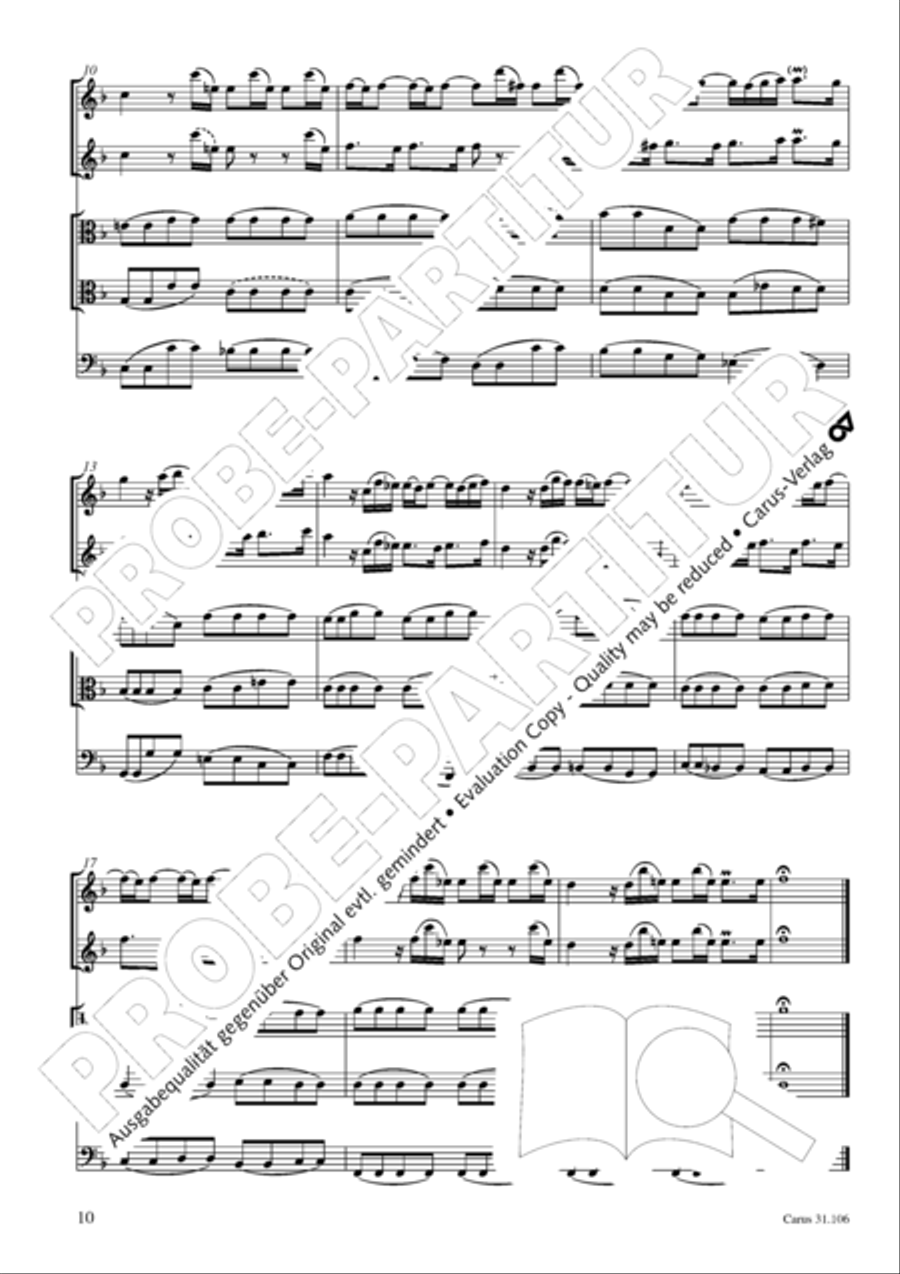
The short, slow "Sonatina" with two recorders, two gambas and continuo gets the listener into the mood of the character of the cantata. This instrumental combination is unique in Bach’s vocal output, but could derive from a central German tradition.
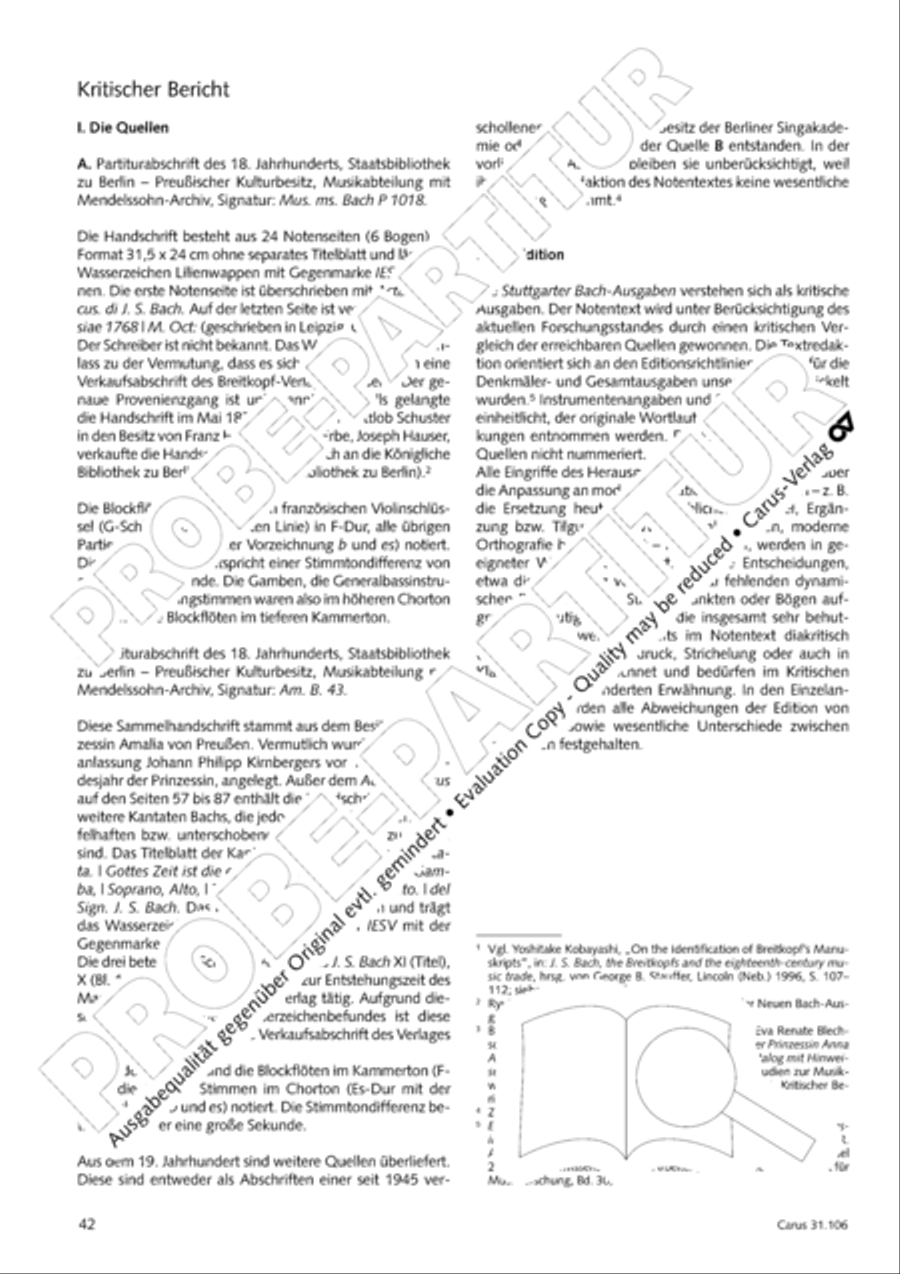
This new edition is a critical-practical edition which combines both the latest discoveries in Bach research with a detailed Critical Report as well as addressing current questions on performance practice.
Similar Sheet Music & Digital Downloads
- More by this Composer:
- Johann Sebastian Bach Johann Sebastian Bach Piano Johann Sebastian Bach Piano Accompaniment Johann Sebastian Bach Piano Solo
- Series:
- Stuttgart Urtext Edition
- Instrument:
- Vocal Choir Woodwinds Recorder Strings Viola da Gamba Vocal Voice Piano and Keyboard Basso Continuo
- Artists:
- Johann Sebastian Bach Paul Horn
- Ensemble:
- 4-Part SATB Mixed Choir
- Publisher:
- Carus Verlag