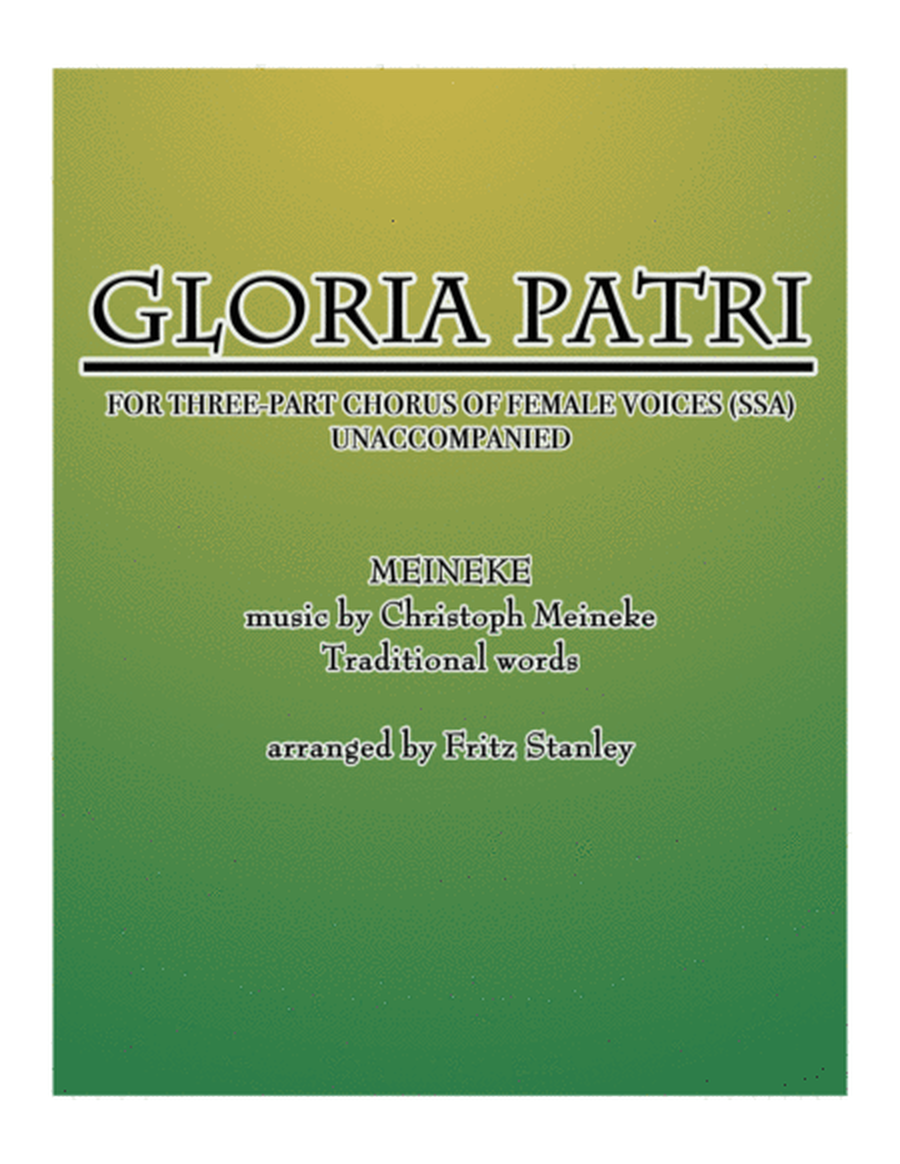
Gloria Patri (Glory Be to the Father - MEINEKE) - SSA A Cappella SSA - Digital Sheet Music
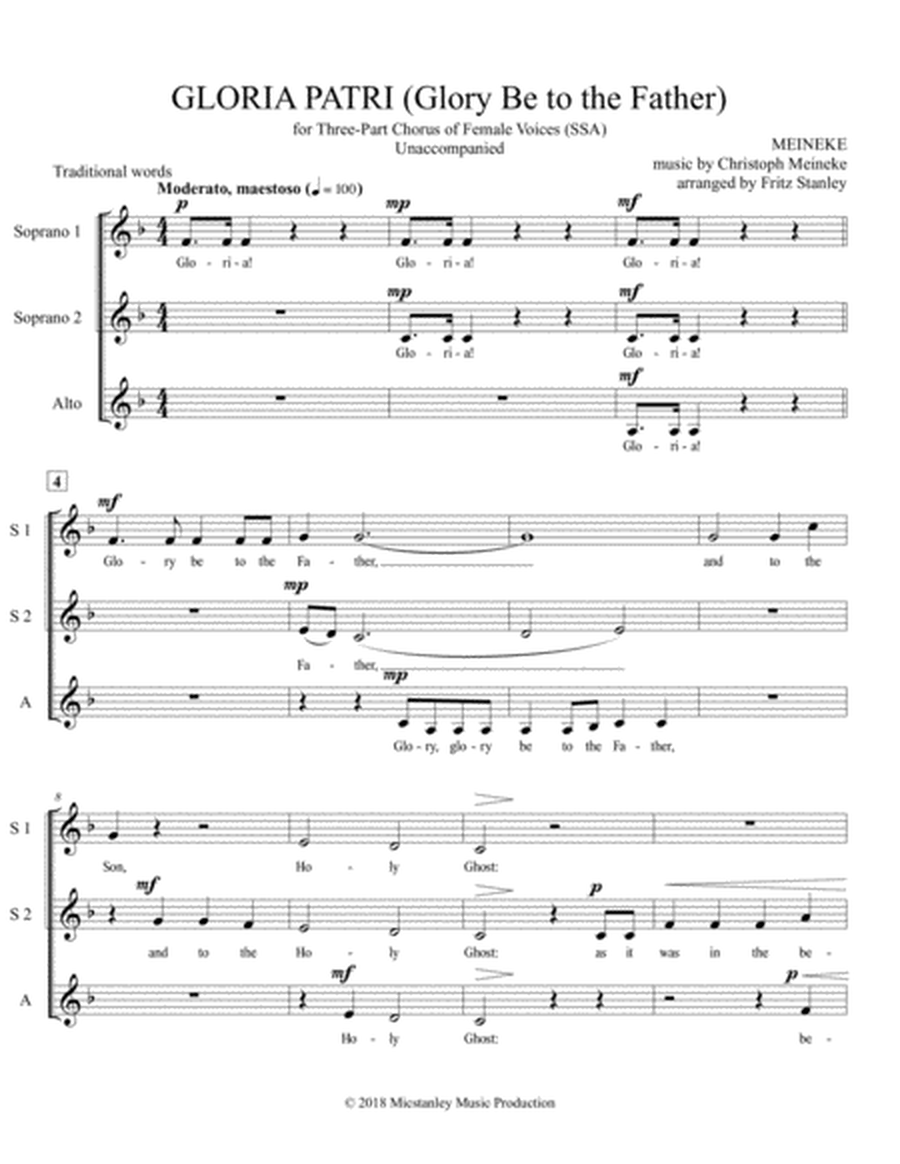
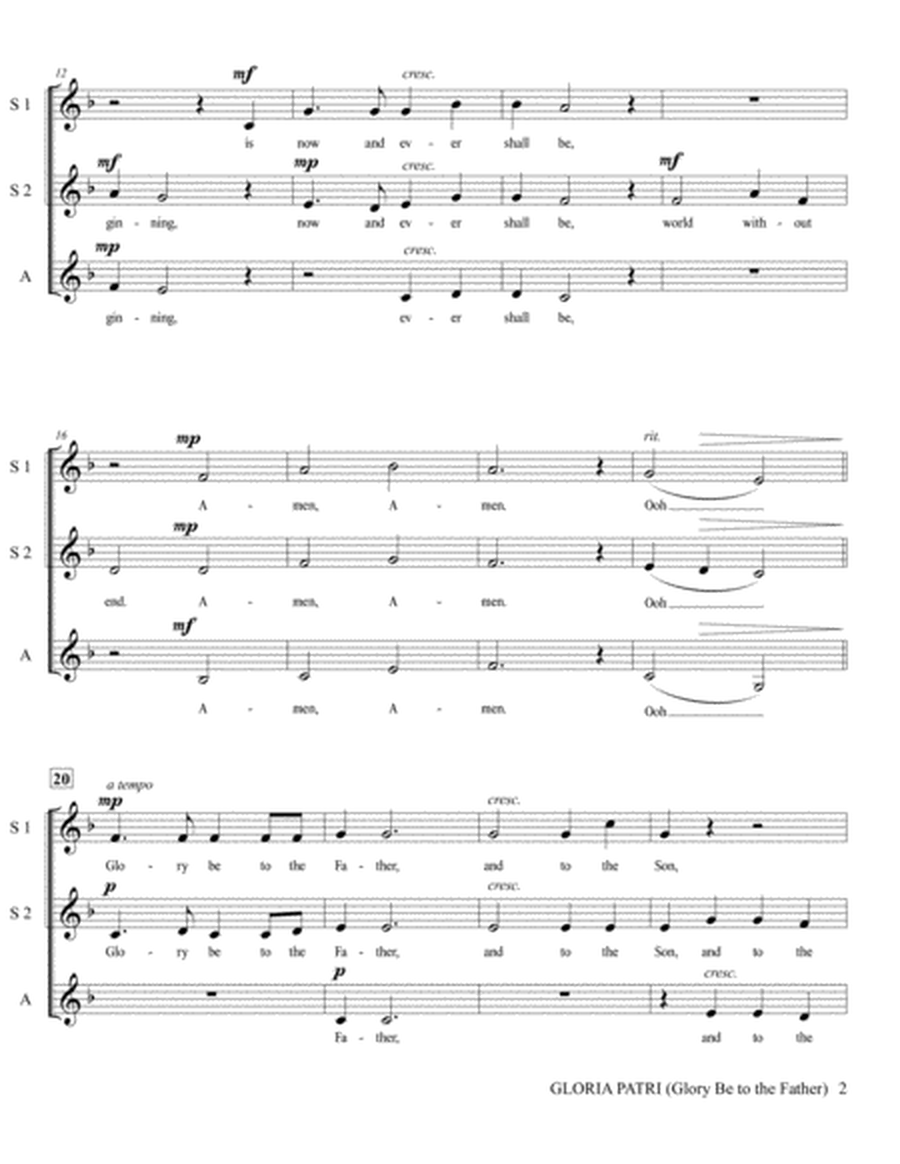
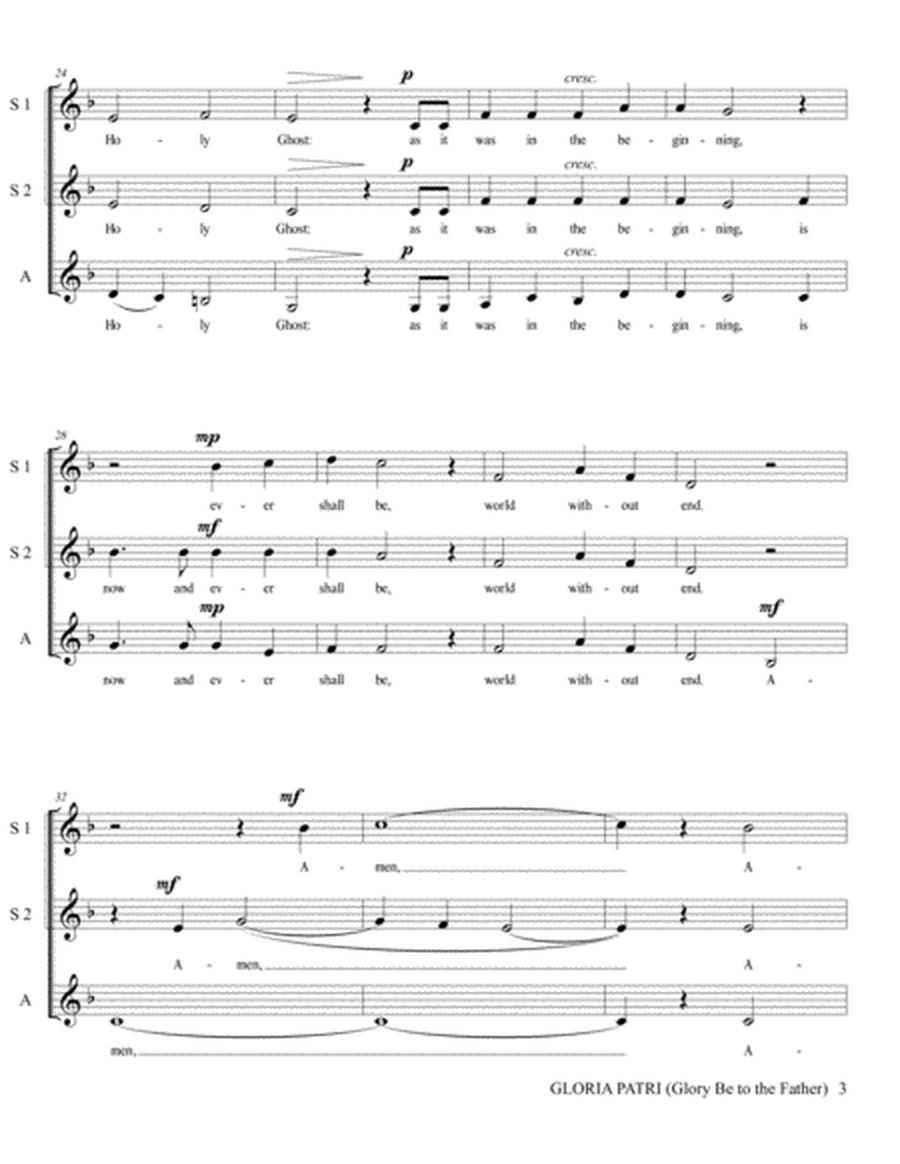
Gloria Patri (Glory Be to the Father) is composed by Christoph Meineke in MEINEKE tune. Arranged by Fritz Stanley for three-part chorus of female voices (SSA) in a cappella. This Gloria Patri text is usually known as the "Lesser Doxology" (what is known as the "Greater Doxology" begins "Gloria in excelsis Deo"; see 247). It is a liturgical text common to most Christian traditions and is often appended to the singing of Old Testament psalms or New Testament canticles. The traditional version of this text is found here, while a more modern translation occurs at 636. The initial part of the Gloria Patri may be traced back to the Trinitarian baptismal formula recordedin Matthew 28: 19; it was probably used by early Christians as an acclamation. The second part, which begins "as it was in the beginning," was added in the fourth century as a response to the Arian heresy. Thus the text reflects the orthodox insistence on the consubstantiality of the Son with the Father and the eternal unity and equality of the three persons in the Trinity. Liturgical Use: Traditionally used at the end of Old Testament psalms and New Testament canticles and at the conclusion of certain prayers or creedal statements; a general doxology.
Details
Summary
- Instrument:
- Choir
- Ensembles:
- SSA 3-Part A Cappella Women's Choir
- Genres:
- Christian
- Publishers:
- MicStanley
- Series:
- ArrangeMe
Detailed Description
SKU: A0.748494
Composed by Christoph Meineke, MEINEKE, and Traditional Words. Arranged by Fritz Stanley. A Cappella,Christian,Praise & Worship,Sacred. Octavo. 7 pages. MicStanley #3916787. Published by MicStanley (A0.748494).Gloria Patri (Glory Be to the Father) is composed by Christoph Meineke in MEINEKE tune. Arranged by Fritz Stanley for three-part chorus of female voices (SSA) in a cappella. This Gloria Patri text is usually known as the "Lesser Doxology" (what is known as the "Greater Doxology" begins "Gloria in excelsis Deo"; see 247). It is a liturgical text common to most Christian traditions and is often appended to the singing of Old Testament psalms or New Testament canticles. The traditional version of this text is found here, while a more modern translation occurs at 636. The initial part of the Gloria Patri may be traced back to the Trinitarian baptismal formula recordedin Matthew 28: 19; it was probably used by early Christians as an acclamation. The second part, which begins "as it was in the beginning," was added in the fourth century as a response to the Arian heresy. Thus the text reflects the orthodox insistence on the consubstantiality of the Son with the Father and the eternal unity and equality of the three persons in the Trinity. Liturgical Use: Traditionally used at the end of Old Testament psalms and New Testament canticles and at the conclusion of certain prayers or creedal statements; a general doxology.
About ArrangeMe
This product was created by a member of ArrangeMe, Hal Leonard's self-publishing community for independent composers, arrangers, and songwriters. Discover unique arrangements of popular titles and original compositions from diverse creators. The length, difficulty, and pricing are determined by the arranger or composer.
About Digital Downloads
Digital Downloads let you instantly access sheet music on your computer, tablet, or mobile device. Print your sheet music anywhere, anytime, or play it straight from your device—no internet connection is required after download.
Each Digital Download includes a watermark with your name, purchase date, and the number of copies purchased. You may only print or use the number of copies purchased. Redistribution or unauthorized printing is prohibited.
Similar Sheet Music & Digital Downloads
- ArrangeMe:
- MicStanley
- Series:
- ArrangeMe
- Ensemble:
- SSA 3-Part A Cappella Women's Choir
- Publisher:
- MicStanley