Details
Summary
- Instrument:
- Easy Piano Piano Solo 1 Piano, 4-Hands
- Ensembles:
- Small Ensemble
- Genres:
- Classical
- Composers:
- Dennis Alexander
- Publishers:
- Alfred Music
- UPC:
- 038081204895
- ISBN:
- 9780739029831
- Format:
- Collection / Songbook
- Item types:
- Physical
- Level:
- Beginning
- Artist:
- Dennis Alexander
- Usages:
- School and Community
- Number of Pages:
- 32
- Shipping Weight:
- 0.38 pounds
Detailed Description
SKU: AP.21347
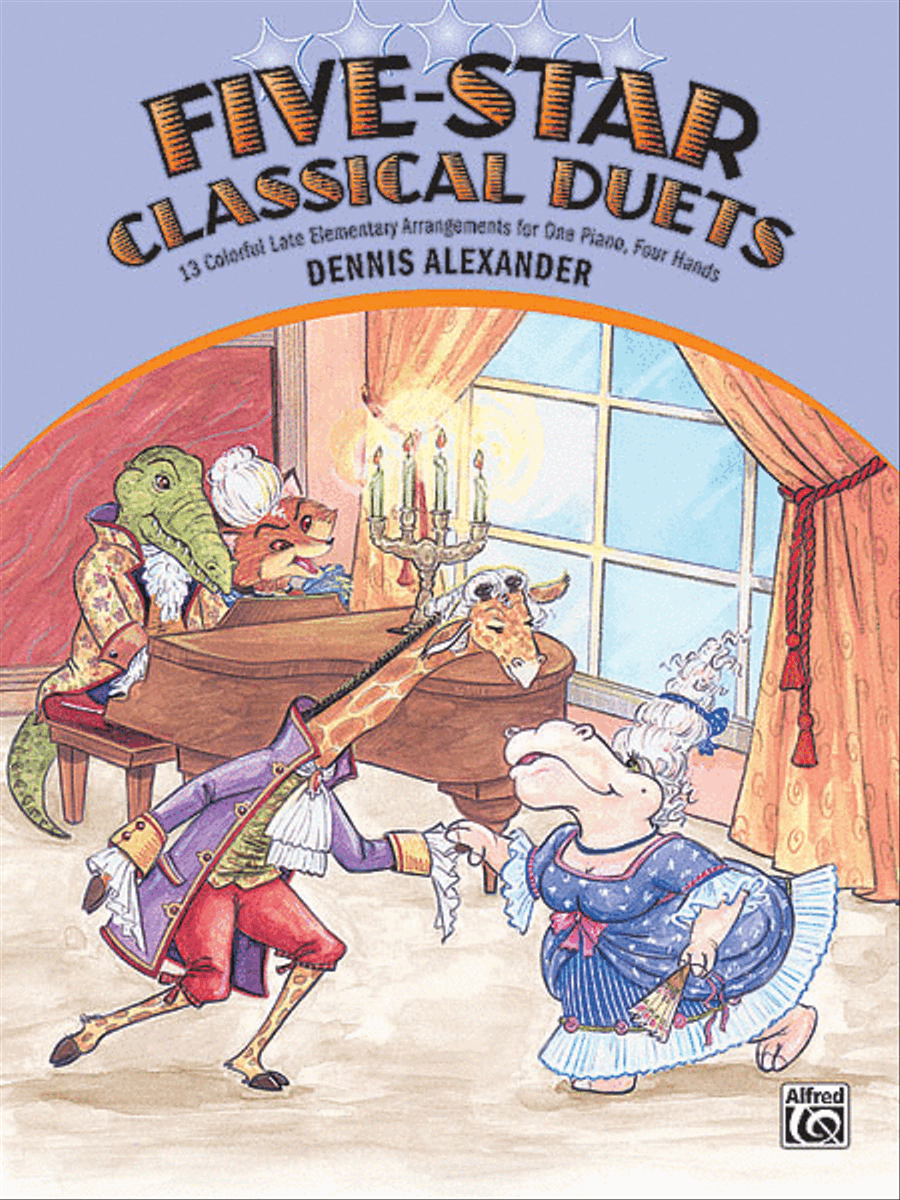
13 Colorful Late Elementary Arrangements for One Piano, Four Hands. Composed by Dennis Alexander. Duet or Duo; Masterworks; Piano Duet (1 Piano, 4 Hands); Solo Small Ensembles. Masterwork Arrangement. Book. 32 pages. Alfred Music #00-21347. Published by Alfred Music (AP.21347).ISBN 9780739029831. UPC: 038081204895. English.
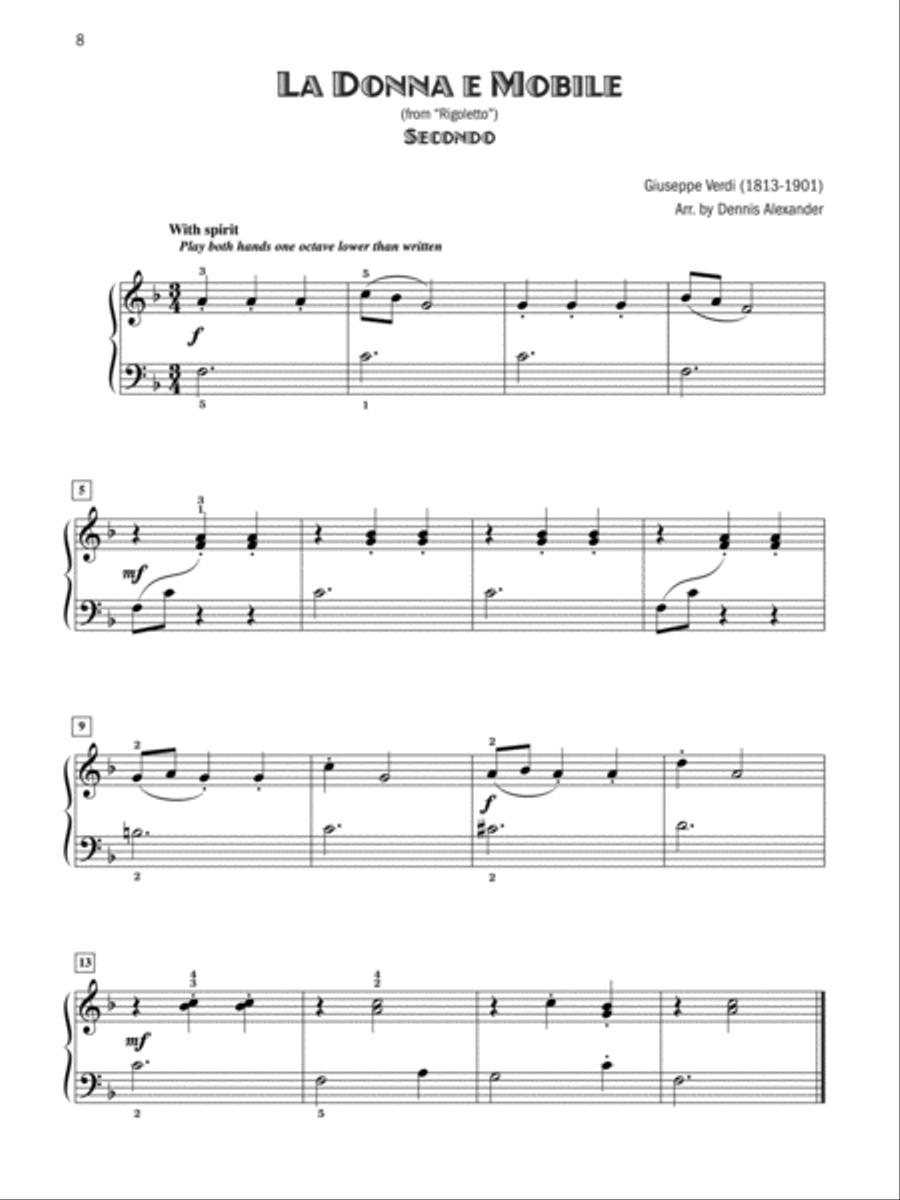
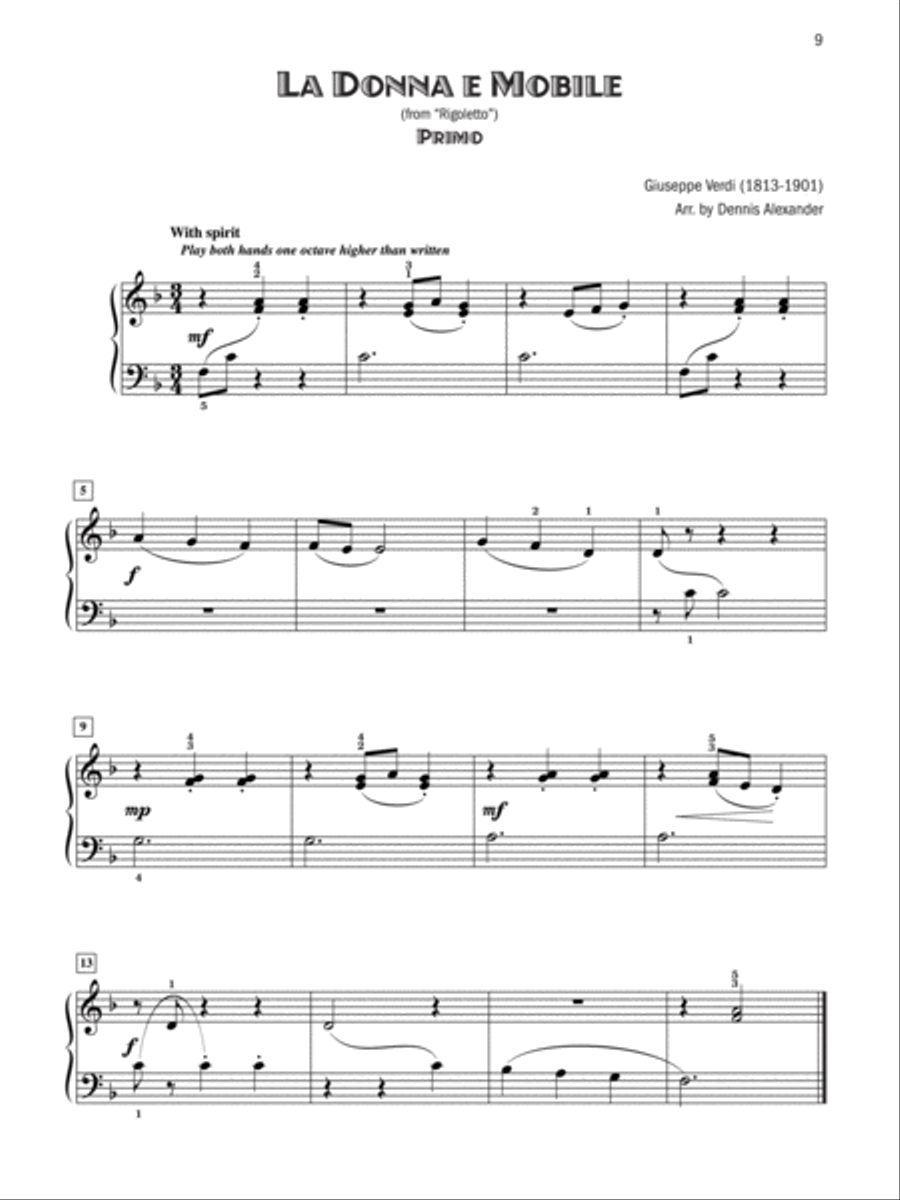
Students will have fun exploring classical operatic, orchestral and piano music through these duets. Arrangements of works by Bach, Mozart, Beethoven, Verdi, Liszt and more are included. Both primo and secondo feature the melody and are equally difficult. Reading is facilitated by both parts being on the grand staff.
Similar Sheet Music & Digital Downloads
- More by this Composer:
- Dennis Alexander Dennis Alexander Piano Method Dennis Alexander Easy Piano Dennis Alexander Piano Solo
- Instrument:
- Piano and Keyboard Piano Easy Piano Piano and Keyboard Piano Piano Solo Piano and Keyboard Piano Piano Duet 1 Piano, 4-Hands
- Artists:
- Dennis Alexander
- Ensemble:
- Small Ensemble
- Publisher:
- Alfred Music
Ratings + Reviews
4 Rating
2 reviews
Anonymous
Mar 21, 2019
These a cute and short and not too hard.
Kathjane
Apr 29, 2011
I have lots of siblings who learn piano with me and these duets are really well suited for sibling performance. The primo and secondo parts are fairly equal in difficulty, though sometimes one part is a little more difficult, making it perfect for the older and more advanced player. Both parts get a turn at the melody, so no one has to play the boring bit all the way through. The well-known tunes are a great incentive to learn as well as helping students to feel and hear the beat and how the parts fit together.