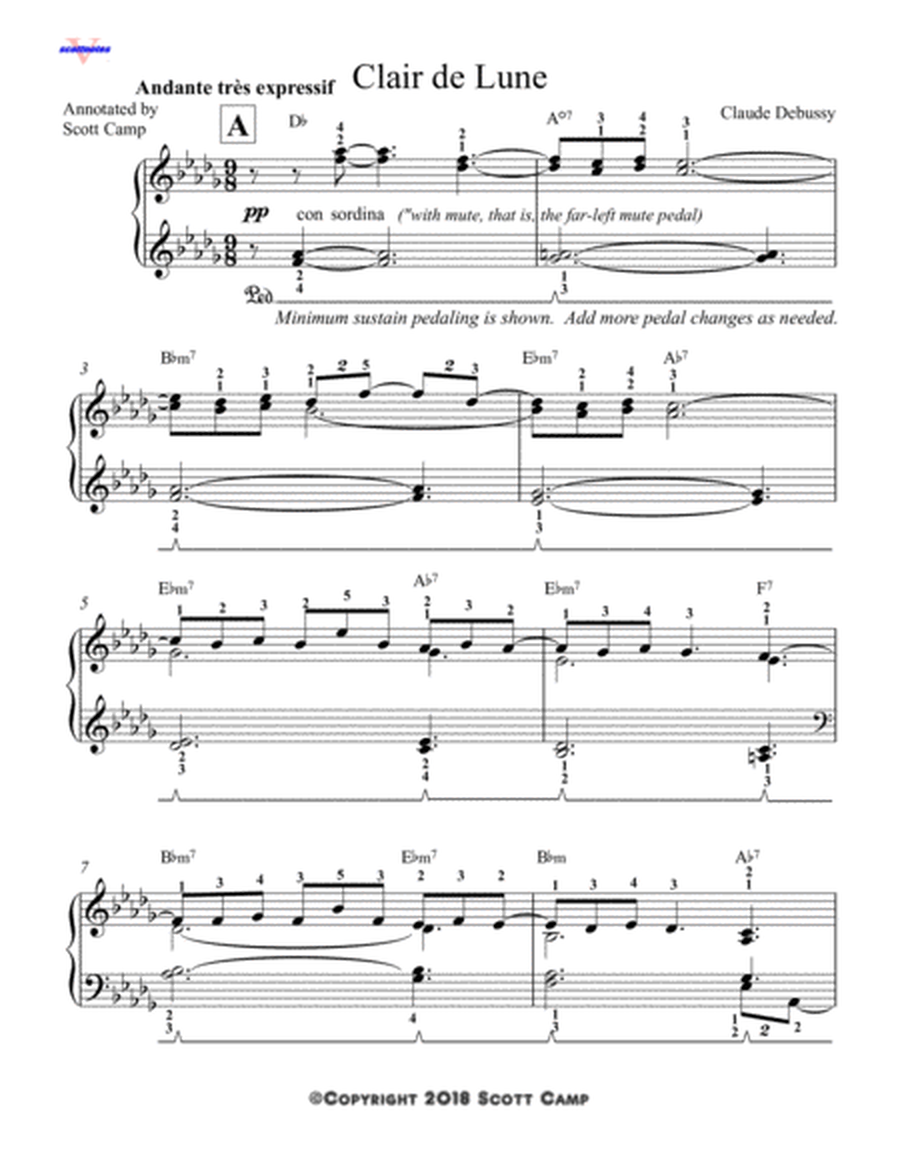
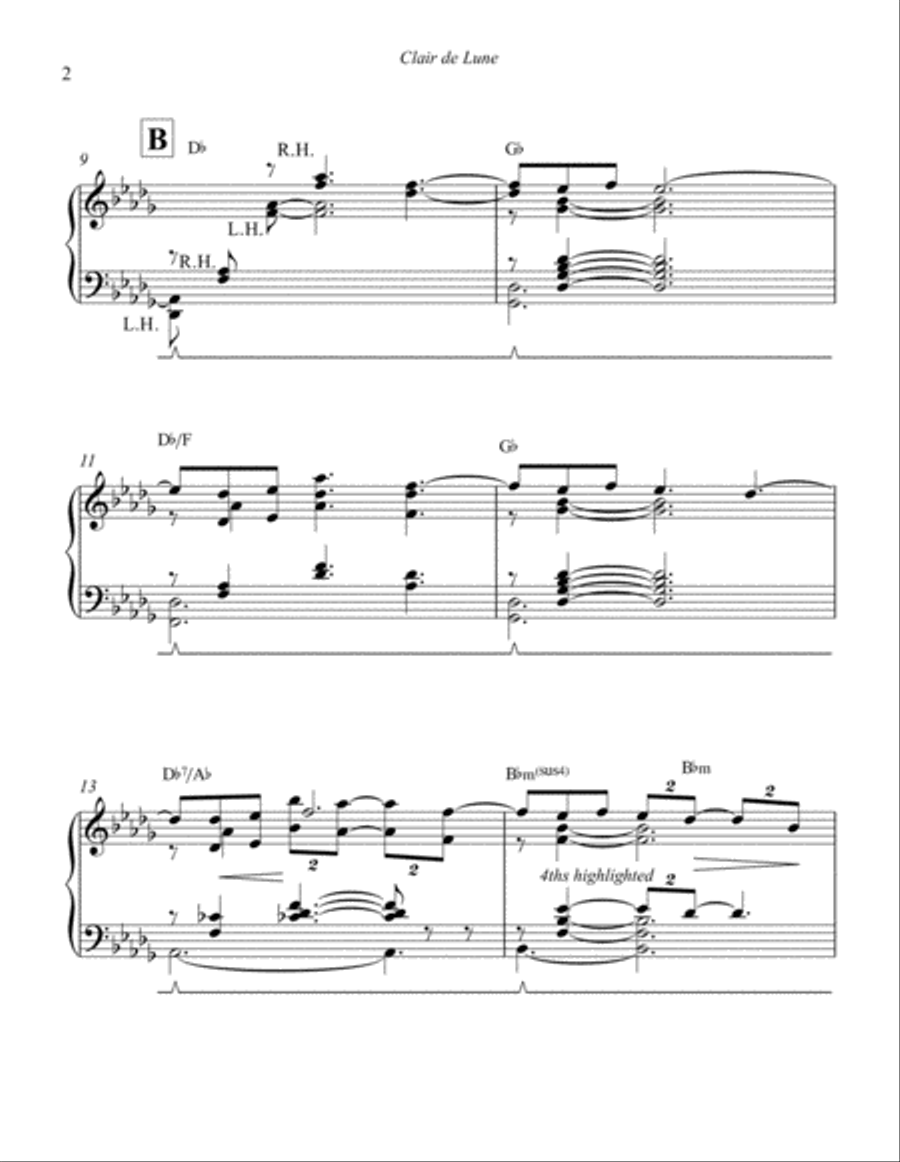
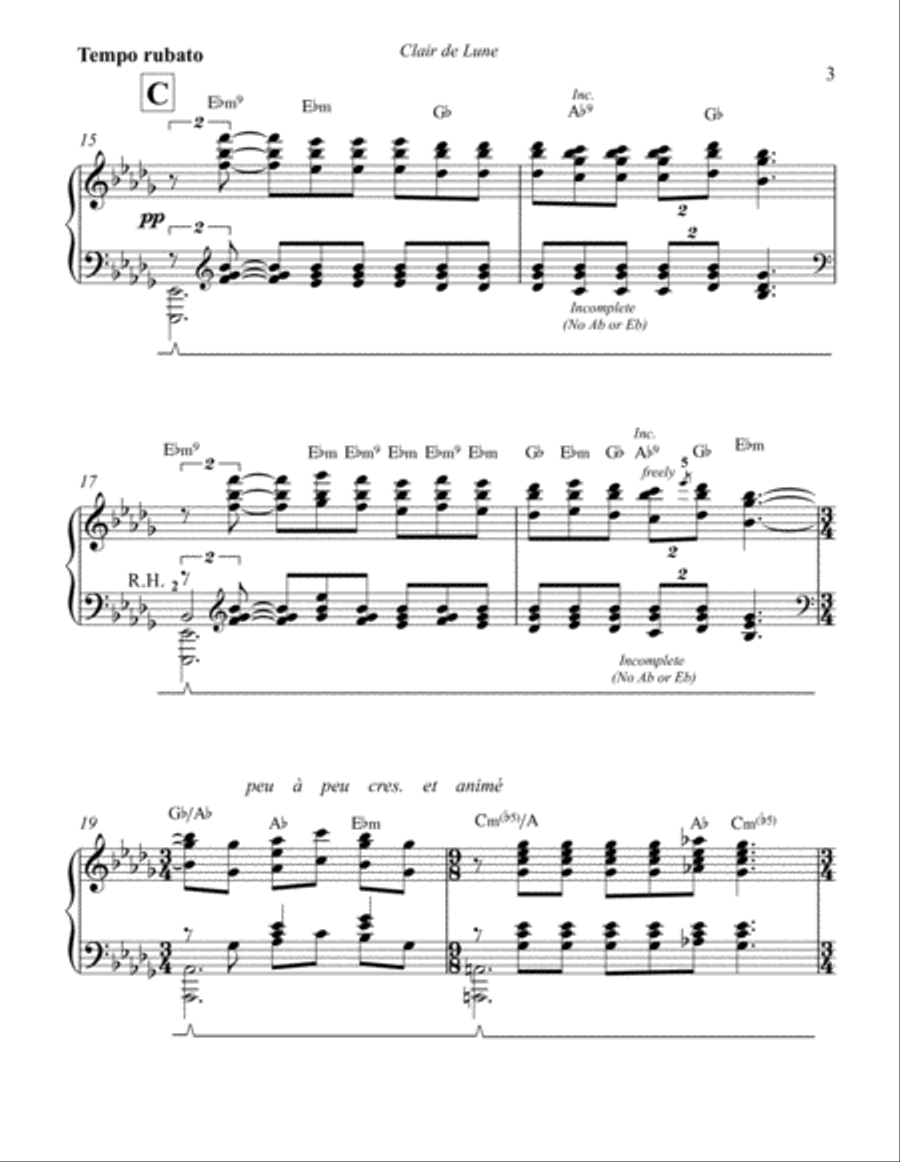
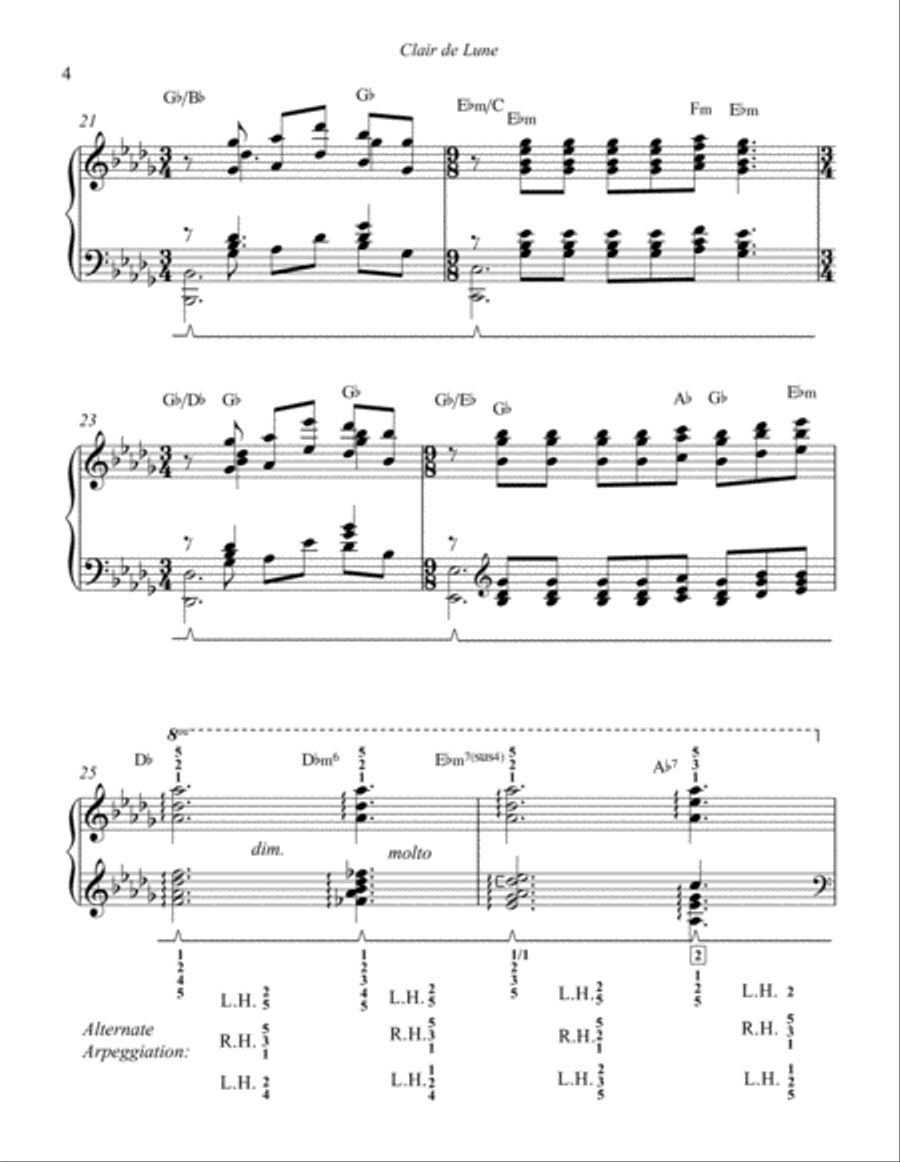
Clair de Lune (with piano fingering as needed) by Claude Debussy Piano Solo - Digital Sheet Music
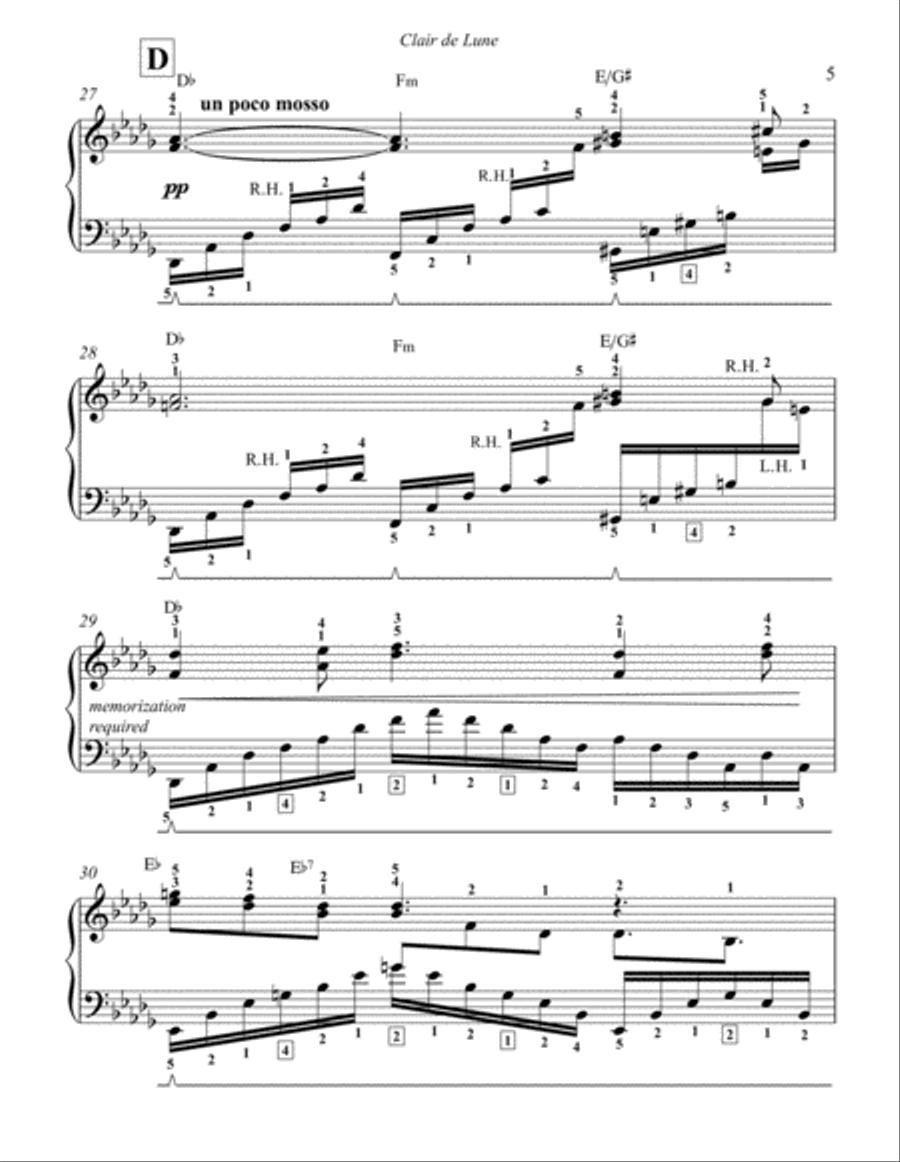
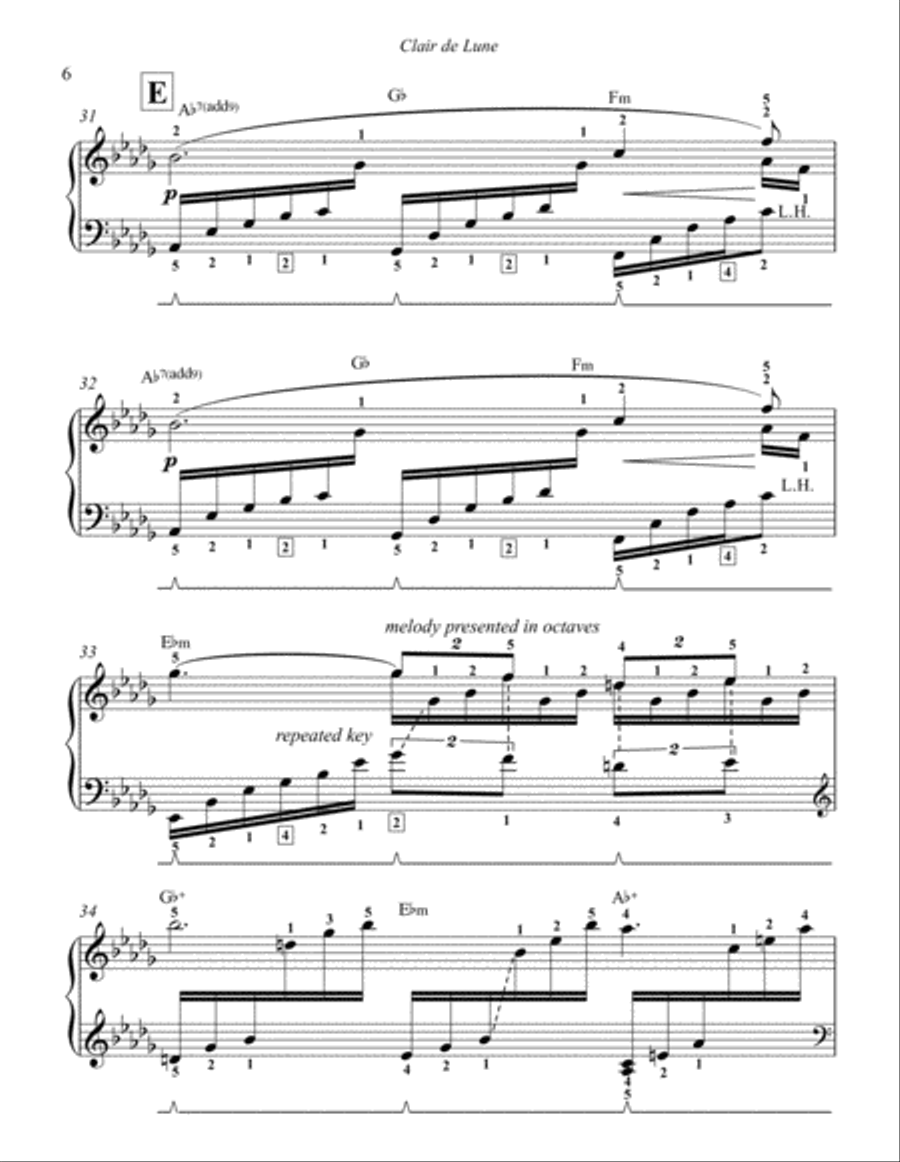
By Claude DebussyPossibly the most beautiful piece of music ever.This edition presents Debussy's masterpiece with as close to 100% clarity as possible: no arrangement, no simplification, no abridgement, only solutions to the challenges of how to play this amazing masterpiece. In my experience, I would guess that Clair de lune has been the final, unfulfilled and unattained goal of piano students more than any other piece in music history.If you recognize the truth in this statement, you owe it to yourself to investigate this edition, in which for the first time, all of the technical challenges are clearly identified with their solutions. Playing a piece of music is not the same as mastering it. Surviving a performance is not the same as playing with confidence. There is no joy in being vulnerable to embarrassing mistakes. It is no way to live. You deserve a set of instructions (this edition) that enables you to master your performance, play with confidence and beauty, not an edition which blocks your access.Clair de Lune is so familiar that it is hard to appreciate just how revolutionary it (and Debussy) are. The word revolutionary is overused, so we fail to realize that Clair de Lune is difficult to play largely because it was difficult to notate. If the faculty of the Paris Conservatory didn't understand or appreciate Debussy, why would we expect the staff of a publishing company (as competent as they were) to understand the demands of his music. Debussy broke the boundaries of conventional piano notation. That means contradictions and ambiguity, which must be addressed.A note about fingering: where and why it is or is not presented. I've done my best to prepare an edition of this music that will enable the Intermediate Classical pianist to prepare and perform this masterpiece. My goal is to include information that the pianist needs, but does not already know. For Claire de Lune, some passages are dependent upon specific hand/fingering solutions, while other passages are either (1) equally playable with different fingering, or (2) only playable by what essentially becomes known as a "self-evident" solution. For example, m9-24, and m61-62, fall into this category. Octaves can only practically be played with fingers 1 and 5. I provide a lot of finger numbers, but that is not the same as creating an edition that can be played without significant staff reading. The premise is that an intermediate musician should have access to advanced material--that is a musician is motivated to play pieces "one level more advanced". Attempting to bridge more than "one level" is not my goal.
Details
Summary
- Instrument:
- Piano Solo
- Genres:
- Impressionism Standards Wedding Graduation
- Composers:
- Claude Debussy
- Publishers:
- Scott Camp
- Series:
- ArrangeMe
- Format:
- Score
- Item types:
- Digital
- Level:
- Intermediate
- Artist:
- Claude Debussy
- Arrangers:
- Scott Camp
- Usages:
- School and Community
- Number of Pages:
- 13
Detailed Description
SKU: A0.553098
Composed by Claude Debussy. Arranged by Scott Camp. 20th Century,Concert,Graduation,Standards,Wedding. Score. 13 pages. Scott Camp #3909193. Published by Scott Camp (A0.553098).Possibly the most beautiful piece of music ever.
This edition presents Debussy's masterpiece with as close to 100% clarity as possible: no arrangement, no simplification, no abridgement, only solutions to the challenges of how to play this amazing masterpiece.
In my experience, I would guess that Clair de lune has been the final, unfulfilled and unattained goal of piano students more than any other piece in music history.
If you recognize the truth in this statement, you owe it to yourself to investigate this edition, in which for the first time, all of the technical challenges are clearly identified with their solutions.
Playing a piece of music is not the same as mastering it.
Surviving a performance is not the same as playing with confidence.
There is no joy in being vulnerable to embarrassing mistakes. It is no way to live.
You deserve a set of instructions (this edition) that enables you to master your performance, play with confidence and beauty, not an edition which blocks your access.
Clair de Lune is so familiar that it is hard to appreciate just how revolutionary it (and Debussy) are. The word revolutionary is overused, so we fail to realize that Clair de Lune is difficult to play largely because it was difficult to notate. If the faculty of the Paris Conservatory didn't understand or appreciate Debussy, why would we expect the staff of a publishing company (as competent as they were) to understand the demands of his music. Debussy broke the boundaries of conventional piano notation. That means contradictions and ambiguity, which must be addressed.
A note about fingering: where and why it is or is not presented. I've done my best to prepare an edition of this music that will enable the Intermediate Classical pianist to prepare and perform this masterpiece. My goal is to include information that the pianist needs, but does not already know. For Claire de Lune, some passages are dependent upon specific hand/fingering solutions, while other passages are either (1) equally playable with different fingering, or (2) only playable by what essentially becomes known as a "self-evident" solution. For example, m9-24, and m61-62, fall into this category. Octaves can only practically be played with fingers 1 and 5. I provide a lot of finger numbers, but that is not the same as creating an edition that can be played without significant staff reading. The premise is that an intermediate musician should have access to advanced material--that is a musician is motivated to play pieces "one level more advanced". Attempting to bridge more than "one level" is not my goal.
About ArrangeMe
This product was created by a member of ArrangeMe, Hal Leonard's self-publishing community for independent composers, arrangers, and songwriters. Discover unique arrangements of popular titles and original compositions from diverse creators. The length, difficulty, and pricing are determined by the arranger or composer.
About Digital Downloads
Digital Downloads let you instantly access sheet music on your computer, tablet, or mobile device. Print your sheet music anywhere, anytime, or play it straight from your device—no internet connection is required after download.
Each Digital Download includes a watermark with your name, purchase date, and the number of copies purchased. You may only print or use the number of copies purchased. Redistribution or unauthorized printing is prohibited.
Similar Sheet Music & Digital Downloads
- More by this Composer:
- Claude Debussy Claude Debussy Piano Claude Debussy Piano Accompaniment Claude Debussy Piano Solo
- ArrangeMe:
- Scott Camp
- Series:
- ArrangeMe
- Instrument:
- Piano and Keyboard Piano Piano Solo
- Artists:
- Claude Debussy Scott Camp
- Publisher:
- Scott Camp