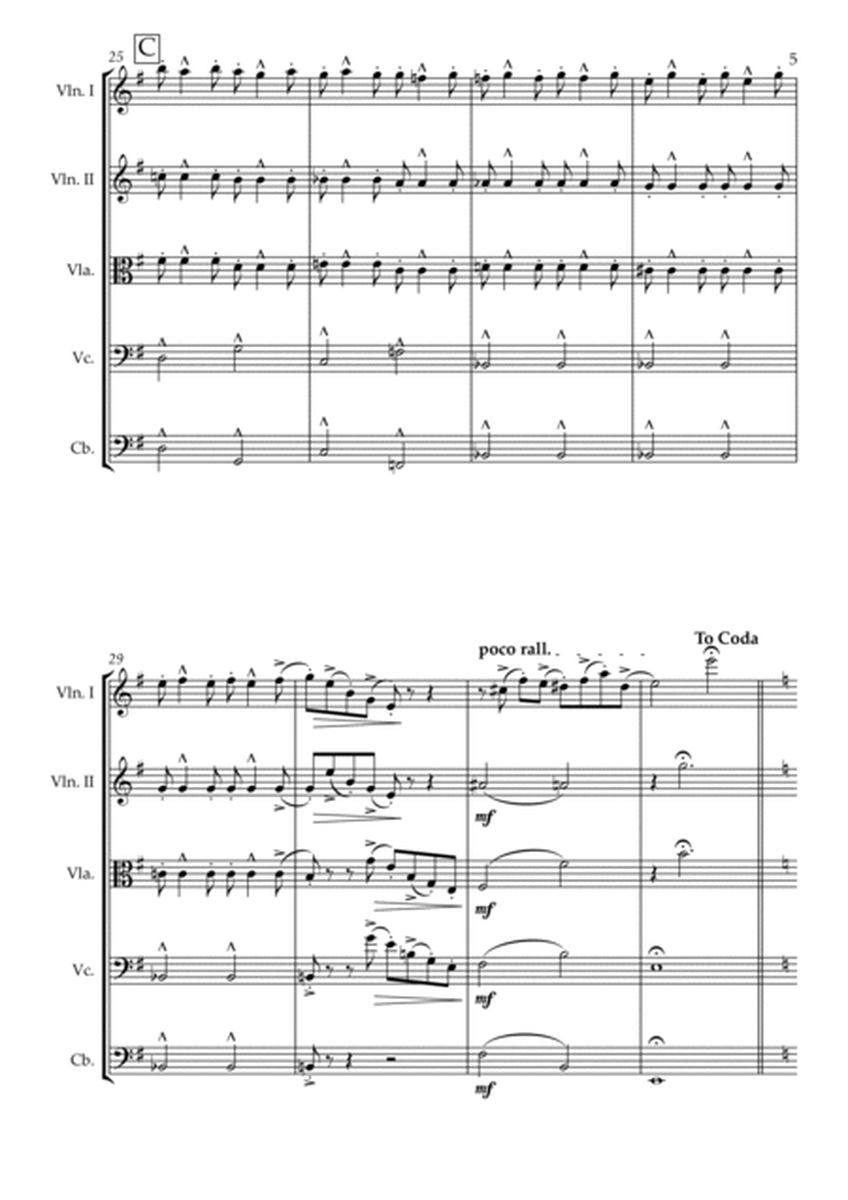
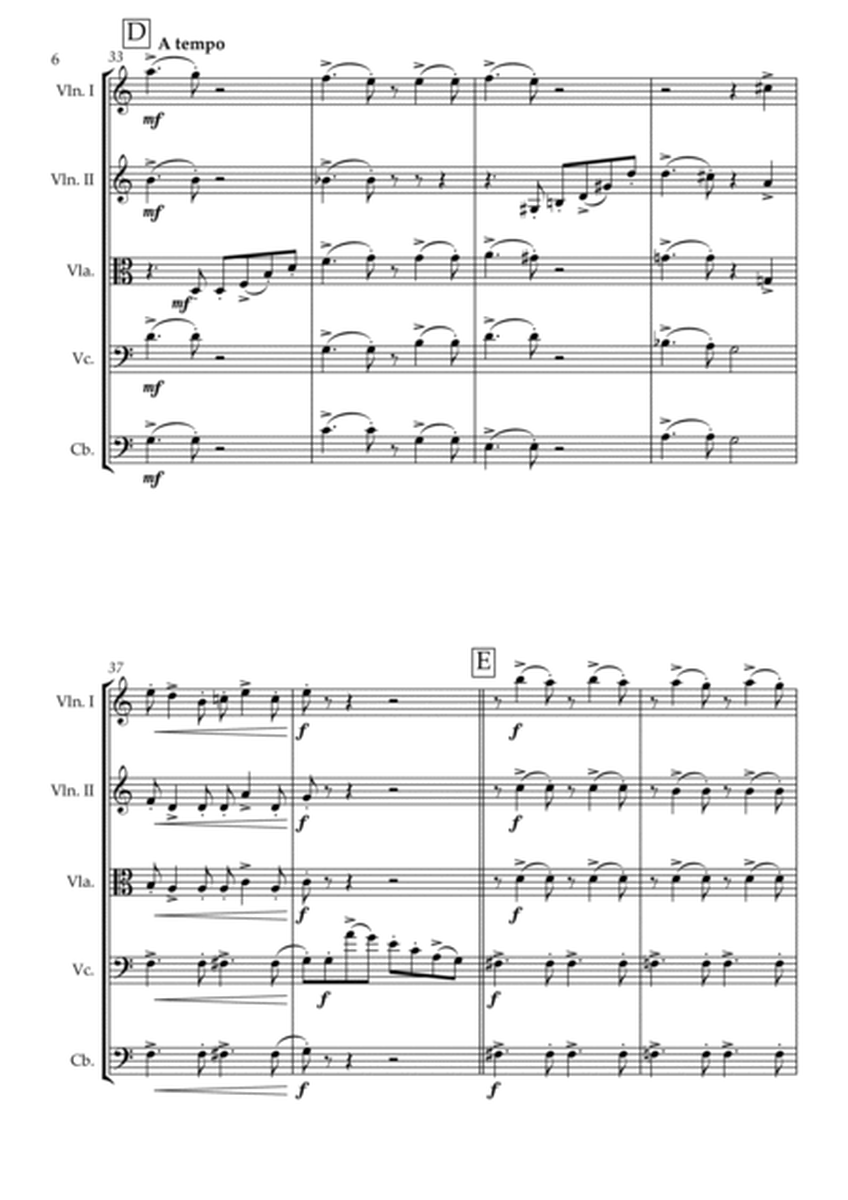
Choros No 1 String Orchestra - Digital Sheet Music
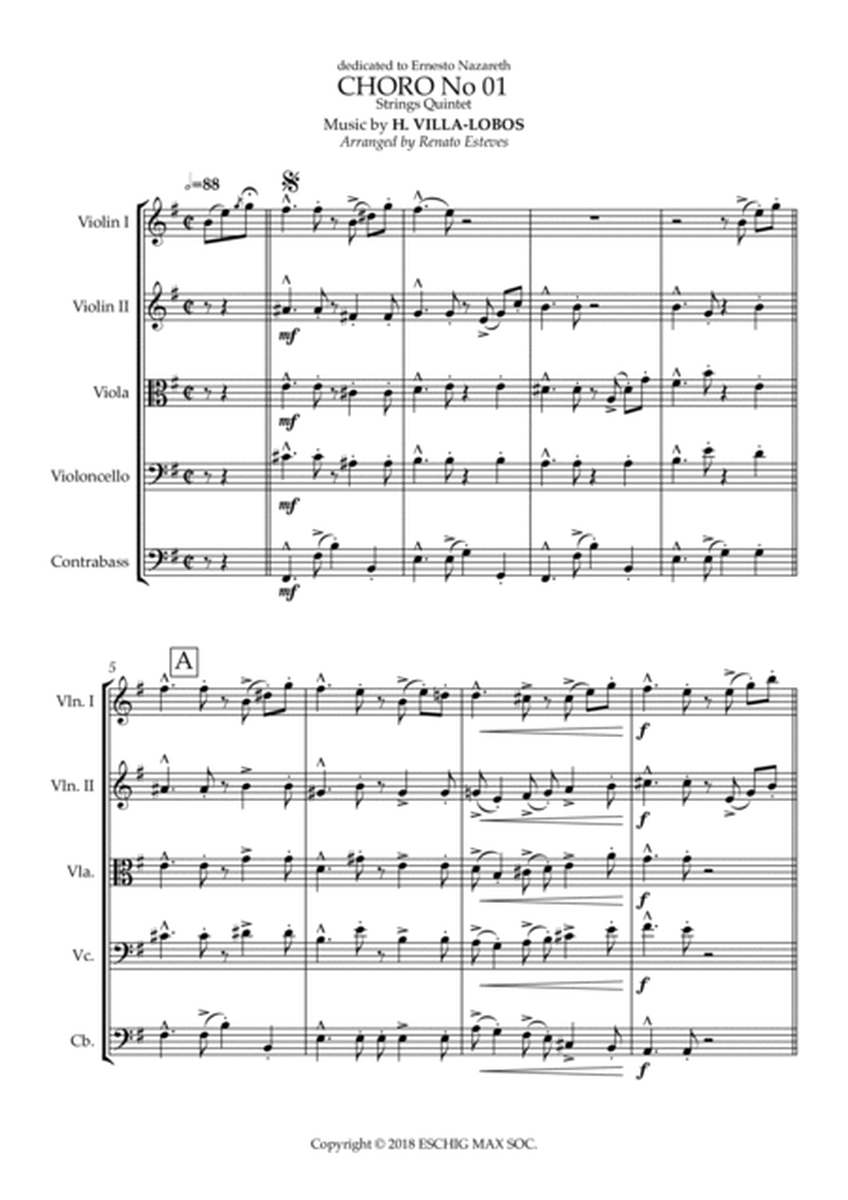
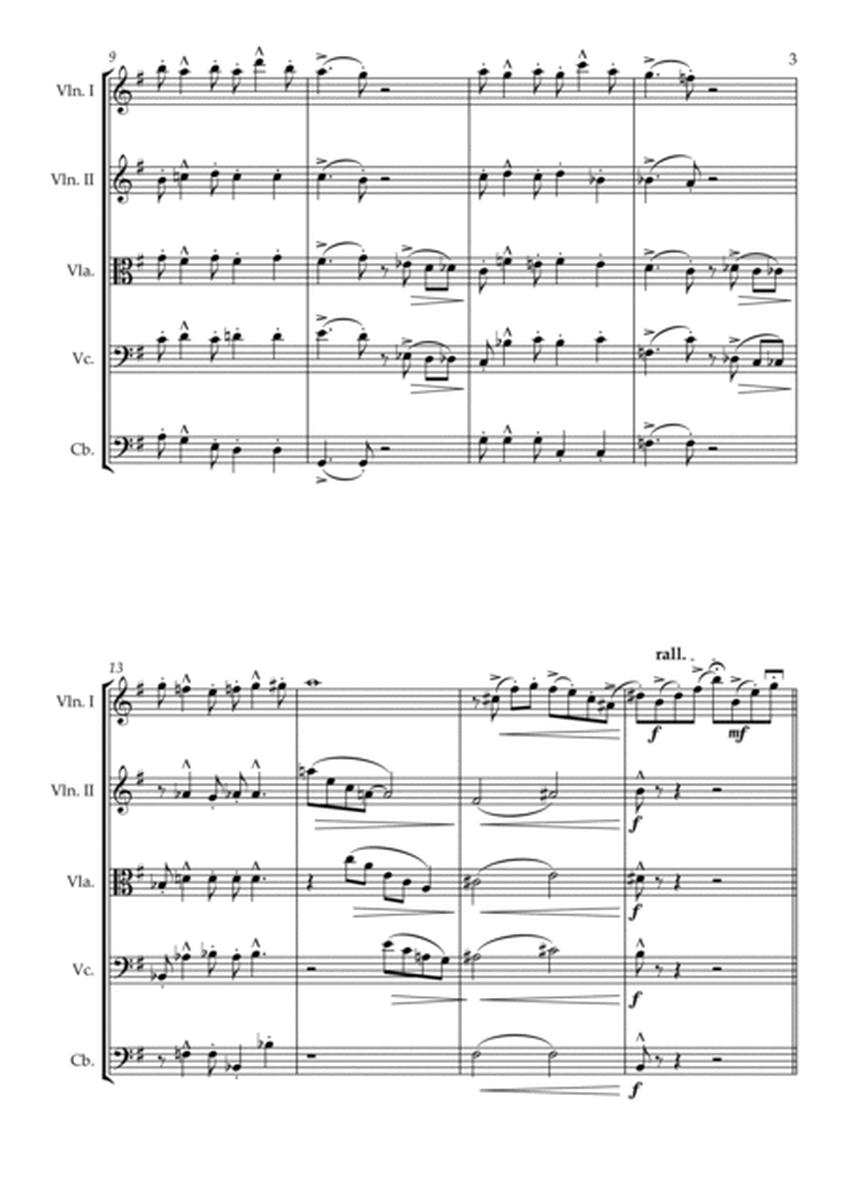
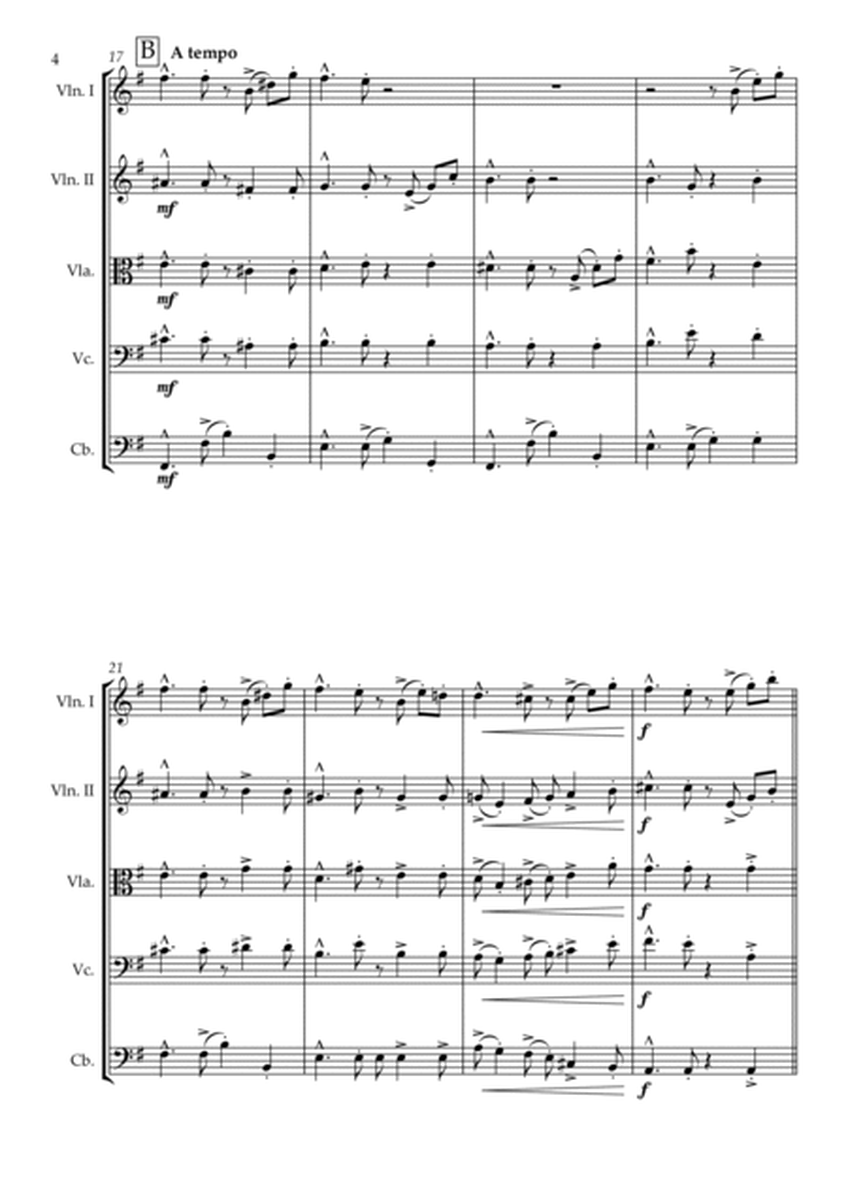
Villa-Lobos composed Chôros No. 1 in Rio de Janeiro in 1920, originally publishing it under the title Chôro típico, then Chôro típico brasileiro. The title is taken from an improvisational genre of Brazilian instrumental popular music that originated in Rio de Janeiro in the nineteenth century. The Portuguese word choro (pronounced [ˈʃoɾu]), means "cry" or "lament", though most music of this type is far from being sorrowful. Four years after composing this work, at the time of his first visit to Paris, he decided to make it part of an extended cycle of works collectively titled Chôros, which eventually included fourteen numbered compositions, plus an Introduction aux chôros (Introdução aos chôros): Ouverture, for guitar and orchestra, designed to be played before a complete performance of the cycle, and Chôros bis, a two-movement duo for violin and cello, considered as a sort of encore piece. A Quintet ("em forma de chôros"), for five woodwind instruments (1928) is sometimes considered as related. In the context of the larger cycle, Chôros No. 1 "is like the essence, the embryo, the psychological model that will be developed technically in the conception of all the Chôros".[1] The score of Chôros No. 1 is dedicated to Ernesto Nazareth, and a recording of it made by the composer lasts just under four minutes. Unlike the successor works, there is no attempt here to synthesize different aspects of Brazilian music into a stylistic montage. Instead, it employs the patterns, figurations, and simple structure characteristic of the improvised music of such celebrated chorões of the late-nineteenth and early twentieth centuries as Zequinha de Abreu, Quincas Laranjeiras [pt], Chiquinha Gonzaga, and Catulo da Paixão Cearense [pt].[2] This simplicity and the beauty of its composition have made it a favourite with professional guitarists.[3] Footnotes Villa-Lobos 1972, p. 210. Wright, Simon. 1992. Villa-Lobos. Oxford Studies of Composers. Oxford and New York: Oxford University Press. ISBN 0-19-315476-5 (cloth); ISBN 0-19-315475-7 (pbk). p. 62. Appleby, David. 2002. Heitor Villa-Lobos: A Life (1887–1959). Lanham, MD: Scarecrow Press. ISBN 978-0-8108-4149-9. p. 80. https://en.wikipedia.org/wiki/Ch%C3%B4ros_No._1
Details
Summary
- Instrument:
- Cello Double Bass Viola Violin
- Ensembles:
- String Orchestra String Quintet
- Genres:
- Classical Latin Multicultural
- Publishers:
- Renato Esteves
- Series:
- ArrangeMe
- Format:
- Score Set of Parts Score and Parts
- Item types:
- Digital
- Level:
- Intermediate
- Usages:
- School and Community
- Number of Pages:
- 29
Detailed Description
SKU: A0.513367
Composed by Heitor Villa Lobos. Arranged by Renato Esteves. This edition: pdf, streaming. Classical, Latin, Multicultural, World. Score and parts. 29 pages. Renato Esteves #124134. Published by Renato Esteves (A0.513367).Villa-Lobos composed Chôros No. 1 in Rio de Janeiro in 1920, originally publishing it under the title Chôro típico, then Chôro típico brasileiro. The title is taken from an improvisational genre of Brazilian instrumental popular music that originated in Rio de Janeiro in the nineteenth century. The Portuguese word choro (pronounced [ˈʃoɾu]), means "cry" or "lament", though most music of this type is far from being sorrowful. Four years after composing this work, at the time of his first visit to Paris, he decided to make it part of an extended cycle of works collectively titled Chôros, which eventually included fourteen numbered compositions, plus an Introduction aux chôros (Introdução aos chôros): Ouverture, for guitar and orchestra, designed to be played before a complete performance of the cycle, and Chôros bis, a two-movement duo for violin and cello, considered as a sort of encore piece. A Quintet ("em forma de chôros"), for five woodwind instruments (1928) is sometimes considered as related. In the context of the larger cycle, Chôros No. 1 "is like the essence, the embryo, the psychological model that will be developed technically in the conception of all the Chôros".[1] The score of Chôros No. 1 is dedicated to Ernesto Nazareth, and a recording of it made by the composer lasts just under four minutes. Unlike the successor works, there is no attempt here to synthesize different aspects of Brazilian music into a stylistic montage. Instead, it employs the patterns, figurations, and simple structure characteristic of the improvised music of such celebrated chorões of the late-nineteenth and early twentieth centuries as Zequinha de Abreu, Quincas Laranjeiras [pt], Chiquinha Gonzaga, and Catulo da Paixão Cearense [pt].[2] This simplicity and the beauty of its composition have made it a favourite with professional guitarists.[3] Footnotes Villa-Lobos 1972, p. 210. Wright, Simon. 1992. Villa-Lobos. Oxford Studies of Composers. Oxford and New York: Oxford University Press. ISBN 0-19-315476-5 (cloth); ISBN 0-19-315475-7 (pbk). p. 62. Appleby, David. 2002. Heitor Villa-Lobos: A Life (1887–1959). Lanham, MD: Scarecrow Press. ISBN 978-0-8108-4149-9. p. 80. https://en.wikipedia.org/wiki/Ch%C3%B4ros_No._1.
About ArrangeMe
This product was created by a member of ArrangeMe, Hal Leonard's self-publishing community for independent composers, arrangers, and songwriters. Discover unique arrangements of popular titles and original compositions from diverse creators. The length, difficulty, and pricing are determined by the arranger or composer.
About Digital Downloads
Digital Downloads let you instantly access sheet music on your computer, tablet, or mobile device. Print your sheet music anywhere, anytime, or play it straight from your device—no internet connection is required after download.
Each Digital Download includes a watermark with your name, purchase date, and the number of copies purchased. You may only print or use the number of copies purchased. Redistribution or unauthorized printing is prohibited.
Similar Sheet Music & Digital Downloads
- ArrangeMe:
- Renato Esteves
- Series:
- ArrangeMe
- Ensemble:
- String Orchestra String Quintet
- Publisher:
- Renato Esteves