

Ships to you
Ships to you
SKU: CF.CM9592
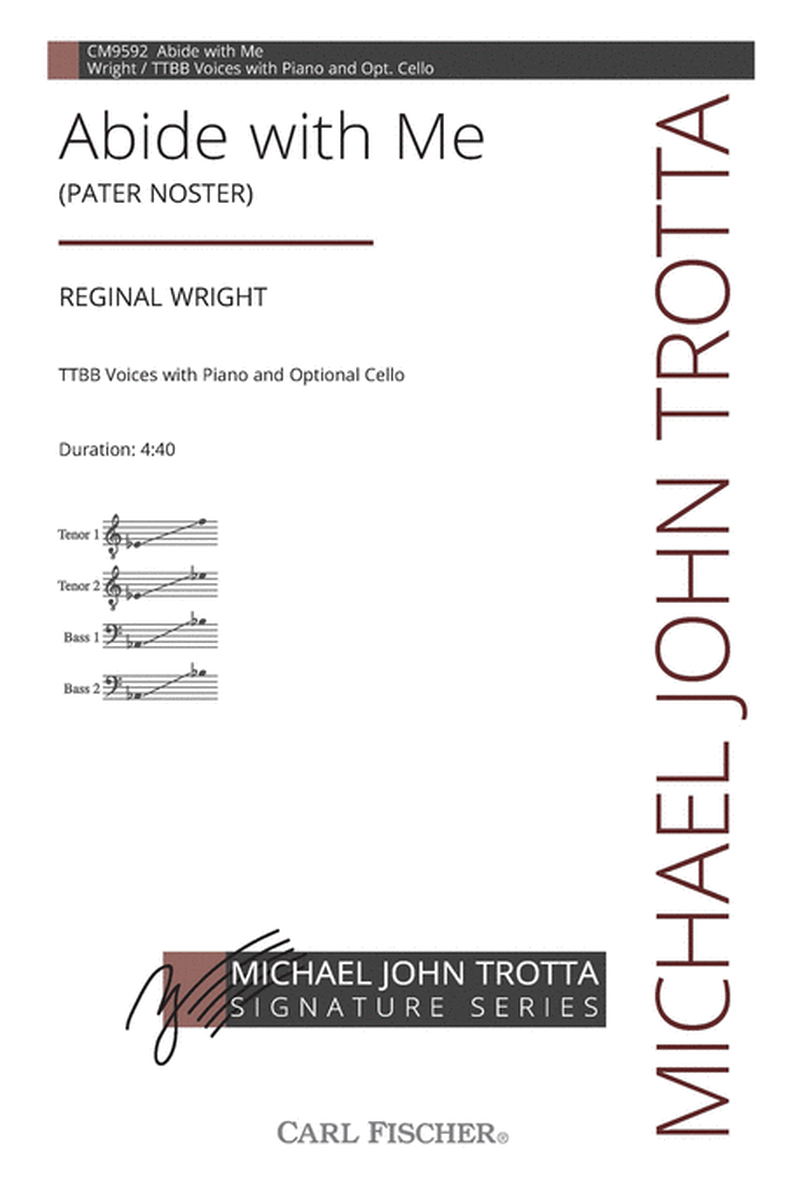
Pater Noster. Composed by Reginal S. Wright. Octavo. Mjts. Performance Score. 16 pages. Duration 0:04:40. Carl Fischer Music #CM9592. Published by Carl Fischer Music (CF.CM9592).ISBN 9781491154144. UPC: 680160912643. 6.875 x 10.5 inches. Key: Ab major. English. Henry F. Lyte (1793-1847).
Henry Francis Lyte, 19th century Scottish minister and poet, wrote this hymn text during the last year of his life. The opening line of the hymn is misquoted from Luke 24:29, when the disciples meet the resurrected Jesus, but do not recognize him. They ask him to Abide with us, for it is toward evening, and the day is far spent. The change to the singular pronoun gives the hymn its comforting, personal and emotional intimacy. Though Lyte wrote his own tune for the poem, the tune most associated with the text is Eventide by William Henry Monk. Monk, a composer, arranger, and editor wrote this tune for the hymns inclusion in Hymns Ancient and Modern, published in 1861. Be intentional to sing a tall, pure /a/ sound on the word abide. Also be mindful that the original Abide with me hymn melody should be primary with the prayerful Pater Noster providing its support. Overall, bear in mind the prayerful mood of the selection and mold the color of the tone accordingly. For more information visit www.reginalwright.com.
Henry Francis Lyte, 19th century Scottish minister and poet, wrote this hymn text during the last year of his life. The opening line of the hymn is misquoted from Luke 24:29, when the disciples meet the resurrected Jesus, but do not recognize him. They ask him to aAbide with us, for it is toward evening, and the day is far spent.a The change to the singular pronoun gives the hymn its comforting, personal and emotional intimacy. Though Lyte wrote his own tune for the poem, the tune most associated with the text is aEventidea by William Henry Monk. Monk, a composer, arranger, and editor wrote this tune for the hymnas inclusion in Hymns Ancient and Modern, published in 1861. Be intentional to sing a tall, pure /a/ sound on the word aabidea. Also be mindful that the original aAbide with mea hymn melody should be primary with the prayerful aPater Nostera providing its support. Overall, bear in mind the prayerful mood of the selection and mold the color of the tone accordingly. For more information visit www.reginalwright.com.
Henry Francis Lyte, 19th century Scottish minister and poet, wrote this hymn text during the last year of his life. The opening line of the hymn is misquoted from Luke 24:29, when the disciples meet the resurrected Jesus, but do not recognize him. They ask him to "Abide with us, for it is toward evening, and the day is far spent." The change to the singular pronoun gives the hymn its comforting, personal and emotional intimacy. Though Lyte wrote his own tune for the poem, the tune most associated with the text is "Eventide" by William Henry Monk. Monk, a composer, arranger, and editor wrote this tune for the hymn's inclusion in Hymns Ancient and Modern, published in 1861. Be intentional to sing a tall, pure /a/ sound on the word "abide". Also be mindful that the original "Abide with me" hymn melody should be primary with the prayerful "Pater Noster" providing its support. Overall, bear in mind the prayerful mood of the selection and mold the color of the tone accordingly. For more information visit www.reginalwright.com.
Henry Francis Lyte, 19th century Scottish minister and poet, wrote this hymn text during the last year of his life. The opening line of the hymn is misquoted from Luke 24:29, when the disciples meet the resurrected Jesus, but do not recognize him. They ask him to “Abide with us, for it is toward evening, and the day is far spent.” The change to the singular pronoun gives the hymn its comforting, personal and emotional intimacy.Though Lyte wrote his own tune for the poem, the tune most associated with the text is “Eventide” by William Henry Monk. Monk, a composer, arranger, and editor wrote this tune for the hymn’s inclusion in Hymns Ancient and Modern, published in 1861.Be intentional to sing a tall, pure /a/ sound on the word “abide”. Also be mindful that the original “Abide with me” hymn melody should be primary with the prayerful “Pater Noster” providing its support. Overall, bear in mind the prayerful mood of the selection and mold the color of the tone accordingly.For more information visit www.reginalwright.com.
See Similar Sheet Music and Digital Downloads