Cadences For Mozart's Concerto In D For Flute by Wolfgang Amadeus Mozart Flute Solo - Sheet Music
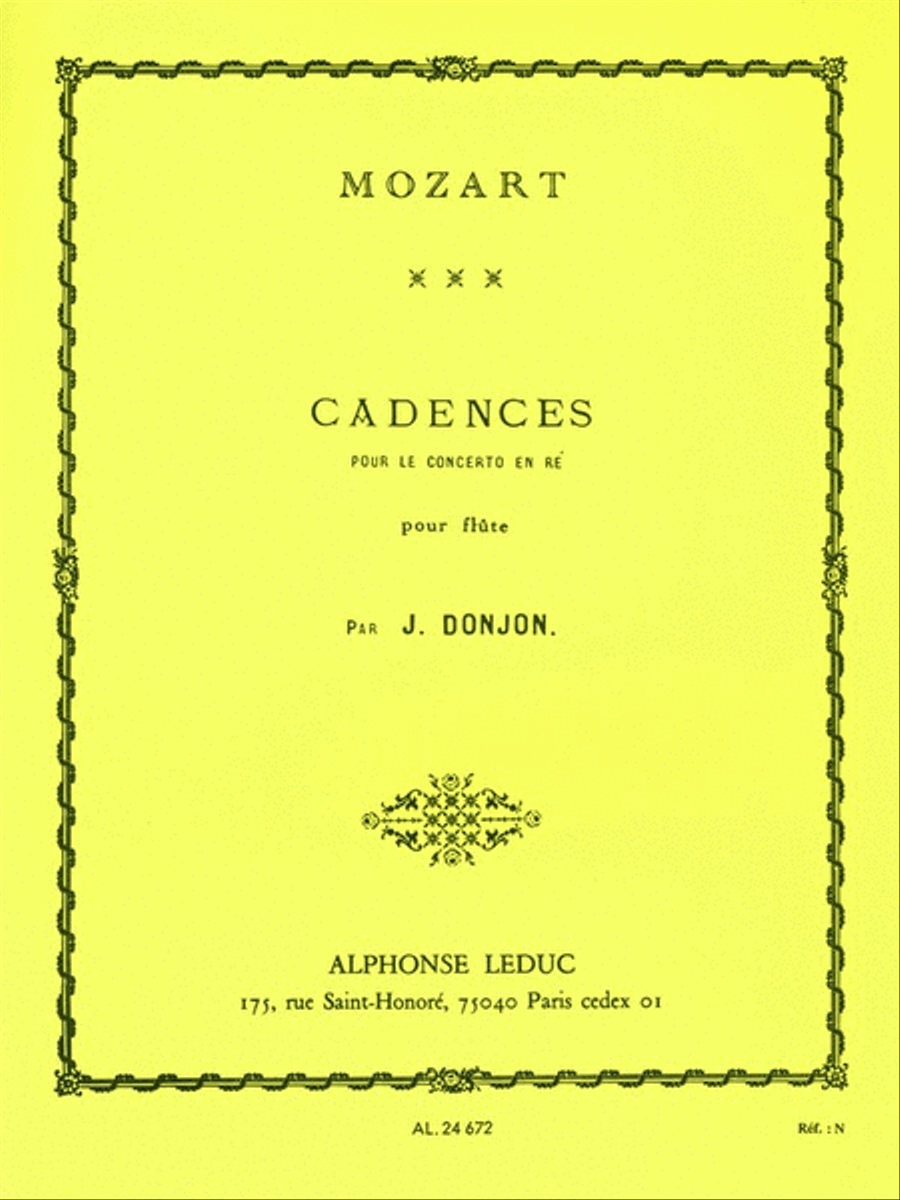
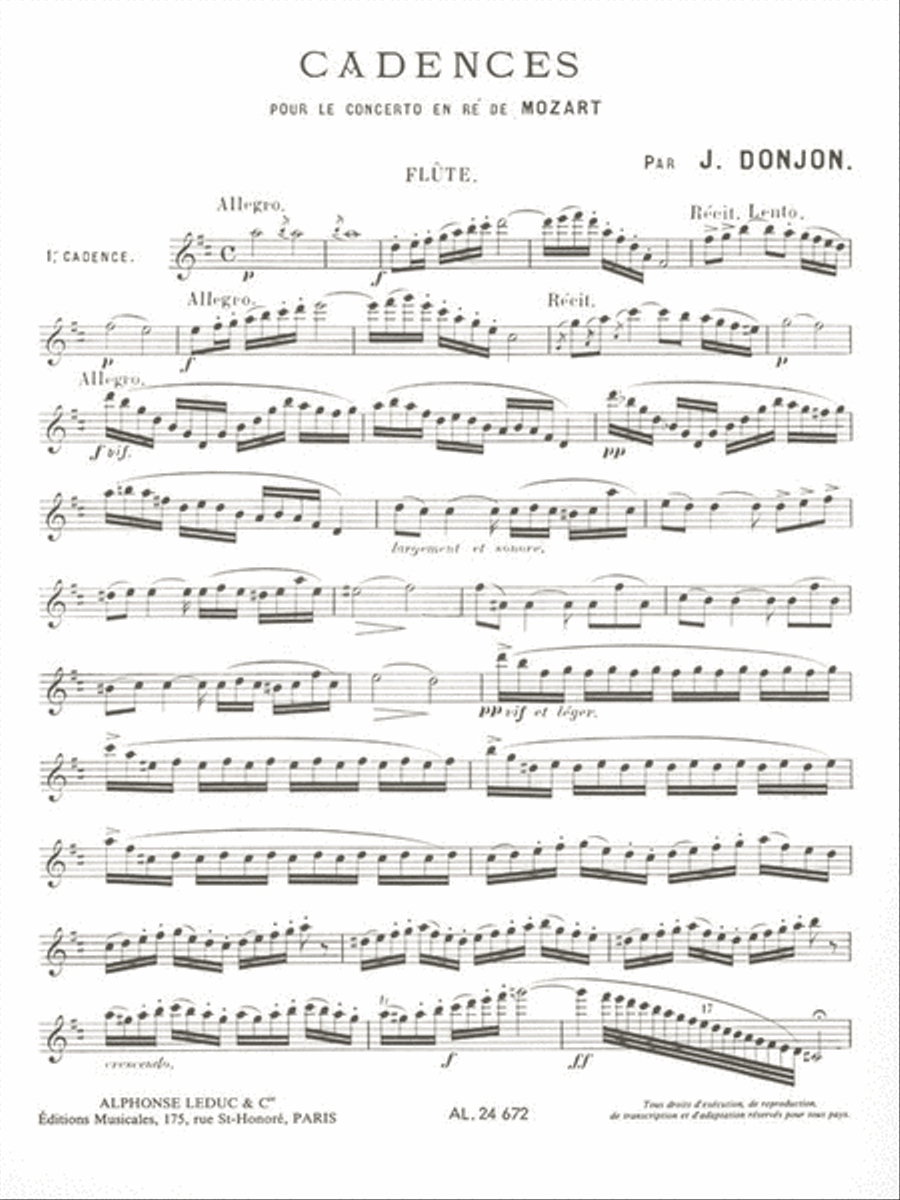
By Wolfgang Amadeus Mozart“Wolfgang Amadeus Mozart's (1756-1791) Flute Concerto in D is an adaptation of the original Oboe Concerto in C, which the composer reworked in 1778. The Concerto remains widely studied and performed on both instruments, making it one of the more important Concerti in the woodwind repertoire. Concerto in D is in three movements; 1. Allegro aperto, 2. Adagio non troppo, and 3. Rondo: Allegretto. The first and last movements are in the tonic key, whilst the second movement is in the subdominant key of G major. All three movements contain a cadenza which initially would have been left for the performer to improvise. However, cadenzas have since been written, including those of Johannes Donjon (1839-1912). Donjon was a prominent flautist of his time and his understanding of Mozart's Flute Concerto in D is second to none, making his cadenzas well-informed and essential to performers of the concerto.”
Details
Summary
- Instrument:
- Flute Solo
- Genres:
- Classical Period
- Composers:
- Wolfgang Amadeus Mozart
- Publishers:
- Alphonse Leduc
- Series:
- Robert King Music
- UPC:
- 888680908317
- Format:
- Collection / Songbook
- Item types:
- Physical
- Musical forms:
- Concerto
- Artist:
- Wolfgang Amadeus Mozart
- Usages:
- School and Community
- Size:
- 9.0x12.0x0.021 inches
- Number of Pages:
- 4
- Shipping Weight:
- 0.13 pounds
Detailed Description
SKU: HL.48182918
Composed by Wolfgang Amadeus Mozart. Leduc. Classical. Softcover. 4 pages. Alphonse Leduc #AL24672. Published by Alphonse Leduc (HL.48182918).UPC: 888680908317. 9.0x12.0x0.021 inches.
“Wolfgang Amadeus Mozart's (1756-1791) Flute Concerto in D is an adaptation of the original Oboe Concerto in C, which the composer reworked in 1778. The Concerto remains widely studied and performed on both instruments, making it one of the more important Concerti in the woodwind repertoire. Concerto in D is in three movements; 1. Allegro aperto, 2. Adagio non troppo, and 3. Rondo: Allegretto. The first and last movements are in the tonic key, whilst the second movement is in the subdominant key of G major. All three movements contain a cadenza which initially would have been left for the performer to improvise. However, cadenzas have since been written, including those of Johannes Donjon (1839-1912). Donjon was a prominent flautist of his time and his understanding of Mozart's Flute Concerto in D is second to none, making his cadenzas well-informed and essential to performers of the concerto.”.
Similar Sheet Music & Digital Downloads
- More by this Composer:
- Wolfgang Amadeus Mozart Wolfgang Amadeus Mozart Piano Wolfgang Amadeus Mozart Piano Accompaniment Wolfgang Amadeus Mozart Violin
- Series:
- Robert King Music
- Instrument:
- Woodwinds Flute Flute Solo
- Artists:
- Wolfgang Amadeus Mozart
- Publisher:
- Alphonse Leduc