About Carl Maria von Weber
Carl Maria von Weber (1786–1826) was a prominent German composer, conductor, and pianist, often celebrated as a foundational figure in the development of German Romantic opera. His music bridged the Classical and Romantic eras, characterized by innovative orchestration, dramatic storytelling, and a deep connection to German folklore and national identity. Weber's pioneering efforts significantly influenced later Romantic composers, including Richard Wagner, and left an indelible mark on the history of opera.
- Weber's most famous opera, Der Freischütz (1821), is considered the first major German Romantic opera. It captivated audiences with its blend of supernatural elements, folk-inspired melodies, and vivid orchestral storytelling.
- A child prodigy, Weber began piano lessons at age four and published his first opera, Das Waldmädchen, as a teenager. He also studied with Michael Haydn, Joseph Haydn's younger brother.
- Beyond composing, Weber was an influential conductor who advocated for modern conducting techniques, including the use of a baton and emphasizing precision and expression from the orchestra. He also implemented changes like the spatial rearrangement of string sections and enlarging the orchestra.
- Weber was a virtuoso pianist and composed numerous technically demanding and expressive piano works, such as the famous "Invitation to the Dance" (1819) and the "Konzertstück in F minor" (1821), which influenced composers like Chopin, Liszt, and Mendelssohn.
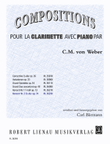
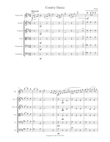
Playing Carl Maria von Weber's sheet music offers a rewarding experience for intermediate to advanced musicians. His compositions, especially his operatic excerpts, piano works, and concertos for wind instruments, provide a rich exploration of early Romanticism. Pianists will find expressive melodies and technical challenges in his sonatas and the captivating "Invitation to the Dance." Vocalists can delve into the dramatic arias from his operas like Der Freischütz and Oberon. Clarinetists, in particular, have a wealth of challenging and beautiful repertoire, including his concertos and concertino, which remain staples in the instrument's repertoire. Performing Weber's music allows musicians to connect with a pivotal moment in music history, experiencing the dramatic flair, innovative orchestration, and deeply felt emotional content that defined the dawn of the Romantic era.